

Passed Aug 23, 2017
1 co-sponsor
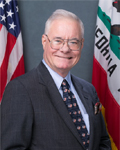
Total votes
12,001
all sessions
Attendance
88%
1,256 missed
Lower than 84% of chamber peers
With party
98%
of cast votes
Lower than 80% of chamber peers
Bipartisan score
1%
crosses aisle rarely
Higher than 87% of chamber peers
Sponsored
1,099
bills & resolutions
Near the chamber average
Committees
0
assignments
1,099 bills and resolutions
Sponsored bills
Total
1,099
Primary
108
Co-sponsor
991
This page
1,099
matching current filters
Passed Aug 21, 2017
1 co-sponsor
Public postsecondary education: residency: dependents of armed forces members.
(1) Under existing law, the segments of the public postsecondary education system in the state include the University of California, which is administered by the Regents of the University of California, the California State University, which is administered by the Trustees of the California State University, and the California Community Colleges, which are administered by the Board of Governors of the California Community Colleges. Existing law establishes uniform student residency requirements for purposes of ascertaining the amount of tuition and fees to be paid by students of public postsecondary education institutions. Existing law entitles a student to resident classification for the purpose of determining tuition and fees if the student is a member, or a child or spouse who is a dependent of a member, of the Armed Forces of the United States stationed in the state on active duty, except as specified. Existing law further provides that, if that member of the Armed Forces of the United States, whose dependent natural or adopted child, stepchild, or spouse is in attendance at an institution, (1) is thereafter transferred on military orders to a place outside this state where the member continues to serve in the Armed Forces of the United States, or (2) is thereafter retired as an active member of the Armed Forces of the United States, the student dependent shall not lose his or her resident classification so long as he or she remains continuously enrolled at that institution. This bill would extend that resident classification for designated dependents of transferred and retired members of the Armed Forces of the United States to those dependents who have been admitted to a public postsecondary institution before the transfer or retirement. The bill would request the Regents of the University of California to establish the same residency benefits as those established by this bill for students enrolled at the University of California. To the extent that the bill would impose new duties on community college districts, it would constitute a state-mandated local program. (2) The California Constitution requires the state to reimburse local agencies and school districts for certain costs mandated by the state. Statutory provisions establish procedures for making that reimbursement. This bill would provide that, if the Commission on State Mandates determines that the bill contains costs mandated by the state, reimbursement for those costs shall be made pursuant to the statutory provisions noted above.
Signed into law Aug 7, 2017
1 co-sponsor
Veterans: pretrial diversion: driving privileges.
Existing law authorizes a court, with the consent of the defendant and a waiver of the defendant's speedy trial right, to postpone prosecution, either temporarily or permanently, of a misdemeanor and place the defendant in a pretrial diversion program, if the defendant was, or currently is, a member of the United States military and if he or she may be suffering from sexual trauma, traumatic brain injury, post-traumatic stress disorder, substance abuse, or mental health problems as a result of his or her military service. Existing law authorizes the defendant to be referred to services for treatment. Existing law makes it unlawful for a person who is under the influence of any alcoholic beverage or drug to drive a vehicle, or to drive a vehicle and concurrently do any act forbidden by law which causes bodily injury to any person other than the driver. In any case in which a person is charged with a violation of these provisions, existing law prohibits a court from suspending or staying the proceedings prior to acquittal or conviction or from dismissing the proceedings because the accused person attends or participates in a treatment program. This bill would, notwithstanding any other law, including the above-described provision, specify that a misdemeanor offense for which a defendant may be placed in a pretrial diversion program in accordance with the above-described program includes a misdemeanor violation of driving under the influence or driving under the influence and causing bodily injury. The bill would not limit the authority of the Department of Motor Vehicles to take administrative action concerning the driving privileges of a person arrested for a violation of those provisions. This bill would declare that it is to take effect immediately as an urgency statute.
Signed into law Aug 7, 2017
1 co-sponsor
Relative to India's Independence Day.
This measure would recognize August 15, 2017, as India's Independence Day and would urge all Californians to join in celebrating India's independence.
Signed into law Jul 31, 2017
1 co-sponsor
Electricity: electrical cooperatives: integrated resource plan.
Existing law requires the Public Utilities Commission to adopt a process for each load-serving entity to file an integrated resource plan, and a schedule for periodic updates to the plan to ensure that load-serving entities meet specified requirements. Existing law requires each load-serving entity to prepare and file an integrated resource plan consistent with certain requirements on a time schedule directed by the commission and subject to commission review. This bill would provide that, for a load-serving entity that is electrical cooperative, the above requirements only apply if the electrical cooperative has an annual electrical demand exceeding 700 gigawatthours, as determined on a 3-year average commencing January 1, 2013.
Signed into law Jul 31, 2017
1 co-sponsor
In-home supportive services: application.
Existing law provides for the county-administered In-Home Supportive Services program, under which qualified aged, blind, and disabled persons are provided with services in order to permit them to remain in their own homes. This bill would require each county to accept applications for benefits under the program by telephone, through facsimile, or in person, or, if the county is capable of accepting online applications or applications via email for benefits under the program, by email or other electronic means. By creating additional duties for counties, this bill would impose a state-mandated local program. The California Constitution requires the state to reimburse local agencies and school districts for certain costs mandated by the state. Statutory provisions establish procedures for making that reimbursement. This bill would provide that, if the Commission on State Mandates determines that the bill contains costs mandated by the state, reimbursement for those costs shall be made pursuant to the statutory provisions noted above.
Signed into law Jul 31, 2017
1 co-sponsor
Radioactive materials: licensing and registration: exemption.
Existing law requires the State Department of Public Health to establish rules or regulations for general or specific licensing of persons to receive, possess, or transfer radioactive materials, or devices or equipment utilizing these materials. Existing law authorizes the department to require registration and inspection of sources of ionizing radiation, as specified. Existing law authorizes the department to exempt certain sources of ionization radiation or kinds of uses or users from the licensing requirements when the department makes a finding that the exemption of those kinds of users will not constitute a significant risk to the health and safety of the public. Under its existing regulatory authority, the department has adopted regulations establishing requirements, including a requirement that an individual acting as a radiation machine radiographer be a certified radiation machine radiographer, for conducting field radiography. This bill would require the department to exempt bomb squads of specified public entities from the regulatory requirements for conducting field radiography, under specified conditions.
Signed into law Jul 24, 2017
1 co-sponsor
Postsecondary education: student hunger.
(1) Existing law establishes the California State University, under the administration of the Trustees of the California State University; the University of California, under the administration of the Regents of the University of California; the California Community Colleges, under the administration of the Board of Governors of the California Community Colleges; and independent institutions of higher education as the 4 segments of postsecondary education in this state. This bill would express the intent of the Legislature to enact legislation to reduce the incidence of hunger and homelessness among college students in California. (2) Existing law requires each public and private postsecondary educational institution that is located in a county that participates in the Restaurant Meals Program to apply to become an approved food vendor for the program, if the institution operates any qualifying food facilities on campus, or to provide contracting on-campus food vendors with specified information about the program. This bill would provide definitions of "on-campus food vendors" and "qualifying food facility" for purposes of this provision. (3) Existing federal law provides for the Supplemental Nutrition Assistance Program (SNAP) , known in California as CalFresh, formerly the Food Stamp Program, under which supplemental nutrition assistance benefits allocated to the state by the federal government are distributed to eligible individuals by each county. Under existing law, households are eligible to receive CalFresh benefits to the extent permitted by federal law. Existing federal law provides that students who are enrolled in college or other institutions of higher education at least half time are not eligible for SNAP benefits unless they meet one of several specified exemptions, including participating in specified employment training programs. Existing state law provides that, for the purposes of determining eligibility, certain educational programs, as determined by the State Department of Social Services, shall be considered employment training programs, thereby qualifying a student participating in one of those programs for an exemption, unless prohibited by federal law. Existing law also requires the State Department of Social Services, in consultation with representatives from other specified organizations, to establish a protocol to identify and verify all potential exemptions and to identify and verify participation in educational programs, including self-initiated placements, that would qualify a student for an exemption. This bill would express legislative intent to clarify educational policies for purposes of improving access for low-income students to the CalFresh program. For purposes of the federal regulation, the bill would specify the definition of half-time college enrollment. The bill would also require the Student Aid Commission to provide written notice to recipients of Cal Grant awards who qualify for participation in the CalFresh program under the federal regulation. This bill would require the Department of Social Services to maintain and regularly update a list of programs identified pursuant to existing law because they meet the employment training exemption set in the federal regulation. The bill would also require the department to issue and maintain instructions for county human services agencies to verify exemptions to the CalFresh student eligibility rules for students who participate in these programs, as specified. To the extent that this provision would impose new duties on county human services agencies, it would constitute a state-mandated local program. (4) Existing law requires the Department of Social Services to implement the provisions described in (3) above by all-county letters or similar instructions beginning no later than October 1, 2015, until regulations are adopted, and further requires the department to adopt regulations on or before October 1, 2017. Existing law also requires the department to seek and obtain federal approval, as specified, prior to publishing that guidance or regulation, if the United States Department of Agriculture requires federal approval. This bill would adjust the dates for the implementation and adoption of regulations. The bill would delete the provision relating to federal approval. (5) The California Constitution requires the state to reimburse local agencies and school districts for certain costs mandated by the state. Statutory provisions establish procedures for making that reimbursement. This bill would provide that, if the Commission on State Mandates determines that the bill contains costs mandated by the state, reimbursement for those costs shall be made pursuant to the statutory provisions noted above.
Signed into law Jul 24, 2017
1 co-sponsor
Relative to Robotics Technology Day.
This measure would declare June 27, 2017, as the second annual Robotics Technology Day.
Signed into law Jul 21, 2017
1 co-sponsor
Ask Maddy
·
AI policy assistant
Ask Maddy about Randy Voepel
Scope: california
Hi! I can help you understand Randy Voepel's legislative record. What would you like to know?
Try one of these
i
Maddy answers using official bill text and legislative records. Always verify before sharing.
Sources cited inline