Maddy summarySenate Concurrent Resolution 6 proclaims January 13, 2025, as Korean American Day in California. The resolution recognizes the historical significance of the first Korean immigrants arriving in the U.S. on January 13, 1903, and honors Korean Americans' contributions to California's cultural, economic, and social landscape. It does not create new laws or policies but serves as a symbolic declaration by the state legislature. The resolution specifically highlights Korean American communities in Los Angeles and Orange County, which have the largest concentrations of Korean Americans in the U.S.
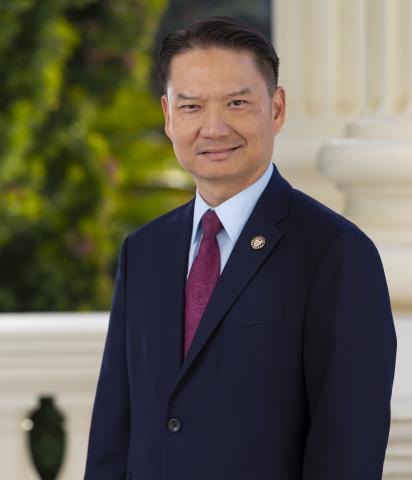
Asm. Tri Ta
Sponsored bills
Maddy summarySCR 10 is a California state resolution recognizing January 2025 as National Human Trafficking Awareness Month. It does not create new laws or policies but serves as a symbolic gesture to raise public awareness about human trafficking - a crime involving exploitation through force, fraud, or coercion. The resolution highlights the severity of trafficking through statistics on global and California victim numbers but does not directly affect any specific groups or alter legal frameworks. This non-binding measure aligns with broader efforts to combat trafficking through education and community engagement.
Maddy summaryACR 9 is a symbolic resolution recognizing January 2025 as National Human Trafficking Awareness Month in California. It does not create new laws or policies but formally acknowledges this observance through a legislative resolution. The resolution cites statistics about trafficking vulnerabilities (including racial disparities, LGBTQ+ youth, and immigrant populations) to highlight the issue's significance. As a procedural resolution, it has no direct impact on affected individuals or enforcement mechanisms.
Maddy summaryThis Assembly Concurrent Resolution (ACR 7) is a ceremonial resolution honoring Reverend Dr. Martin Luther King, Jr., and commemorating Dr. Martin Luther King, Jr. Day in California. It recognizes Dr. King’s legacy as a civil rights pioneer, his role in ending segregation through nonviolent action, and California’s historical leadership in establishing his birthday as a state holiday. The resolution encourages legislators and constituents to participate in community service projects that align with Dr. King’s values of equality and unity. As a non-binding resolution, it does not create new laws or policies but formally expresses the legislature’s support for commemorating Dr. King’s life and work.
Maddy summaryThis House Resolution (HR 10) symbolically recognizes February 2, 2025, as World Wetlands Day in California. It acknowledges the global importance of wetlands - highlighting their role in climate mitigation, biodiversity, and achieving UN Sustainable Development Goals - without creating new laws or affecting any individuals or entities. The resolution cites the UN's designation of February 2 as World Wetlands Day and references the Ramsar Convention, but it only serves to raise public awareness through official recognition. As a commemorative resolution, it has no regulatory or financial impact.
This measure would recognize the 2nd Saturday of January each year as World Desert Day in California, and would encourage local jurisdictions to partner with organizations, agencies, or community groups to host educational programs and community celebrations highlighting desert conservation.
Maddy summaryACR 10 designates January 13, 2025, as Korean American Day in California. The resolution commemorates the arrival of the first Korean immigrants to the U.S. on January 13, 1903, and recognizes Korean Americans' historical contributions to California and the nation. It does not create new laws or policies, but serves as a ceremonial acknowledgment of this community's heritage and impact.
The Personal Income Tax Law allows various credits against the taxes imposed by that law. This bill would allow a credit against those taxes for each taxable year beginning on or after January 1, 2025, and before January 1, 2030, to a qualified taxpayer, as defined, in an amount equal to 40% of the taxpayer's qualified expenses, as defined, not to exceed $400 per taxable year, or $2,000 cumulatively. Existing law requires any bill authorizing a new tax credit to contain, among other things, specific goals, purposes, and objectives that the tax credit will achieve, detailed performance indicators, and data collection requirements. The bill would also include additional information required for any bill authorizing a new tax expenditure. This bill would take effect immediately as a tax levy.
Maddy summaryThis bill is a House Resolution that formally recognizes the work of school board members across California by designating January 2025 as School Board Recognition Month. It directly affects local school districts and county offices of education by honoring the nearly 5,000 elected school board members who serve in these roles. The resolution expresses appreciation for their dedication to public education and encourages community members to support these local officials in their efforts to serve students. This is a commemorative measure rather than a policy change, as it does not alter laws or regulations but instead highlights the importance of school governance.
The California Global Warming Solutions Act of 2006 establishes the State Air Resources Board as the state agency responsible for monitoring and regulating sources emitting greenhouse gases. The act requires the state board to approve a statewide greenhouse gas emissions limit equivalent to the statewide greenhouse gas emissions level in 1990 and to ensure the statewide greenhouse gas emissions are reduced to at least 40% below the statewide greenhouse gas emissions limit by 2030. The act authorizes the state board to include the use of market-based compliance mechanisms in its regulation of greenhouse gas emissions. This bill would specify that transportation fuels are not subject to regulations implementing a market-based compliance mechanism for greenhouse gas emissions. Existing law authorizes the state board to adopt and implement motor vehicle fuel specifications for the control of air contaminants and sources of air pollution. Existing law authorizes the state board to grant variances from the gasoline specifications, as provided. This bill would require the state board to grant variances from gasoline specifications, including for gasoline imported from outside the state, whenever a refinery outage or other supply interruption would result in substantial short-term price increases, as specified. Existing law requires the state board to establish, by regulation, maximum standards for volatility of gasoline, as provided. Pursuant to these authorities, the state board has adopted the California Reformulated Gasoline regulations, which include regulations establishing the maximum Reid vapor pressure of gasoline for various regions of the state at specified time periods. This bill would require the state board to waive the Reid vapor pressure requirement on summer-blend gasoline under the California Reformulated Gasoline regulations and to allow for the early transition to winter-blend gasoline if the state board determines that the gasoline market is experiencing a sudden and unusual increase in gasoline prices.