

Existing law prohibits a person from having in the person's possession or otherwise under the person's control more than one driver's license. Existing law prohibits the Department of Motor Vehicles from issuing a driver's license to, or renewing a driver's license of, a person who holds a valid driver's license issued by a foreign jurisdiction unless the license has been surrendered to the department, or is lost or destroyed. Except as specified, existing law requires the department to require an applicant for an original driver's license to submit satisfactory proof of California residency and that the applicant's presence in the United States is authorized under federal law. Existing law requires the department, upon application for an original driver's license, except a student license, to require an examination of the applicant. Existing law requires the examination to test, among other things, the applicant's knowledge and understanding of the provisions of the Vehicle Code governing the operation of vehicles upon the highways, an actual demonstration of the applicant's ability to exercise ordinary and reasonable control in operating a motor vehicle by driving it under the supervision of an examining officer, and a test of the hearing and eyesight of the applicant, as specified. Existing law authorizes the department to waive the driving test part of the examination for an applicant who submits a license issued by another state, territory, or possession of the United States, the District of Columbia, or the Commonwealth of Puerto Rico if the department verifies through any acknowledged national driver record data source that there are no stops, holds, or other impediments to its issuance. This bill would authorize the department, for purposes of the issuance of a noncommercial class C driver's license, to the extent not prohibited by federal law or treaty, to waive the driving test part of the examination for an applicant who submits a driver's license issued by Japan, the Republic of China (Taiwan) , and South Korea, also referred to as "foreign nation," under specified conditions, including a requirement that the foreign nation, in a memorandum of understanding, extends the same reciprocal privilege relating to the issuance of a driver's license to a person who holds a valid California driver's license. The bill would require an applicant to be 18 years of age or older, to submit satisfactory proof of legal residency in California and specified documents issued by the foreign nation, and to have no stops, holds, or other impediments to issuance in the person's driving record. The bill would specify that an applicant may submit a driver's license issued by a foreign nation that is equivalent to a noncommercial or a commercial class A, class B, or class C California driver's license, but would require the California driver's license issued by the department to the applicant to be a noncommercial class C driver's license only.
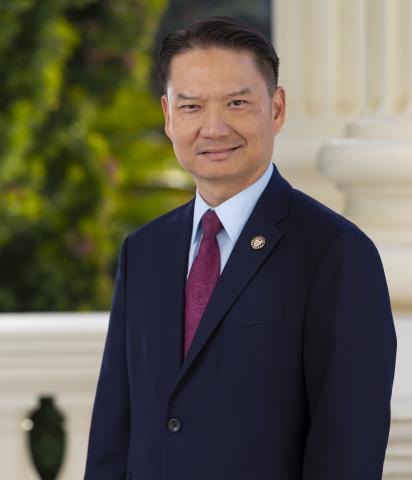
Rep. Tri Ta
Sponsored bills
Existing law authorizes each county board of supervisors to appoint a county veterans service officer, and permits the county to provide the officer with any assistance and facilities that it determines to be necessary. Existing law requires the Department of Veterans Affairs to disburse funds, appropriated to the department for the purpose of supporting county veterans service officers pursuant to the annual Budget Act, on a pro rata basis, to counties that comply with certain conditions. This bill would, upon appropriation by the Legislature, provide a stipend to counties that host an active United States military base for the purposes of maintaining a county veterans service officer, at least part time, at each active United States military base in the county, subject to base approval.
Maddy summaryThis bill designates April 2026 as Second Chance Month in California to raise awareness about opportunities for individuals reentering society after incarceration. The measure is a ceremonial proclamation that does not alter laws, allocate funding, or change government operations. Its primary purpose is to encourage public recognition of the challenges faced by formerly incarcerated people and to highlight available support resources during that specific month.
This measure would proclaim the week of April 20, 2026, to April 24, 2026, inclusive, as California Home Visiting Week, and would encourage all Californians to recognize and celebrate the contributions of home visiting programs and professionals and the families they serve.
Maddy summaryThis bill designates the week of April 19 to April 25, 2026, as Mosquito Awareness Week. The measure is a commemorative resolution that officially recognizes this specific time period to highlight mosquito-related issues. It does not create new laws, impose regulations, or allocate funding, but rather serves to raise public awareness through official designation.
Maddy summaryThis bill designates April 2026 as Parkinson's Disease Awareness Month in California. It requires state officials to issue a formal proclamation highlighting the importance of raising public awareness about the condition. The measure does not change laws or allocate funding but serves to recognize the month dedicated to this health issue.
This measure would proclaim March 2026 as American Red Cross Month, dedicate it to all those who continue to advance the noble legacy of the organization's founder, and encourage all Californians to reach out, support the organization's humanitarian mission, and join in their commitment to care for people in need.
Maddy summaryThis bill designates April 14 of every year as Sylvia Mendez Day to honor the civil rights activist who challenged school segregation in California. The measure is a commemorative resolution that does not change laws, allocate funding, or alter government operations. By establishing this annual observance, the state recognizes Mendez's historical contributions to education and civil rights.
Maddy summaryThis bill designates the week of April 5, 2026, through April 11, 2026, as Special Districts Week. It directly affects special districts, which are local government entities that provide specific services like water supply or fire protection to communities. The primary mechanism is an official proclamation that encourages public awareness and recognition of the work these districts perform. This measure does not alter any laws or budgets but serves as a commemorative resolution to highlight the importance of special districts.
Maddy summaryThis bill designates the week of April 12 to April 18, 2026, as California Public Safety Telecommunicators Week to honor the work of emergency call operators. The measure does not change laws or allocate funding; it simply establishes an official state observance. By creating this designated week, the legislation aims to bring public attention to the role of telecommunicators without altering their duties or compensation.