Maddy summaryACR 120 designates January 2026 as Positive Parenting Awareness Month in California. This ceremonial resolution encourages statewide recognition and educational efforts focused on positive parenting practices. It does not create new laws or provide funding, but aims to raise public awareness about supportive parenting approaches. The measure affects all California residents by promoting community engagement during this designated month.
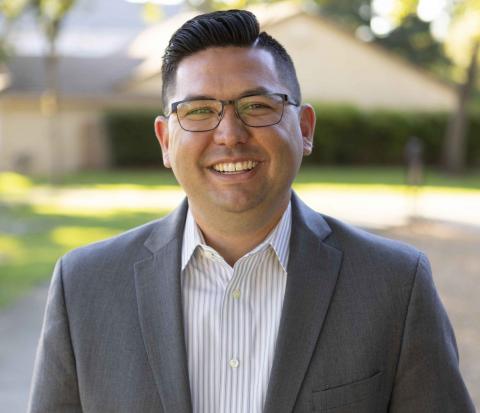
Asm. Joshua Hoover
Sponsored bills
Maddy summaryThis bill designates Tuesday, April 21, 2026, as California Agriculture Day to honor the state's farmers, ranchers, and farmworkers. It highlights the agricultural sector's economic impact, its leadership in sustainable practices, and the significant role women play in the industry. The resolution also observes March 24, 2026, as National Agriculture Day and directs the Assembly Clerk to distribute copies of the text for public awareness.
Maddy summaryThis House Resolution formally recognizes the events of 1915 to 1923 as the Armenian Genocide, stating that the Ottoman Empire and the Republic of Turkey systematically persecuted and killed over 1.5 million Armenians. The measure details how these actions included massacres, forced marches to death, and the displacement of survivors, while also noting the subsequent ethnic cleansing of other Christian groups in the region. It further highlights the historical role of Near East Relief in providing humanitarian aid to Armenians following the atrocities. As a commemorative resolution, this bill does not alter laws or budgets but serves to acknowledge the historical facts and honor the victims within the California Legislature.
Maddy summaryThis bill is a House Resolution that formally recognizes April 14 through April 16, 2026, as Khmer New Year in California. It acknowledges the cultural significance of this three-day celebration for the Cambodian community, which includes traditions like family gatherings, charitable acts, and religious ceremonies. The resolution calls on all Californians to participate in appropriate activities and programs related to the holiday. This measure serves as a commemorative recognition rather than establishing a legal public holiday or changing existing laws.
Maddy summaryThis bill designates the week of April 17 to April 23, 2026, as Cambodian Genocide Memorial Week in California. It aims to honor the survivors and descendants of the Cambodian people while remembering those who died during the Khmer Rouge regime between 1975 and 1979. The resolution calls on all Californians to observe this week by participating in appropriate activities and programs that recognize the tragedy and the resilience of the Cambodian community.
Maddy summaryThis bill designates April 14, 2026, as California Holocaust Memorial Day to honor the victims of the Holocaust and promote awareness of the tragedy. It urges all Californians to observe this day with appropriate remembrance activities, such as educational events or moments of reflection. The resolution also highlights the importance of combating antisemitism and other forms of hatred by remembering the historical events and the heroism shown during that time.
Maddy summaryThis House Resolution officially recognizes Vaisakhi as a significant cultural and religious observance for Sikh, Hindu, and Buddhist communities in California. The bill formally acknowledges the festival's historical roots as a harvest celebration and its modern importance for Sikhs, who mark the day with religious ceremonies and the initiation of new members into the Khalsa faith. By designating April 14, 2026, as the date for this recognition, the resolution encourages Californians to participate in the festivities and expresses respect for the diverse traditions associated with the holiday.
Existing law establishes a system of elementary and secondary education in this state, under which school districts, county offices of education, charter schools, and state special schools provide instruction to pupils in kindergarten and grades 1 to 12, inclusive, at schoolsites throughout the state. Existing law establishes the University of California, under the administration of the Regents of the University of California, the California State University, under the administration of the Trustees of the California State University, and the California Community Colleges, under the administration of the Board of Governors of the California Community Colleges, as the public segments of postsecondary education in the state. This bill, on or before July 1, 2028, would require the State Board of Education, in partnership with the State Department of Education, to establish a formal framework, to be known as the Vision for California Education, to serve as the primary guiding framework for education policy across the state's elementary, secondary, and public postsecondary educational systems. The bill would require the vision to achieve specified goals, including, among other goals, establishing clear pathways that connect the state's elementary, secondary, and public postsecondary educational systems and the workforce, as provided. The bill further would require the state board, on or before January 1, 2030, and every 2 years thereafter, to report to the Legislature on the progress made toward achieving the vision's goals.

Existing law establishes the Elderly Parole Program for the purpose of reviewing the parole suitability of inmates who are 50 years of age or older and who have served a minimum of 20 years of continuous incarceration on their sentence. This bill would raise the minimum age limitation for that program to 65 years of age.
Existing law prohibits the State Energy Resources Conservation and Development Commission from certifying a nuclear fission thermal powerplant, except for specified powerplants, and provides that a nuclear fission thermal powerplant, except specified powerplants, is not a permitted land use in California unless certain conditions are met regarding the existence of technology for the construction and operation of nuclear fuel rod processing plants and of demonstrated technology or means for the disposal of high-level nuclear waste, as specified. This bill would exempt a nuclear microreactor, as defined, from those provisions.