

Existing law allows a person who was arrested or convicted of a nonviolent offense while they were a victim of human trafficking to petition the court, under penalty of perjury, for vacatur relief. Existing law requires a court that issues an order for relief pursuant to these provisions to also order specified law enforcement agencies to seal and destroy their records of the offense. This bill would authorize a person who has suffered an arrest for, or was charged with, any offense that did not result in conviction or who was convicted of an eligible offense, as defined, to petition the court to have their records of that conviction, charge, or arrest sealed if 4 years have elapsed since the date, including, among others, on which the person was arrested, as specified, or on which the defendant completed any terms of incarceration, probation, mandatory supervision, postrelease community supervision, or parole associated with the record, whichever was later, during which the person has not been convicted of a new offense. The bill would require a court granting this relief to also order specified law enforcement agencies to seal their records. By increasing duties on local law enforcement, this bill would impose a state-mandated local program. The bill would exclude specified offenses from being considered an eligible offense, including, among others, a serious or violent felony, or a sex offense. The bill would authorize a criminal justice agency to access and use a conviction record sealed pursuant to these provisions as required by an initiative statute and for the limited purpose of determining eligibility and suitability of a defendant for diversion. The California Constitution requires the state to reimburse local agencies and school districts for certain costs mandated by the state. Statutory provisions establish procedures for making that reimbursement. This bill would provide that, if the Commission on State Mandates determines that the bill contains costs mandated by the state, reimbursement for those costs shall be made pursuant to the statutory provisions noted above.
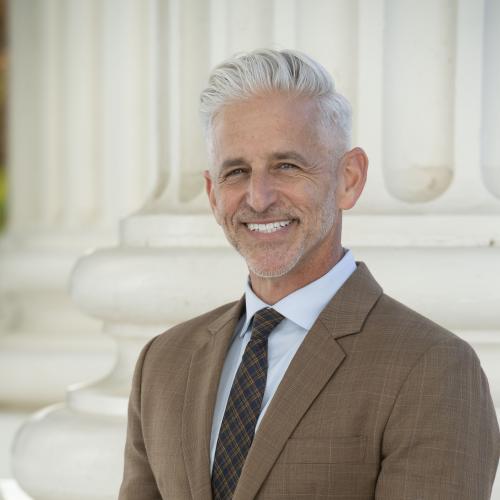
Rep. Josh Lowenthal
Sponsored bills
This measure would urge President Donald J. Trump to avoid raising the cost of living for American consumers by rescinding the tariffs that he has imposed since taking office in January 2025 and refunding the American people for the costs passed on to them by his tariffs. The measure would also urge the United States Congress to enact a joint resolution to rescind President Trump's tariffs and to oppose all future unilateral and arbitrary tariff increases imposed by President Trump.
Existing law authorizes designated health care services providers, employees, volunteers, and patients, and individuals who face threats of violence or violence or harassment from the public because of their affiliation with a designated health care services facility, to complete an application to be approved by the Secretary of State for the purposes of enabling state and local agencies to respond to requests for public records without disclosing a program participant's residence address contained in any public record and otherwise provide for confidentiality of identity for that person, subject to specified conditions. Existing law defines "designated health care services" to mean gender-affirming health care services or reproductive health care services. Under existing law, any person who makes a false statement in an application is guilty of a misdemeanor. Existing law prohibits a person, business, or association from knowingly publicly posting or publicly displaying, disclosing, or distributing on internet websites or on social media, the personal information or image of any designated health care services patient, provider, or assistant, or other individuals residing at the same home address, with the intent to incite a third person to cause imminent great bodily harm to the person identified in the posting or display, or to a coresident of that person, as specified, or to threaten the person identified in the posting or display, or a coresident of that person, as specified. Existing law additionally prohibits a person, business, or association from soliciting, selling, or trading on the internet or social media the personal information or image of a designated health care services patient, provider, or assistant with the intent described above. Existing law establishes a cause of action for injunctive or declarative relief for a violation of these prohibitions. Existing law prohibits a person from posting on the internet or social media, with the intent that another person imminently use that information to commit a crime involving violence or a threat of violence against a designated health care services patient, provider, or assistant, or other individuals residing at the same home address, the personal information or image of a reproductive health care services patient, provider, or assistant, or other individuals residing at the same home address. This bill would, commencing October 1, 2027, similarly establish an address confidentiality program for a designated immigration support services provider, employee, or volunteer, as defined, who faces threats of violence or harassment from the public because of their affiliation with a designated immigration support services facility. This bill would additionally prohibit a person, business, or association from soliciting, selling, or trading on the internet the personal information or image of a designated immigration support services provider, employee, or volunteer with the intent described above. The bill would also, among other things, prohibit a person from posting on the internet the personal information or image of a designated immigration support services provider, employee, or volunteer, or other individuals residing at the same home address, with the specific intent that another person imminently use that information to commit a crime involving violence or a threat of violence that is likely to occur against such an individual. The bill would define various terms for these purposes. By imposing new duties on local agencies and creating new crimes, this bill would create a state-mandated local program. Existing constitutional provisions require that a statute that limits the right of access to the meetings of public bodies or the writings of public officials and agencies be adopted with findings demonstrating the interest protected by the limitation and the need for protecting that interest. This bill would make legislative findings to that effect. The California Constitution requires the state to reimburse local agencies and school districts for certain costs mandated by the state. Statutory provisions establish procedures for making that reimbursement. This bill would provide that with regard to certain mandates no reimbursement is required by this act for a specified reason. With regard to any other mandates, this bill would provide that, if the Commission on State Mandates determines that the bill contains costs so mandated by the state, reimbursement for those costs shall be made pursuant to the statutory provisions noted above.
Existing law, the California Worker Adjustment and Retraining Act (Cal/WARN Act) , prohibits an employer from ordering a mass layoff, relocation, or termination at a covered establishment unless, 60 days before the order takes effect, the employer gives written notice of the order to the employees affected by the order and to the Employment Development Department and certain local officials. Existing law makes an employer who fails to give specified notice regarding a mass layoff, relocation, or termination subject to a civil penalty of not more than $500 for each day of the employer's violation. This bill would revise the Cal/WARN Act to also require an employer giving notice of a mass layoff, relocation, or termination caused in whole or in substantial part by an artificial intelligence (AI) system or other automated technology replacing or automating employment positions to include certain information in the notice, including the job functions performed by workers that will be automated by AI or other automated technology. The bill would require the department to publish a summary of the notices received on its internet website and to post a quarterly statewide summary of technological displacements reported. The bill would require the department, on or before January 1, 2028, to submit a report to the Legislature on artificial intelligence's effects on business hiring practices, including its impact on industries and occupations at the state and regional level. The bill would repeal the provision requiring that report on January 1, 2029.
Maddy summaryCalifornia Assembly Resolution 137 formally recognizes the Diwali festival scheduled for November 8, 2026, and encourages state residents to participate in the celebration. The resolution highlights the cultural significance of the holiday for Indian Americans and South Asian communities, noting its themes of unity, joy, and the triumph of light over darkness. It also acknowledges that California previously designated Diwali as an official state holiday in 2025. This measure serves as a commemorative statement rather than a law with new regulatory or financial provisions.
The Alcoholic Beverage Control Act, administered by the Department of Alcoholic Beverage Control, regulates the application for, the issuance of, the suspension of, and the conditions imposed upon, various alcoholic beverage licenses. The act requires an applicant for a new permanent on-sale general public premises (Type 48) license or the holder of an existing Type 48 license to offer for sale to their customers drink lids and drug testing devices at a cost not to exceed a reasonable amount based on the wholesale cost of those lids and devices and to post a specific notice about the availability of the drink lids and drug testing devices. The act defines "drug testing devices" for this purpose to mean specified devices designed to detect the presence of controlled substances in a drink. The act requires the department to post on its internet website a link to a page that contains information about the drug testing device requirements. The act repeals these requirements on January 1, 2027. This bill would instead require one of 2 specified notices about the availability of the drink lids and drug testing devices to be posted and would repeal the January 1, 2027, sunset date, thereby indefinitely extending these requirements.
This measure would recognize August 26, 2026, as Women's Equality Day and its historic importance to women's rights, including the battle to attain those rights in the past, present, and future.
Maddy summaryThis bill designates 2026 as the International Year of the Woman Farmer to acknowledge the vital contributions of women in agriculture. It functions as a formal proclamation rather than a law that changes regulations or allocates funding. The measure directly affects the state by officially recognizing the importance of female agricultural workers during that year.
This measure would affirm the fundamental importance of indigent defense to due process, equal justice, and democratic governance, recognize public defenders as essential protectors of constitutional rights and the rule of law, and encourage the development of statewide approaches to indigent defense.
Maddy summaryThis bill designates June 2026 as Electronic Dance Music Month to recognize the genre's cultural significance. It directly affects communities and organizations involved in the electronic dance music scene by encouraging public awareness and celebration during that period. The measure requires no new funding or legal changes, serving instead as a symbolic declaration to highlight the month's theme.