Maddy summarySenate Concurrent Resolution 6 proclaims January 13, 2025, as Korean American Day in California. The resolution recognizes the historical significance of the first Korean immigrants arriving in the U.S. on January 13, 1903, and honors Korean Americans' contributions to California's cultural, economic, and social landscape. It does not create new laws or policies but serves as a symbolic declaration by the state legislature. The resolution specifically highlights Korean American communities in Los Angeles and Orange County, which have the largest concentrations of Korean Americans in the U.S.
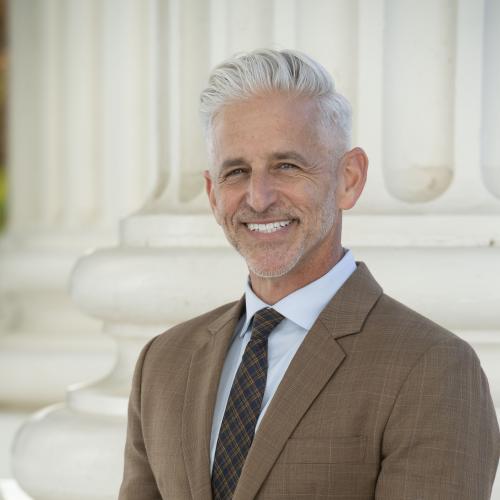
Asm. Josh Lowenthal
Sponsored bills
Maddy summarySCR 10 is a California state resolution recognizing January 2025 as National Human Trafficking Awareness Month. It does not create new laws or policies but serves as a symbolic gesture to raise public awareness about human trafficking - a crime involving exploitation through force, fraud, or coercion. The resolution highlights the severity of trafficking through statistics on global and California victim numbers but does not directly affect any specific groups or alter legal frameworks. This non-binding measure aligns with broader efforts to combat trafficking through education and community engagement.
Maddy summaryThis Assembly Concurrent Resolution (ACR 7) is a ceremonial resolution honoring Reverend Dr. Martin Luther King, Jr., and commemorating Dr. Martin Luther King, Jr. Day in California. It recognizes Dr. King’s legacy as a civil rights pioneer, his role in ending segregation through nonviolent action, and California’s historical leadership in establishing his birthday as a state holiday. The resolution encourages legislators and constituents to participate in community service projects that align with Dr. King’s values of equality and unity. As a non-binding resolution, it does not create new laws or policies but formally expresses the legislature’s support for commemorating Dr. King’s life and work.
Maddy summaryThis House Resolution (HR 10) symbolically recognizes February 2, 2025, as World Wetlands Day in California. It acknowledges the global importance of wetlands - highlighting their role in climate mitigation, biodiversity, and achieving UN Sustainable Development Goals - without creating new laws or affecting any individuals or entities. The resolution cites the UN's designation of February 2 as World Wetlands Day and references the Ramsar Convention, but it only serves to raise public awareness through official recognition. As a commemorative resolution, it has no regulatory or financial impact.
This measure would recognize the 2nd Saturday of January each year as World Desert Day in California, and would encourage local jurisdictions to partner with organizations, agencies, or community groups to host educational programs and community celebrations highlighting desert conservation.
Maddy summaryACR 10 designates January 13, 2025, as Korean American Day in California. The resolution commemorates the arrival of the first Korean immigrants to the U.S. on January 13, 1903, and recognizes Korean Americans' historical contributions to California and the nation. It does not create new laws or policies, but serves as a ceremonial acknowledgment of this community's heritage and impact.
Maddy summaryThis bill is a House Resolution that formally recognizes the work of school board members across California by designating January 2025 as School Board Recognition Month. It directly affects local school districts and county offices of education by honoring the nearly 5,000 elected school board members who serve in these roles. The resolution expresses appreciation for their dedication to public education and encourages community members to support these local officials in their efforts to serve students. This is a commemorative measure rather than a policy change, as it does not alter laws or regulations but instead highlights the importance of school governance.
Existing law generally regulates a social media platform, including by requiring a social media platform to clearly and conspicuously state whether it has a mechanism for reporting violent posts that is available to users and nonusers of the social media platform and to include a link to that reporting mechanism, as prescribed. This bill would require a social media platform to maintain a law enforcement contact process that, among other things, makes available a staffed hotline for law enforcement personnel for purposes of receiving, and responding to, requests for information. The bill would, except as prescribed, also require a social media platform to comply with a search warrant within 72 hours if the search warrant is provided to the social media platform by a law enforcement agency, the subject of the search warrant is information associated with an account on the social media platform, and that information is controlled by a user of the social media platform. This bill would not apply to a social media platform with fewer than 1,000,000 discrete monthly users and would make its provisions operative on July 1, 2025.
Existing law, the Mental Health Services Act, an initiative measure enacted by the voters as Proposition 63 at the November 2, 2004, statewide general election, establishes the Mental Health Services Oversight and Accountability Commission, and authorizes the commission to take specified actions, including advising the Governor or the Legislature regarding actions the state may take to improve care and services for people with mental illness. Existing law authorizes the State Department of Public Health to, among other things, enforce its regulations and protect and preserve the public health. This bill would require the department, in consultation with the commission, to report to specified policy committees of the Legislature, on or before December 31, 2026, a statewide strategy to understand, communicate, and mitigate mental health risks associated with the use of social media by children and youth. The bill would require the report to include, among other things, (1) the degree to which the mental health of children and youth is positively, negatively, or neutrally impacted by use of social media and (2) recommendations to strengthen children and youth resiliency strategies and California's use of mental health services related to social media use. The bill would require the department to explore, among other things, the child and youth populations that use social media, including disproportionate rates and impacts among specific groups, and the negative behavioral health risks, as specified, associated with social media use and misuse among children and youth. The bill would require the department to additionally consult with certain communities in preparing the report, and prior to publication. The bill would repeal these provisions on January 1, 2030.

Existing law, the Knox-Keene Health Care Service Plan Act of 1975, provides for the licensure and regulation of health care service plans by the Department of Managed Health Care, and makes a willful violation of the act a crime. Existing law provides for the regulation of health insurers by the Department of Insurance. Existing law sets forth specified coverage requirements for health care service plan contracts and health insurance policies, and limits the copayment, coinsurance, deductible, and other cost sharing that may be imposed for specified health care services. This bill would require a health care service plan contract or health insurance policy issued, amended, or renewed on or after January 1, 2025, to provide coverage for the prophylaxis, diagnosis, and treatment of Pediatric Autoimmune Neuropsychiatric Disorder Associated with Streptococcal Infections (PANDAS) and Pediatric Acute-onset Neuropsychiatric Syndrome (PANS) that is prescribed or ordered by the treating physician and surgeon and is medically necessary, as specified. The bill would prohibit coverage for PANDAS and PANS from being subject to a copayment, coinsurance, deductible, or other cost sharing that is greater than that applied to other benefits. The bill would prohibit a plan or insurer from denying or delaying coverage for PANDAS or PANS therapies because the enrollee or insured previously received treatment for PANDAS or PANS or was diagnosed with or received treatment for the condition under a different diagnostic name. Because a willful violation of these provisions by a health care service plan would be a crime, the bill would impose a state-mandated local program. The California Constitution requires the state to reimburse local agencies and school districts for certain costs mandated by the state. Statutory provisions establish procedures for making that reimbursement. This bill would provide that no reimbursement is required by this act for a specified reason.