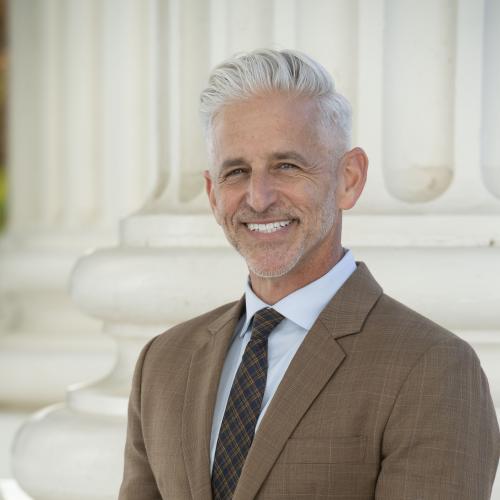
Photo of Josh Lowenthal
D California Assembly · District 69 On the 2026 ballot

Asm. Josh Lowenthal

Compare
Total votes
10,647
all sessions
Attendance
98%
155 missed
Near the chamber average
With party
99%
of cast votes
Near the chamber average
Bipartisan score
0%
crosses aisle rarely
Near the chamber average
Sponsored
853
bills & resolutions
Near the chamber average
Committees
10
assignments
853 bills and resolutions

Sponsored bills

Total
853
Primary
80
Co-sponsor
773
This page
853
matching current filters
Co-sponsor ACR 103
Signed into law · California Assembly · Co-sponsor
Relative to California Western Monarch Protection Week.

Maddy summaryACR 103 designates the week of July 14-18, 2025, as "California Western Monarch Protection Week." The bill is purely ceremonial, recognizing efforts to protect monarch butterflies in California. It does not create new laws, funding, or obligations. The measure serves to raise public awareness about monarch conservation during that specific week.

Signed into law Sep 5, 2025 1 co-sponsor
Co-sponsor HR 67
Passed · California Assembly · Co-sponsor
Relative to All California Day.

Maddy summaryHR 67 designates November 9 as "All California Day" to celebrate California's shared history and cultural ties with Baja California and Baja California Sur. The resolution encourages community events and cultural celebrations across the state to honor this interconnected heritage, including contributions from Indigenous peoples and Mexican heritage communities. As a ceremonial resolution (not a binding law), it has no direct regulatory or financial impact on any specific group or policy. The measure was adopted by the California Assembly on September 4, 2025.

Passed Sep 4, 2025 1 co-sponsor
Co-sponsor HR 58
Passed · California Assembly · Co-sponsor
Relative to California Promotoras Month.

Maddy summaryThis House Resolution (HR 58) declares October 2025 as "California Promotoras Month" to formally recognize the work of promotoras - community health workers who serve as cultural brokers and connect underserved communities (particularly Latino populations) to essential services like health, housing, and disaster response. It acknowledges their role in improving community resilience and access to resources, while highlighting the need for better support, training, and equitable compensation for this workforce. The resolution is symbolic and does not create new laws, funding, or programs; it solely aims to raise awareness and honor promotoras' contributions through a designated month of recognition.

Passed Sep 4, 2025 1 co-sponsor
Co-sponsor HR 70
Passed · California Assembly · Co-sponsor
Relative to Direct Support Professional Recognition Week.

Maddy summaryThis is a symbolic resolution, not a substantive bill. It designates September 7-13, 2025, as "Direct Support Professional Recognition Week" in California. The resolution acknowledges direct support professionals who assist Californians with intellectual and developmental disabilities (IDD) through the state's Lanterman Act system, which serves over 450,000 residents. It formally recognizes their role in enabling community inclusion and independence but does not create new policies, funding, or legal obligations.

Passed Sep 4, 2025 1 co-sponsor
Co-sponsor HR 71
Passed · California Assembly · Co-sponsor
Relative to National Fried Rice Day.

Maddy summaryThis symbolic resolution recognizes September 20, 2025, as National Fried Rice Day in California, highlighting the dish's cultural significance to Asian American communities and its connection to California's rice-growing economy (noting the state's status as the second-largest rice producer). It has no legal effect or policy changes - it serves solely to celebrate culinary traditions and community diversity. The resolution was adopted by the California Assembly with no opposing votes.

Passed Sep 4, 2025 1 co-sponsor
Co-sponsor HR 65
Passed · California Assembly · Co-sponsor
Relative to Filipino American History Month.

Maddy summaryThis House Resolution designates a month as Filipino American History Month in California. It recognizes the historical contributions of Filipino Americans to the state, including early settlement (dating to 1587), agricultural labor, community building (such as "Little Manila" in Stockton), and military service during World War II. As a symbolic resolution, it does not create new laws, policies, or direct effects on any specific group.

Passed Sep 2, 2025 1 co-sponsor
Co-sponsor SB 442
Passed · California Senate · Co-sponsor
Grocery retail store and retail drug establishment employees: self-service checkout.

Existing law imposes certain requirements on grocery employers, as defined, upon the purchase or change in control of a grocery establishment, including requiring a successor grocery employer to retain eligible grocery workers for a specified period after transfer of the grocery establishment. This bill would prohibit a grocery retail store or a retail drug establishment, as those terms are defined, from providing a self-service checkout option for customers unless specified conditions are satisfied, including having at least one manual checkout station staffed by an employee who is available to any given customer at the time that a self-service checkout option is made available to that customer. This bill would require a grocery retail store or retail drug establishment that offers self-service checkout to include self-service checkout in the employer's illness and prevention program, as required by regulations of the Division of Occupational Safety and Health. The bill also would require a grocery retail store or retail drug establishment that intends to implement self-checkout to notify workers and their collective bargaining representatives at least 60 days in advance of the implementation, as specified. The bill would not preempt any city, county, or city and county ordinance that provides equal or greater protection to workers. This bill would make an employer who violates the bill's provisions subject to a civil penalty of $1,000 per violation per day, not to exceed an aggregate penalty of $200,000.

Passed Aug 29, 2025 1 co-sponsor
Co-sponsor SB 52
Passed · California Senate · Co-sponsor
Housing rental terms: algorithmic devices.

Existing law governs the hiring of residential dwelling units and requires a landlord to provide specified notice to tenants prior to an increase in rent. Existing law, the Costa-Hawkins Rental Housing Act, prescribes statewide limits on the application of local rent control with regard to certain properties. That act, among other things, authorizes an owner of residential real property to establish the initial and all subsequent rental rates for a dwelling or unit that meets specified criteria, subject to certain limitations. This bill would make it unlawful for any person to sell, license, or otherwise provide to 2 or more persons a rental pricing algorithm, as defined, with the intent or reasonable expectation that it be used by 2 or more persons, as specified, to set rental terms, as defined, for residential premises. The bill would make it unlawful for a person to set or adopt rental terms based on the recommendation of a rental pricing algorithm if the person knows or should know that the rental pricing algorithm processes nonpublic competitor data, as defined, to set rental terms and that the pricing algorithm or the recommendation of the algorithm was used by another person to set or recommend a rental term for residential premises in the same market. Existing law establishes the Attorney General as the head of the Department of Justice, with charge of all legal matters in which the state is interested, except as specified. Existing law imposes various requirements on the Attorney General related to consumer protection, including, among others, the supervision of charitable trusts and the enforcement of antitrust laws. This bill would authorize the Attorney General, and the city attorney or county counsel in the jurisdiction in which the rental unit is located, to file a civil action for a violation of the bill, as specified, and would authorize a person who is harmed by a violation of the bill to file a civil action, as specified.

Passed Aug 29, 2025 1 co-sponsor
Primary AB 668
Passed · California Assembly · Lead sponsor
Alcoholic beverage control: large outdoor events: drink spiking.

Existing law, the Alcoholic Beverage Control Act, administered by the Department of Alcoholic Beverage Control, regulates the application for, the issuance of, the suspension of, and the conditions imposed upon, various alcoholic beverage licenses. Existing law generally makes a violation of the act a misdemeanor and grounds for suspension or revocation of a license, except as specified. Existing law, until January 1, 2027, requires an applicant for a new permanent on-sale general public premises (Type 48) license and the holder of an existing Type 48 license to offer drug testing devices and drink lids to their customers and to post a related notice, as specified. Existing law also requires those applicants and licensees to contact and provide specified information to law enforcement or emergency medical services when they are notified by a customer that the customer or another customer believes they have been a victim of drink spiking, as specified. This bill would, commencing July 1, 2026, until January 1, 2029, require any person who obtains a catering authorization or daily on-sale license for the sale of alcoholic beverages at a large outdoor event, as defined, to comply with the above-described drink spiking requirements. The bill would require a licensee to comply with all manufacturer instructions relating to testing devices, as specified, and would specify that a licensee who complies with the manufacturer's instructions shall not be held liable for a defective test or inaccurate test result. The bill would specify that a violation of its provisions is not a crime and would specify that a first violation would result only in a warning by the department.


Passed Aug 29, 2025 0 co-sponsors
Primary AB 704
Passed · California Assembly · Lead sponsor
Criminal records: destruction.

Existing law allows a person who was arrested or convicted of a nonviolent offense while they were a victim of human trafficking to petition the court, under penalty of perjury, for vacatur relief. Existing law requires a court that issues an order for relief pursuant to these provisions to also order specified law enforcement agencies to seal and destroy their records of the offense. This bill would authorize a person arrested for or convicted of an eligible offense, as defined, before the person was 26 years of age to petition the court to have their records of that conviction or arrest sealed and destroyed if 4 years have elapsed since the date on which the person was arrested or completed any terms of incarceration, probation, mandatory supervision, postrelease community supervision, or parole associated with the record, whichever was later, during which the person has not been convicted of a new offense. The bill would require a court granting this relief to also order specified law enforcement agencies to seal and destroy their records. By increasing duties on local law enforcement, this bill would impose a state-mandated local program. The bill would exclude specified offenses from being considered an eligible offense, including, among others, a serious or violent felony, a sex offense, or an offense that may be plead and proved as a prior offense for purposes of imposing an increased sentence or enhancement upon conviction. The California Constitution requires the state to reimburse local agencies and school districts for certain costs mandated by the state. Statutory provisions establish procedures for making that reimbursement. This bill would provide that, if the Commission on State Mandates determines that the bill contains costs mandated by the state, reimbursement for those costs shall be made pursuant to the statutory provisions noted above.

Passed Aug 29, 2025 0 co-sponsors
Showing 261 to 270 of 853 bills
Previous 1 … 26 27 28 … 86 Next