

This measure would recognize February 2026 as the centennial anniversary of Black History Month, urge all citizens to join in celebrating the accomplishments of African Americans during Black History Month, and encourage the people of California to recognize the many talents of African Americans and the achievements and contributions they make to their communities to create equity and equality for education, economics, and social justice. The measure would recognize the significance in protecting the fundamental human rights enshrined in the United States Constitution and its Amendments, the United States Bill of Rights, and the California Constitution, as specified. The measure would also affirm the commitment of the Legislature all people are equal and shall be treated with respect and dignity and shall enjoy the equal application of the law for which the Legislature has been entrusted.
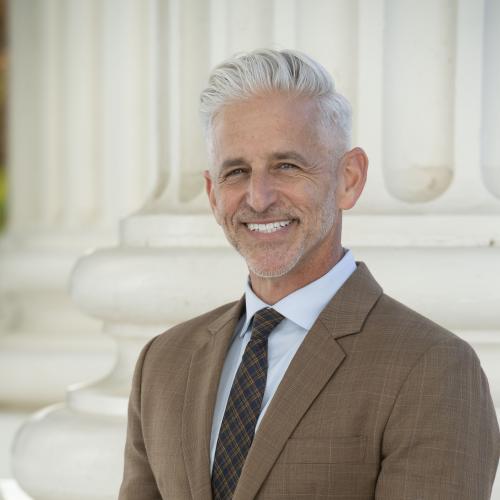
Asm. Josh Lowenthal
Sponsored bills
Maddy summaryThis bill, House Resolution 83, is a commemorative resolution that formally recognizes March 2026 as Developmental Disabilities Awareness Month in California. It does not create new laws or change funding but instead serves to honor the progress made in supporting individuals with developmental disabilities, such as autism and intellectual disabilities, and their families. The resolution salutes the contributions of self-advocates, service providers, regional centers, and families who work together to improve community inclusion and quality of life. Additionally, it directs the Assembly's Chief Clerk to send copies of the resolution to the bill's author for distribution.
This measure would designate February 28, 2026, as Rare Disease Day and, with respect to rare diseases and disorders, would recognize the importance of improving awareness, encouraging accurate and early diagnosis, and supporting national and global efforts to develop effective treatments, diagnostics, and cures.
This measure would recognize February 24, 2026, as a Day of Solidarity with Ukraine, honoring the resilience of the Ukrainian people and acknowledging the ongoing impact of the war on youth, families, and communities.
Maddy summaryACR 127 designates February 2-6, 2026, as National School Counseling Week. This is a symbolic resolution recognizing the role of school counselors, with no new policies or funding changes. It directly affects no specific group but aims to raise awareness for school counseling services during that week. The resolution was unanimously adopted by the Assembly on February 5, 2026.
Maddy summaryThis bill is a House Resolution that formally declares March 2026 as Women's History Month in California. It aims to honor the historical and ongoing contributions of women across various fields such as business, science, and civil rights. The resolution does not create new laws or change existing policies but serves to recognize and celebrate the achievements of women throughout history.
Maddy summaryThis bill designates March 2026 as Colorectal Cancer Awareness Month in California to highlight the disease's impact and promote screening efforts. It directly affects all Californians by encouraging early detection through regular check-ups and new testing options, particularly for younger adults and underserved communities facing higher risks. The resolution aims to increase public knowledge about prevention and treatment advancements without mandating specific actions or funding changes.
Existing law prohibits a public agency, which includes the state, a city, a county, a city and county, or any agency or political subdivision of the state, a city, a county, or a city and county, including, but not limited to, a law enforcement agency, from selling, sharing, or transferring automated license plate recognition (ALPR) information, except to another public agency, and only as otherwise permitted by law. Existing law defines ALPR information as information or data collected through the use of an ALPR system. This bill would provide that "public agency" does not include a transportation agency, a public transit operator, or a local department of transportation or public works department, as specified. The bill would, beginning January 1, 2026, require new, updated, expansions of, or addendums of contractual agreements with ALPR vendors, manufacturers, or suppliers to mandate that no default access is provided to any national ALPR database and that an agency's collected scans are by default not accessible to any other agency, and would impose new requirements on sharing between California state law enforcement agencies. The bill would authorize a law enforcement agency to use ALPR information only for purposes of locating vehicles or persons when either are reasonably suspected of being involved in the commission of a public offense. The bill would prohibit a public agency from retaining ALPR information for more than 60 days after the date of collection if it does not match information on an authorized hot list, as defined, and as of January 1, 2026, would require a public agency to delete all ALPR information that has been held for more than 60 days and does not match information on an authorized hot list within 14 days. By imposing new requirements on public agencies, which include local agencies, this bill would impose a state-mandated local program. Existing law defines an ALPR operator as a person that operates an ALPR system, which does not include a transportation agency. Existing law defines an ALPR end-user a person that accesses or uses an ALPR system, which does not include, among other things, a transportation agency. This bill would additionally exclude from the definitions of "ALPR operator" and "ALPR end-user" a public transit operator, a local department of transportation or public works department, or an airport or airport operator, as provided. Existing law requires an ALPR operator and ALPR end-user to maintain reasonable security procedures and practices, including operational, administrative, technical, and physical safeguards, to protect ALPR information from unauthorized access, destruction, use, modification, or disclosure. This bill would require those security procedures and practices to include safeguards for managing which employees can see the data from their systems, as specified, and requiring data security training and data privacy training for all employees that access ALPR information. Existing law requires an ALPR operator and ALPR end-user to implement a usage and privacy policy that includes, among other things, a description of the job title or other designation of the employees and independent contractors who are authorized to access and use ALPR information. This bill would require the usage and privacy policy to identify what purpose employees and independent contractors access and use ALPR information for. The bill would also require the Department of Justice to, contingent upon an appropriation of sufficient funds, conduct annual random audits on a public agency that is an ALPR operator or ALPR end-user to determine whether they have implemented and are adhering to that usage and privacy policy. Existing law requires an ALPR operator that accesses or provides access to ALPR information to require that ALPR information only be used for the authorized purposes described in the usage and privacy policy and to maintain a record of that access that includes, among other things, the purpose for accessing the information. This bill would instead require that record of access maintained by the ALPR operator to include the case file number or task force name, as applicable, that justifies the search query, and would provide that no queries shall be allowed without a log entry with a valid and current case file number or task force name from the agency conducting the query. The bill would include findings that changes proposed by this bill address a matter of statewide concern rather than a municipal affair and, therefore, apply to all cities, including charter cities. The California Constitution requires the state to reimburse local agencies and school districts for certain costs mandated by the state. Statutory provisions establish procedures for making that reimbursement. This bill would provide that, if the Commission on State Mandates determines that the bill contains costs mandated by the state, reimbursement for those costs shall be made pursuant to the statutory provisions noted above.
Existing law establishes the Governor's Office of Business and Economic Development ("GO-Biz") to, among other duties, serve the Governor as the lead entity for economic strategy and the marketing of California on issues relating to business development, private sector investment, and economic growth. Existing law requires the Transportation Agency to establish a freight advisory committee to, among other things, participate in the development of the state freight plan. This bill would require GO-Biz, in consultation with the Department of Finance and the Transportation Agency, to conduct a study on the impacts that increases in tariffs and reciprocal tariffs have on the state's international trade of imports and exports, as specified. The bill would also require GO-Biz to provide resources to support the international trade activities of California small businesses. The bill would require the agency to convene the freight advisory committee to discuss the scope of the study upon GO-Biz initiating the study. On or before January 1, 2029, the bill would require GO-Biz, to submit the study to the Legislature, as specified.
Existing law generally regulates social media platforms, including by requiring a social media company to post terms of service for each social media platform owned or operated by the company in a manner reasonably designed to inform all users of the social media platform of the existence and contents of the terms of service, as prescribed. Existing law generally prohibits a person from using violence or intimidation to interfere with another person's enjoyment of certain rights or because of certain attributes of that person, including the person's political affiliation, race, or sexual orientation, and punishes violations of that law with certain civil penalties or as misdemeanors, as prescribed. This bill would make a social media platform, as defined, that violates the above-referenced provisions of law relating to personal rights through its algorithms that relay content to users or aids, abets, acts in concert, or conspires in violation of those laws, or is a joint tortfeasor in an action alleging a violation of those laws, liable for specified civil penalties. The bill would declare its provisions to be severable and would declare attempted waiver of its provisions to be void and unenforceable. This bill would become operative on January 1, 2027.