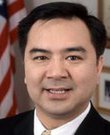
Photo of Van Tran
R California Assembly · District 68

Asm. Van Tran

Compare
Total votes
9,477
all sessions
Attendance
92%
695 missed
Lower than 77% of chamber peers
With party
95%
of cast votes
Lower than 92% of chamber peers
Bipartisan score
3%
crosses aisle rarely
Higher than 90% of chamber peers
Sponsored
349
bills & resolutions
Near the chamber average
Committees
0
assignments
349 bills and resolutions

Sponsored bills

Total
349
Primary
67
Co-sponsor
282
This page
349
matching current filters
Primary AB 298
Failed · California Assembly · Lead sponsor
Appeals: class action certification.

Existing law provides that an appeal is to the court of appeal, other than in a limited civil case, and specifies certain judgments and orders from which an appeal may be taken. This bill would add an order granting or denying class certification, as specified, to those judgments and orders from which an appeal may be taken.

Failed Feb 1, 2010 0 co-sponsors
Primary AB 631
Failed · California Assembly · Lead sponsor
Public assistance: home visits.

Existing law provides for the CalWORKs program, under which each county provides cash assistance and other benefits to qualified low-income families and individuals. This bill would require a welfare fraud investigator in the county of residence of an applicant for aid, within 10 days of the applicant's preliminary approval, to arrange for an authorized investigator to conduct a home call, consisting of a brief interview with the applicant and walk-through of the applicant's residence. The bill would require the investigator to report his or her findings to the appropriate county officials prior to final approval of aid for the applicant. By increasing the duties of county agencies, this bill would impose a state-mandated local program. The California Constitution requires the state to reimburse local agencies and school districts for certain costs mandated by the state. Statutory provisions establish procedures for making that reimbursement, including the creation of a State Mandates Claims Fund to pay the costs of mandates that do not exceed $1,000,000 statewide and other procedures for claims whose statewide costs exceed $1,000,000. This bill would provide that, if the Commission on State Mandates determines that the bill contains costs mandated by the state, reimbursement for those costs shall be made pursuant to these statutory provisions.

Failed Feb 1, 2010 0 co-sponsors
Primary AB 493
Failed · California Assembly · Lead sponsor
Employment and Benefits Appeals Board.

Existing law establishes in the Employment Development Department the Unemployment Insurance Appeals Board to review the decisions of administrative law judges regarding petitions for unemployment insurance benefits. Existing law establishes within the Labor and Workforce Development Agency the California Occupational Safety and Health Appeals Board to conduct hearings when an employer served with a special order relating to occupational safety and health appeals that order, and also establishes the Workers' Compensation Appeals Board which has jurisdiction to determine workers' compensation claims of an employee for injuries sustained in the course of his or her employment. This bill would abolish the Unemployment Insurance Appeals Board, the California Occupational Safety and Health Appeals Board, and the Workers' Compensation Appeals Board and transfer their duties to the Employment and Benefits Appeals Board, which this bill would create in the Labor and Workforce Development Agency. The bill would make conforming changes to existing law.

Failed Feb 1, 2010 0 co-sponsors
Co-sponsor SB 55
Signed into law · California Senate · Co-sponsor
The State Bar Act.

Existing law, the State Bar Act, provides for the licensure and regulation of attorneys by the State Bar of California, a public corporation. (1) Existing law requires the State Bar to comply with specified standards applicable to state agency contracts when awarding a contract for goods, services, or both, for an aggregate amount in excess of $50,000. This bill would require the State Bar to comply with those standards when awarding a contract for information technology goods, services, or both, only when the contract is for an aggregate amount in excess of $100,000. The bill would require the State Bar to report to the judiciary committees of the Legislature by April 1, 2010, and annually thereafter until January 1, 2014, on the impact of this change. The bill would also require the State Bar to have a preference for using in-house employees for information technology projects. (2) Existing law requires the Board of Governors of the State Bar to charge an annual membership fee for active members of up to $315 for the year 2009. Existing law also requires the board to charge an annual membership fee for inactive members of up to $75. Under existing law, these fees are payable on or before the first day of February of each year. This bill would require the board to charge that annual membership fee for active members for 2010. The bill would specify that, for 2010, the annual membership fee for active members and inactive members is payable on or before the first day of March. (3) Existing law provides for the registration and regulation of law corporations, as defined. Existing law requires law corporations to apply to the State Bar for registration and to supply the State Bar with specified information. Existing law also requires law corporations to pay a registration fee and an annual renewal fee and specifies that all fees are paid into the treasury of the State Bar. This bill would require these fees to be used for regulatory and disciplinary purposes. (4) Existing law, the Uniform Partnership Act of 1994, provides for the registration and regulation of limited liability partnerships, including those partnerships providing legal services. The act requires, at the time of registration and at all times these partnerships transact intrastate business, that these partnerships provide specified security for claims arising out of the practice of law. The act also requires a limited liability partnership providing professional services in this state to comply with the administrative registration or filing requirements of that profession's respective regulatory entity. In this regard, the State Bar, pursuant to its Rules of the State Bar, requires those partnerships that provide legal services to register with the State Bar by submitting an initial application and thereafter to renew annually and to include the payment of a fee in each of these instances. This bill would require these fees to be used for regulatory and disciplinary purposes. The bill would also require applicants for registration with the State Bar to file a separate form stating that the limited liability partnership has complied with the security requirements for claims arising out of the practice of law. This bill would declare that it is to take effect immediately as an urgency statute.


Signed into law Jan 25, 2010 1 co-sponsor
Co-sponsor SB 218
Vetoed · California Senate · Co-sponsor
Public records: state agency: auxiliary organizations.

The California Public Records Act requires state and local agencies to make their records available for public inspection and to make copies available upon request and payment of a fee unless those records are exempt from disclosure. The act defines the terms "local agency" and "state agency" for purposes of the act. This bill would revise the definition of the term "local agency" to additionally include specified auxiliary organizations established for the purpose of providing support services and specialized programs for the general benefit of a community college. This bill would revise the definition of the term "state agency" to additionally include specified auxiliary organizations and other specified entities. The bill would exempt from disclosure under the California Public Records Act the names of individuals who donate to specified entities if those individuals request anonymity. However, the bill would provide that this exemption does not apply if a donor, in a quid pro quo arrangement, receives anything that has more than a nominal value in exchange for the donation. This bill would also provide that it is the intent of the Legislature to reject the court's interpretation of state law regarding the application of the act to auxiliary organizations, such as the CSU Fresno Association, at issue in California State University, Fresno Assn., Inc. v. Superior Court (2001) 90 Cal.App.4th 810. The bill would also provide that it is the intent of the Legislature that specified organizations be included in the definition of "state agency" solely for the purposes of the California Public Records Act.

Vetoed Jan 19, 2010 1 co-sponsor
Co-sponsor SB 367
Signed into law · California Senate · Co-sponsor
Discrimination.

The Unruh Civil Rights Act provides that all persons within the jurisdiction of this state are free and equal, and no matter what their sex, race, color, religion, ancestry, national origin, disability, medical condition, marital status, or sexual orientation are entitled to the full and equal accommodations, advantages, facilities, privileges, or services in all business establishments of every kind whatsoever. This bill would provide that any discount or other benefit offered to, or conferred on, a consumer or prospective consumer by a business because the consumer or prospective consumer has suffered the loss or reduction of employment or reduction of wages would not be considered an arbitrary discrimination in violation of that act. This bill would declare that it is to take effect immediately as an urgency statute.
Signed into law Nov 2, 2009 1 co-sponsor
Co-sponsor AB 30
died · California Assembly · Co-sponsor
Gasoline: vapor recovery systems.

(1) Existing law requires the State Air Resources Board to adopt procedures for determining the compliance of any system designed for the control of gasoline vapor emissions during gasoline marketing operations, including storage and transfer operations, and additional performance standards to ensure that systems for the control of gasoline vapors from motor vehicle fueling operations do not cause excessive spillage and emissions. Existing law prohibits the state board from requiring a gasoline dispensing facility that meets certain requirements from undergoing an Enhanced Vapor Recovery Phase II upgrade until April 1, 2011. This bill would exempt a gasoline dispensing facility that does not meet these requirements from penalties for failing to undergo an Enhanced Vapor Recovery Phase II upgrade until April 1, 2010. (2) The California Constitution authorizes the Governor to declare a fiscal emergency and to call the Legislature into special session for that purpose. The Governor issued a proclamation declaring a fiscal emergency, and calling a special session for this purpose, on December 19, 2008. This bill would state that it addresses the fiscal emergency declared by the Governor by proclamation issued on December 19, 2008, pursuant to the California Constitution.

died Oct 26, 2009 1 co-sponsor
Co-sponsor SB 510
Signed into law · California Senate · Co-sponsor
Structured settlements: payment transfers.

Existing law provides that no direct or indirect transfer of structured settlement payment rights is effective unless the transfer has been approved in advance in a final court order based on certain written court findings. This bill would specify that those provisions only apply to agreements with certain connections to California. This bill would also specify new information to be included in the written disclosure statement provided to the payee prior to executing the transfer agreement. This bill would specify circumstances the court must consider before approving the transfer. This bill would provide that every application for approval of a transfer of structured settlement payment rights shall contain specified information. This bill would also specify notice and disclosure requirements that must be complied with prior to any transfer.

Signed into law Oct 11, 2009 1 co-sponsor
Co-sponsor AB 1160
Signed into law · California Assembly · Co-sponsor
Contracts: translation.

Existing law requires a person in a trade or business who negotiates specified contracts or agreements primarily in the languages of Spanish, Chinese, Tagalog, Vietnamese, or Korean to deliver to the other party, prior to execution of the contract or agreement, a translation of the contract or agreement in the applicable foreign language, except as specified. Under existing law, failure to comply with these provisions entitles the aggrieved party to rescind the contract or agreement. Under existing law, these provisions apply to specified loans or extensions of credit subject to the Industrial Loan Law and the California Finance Lenders Law. This bill would, in the alternative, require a supervised financial organization, as defined, that negotiates primarily in one of those languages in the course of entering into a contract or agreement for a loan or extension of credit secured by residential real property, to deliver, prior to the execution of the contract or agreement, and no later than 3 business days after receiving the written application, a specified form in that language summarizing the terms of the contract or agreement, as specified. The bill would provide that a supervised financial organization that complies with these provisions would be deemed to be in compliance with the translation requirement in existing law described above. The bill would also provide that a supervised financial organization that complies with the translation requirement in existing law would be in compliance with these provisions. The bill would provide for administrative penalties against specified licensed persons for violations of these provisions. The bill would require the Department of Corporations and the Department of Financial Institutions to create a new form for these purposes, as provided, and to make it available in each of the languages described above. The bill would authorize an action against a supervised financial organization for a violation of these provisions to be brought only by a licensing agency or by the Attorney General. These provisions would become operative beginning on July 1, 2010, or 90 days after issuance of a form as provided, whichever occurs later. The provisions of this bill would not affect the obligations of a real estate broker, as specified.

Signed into law Oct 11, 2009 1 co-sponsor
Co-sponsor AB 1311
Signed into law · California Assembly · Co-sponsor
State government reports.

(1) Existing law requires the Department of General Services to submit an annual report to the Joint Legislative Budget Committee and each Member of the Legislature that is required to list specified information and include detailed information on all items in the report. This bill would instead require the department to summarize the information required to be included in the report and would delete the requirement regarding detailed information. (2) Existing law requires the State Architect to, by January 10 of each year, provide the Joint Legislative Budget Committee and the chairpersons of the fiscal committees in each house of the Legislature a listing of expenditures for activities relating to local government buildings, as specified. This bill would repeal this requirement. (3) Existing law requires the Director of General Services to, by March 1 of each year, prepare and submit to the Legislature, as specified, a report listing all leases entered into in the prior calendar year with an option to purchase with another public or private entity that involve office space. This bill would repeal that requirement. (4) Existing law authorizes the Director of General Services to lease any real property owned by the state not exceeding 5 acres for a period not to exceed 25 years to governmental entities to further the state's mission to provide emergency services. Existing law requires the director to report annually to the Legislature concerning this authority. This bill would repeal this reporting requirement. (5) Existing law authorizes the Department of General Services to enter into exclusive or nonexclusive contracts on a bid or negotiated basis with manufacturers and suppliers of single source or multisource drugs. The department is required to submit an annual report on activities that have been, or will be, undertaken pursuant to those provisions. This bill would repeal the requirement for that annual report.

Signed into law Oct 11, 2009 1 co-sponsor
Showing 111 to 120 of 349 bills
Previous 1 11 12 13 35 Next