

Existing law establishes the Medi-Cal program, administered by the State Department of Health Care Services, under which health care services are provided to qualified, low-income persons. The Medi-Cal program is, in part, governed and funded by federal Medicaid program provisions. Existing law authorizes a county board of supervisors, by ordinance, to establish a commission to negotiate an exclusive contract with the department and to arrange for the provision of health care services under the Medi-Cal program. This system of services provided by or through a county under these provisions is known as a county organized health system. Pursuant to this authority, the County of Orange, by ordinance, established a commission, known as the Orange County Health Authority, or CalOptima, to provide health care services under the Medi-Cal program. Existing law codifies the establishment of the Orange County Health Authority and vests governance of the authority in a 10-member governing body. Existing law prescribes the membership of the governing body, which includes, among others, 2 members of the Board of Supervisors of the County of Orange, one member who is a current or former hospital administrator, and one member who is a representative of a community clinic. Existing law requires a member of the governing body to serve a 4-year term, except for a member who is a member of the Board of Supervisors of the County of Orange, who is required to serve a one-year term. Existing law prohibits a member of the governing body, except for a member of the Board of Supervisors of the County of Orange, from serving more than 2 consecutive terms. This bill would prohibit an individual who served a one-year term on the governing body as a member of the board of supervisors from being appointed to serve a 4-year term under any of the other categories within 12 months of the expiration of their one-year term. Under existing law, the voting members are nominated by the Orange County Health Care Agency and are appointed by a majority vote of the board of supervisors. This bill would require the board of supervisors to consult with stakeholders in the County of Orange, as specified, for purposes of identifying qualified individuals to be considered as members of the governing body. Existing law requires members of the governing body to, among other things, strive to improve health care quality, promote prevention and wellness, ensure the provision of cost-effective health and mental health care services, and reduce health disparities. This bill would require the members of the governing body to ensure the provision of cost-effective behavioral health care services, rather than mental health care services, and would additionally require the members to address the needs of Medi-Cal members who are affected by homelessness and housing instability, improve quality outcomes, and manage the risk and needs of Medi-Cal beneficiaries through whole-person care approaches and addressing social determinants of health. This bill would require a member of the governing body who has a financial interest in a decision of the governing body to, upon identifying a conflict of interest or a potential conflict of interest, take certain actions, including publicly identifying the financial interest that gives rise to the conflict of interest or potential conflict of interest, recusing the member's own self from discussing and voting on the matter, and leaving the room until after the discussion, vote, and any other disposition of the matter is concluded. This bill would prohibit members of the governing body, for a period of one year after leaving office, from acting as an agent or attorney for, or otherwise representing, for compensation, any other person, by making any appearance before, or by making any communication to, the commission, as specified, if the appearance or communication is made for the purpose of influencing the commission to take certain actions. The bill would also prohibit specified members of the governing body, for a period of one year after leaving office, from serving as an employee, agent, or attorney for, or otherwise representing, for compensation, the Orange County Health Authority or any other entity that received an expenditure of Medi-Cal funds from the Orange County Health Authority during the prior 5 years, with exceptions, including if the member is returning to or continuing a role they held when appointed to the governing body. This bill would eliminate the January 1, 2023, repeal date for the authority, thereby extending the authorization for the authority indefinitely. The bill would make other clarifying changes. This bill would make legislative findings and declarations as to the necessity of a special statute for the County of Orange.
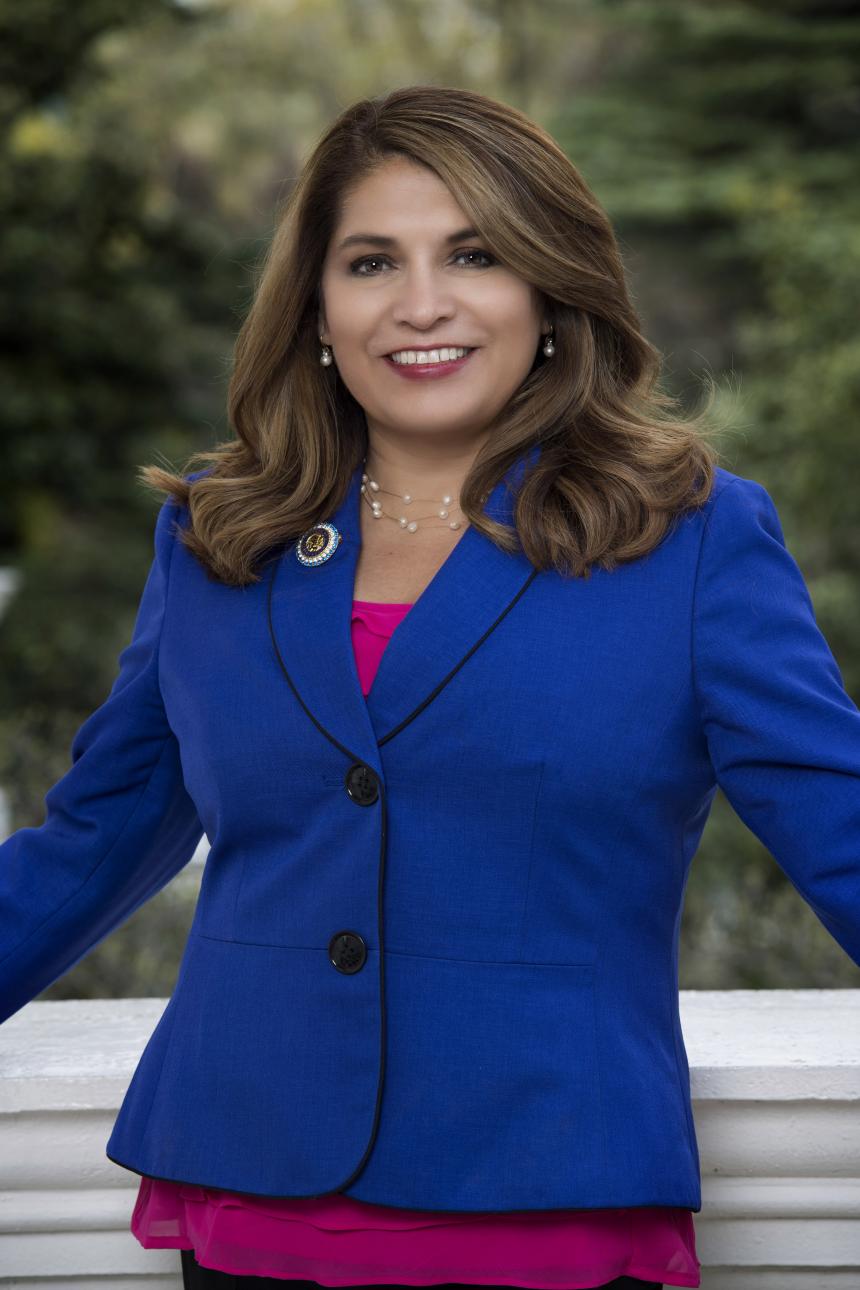
Asm. Sharon Quirk-Silva
Sponsored bills
Existing law establishes the Department of General Services (DGS) in the Government Operations Agency for purposes of, among other things, planning, acquiring, constructing, and maintaining state buildings and property. Under existing law, by executive order, the DGS was required to, among other things, create a digitized inventory of all excess state land, create screening tools for prioritizing affordable housing development on excess state land, and issue requests for proposals for and select affordable housing developments on excess state land, as described. Specifically, Executive Order No. N-06-19 (E.O. N-06-19) required the DGS to create a digitized inventory of excess state land no later than April 30, 2019, and required the DGS, the Department of Housing and Community Development (HCD) , and the California Housing Finance Agency to collaborate to develop 2 new screening tools for prioritizing affordable housing development on excess state land no later than March 29, 2019. This bill would require the DGS to develop, in consultation with the HCD, no later than September 1, 2023, a set of criteria to consistently evaluate state-owned parcels for suitability as affordable housing sites. The bill would also require, on or before July 1, 2024, and every 4 years thereafter, the DGS to, among other things, conduct a review of all state-owned property and identify state-owned parcels that are potentially viable for affordable housing based on those criteria. The bill would require the DGS to update the digitized inventory created pursuant to E.O. N-06-19 of all excess state land, as defined, suitable for affordable housing identified by its review. The bill would require the DGS and the HCD to evaluate and update the 2 screening tools created pursuant to E.O. N-06-19. This bill would require the DGS, in consultation with the HCD, to pursue the development of affordable housing on excess state properties.The bill would require all state agencies to respond to requests for information from the DGS, as described, and to consider exchanging excess state land with local governments for other parcels for purposes of affordable housing development and preservation. The bill would also require all state agencies to use all existing legal and financial authority to expedite and prioritize developments accepted pursuant to the request for proposal process described in the bill, as specified. The bill would require the DGS to report to the Legislature on or before January 1, 2024, and annually thereafter, on the status of the excess state properties identified, as specified.
Existing law requires the governing board of any school district to give diligent care to the health and physical development of pupils and authorizes the governing board of a school district to employ properly certified persons for the work. The School-based Early Mental Health Intervention and Prevention Services for Children Act of 1991 authorizes the Director of Health Care Services, in consultation with the Superintendent of Public Instruction, to award matching grants to local educational agencies to pay the state share of the costs of providing school-based early mental health intervention and prevention services to eligible pupils at schoolsites of eligible pupils, subject to the availability of funding each year. This bill would authorize the Integrated School-Based Behavioral Health Partnership Program, which the bill would establish, to provide prevention and early intervention for, and access to, behavioral health services for pupils. The bill would authorize a county behavioral health agency and the governing board or body of a local educational agency to agree to collaborate on conducting a needs assessment on the need for school-based mental health and substance use disorder services, to implement an integrated school-based behavioral health partnership program, and to develop a memorandum of understanding outlining the requirements for the partnership program. The bill would encourage the county behavioral health agency and the local educational agency, when appropriate, to enter into a contract for mental health or substance use disorder services. As part of a partnership program, the bill would require a county behavioral health agency to provide, through its own staff or through its network of contracted community-based organizations, one or more behavioral health professionals that meet specified contract, licensing, and supervision requirements, and who have a valid, current satisfactory background check, to serve pupils with serious emotional disturbances or substance use disorders, or who are at risk of developing a serious behavioral health condition. The bill would require a local educational agency to provide school-based locations, including space at schools, appropriate for the delivery of behavioral health services, and would additionally authorize these services to be provided through telehealth or through appropriate referral. The bill would require parents and guardians to be notified of, and contacted for information related to, these services by local educational agencies, as provided. The bill would establish processes for delivering services, and would specify the types of services, including prevention, intervention, and brief initial intervention services, as specified, that may be provided pursuant to the partnership program. The bill would require the local educational agency and county behavioral health agency to develop a process related to serving pupils with private coverage, including a process to seek reimbursement from private insurers for behavioral health services provided to a pupil. The bill would require the memorandum of understanding of the partnership program to specify, among other things, how a pupil will be served if a pupil has coverage from a health plan or insurer that is not regulated by the state, or if the parent or guardian cannot afford the cost sharing required under their health plan contract or health insurance policy. The bill would require the partnership program to annually report specified information to the State Department of Health Care Services and the Mental Health Services Oversight and Accountability Commission, and would require the commission, in collaboration with the department, to report that information to the Legislature every 3 years, as specified. The bill would also require the partnership program to annually report specified pupil referral information to the Department of Managed Health Care and the Department of Insurance, as provided. The bill would authorize a partnership program to provide services to individuals with exceptional needs, including services required by the pupil's individualized education program, as specified.
Existing law establishes in the state government, in the Government Operations Agency, the Department of General Services and provides that the department is under the control of an executive officer known as the Director of General Services. Existing law requires each state agency annually to review certain proprietary state lands over which it has jurisdiction to determine what land, if any, is in excess of its foreseeable needs and report this in writing to the department. Existing law requires the department to create a database of information on lands identified by a local government as suitable and available for residential development and information regarding the state lands determined or declared excess, as specified. Existing law requires the department to report to the Legislature annually the land declared excess and to request authorization to dispose of the land by sale or otherwise. Existing law authorizes the department to dispose of real property declared surplus by the Legislature, as specified. This bill would require, by January 1, 2024, the department to prepare and report to the Legislature a streamlined plan to transition underutilized multistory state buildings into housing for the purpose of expanding affordable housing development and adaptive reuse opportunities.
Existing law establishes the Title 38 award program, which provides student financial aid to military veterans under the administration of the California State Approving Agency for Veterans Education (CSAAVE) . Existing law requires an institution headquartered or operating in California desiring to enroll students eligible for federal Title 38 awards to apply for approval of its courses to CSAAVE, and authorizes CSAAVE to approve the application of the school when the school and its courses satisfy specified criteria and any additional reasonable criteria established by CSAAVE. This bill would require, on or before January 1, 2024, CSAAVE to establish regulations requiring postsecondary educational institutions to provide specified information to CSAAVE as part of an application for approval or renewal. This bill would state that its provisions are severable.
Existing sales and use tax laws impose taxes on retailers measured by the gross receipts from the sale of tangible personal property sold at retail in this state, or on the storage, use, or other consumption in this state of tangible personal property purchased from a retailer for storage, use, or other consumption in this state. The Sales and Use Tax Law provides various exemptions from those taxes, including a partial exemption from those taxes, on and after July 1, 2014, and before July 1, 2030, for the gross receipts from the sale of, and the storage, use, or other consumption of, qualified tangible personal property purchased by a qualified person for purchases not exceeding $200,000,000, for use primarily in manufacturing, processing, refining, fabricating, or recycling of tangible personal property, as specified; qualified tangible personal property purchased for use by a qualified person to be used primarily in research and development, as provided; qualified tangible personal property purchased for use by a qualified person to be used primarily to maintain, repair, measure, or test any qualified tangible personal property, as provided; and qualified tangible personal property purchased by a contractor purchasing that property for use in the performance of a construction contract for the qualified person, that will use that property as an integral part of specified processes. Existing law, on and after January 1, 2018, and before July 1, 2030, additionally exempts from those taxes the sale of, and the storage, use, or other consumption of, qualified tangible personal property purchased for use by a qualified person to be used primarily in the generation or production, as defined, or storage and distribution, as defined, of electric power. This bill would, on and after January 1, 2023, and before January 1, 2028, make this a full exemption for purchases not exceeding $200,000,000. The bill would repeal these provisions on January 1, 2028, and would revert to the above-described partial exemption on that date. Existing law requires any bill authorizing a new tax expenditure to contain, among other things, specific goals, purposes, and objectives that the tax expenditure will achieve, detailed performance indicators, and data collection requirements. This bill would require the California Department of Tax and Fee Administration to submit a report to the Legislature on the exemption and would provide findings and declarations relating to the goals of the exemption. The Bradley-Burns Uniform Local Sales and Use Tax Law authorizes counties and cities to impose local sales and use taxes in conformity with the Sales and Use Tax Law, and existing laws authorize districts, as specified, to impose transactions and use taxes in accordance with the Transactions and Use Tax Law, which generally conforms to the Sales and Use Tax Law. Amendments to the Sales and Use Tax Law are automatically incorporated into the local tax laws. Existing law requires the state to reimburse counties and cities for revenue losses caused by the enactment of sales and use tax exemptions. This bill would provide that, notwithstanding Section 2230 of the Revenue and Taxation Code, no appropriation is made and the state shall not reimburse any local agencies for sales and use tax revenues lost by them pursuant to this bill. This bill would take effect immediately as a tax levy.
Existing law governs the bidding and awarding of public contracts by public entities, as defined. Existing law makes it a crime for a public official, as specified, to ask, receive, or agree to receive, any bribe, upon an understanding that their official vote, opinion, judgment, or action will be influenced thereby. This bill would declare a contract voidable that was entered into because of an act that would constitute a violation of a state or federal crime relating to bribery of a public official, including a violation of the above-described crime. The bill would specify that these provisions apply to contracts executed on or after January 1, 2023, including contracts negotiated prior to that date.
This measure would proclaim the month of September 2022 as Prostate Cancer Awareness Month.
This measure would designate a specified portion of State Highway Route 44, near Oak Run in the County of Shasta, as the Stan Statham Memorial Highway. This measure would request the Department of Transportation to determine the cost of appropriate signs showing this special designation and, upon receiving donations from nonstate sources covering that cost, to erect those signs.
This measure would designate the East End Complex-Block 171 in Sacramento as the Mario Obledo Building, and would request the Department of General Services to determine the cost of erecting appropriate plaques and markers showing the designation and, upon receiving donations from nonstate sources, to cover that cost to erect signage.