

Passed Jan 23, 2023
1 co-sponsor
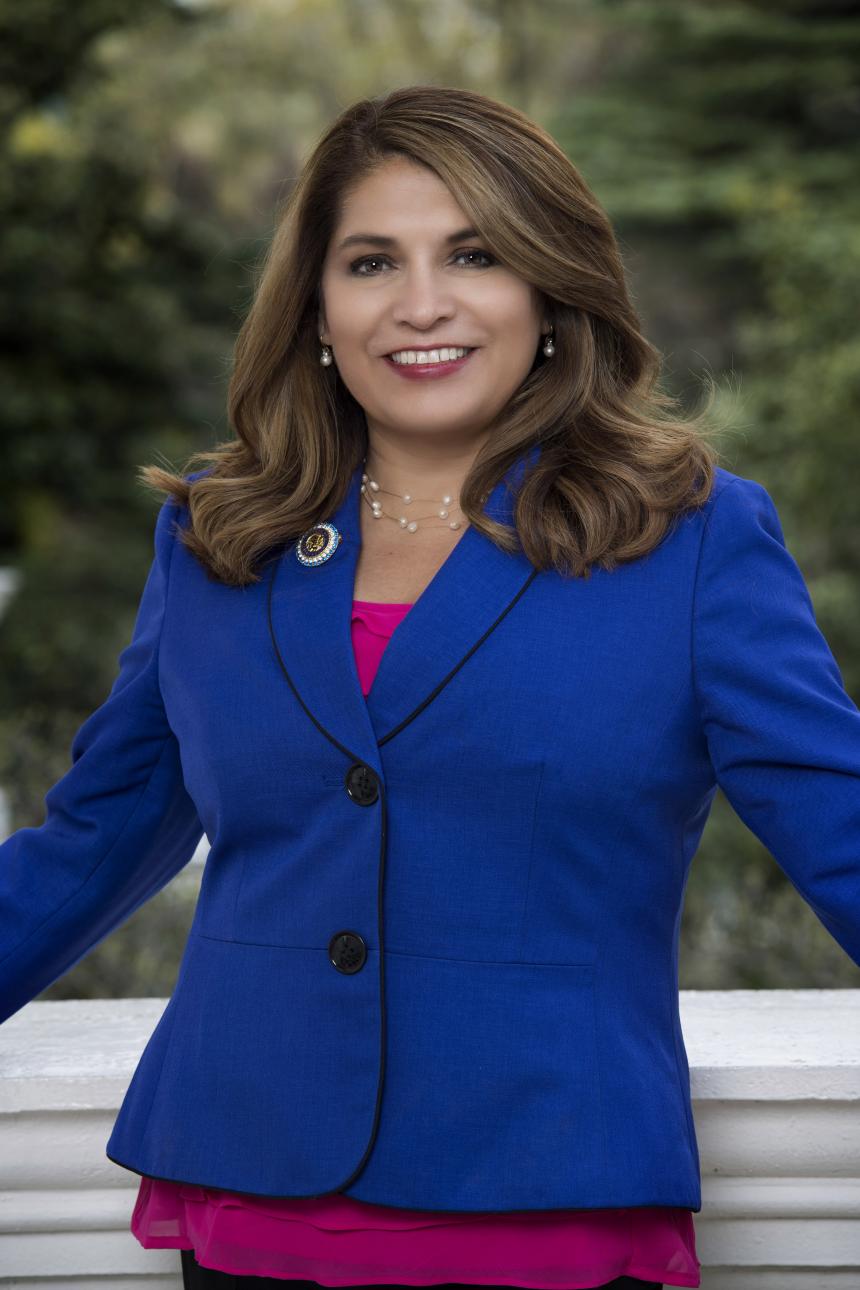
D
California Assembly
·
District 67
Asm. Sharon Quirk-Silva
Total votes
25,250
all sessions
Attendance
94%
1,303 missed
Near the chamber average
With party
98%
of cast votes
Higher than 76% of chamber peers
Bipartisan score
1%
crosses aisle rarely
Lower than 78% of chamber peers
Sponsored
2,398
bills & resolutions
Near the chamber average
Committees
15
assignments
2,398 bills and resolutions
Sponsored bills
Total
2,398
Primary
286
Co-sponsor
2,112
This page
2,398
matching current filters
Criminal law: witnesses.
Existing law authorizes a court in a criminal proceeding, upon written notice by the prosecutor made at least 3 days prior to the date of the preliminary hearing or trial date on which the testimony of the minor is scheduled or during the course of the proceeding on the court's own motion, to order that the testimony of a minor 13 years of age or younger at the time of the motion be taken by contemporaneous examination and cross-examination in another place and out of the presence of the judge, jury, defendant or defendants, and attorneys, and communicated to the courtroom by means of closed-circuit television, if the court makes specified findings. This bill would apply this provision to criminal proceedings in which the defendant is representing themselves pro per and expand it to include any victim witness. The bill would authorize a court to order that the testimony of a victim be taken by contemporaneous examination and cross-examination in another place and out of the presence of the judge, jury, pro per defendant, and attorneys, and be communicated to the courtroom by remote technology, if the court makes specified findings. The bill would require the prosecution to give the pro per defendant at least 30 days' written notice of the prosecution's intent to seek to conduct remote proceedings, unless they show good cause to the court.
Failed Oct 24, 2022
1 co-sponsor
Crimes: false personation.
Existing law prohibits credibly impersonating a peace officer, firefighter, or employee of a public utility, state or local government agency, or search and rescue team, as specified. A violation of these prohibitions is punishable as a misdemeanor. This bill would extend these offenses to include impersonation through or on an internet website, or by other electronic means, for purposes of defrauding another. By expanding the application of existing crimes, this bill would impose a state-mandated local program The California Constitution requires the state to reimburse local agencies and school districts for certain costs mandated by the state. Statutory provisions establish procedures for making that reimbursement. This bill would provide that no reimbursement is required by this act for a specified reason.
Signed into law Sep 30, 2022
1 co-sponsor
Homeless children and youths: reporting.
(1) Existing federal law, the McKinney-Vento Homeless Assistance Act, provides grants to states to carry out activities relating to the education of homeless children and youths, as defined, including, among others, providing services and activities to improve the identification of homeless children and youths and to enable them to enroll in, attend, and succeed in school. The act requires a state plan submitted for the receipt of the grant to include assurances that local educational agencies will designate an appropriate staff person to act as a local educational agency liaison for homeless children and youths and a description of how the state will ensure that local educational agencies and their liaisons will comply with specified requirements of the act, including the identification of homeless children and youths. Existing federal law, the American Rescue Plan Act of 2021, also allocates funds for states to provide services for homeless children and youth, as provided. Under existing state law, public schools, including charter schools, and county offices of education are required to immediately enroll a homeless child or youth seeking enrollment, except as specified. Existing law requires a local educational agency liaison for homeless children and youths to ensure that public notice of the educational rights of homeless children and youths is disseminated in schools within the liaison's local educational agency that provide services pursuant to the act. Existing law also requires the department to develop best practices that a local educational agency may use to identify and obtain accurate data on all homeless children and youths and unaccompanied youths enrolled in schools of the local educational agency and a model housing questionnaire, and to post this information on its internet website. This bill would require a local educational agency, as defined to include a school district, county office of education, charter school, or special education local plan area, to establish homeless education program policies that are consistent with specified state laws and use the above-described resources developed and posted on the department's internet website and resources developed by homeless education technical assistance centers established using certain federal funds. The bill would further require the local educational agency to update these policies at intervals not exceeding 3 years. The bill would require a local educational agency liaison for homeless children and youths and unaccompanied youths to provide training at least annually on designated subjects to classified and certificated employees of the local educational agency who work with pupils experiencing homelessness pursuant to federal law, as specified. The bill would also encourage a local educational agency liaison to offer that training to all other classified and certificated employees, as provided. The bill would further require the liaison to inform both those groups of employees of the availability of training and services the liaison provides to pupils who are experiencing, or are at risk of experiencing, homelessness. By imposing additional duties on local educational agencies, the bill would impose a state-mandated local program. (2) Existing law requires the State Department of Education to provide, among other things, informational and training materials to local educational agency liaisons regarding the educational rights of homeless children and youths and the responsibilities of the liaisons. This bill would require the department, to the extent possible within existing resources, to develop and implement a plan for monitoring the compliance of local educational agencies with state laws relating to youth experiencing homelessness. The bill would require the monitoring plan to include reviews of the local educational agencies including, but not limited to, schoolsite inspections to ensure that the state is not underestimating the number of youth experiencing homelessness. (3) The California Constitution requires the state to reimburse local agencies and school districts for certain costs mandated by the state. Statutory provisions establish procedures for making that reimbursement. This bill would provide that, if the Commission on State Mandates determines that the bill contains costs mandated by the state, reimbursement for those costs shall be made pursuant to the statutory provisions noted above.
Signed into law Sep 30, 2022
0 co-sponsors
Child daycare facilities.
Existing law, the California Child Day Care Facilities Act, administered by the State Department of Social Services, provides for the licensure and regulation of child daycare facilities, as defined. Existing regulations impose various requirements on outdoor activity space for child daycare facilities, including, among others, that there be at least 75 square feet per child of outdoor activity space based on the total licensed capacity. A willful or repeated violation of these provisions is a misdemeanor. This bill would require the department to revise its regulations to permit children with exceptional needs, as defined, to use outdoor play spaces simultaneously with nondisabled children without first seeking a specified regulatory waiver and to specify any health and safety requirements that are required to be met when that simultaneous play occurs. The bill would authorize the department to implement those provisions by means of an all-county letter or similar instruction on or before January 1, 2024.
Signed into law Sep 30, 2022
0 co-sponsors
Residential real property: foreclosure sales.
Existing law prescribes various requirements to be satisfied before the exercise of a power of sale under a mortgage or deed of trust and prescribes a procedure for the exercise of that power. Existing law, until January 1, 2026, prescribes a process in connection with a trustee's sale of property under a power of sale contained in a deed of trust or mortgage on real property containing one to 4 residential units, inclusive, that provides specified bidding priorities to certain parties, including prospective owner-occupants. This bill would prescribe requirements that would apply to sales of real property containing one to 4 residential dwelling units, inclusive, that is acquired through foreclosure under a mortgage or deed of trust by an institution or that is acquired at a foreclosure sale by an institution, as defined. The bill would require the institution, during the first 30 days after a property is listed, as specified, to only accept offers from eligible bidders, as defined, and to respond, in writing, to all offers received from eligible bidders before considering any other offers. This bill would require an eligible bidder to submit an affidavit or declaration, as specified, with their offer to an institution. By expanding the crime of perjury, this bill would impose a state-mandated local program. This bill would also prohibit an institution from conducting a bundled sale, as defined. The California Constitution requires the state to reimburse local agencies and school districts for certain costs mandated by the state. Statutory provisions establish procedures for making that reimbursement. This bill would provide that no reimbursement is required by this act for a specified reason.
Signed into law Sep 30, 2022
1 co-sponsor
School meals: Child Nutrition Act of 2022.
Existing law requires each school district or county superintendent of schools maintaining kindergarten or any of grades 1 to 12, inclusive, and each charter school to provide for each needy pupil one nutritionally adequate free or reduced-price meal during each schoolday, and authorizes a school district or county office of education to use funds available from any federal program the purpose of which includes the provision of meals to a pupil, including the federal School Breakfast Program, to comply with that requirement. Existing law, commencing with the 2022–23 school year, requires a school district or county superintendent of schools maintaining kindergarten or any of grades 1 to 12, inclusive, or charter school to provide 2 nutritiously adequate school meals free of charge during each schoolday to any pupil who requests a meal without consideration of the pupil's eligibility for a federally funded free or reduced-priced meal, with a maximum of one free meal for each meal service period, as provided. This bill would require the State Department of Education, in consultation with the State Department of Social Services, to develop, and to post on its internet website by July 1, 2023, guidance for local educational agencies participating in the federal School Breakfast Program that maintain kindergarten or any of grades 1 to 6, inclusive, on how to serve eligible nonschoolaged children breakfast or a morning snack at a local educational agency schoolsite. The bill would define "eligible nonschoolaged child" to mean a child who is not enrolled in school and who is a sibling, half sibling, or stepsibling of, or a foster child residing with, a pupil who is eligible for a free or reduced-price breakfast. The bill would require a guardian of an eligible nonschoolaged child to be present in order for the nonschoolaged child to receive breakfast or a morning snack.
Signed into law Sep 30, 2022
1 co-sponsor
Income tax credits: low-income housing: California Debt Limit Allocation Committee rulemaking.
Existing federal law prescribes a volume ceiling on the aggregate amount of private activity bonds that may be issued in a state. Existing law creates the California Debt Limit Allocation Committee (CDLAC) for the purpose of administering the volume limit for the state on private activity bonds through an allocation system. Existing law authorizes CDLAC to adopt, amend, or repeal rules and regulations as emergency regulations in accordance with the rulemaking provisions of the Administrative Procedure Act. This bill, instead, would authorize CDLAC to adopt, amend, or repeal rules and regulations without complying with the procedural requirements of the Administrative Procedures Act, except as specified. The bill would make rules and regulations adopted, amended, or repealed by CDLAC effective immediately upon adoption. The bill would repeal these changes to existing law on January 1, 2028. Existing law establishes a low-income housing tax credit program pursuant to which the California Tax Credit Allocation Committee (CTCAC) provides procedures and requirements for the allocation, in modified conformity with federal law, of state insurance, personal income, and corporation tax credit amounts to qualified low-income housing projects that have been allocated, or qualify for, a federal low-income housing tax credit, and farmworker housing. Existing law limits the total annual amount of the state low-income housing credit for which a federal low-income housing credit is required to the sum of $70,000,000, as increased by any percentage increase in the Consumer Price Index for the preceding calendar year, any unused credit for the preceding calendar years, and the amount of housing credit ceiling returned in the calendar year. Existing law provides for an additional allocation of $500,000,000 in low-income housing tax credits for the 2020 calendar year and up to $500,000,000 for the 2021 calendar year and thereafter. Existing law provides that the additional amount for the 2021 calendar year and thereafter is available only if the Budget Act or related legislation specifies an amount available for allocation. Existing law authorizes CTCAC to allocate up to $200,000,000 of this amount for housing financed by the California Housing Finance Agency (CalHFA) under its Mixed-Income Program. Existing law makes a housing sponsor receiving a nonfederally subsidized allocation ineligible for receipt of this increased housing credit allocation. This bill would, for any calendar year in which CDLAC has declared a competition for the award of tax-exempt bond authority for qualified residential rental projects, authorize CTCAC to allocate some or all of the additional credit amount, other than credits allocated for housing financed by CalHFA under these provisions, to nonfederally subsidized buildings and require CTCAC to allocate the remainder for new buildings, as defined by specified federal law, that are federally subsidized and can begin construction within a reasonable time as determined by the California Tax Credit Allocation Committee. For any calendar year in which CDLAC has not declared a competition for the award of tax-exempt bond authority for qualified residential rental projects, the bill would require a project receiving an award of credits from the additional credit allocation to begin construction within a reasonable time as determined by the California Tax Credit Allocation Committee. For purposes of determining the amount of low-income housing tax credit allocated under the above-described provisions, existing law defines various terms, including the term "applicable percentage." In the case of any qualified low-income building that receives an allocation of the $70,000,000 credit amount available under existing law and meets specified additional criteria, existing law defines "applicable percentage" to mean 30% for each of the first 3 years and 5% for the 4th year. This bill would revise the above-described definition of "applicable percentage" to delete the limitation that the qualified low-income building receive an allocation of the $70,000,000 credit amount available under existing law, thereby applying this definition to any qualified low-income building that meets the above-described criteria. Existing law authorizes a taxpayer to elect in its application to CTCAC to sell all or any portion of the low-income housing tax credit to one or more unrelated parties for each taxable year in which the credit is allowed, as specified. This bill would make a taxpayer who has purchased a credit eligible to claim the credit commencing in the year the building is placed in service and the federal credit period commences notwithstanding that CTCAC has not certified the amount of the tax credit. The bill would prohibit the taxpayer from claiming an amount of credit that exceeds the lesser of 9% of the qualified basis of the building set forth in the preliminary reservation or the amount of credit for which the project is eligible as certified in the "taxpayer certification," which the bill would define for these purposes as the certification by the certified public accountant of the taxpayer who originally received the preliminary reservation of credits. The bill would authorize CTCAC to elect to rely upon the taxpayer certification for the purposes of making its required certification, and to review the taxpayer certification and other information provided by the taxpayer who originally received the preliminary reservation of credits, as specified. In the event CTCAC issues a certification that is inconsistent with the taxpayer certification, the bill would require the taxpayer to amend any previously filed tax returns as needed to reflect the credit amount certified by CTCAC. This bill would make technical and conforming changes to the low-income housing tax credit program. This bill would incorporate additional changes to Sections 12206, 17058, and 23610.5 of the Revenue and Taxation Code proposed by AB 1654 to be operative only if this bill and AB 1654 are enacted and this bill is enacted last. This bill would include a change in state statute that would result in a taxpayer paying a higher tax within the meaning of Section 3 of Article XIIIA of the California Constitution, and thus would require for passage the approval of 23 of the membership of each house of the Legislature.
Vetoed Sep 29, 2022
0 co-sponsors
Department of Technology: broadband communications: report.
Under existing law, the Public Utilities Commission has regulatory authority over public utilities, including telephone corporations. Existing law requires the commission, in collaboration with other relevant state agencies and stakeholders, to maintain and update a statewide, publicly accessible, and interactive map showing the accessibility of broadband service in the state. Existing law establishes, within the Government Operations Agency, the Department of Technology under the supervision of the Director of Technology, who also serves as the State Chief Information Officer. Under existing law, the Department of Technology is responsible for the approval and oversight of information technology projects. This bill would require the Department of Technology, on or before May 1, 2024, with input from relevant state agencies and stakeholders, to conduct, complete, and submit a report to specified legislative committees that reviews and identifies barriers to, and opportunities for, investment in, and efficient building of, broadband access points on private and government-owned structures and property, private and public lands and buildings, and public rights of way. The bill would also require the report to identify barriers to, and opportunities for, access to mobile and fixed broadband internet service infrastructure by low-income tribal, urban, and rural customers, and underserved communities. This bill would further require the report to provide recommendations on how to accelerate deployment of broadband access points to serve tribes, low-income customers, and disadvantaged or underserved communities. The bill would require the report, at a minimum, to consider the extent to which specified factors serve as barriers to investment or deployment of broadband access points and to make recommendations on how to overcome these barriers. The bill would define relevant terms.
Signed into law Sep 29, 2022
1 co-sponsor
California Conservation Corps: California Ocean Corps Program.
Existing law establishes in the Natural Resources Agency the California Conservation Corps and requires the corps to implement and administer the conservation corps program. Existing law requires the director of the corps to establish a forestry corps program to accomplish specified objectives related to forest health. This bill would require the director to establish and administer the California Ocean Corps Program to provide competitive grants to certified local conservation corps located in coastal counties in order to provide opportunities for young people to complete workforce preparation, training, and education programs, and, ultimately, to obtain employment, or continue education, in ocean and coastal conservation or related fields, as provided. The bill would require the director to develop and adopt program guidelines before awarding any grants, as provided. The bill would require the director to develop performance measures and accountability controls to track progress and outcomes of all grants. The bill would require the director, on or before January 1, 2026, to report these outcomes to the appropriate fiscal and policy committees of the Legislature. The bill would make these provisions contingent upon an appropriation by the Legislature in the annual Budget Act or another statute. The bill would repeal these provisions on January 1, 2027.
Vetoed Sep 29, 2022
1 co-sponsor
Ask Maddy
·
AI policy assistant
Ask Maddy about Sharon Quirk-Silva
Scope: CA
Hi! I can help you understand Sharon Quirk-Silva's legislative record. What would you like to know?
Try one of these
i
Maddy answers using official bill text and legislative records. Always verify before sharing.
Sources cited inline