

Passed Jan 25, 2024
1 co-sponsor
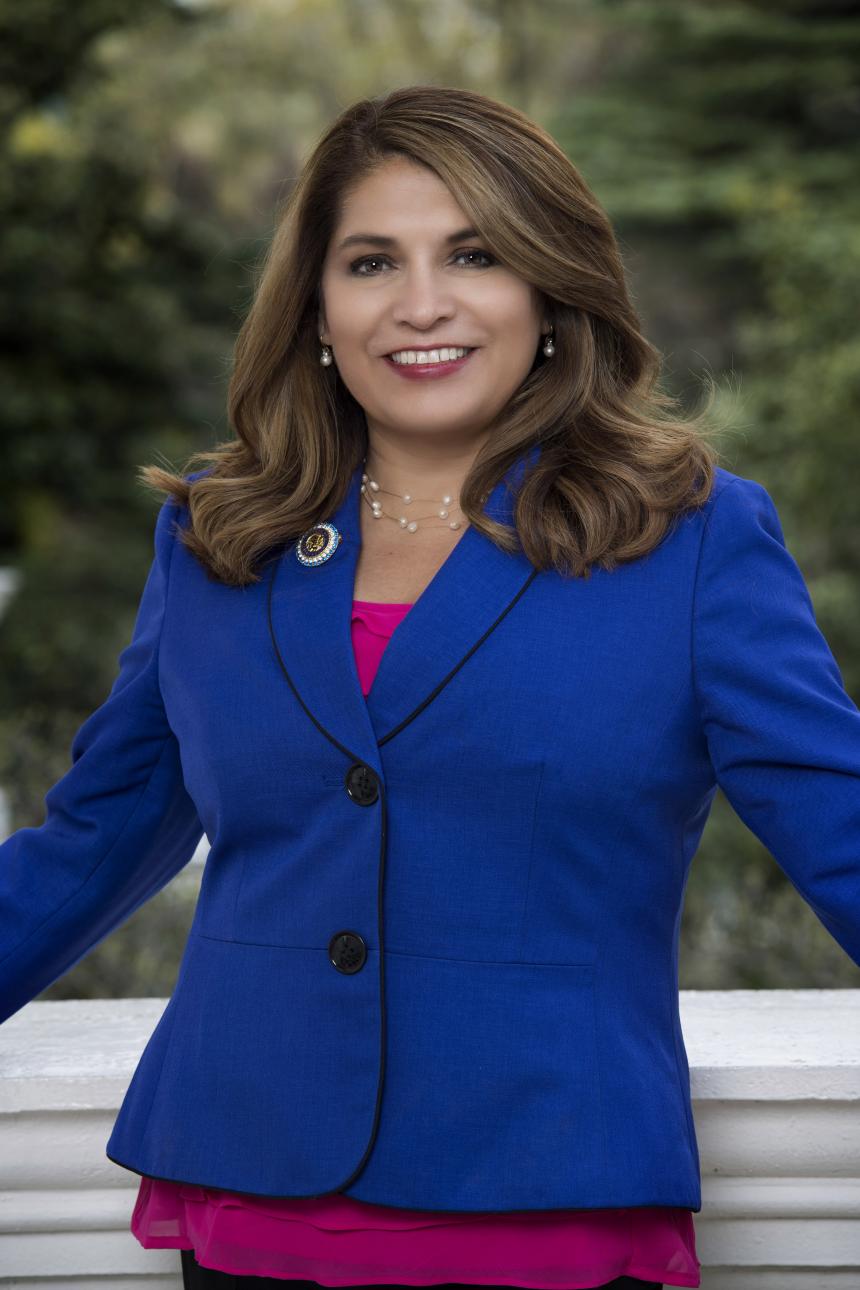
D
California Assembly
·
District 67
Asm. Sharon Quirk-Silva
Total votes
25,250
all sessions
Attendance
94%
1,303 missed
Near the chamber average
With party
98%
of cast votes
Higher than 76% of chamber peers
Bipartisan score
1%
crosses aisle rarely
Lower than 81% of chamber peers
Sponsored
2,398
bills & resolutions
Near the chamber average
Committees
15
assignments
2,398 bills and resolutions
Sponsored bills
Total
2,398
Primary
286
Co-sponsor
2,112
This page
2,398
matching current filters
Passed Jan 18, 2024
1 co-sponsor
Passed Jan 16, 2024
0 co-sponsors
Controlled substances.
Existing law makes it a crime to possess for sale or purchase for purpose of sale, transport, import, sell, furnish, administer, give away, manufacture, compound, convert, produce, derive, process, or prepare various controlled substances, including, among others, fentanyl, peyote, and various other opiates and narcotics. This bill, Alexandra's Law, would require the court to advise a person who is convicted of, or who pleads guilty or no contest to, the above crimes, as specified, of the danger of selling or administering illicit drugs and counterfeit pills and that, if a person dies as a result of that action, the defendant can be charged with homicide. The bill would require the court to read the advisory statement in a case in which the defendant exchanged a controlled substance containing fentanyl or its analogs for anything else of value, as specified. The bill would require the advisory statement to be included in a plea form, if used, and specified on the record. The bill would require that the fact the advisory was given be recorded in the abstract of conviction and would prohibit the advisement from being used as evidence in the prosecution of a minor in juvenile court.
died Nov 29, 2023
1 co-sponsor
Minor league baseball players.
Existing law provides that 8 hours of labor constitute a day's work unless it is otherwise expressly stipulated in a collective bargaining agreement, and requires that any work in excess of specified hours in one workday or one workweek be compensated at a rate higher than the regular rate of pay for the employee, as specified. Existing law authorizes, upon the proposal of an employer, employees of an employer to adopt a regularly scheduled alternative workweek that authorizes work by the affected employees for no longer than 10 hours per day within a 40-hour workweek without the payment to the affected employees of an overtime rate of compensation, as specified. Existing law prohibits an employer from employing an employee for a work period of more than 5 hours per day without providing the employee with a meal period, as specified, but, notwithstanding these provisions, existing law authorizes the Industrial Welfare Commission to adopt a working condition order permitting a meal period to commence after 6 hours of work if specified conditions are met. Under existing law, the Industrial Welfare Commission issues wage orders that regulates wages, hours, and working conditions in various occupations, including Wage Order No. 10-2001, which regulates the amusement and recreation industry. This bill would provide that these provisions do not apply to a person who is covered by a contract to play baseball at the minor league level with a labor organization that has at least 10 years of experience representing baseball players and who is compensated pursuant to the terms of a valid collective bargaining agreement that expressly provides for the wages, hours of work, working conditions of employees, payment for time worked during the off-season and spring training, and final and binding arbitration of disputes. The bill would require the Department of Industrial Relations to amend and republish Wage Order No. 10-2001 to provide that specified provisions of the wage order do not apply to a person subject to these provisions, as specified. Existing law requires an employer, semimonthly or at the time of payment of wages, to furnish an employee an accurate, itemized, written statement containing specified information regarding the amounts earned, hours worked, and the employee's identity, among other things, subject to certain variations. Existing law provides that an itemized wage statement furnished by an employer pursuant to these provisions is not required to show total hours worked by the employee if, among other things, the employee is exempt from the payment of minimum wage and overtime under specified law. This bill would provide that an itemized wage statement furnished by an employer pursuant to these provisions is not required to show total hours worked by an employee if the employee is exempt from the payment of minimum wage and overtime under the bill's provisions described above. Existing law, the Administrative Procedure Act, governs, among other things, the procedures for the adoption, amendment, or repeal of regulations by state agencies. Existing law also describes procedures for the promulgation of regulations by the Industrial Welfare Commission. This bill would exempt these provisions from the rulemaking procedures described above. Existing constitutional provisions require that a statute that limits the right of access to the meetings of public bodies or the writings of public officials and agencies be adopted with findings demonstrating the interest protected by the limitation and the need for protecting that interest. This bill would make legislative findings to that effect. This bill would declare that it is to take effect immediately as an urgency statute.
Signed into law Oct 13, 2023
1 co-sponsor
Pupil health: opioid overdose prevention and treatment: Melanie's Law.
(1) Existing law authorizes a public or private elementary or secondary school to determine whether or not to make emergency naloxone hydrochloride or another opioid antagonist and trained personnel available at its school, and to designate one or more volunteers to receive related training to address an opioid overdose, as specified. This bill would state the Legislature's encouragement of county offices of education to establish a County Working Group on Fentanyl Education in Schools, as provided, for the purposes of outreach, building awareness, and collaborating with local health agencies regarding fentanyl overdoses. The bill would require the State Department of Education to curate and maintain on its internet website, among other things, informational materials containing awareness and safety advice, for school staff, pupils, and parents or guardians of pupils, on how to prevent an opioid overdose. (2) Under existing law, each school district and county office of education is responsible for the overall development of a comprehensive school safety plan for each of its schools operating kindergarten or any of grades 1 to 12, inclusive, in cooperation with certain local entities. Existing law requires that the plan identify appropriate strategies and programs that will provide or maintain a high level of school safety and address the school's procedures for complying with existing laws related to school safety. Existing law requires a petition to establish a charter school to include, among other things, a reasonably comprehensive description of the procedures that the charter school will follow to ensure the health and safety of pupils and staff, including requiring the development and annual update of a school safety plan that includes certain safety topics and procedures. This bill would additionally require a comprehensive school safety plan, and the school safety plan of a charter school, for a school serving pupils in any of grades 7 to 12, inclusive, to include the development of a protocol in the event a pupil is suffering or is reasonably believed to be suffering from an opioid overdose. By creating new duties for local educational agencies, the bill would impose a state-mandated local program. (3) Existing law states the intent of the Legislature that alternatives to suspension or expulsion be imposed against a pupil who is truant, tardy, or otherwise absent from school activities. Existing law further states legislative intent that the Multi-Tiered System of Supports, which includes restorative justice practices, among other things, may be used to help pupils, as specified. This bill would state the intent of the Legislature that a school use alternatives to a referral of a pupil to a law enforcement agency in response to an incident involving the pupil's misuse of an opioid, to the extent not in conflict with any other law requiring that referral. The bill would state legislative intent that the above-described Multi-Tiered System of Supports may be used to achieve these alternatives. (4) This bill would incorporate additional changes to Section 32282 of the Education Code proposed by SB 323 and SB 671 to be operative only if this bill and either or both of those bills are enacted and this bill is enacted last. This bill would incorporate additional changes to Section 47605 of the Education Code proposed by AB 1604 and SB 671 to be operative only if this bill and either or both of those bills are enacted and this bill is enacted last. This bill would incorporate additional changes to Section 47605.6 of the Education Code proposed by AB 1604 and SB 671 to be operative only if this bill and either or both of those bills are enacted and this bill is enacted last. (5) The California Constitution requires the state to reimburse local agencies and school districts for certain costs mandated by the state. Statutory provisions establish procedures for making that reimbursement. This bill would provide that, if the Commission on State Mandates determines that the bill contains costs mandated by the state, reimbursement for those costs shall be made pursuant to the statutory provisions noted above.
Signed into law Oct 13, 2023
1 co-sponsor
School districts: budgets: public hearings: notice.
Existing law requires the governing board of each school district to hold a public hearing on the proposed budget of the school district in a school district facility, or some other place conveniently accessible to the residents of the school district, as specified. Existing law requires notification of the dates and location or locations at which the proposed budget may be inspected by the public, and the date, time, and location of the public hearing on the proposed budget, to be published by the county superintendent of schools in a newspaper of general circulation in the school district or, if there is no newspaper of general circulation in the school district, in any newspaper of general circulation in the county, at least 3 days before the availability of the proposed budget for public inspection. This bill, on January 1, 2027, would repeal the requirement to publish that information in a newspaper of general circulation and instead require the information to be posted prominently on the homepage of the internet website of the school district at least 3 days before the availability of the proposed budget for public inspection. The bill would require each county superintendent of schools to verify the posting or publishing requirement, as applicable, is met for all school districts in their jurisdiction. By imposing additional duties on local educational agency officials, the bill would impose a state-mandated local program. The bill would require the State Department of Education to select 3 school districts that agree to provide information to the department regarding how the school district communicates with the school community within the school district, as provided. The bill would require the participating school districts to provide specified information to the department on or before December 31, 2024, on or before December 31, 2025, and on or before December 31, 2026. The California Constitution requires the state to reimburse local agencies and school districts for certain costs mandated by the state. Statutory provisions establish procedures for making that reimbursement. This bill would provide that, if the Commission on State Mandates determines that the bill contains costs mandated by the state, reimbursement for those costs shall be made pursuant to the statutory provisions noted above.
Signed into law Oct 13, 2023
1 co-sponsor
Pupil placement: special education: foster children: nonpublic, nonsectarian schools or agencies: school of origin.
Existing law requires a local educational agency serving a foster child to allow the foster child to remain at the child's school of origin upon the initial detention or placement, any subsequent change in placement, the termination of the court's jurisdiction, or pending resolution of a dispute regarding school of origin placement, as provided. Existing law defines "school of origin" as the school that the foster child attended when permanently housed or the school in which the foster child was last enrolled, except as specified. Existing law sets forth a method for providing special education and related services to pupils who are individuals with exceptional needs, as defined. Existing law permits, under certain circumstances, contracts to be entered into for the provision of those services by nonpublic, nonsectarian schools or agencies, as defined. Existing law authorizes a master contract for special education and related services provided by a nonpublic, nonsectarian school or agency only if the school or agency has been certified as meeting specified standards. Existing law sets forth the certification process and procedures for the nonpublic, nonsectarian schools or agencies that seek certification from the Superintendent of Public Instruction. This bill would, for a foster child who is an individual with exceptional needs, define "school of origin" as also including a placement in a certified nonpublic, nonsectarian school, as provided. The bill would require, commencing with the 2024–25 school year, a nonpublic, nonsectarian school or agency seeking certification or already certified to agree in writing, for any foster child it serves, to be designated as the school of origin of the foster child and to allow the foster child to continue their education in the school, as specified. This bill would incorporate additional changes to Section 48853.5 of the Education Code proposed by AB 373 to be operative only if this bill and AB 373 are enacted and this bill is enacted last.
Signed into law Oct 13, 2023
0 co-sponsors
Pupil instruction: handwriting.
(1) Existing law requires the adopted course of study for grades 1 to 6, inclusive, to include certain areas of study, including, among others, English, mathematics, social sciences, science, and visual and performing arts, as specified. With respect to the study of English, existing law requires that instruction to include knowledge of, and appreciation for, literature and the language, as well as the skills of speaking, reading, listening, spelling, handwriting, and composition. This bill would require handwriting instruction for grades 1 to 6, inclusive, to include instruction in cursive or joined italics in the appropriate grade levels. To the extent that this bill would impose new duties on local educational agencies, it would constitute a state-mandated local program. (2) This bill would incorporate additional changes to Section 51210 of the Education Code proposed by AB 285 and SB 509 to be operative only if this bill and either or both of those bills are enacted and this bill is enacted last. (3) The California Constitution requires the state to reimburse local agencies and school districts for certain costs mandated by the state. Statutory provisions establish procedures for making that reimbursement. This bill would provide that, if the Commission on State Mandates determines that the bill contains costs mandated by the state, reimbursement for those costs shall be made pursuant to the statutory provisions noted above.
Signed into law Oct 13, 2023
0 co-sponsors
Planning and Zoning Law: single-family residences: parking requirements.
The Planning and Zoning Law authorizes the legislative body of any county or city to adopt ordinances that regulate the use of buildings, structures, and land as between industry, business, residences, open space, and other purposes. This bill would prohibit a public agency, as defined, from increasing the minimum parking requirement that applies to a single-family residence as a condition of approval of a project to remodel, renovate, or add to a single-family residence, except as specified. By imposing additional duties on local officials, the bill would impose a state-mandated local program. The bill would include findings that changes proposed by this bill address a matter of statewide concern rather than a municipal affair and, therefore, apply to all cities, including charter cities. The California Constitution requires the state to reimburse local agencies and school districts for certain costs mandated by the state. Statutory provisions establish procedures for making that reimbursement. This bill would provide that no reimbursement is required by this act for a specified reason.
Signed into law Oct 11, 2023
0 co-sponsors
Ask Maddy
·
AI policy assistant
Ask Maddy about Sharon Quirk-Silva
Scope: CA
Hi! I can help you understand Sharon Quirk-Silva's legislative record. What would you like to know?
Try one of these
i
Maddy answers using official bill text and legislative records. Always verify before sharing.
Sources cited inline