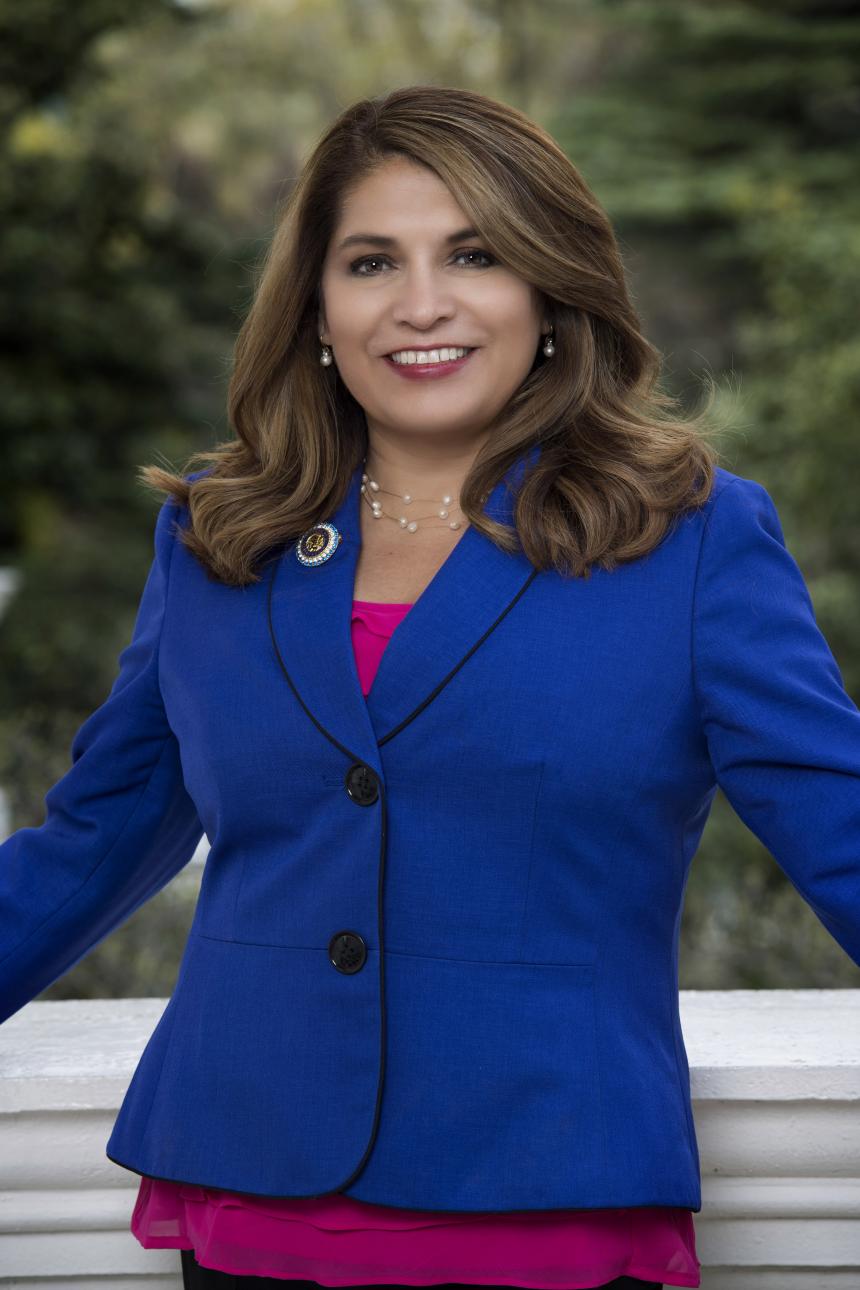
Photo of Sharon Quirk-Silva
D California Assembly · District 67

Asm. Sharon Quirk-Silva

Compare
Total votes
25,250
all sessions
Attendance
94%
1,303 missed
Near the chamber average
With party
98%
of cast votes
Higher than 76% of chamber peers
Bipartisan score
1%
crosses aisle rarely
Lower than 81% of chamber peers
Sponsored
2,398
bills & resolutions
Near the chamber average
Committees
15
assignments
2,398 bills and resolutions

Sponsored bills

Total
2,398
Primary
286
Co-sponsor
2,112
This page
2,398
matching current filters
Primary AB 1353
died · California Assembly · Lead sponsor
Housing.

The State Housing Law establishes statewide construction and occupancy standards for buildings used for human habitation. That law requires the building department of every city or county to enforce within its jurisdiction the provisions of the State Building Standards Code, the provisions of the State Housing Law, and specified other rules and regulations promulgated pursuant to that law. This bill would make nonsubstantive changes to the provision naming the State Housing Law.

died Feb 1, 2024 0 co-sponsors
Co-sponsor SB 431
In committee · California Senate · Co-sponsor
Grandparents: caregivers support.

Existing law establishes the California Department of Aging within the California Health and Human Services Agency to provide leadership to the area agencies on aging in developing systems of home- and community-based services that maintain individuals in their own homes or least restrictive homelike environments. Existing law requires the Secretary of California Health and Human Services, in coordination with the Director of the California Department of Aging, to lead the development and implementation of the Master Plan for Aging established pursuant to Executive Order N-14-19. Existing law also establishes the grounds for removal of a dependent child from the custody of the dependent child's parent or guardian and establishes procedures to determine the placement of a dependent child. Existing law requires foster care placement, if possible, to be made in the home of a relative unless the placement would not be in the best interest of the child. Existing law establishes the Kinship Guardianship Assistance Payment Program (Kin-GAP) , which provides aid on behalf of eligible children who are placed in the home of a relative guardian, and the Kinship Support Services Program to provide community-based support services to relative caregivers and children placed in their homes. This bill would require the California Department of Aging, in consultation with the Department of Justice and the State Department of Social Services, to conduct a study to examine the issues faced by grandparents who are 60 years of age or older and are primary caregivers for their grandchildren, and requires the California Department of Aging to report the findings of the study to the Legislature.

In committee Feb 1, 2024 1 co-sponsor
Primary AB 1662
died · California Assembly · Lead sponsor
State Department of Public Health.

Existing law establishes the State Department of Public Health, and transferred the responsibility for specified health programs from the former State Department of Health Services to the State Department of Public Health, as prescribed. This bill would make technical, nonsubstantive changes to that provision.

died Feb 1, 2024 0 co-sponsors
Primary AB 1669
Failed · California Assembly · Lead sponsor
California Historically Significant Commercial District Act.

Existing law establishes the California Business Investment Service Program within the Governor's Office of Business and Economic Development (GO-Biz) for the purpose of serving employers, corporate executives, business owners, investors, and site location consultants who are considering California for business investment and expansion. Existing law provides that the program is under the authority of the director, who is required, among other things, to work cooperatively with local, regional, federal, and other state public and private marketing institutions, economic developers, workforce training partners, and trade organizations in attracting, retaining, and helping businesses and investments grow and be successful in California. This bill, upon appropriation by the Legislature, would establish the California Historically Significant District Program for the purpose of revitalizing and maintaining historically and culturally significant commercial corridors throughout the state by funding technical assistance, training, and other activities that increase the capacity of revitalization entities to provide business assistance programs and services that meet the unique needs of small businesses that operate within historic commercial districts. The bill would provide that the program be administered by the California Business Investment Service Unit within GO-Biz, in consultation with the Community and Placed-Based Solutions Unit. The bill would require the program to award grants to eligible grantees, as defined, who submit an application meeting certain requirements, including, among other things, documentation that the applicant has the experience and capacity to provide technical assistance, training, and other services that increase the capacity of revitalization entities to use place-based tools to improve the entrepreneurial ecosystem to meet the needs of small businesses that operate within historic districts. The bill would require training and education topics and uses of the grant by the grantee to include, but not be limited to, among other things, onsite assessment and training of revitalization entities to develop capacity for implementation of commercial district revitalization plans. The bill would require that grant funds be used by the grantee consistent with certain requirements, including that at least 40% of the total amount of the grant be used by the grantee to provide capacity-building programs and services to eligible historic commercial corridor revitalization entities throughout the state, as specified. The bill would require a grantee, as a condition of receiving the grant, to report on the performance annually. The bill would require that this reporting include, among other things, outcomes from the training and technical assistance provided, including, among other things, the number of training events. The bill would also require a subgrantee to report on program performance quarterly and annually. The bill would require this reporting to include, but not be limited to, quarterly outcomes from the subgrants provided, including, among other things, the number of businesses reached in person. This bill would require a grantee, 6 months following the completion of the grant, to submit a final outcomes report which includes, among other things, a detailed narrative description of how the funds awarded were used to expand the capacity of the statewide network of historic commercial corridor revitalization entities and to help underserved business owners and entrepreneurs within those districts to adapt new, place-based business strategies. This bill would require a grantee and any subgrantee to provide matching funds of at least one dollar for each dollar of state funds received. The bill would authorize up to 50% of the match to be in the form of in-kind services or resources. The bill would require that grant funding be available to the grantee for a 3-year period. The bill would authorize up to 5% of any program appropriation to be used by the Governor's Office of Business and Economic Development for administrative costs, including reporting. The bill would authorize up to 5% of a grant to be used by the grantee for administrative costs related to the organization of the training, technical assistance, and program delivery, including travel and technology. The bill would authorize the Director of GO-Biz to assign one or more of the duties or authorities provided by this bill to another unit within the office or another state agency. This bill would also make related findings and declarations.

Failed Feb 1, 2024 0 co-sponsors
Co-sponsor AB 550
Failed · California Assembly · Co-sponsor
Homelessness: point-in-time count results: meetings.

Existing law, the Planning and Zoning Law, requires each city, county, and city and county to prepare and adopt a general plan that contains certain mandatory elements, including a housing element. Existing law requires the housing element to identify the existing and projected housing needs of all economic segments of the community. Existing federal law requires a continuum of care, a group organized under the federal McKinney-Vento Homeless Assistance Act, to develop a plan that includes planning for and conducting, at least biennially, a point-in-time count of homeless persons within the geographic area. Existing law requires that information from the point-in-time count be used to, among other things, allocate funding for the Homeless Emergency Aid program and Homeless Housing, Assistance, and Prevention program. This bill would require a city, county, and city and county, within 60 days after the local continuum of care releases the results of a point-in-time count for a city, county, or city and county's jurisdiction, to, among other things, agendize the point-in-time count results at a meeting of the city, county, or city and county and present the steps the city, county, or city and county is taking to prevent and end homelessness, including, but not limited to, consideration of specified actions. By imposing new duties on local agencies, this bill would impose a state-mandated local program. The bill would include findings that changes proposed by this bill address a matter of statewide concern rather than a municipal affair and, therefore, apply to all cities, including charter cities. The California Constitution requires the state to reimburse local agencies and school districts for certain costs mandated by the state. Statutory provisions establish procedures for making that reimbursement. This bill would provide that, if the Commission on State Mandates determines that the bill contains costs mandated by the state, reimbursement for those costs shall be made pursuant to the statutory provisions noted above.

Failed Feb 1, 2024 1 co-sponsor
Primary AB 1477
Failed · California Assembly · Lead sponsor
Alcohol and drug treatment programs: licensing and certification fee.

Existing law makes the State Department of Health Care Services responsible for administering prevention, treatment, and recovery programs for adult alcoholism and drug abuse. Existing law requires the department to charge a fee to all programs for licensure or certification by the department and to submit any proposed new fees or fee changes to the Legislature for approval, as specified. Existing law prohibits new fees or fee changes from being implemented without legislative approval. This bill would require all fees for licensing of residential treatment facilities and certification of treatment programs that provide addiction treatment services to be at the rate last published in 2022. The bill would leave that rate in effect until January 1, 2031, or until deaths related to opioid overdose reported by the California Overdose Surveillance Dashboard have declined by 50%, whichever is first. The bill would then require that fee increases continue until licensing and certification programs are self-sufficient, but would prohibit the increase from exceeding 15% in a single year.

Failed Feb 1, 2024 0 co-sponsors
Primary AB 1384
died · California Assembly · Lead sponsor
Civil rights.

Existing law declares that any provision in a written instrument relating to real property that purports to forbid or restrict the conveyance, encumbrance, leasing, or mortgaging of that real property to any person because of their sex, race, color, religion, ancestry, national origin, disability, medical condition, genetic information, marital status, sexual orientation, citizenship, primary language, or immigration status, is void. This bill would make nonsubstantive changes to those provisions.

died Feb 1, 2024 0 co-sponsors
Co-sponsor AB 1421
Failed · California Assembly · Co-sponsor
The San Diego Regional Film Financial Incentive Pilot Program.

Existing law establishes the County of San Diego and various offices within the county for administration of the county government. The Personal Income Tax Law and the Corporation Tax Law allow various credits against the taxes imposed by those laws, including motion picture credits for taxable years beginning on or after January 1, 2020, to be allocated by the California Film Commission on or after July 1, 2020, and before July 1, 2025. This bill would establish the San Diego Regional Film Financial Incentive Pilot Program to be administered by the San Diego Regional Film Financial Incentive Pilot Program Office within the County of San Diego for purposes of awarding grants, beginning on July 1, 2024, to qualified projects that, among other things, have a production budget with at least 70% of expenditures to laborers, retailers, or suppliers who are permanent residents of the County of San Diego. The bill would require an applicant to submit a specified application to the office, and would require the office to award grants in order of priority based on the ratio of the total moneys expected to be paid by the applicant as wages to laborers who are permanent residents of the County of San Diego divided by the total production budget. The bill would appropriate $25,000,000 to the County of San Diego over a 3-year period for purposes of the program, including administrative costs. The bill would require the office to submit, on or before January 1, 2027, a report to the Legislature and the California Film Commission on the results of the program. By placing new requirements on the County of San Diego, the bill would impose a state-mandated local program. The bill would repeal these provisions on January 1, 2028. This bill would make legislative findings and declarations as to the necessity of a special statute for the County of San Diego. The California Constitution requires the state to reimburse local agencies and school districts for certain costs mandated by the state. Statutory provisions establish procedures for making that reimbursement. This bill would provide that, if the Commission on State Mandates determines that the bill contains costs mandated by the state, reimbursement for those costs shall be made pursuant to the statutory provisions noted above.

Failed Feb 1, 2024 1 co-sponsor
Co-sponsor AB 29
Failed · California Assembly · Co-sponsor
Firearms: California Do Not Sell List.

Existing law makes possession of a firearm by certain classes of persons, including a convicted felon, a person convicted of specified misdemeanors, a person has been found mentally incompetent to stand trial, a person has been found not guilty of specified crimes by reason of insanity, or a person has been placed under conservatorship, a crime. Existing law additionally makes it a crime to sell or give possession of a firearm to these classes of persons prohibited from owning a firearm. Existing law requires the Department of Justice, upon submission of firearm purchaser information by a licensed firearm dealer, to examine its records to determine whether a potential firearm purchaser is prohibited by state of federal law from possessing, receiving, owning, or purchasing a firearm. Existing law requires the department to participate in the National Instant Criminal Background Check System. This bill would require the Department of Justice to develop and launch a secure Internet-based platform to allow a person who resides in California to voluntarily add their own name to the California Do Not Sell List. The bill would require the department to ensure that information on the list is uploaded and reflected in the National Instant Criminal Background Check System. The bill would make it a crime, punishable as a misdemeanor, to transfer a firearm to a person who is validly registered on the California Do Not Sell List. By creating a new crime, this bill would impose a state-mandated local program. This bill would allow a person, after a specified period of time, to request removal from the list. The bill would require the State Department of Public Health to create and distribute informational materials about the California Do Not Sell List to general acute care hospitals and acute psychiatric hospitals. The bill would specify that a person presenting in a general acute care hospital or acute psychiatric hospital who is at a substantially elevated risk of suicide should be presented with these informational materials. The bill would specify that any suicide hotline maintained or operated by an entity funded in whole or in part by the state should generally inform callers on how to access the California Do Not Sell List Internet-based platform. The bill would provide that its provisions are severable. The California Constitution requires the state to reimburse local agencies and school districts for certain costs mandated by the state. Statutory provisions establish procedures for making that reimbursement. This bill would provide that no reimbursement is required by this act for a specified reason.

Failed Feb 1, 2024 1 co-sponsor
Primary AB 1509
Failed · California Assembly · Lead sponsor
Pupil instruction: State Board of Education: exam and course programs.

(1) Existing law appropriates, for the 2021–22 fiscal year, funds from the General Fund to the Superintendent for allocation for the A–G Completion Improvement Grant Program and makes these funds available for expenditure or encumbrance through the 2025–26 fiscal year. Existing law requires grants awarded by that program to be used for activities that directly support pupil access to, and successful completion of, the A–G course requirements, including, but not limited to, paying Advanced Placement and International Baccalaureate fees for unduplicated pupils. This bill would authorize the State Board of Education, for purposes of authorized A–G Completion Improvement Grant fund activities, to expressly approve fees for unduplicated pupils for additional exam programs, and would require the state board to begin to develop the approval criteria, as provided. By expanding the purposes for which appropriated funds may be spent, the bill would make an appropriation. (2) Existing law authorizes a school district to evaluate a principal annually for the principal's first and 2nd year of employment as a new principal and authorizes additional evaluations, as specified. Existing law authorizes the criteria for school principal evaluations to be based upon the California Professional Standards for Educational Leaders and to include evidence of, among other things, pupil academic growth. Existing law authorizes pupil academic growth to be evaluated pursuant to local and state academic assessments, including, among others, state standardized assessments and performance assessments. This bill would authorize the state board to expressly authorize additional exams that may be used to measure pupil academic growth for a principal evaluation, and would require the state board to begin to develop the approval criteria, as provided. (3) Existing law authorizes the governing board of a school district to provide access to a comprehensive educational counseling program for all pupils enrolled in the school district. For schools that enroll pupils in grades 6 to 12, inclusive, existing law defines educational counseling to include, among other things, counseling to encourage participation in advanced placement and international baccalaureate programs. This bill would authorize the state board to approve additional exam programs that an educational counseling program is expressly authorized to encourage participation in, and would require the state board to begin to develop the approval criteria, as provided. (4) Existing law requires the governing board of each school district and county board of education to adopt a local control and accountability plan and to update its respective local control and accountability plan before July 1 of each year. Existing law requires a local control and accountability plan to include, among other things, a description of the annual goals to be achieved for each state priority, as specified, for all pupils and certain subgroups of pupils. The state's delineated priorities include, among others, pupil achievement as measured by, and as applicable, among other things, the percentage of pupils who have passed an advanced placement examination with a score of 3 or higher. This bill would authorize the state board to approve additional examinations, and their respective scores, for purposes of measuring pupil achievement, and would require the state board to begin to develop the approval criteria, as provided. To the extent the state board's approval of additional examinations and scores would impose additional duties on school districts and county boards of education in regard to local control and accountability plans, the bill would impose a state-mandated local program. (5) Existing law establishes the Golden State Pathways Program to promote pathways in high-wage, high-skill, high-growth areas, including technology, health care, education, and climate-related fields that, among other things, allow pupils to advance seamlessly from high school to college and career and provide the workforce needed for economic growth. Existing law appropriates $500,000,000 from the General Fund to the State Department of Education to competitively award grant funds to school districts, charter schools, county offices of education, or regional occupational centers or programs operated by a joint powers authority or county office of education for purposes of the program, and makes these funds available for encumbrance until June 30, 2029. Existing law requires Golden State Pathways Program recipients to commit to providing participating pupils with, among other commitments, the opportunity to earn at least 12 postsecondary credits that are applicable toward the completion of a degree, certificate, or credential through various methods. This bill would include additional course programs approved by the state board as one of methods pupils can use to earn those postsecondary credits, and would require the state board to begin to develop the approval criteria, as provided. By expanding the purposes for which appropriated funds may be spent, the bill would make an appropriation. (6) Existing law requires an applicant for the California Career Technical Education Incentive Grant Program to demonstrate, among other requirements, that the applicant's career technical education program offers high quality curriculum and instruction that offers the opportunity for participants to earn postsecondary credits through Advanced Placement courses and International Baccalaureate courses or by formal agreement with a postsecondary partner to provide dual enrollment opportunities. This bill would authorize the state board to approve additional course programs to demonstrate that the applicant has met the above-described requirement, and would require the state board to begin to develop the approval criteria, as provided. (7) The California Constitution requires the state to reimburse local agencies and school districts for certain costs mandated by the state. Statutory provisions establish procedures for making that reimbursement. This bill would provide that, if the Commission on State Mandates determines that the bill contains costs mandated by the state, reimbursement for those costs shall be made pursuant to the statutory provisions noted above. (8) Funds appropriated by this bill would be applied toward the minimum funding requirements for school districts and community college districts imposed by Section 8 of Article XVI of the California Constitution.


Failed Feb 1, 2024 0 co-sponsors
Showing 651 to 660 of 2,398 bills
Previous 1 … 65 66 67 … 240 Next