

The Personal Income Tax Law authorizes various credits against the taxes imposed by that law, including the California Earned Income Tax Credit (CalEITC) , the Young Child Tax Credit (YCTC) , and the Foster Youth Tax Credit (FYTC) . Beginning on or after January 1, 2020, CalEITC is available to any eligible individuals using an individual taxpayer identification number (ITIN) . Existing federal income tax law authorizes a refundable earned income tax credit (federal EITC) for certain low-income individuals who have earned income and meet certain other requirements. This bill would enact the Free Tax Prep and Community Engagement Act, which would establish the California Earned Income Tax Credit (CalEITC) Outreach, Education, and Free Tax Assistance Grant Program. Upon appropriation by the Legislature, the bill would require the Franchise Tax Board to allocate grants to qualified nonprofit community-based organizations or local government agencies to increase the number of eligible households claiming the state and federal Earned Income Tax Credit, the federal Child Tax Credit, the Young Child Tax Credit, and the Foster Youth Tax Credit, and to increase awareness of ITIN tax status eligibility. The bill would authorize the Franchise Tax Board to administratively partner with the Department of Community Services and Development to administer the program. The bill would establish the California Earned Income Tax Credit (CalEITC) Outreach, Education, and Free Tax Assistance Grant Fund in the State Treasury for these purposes.
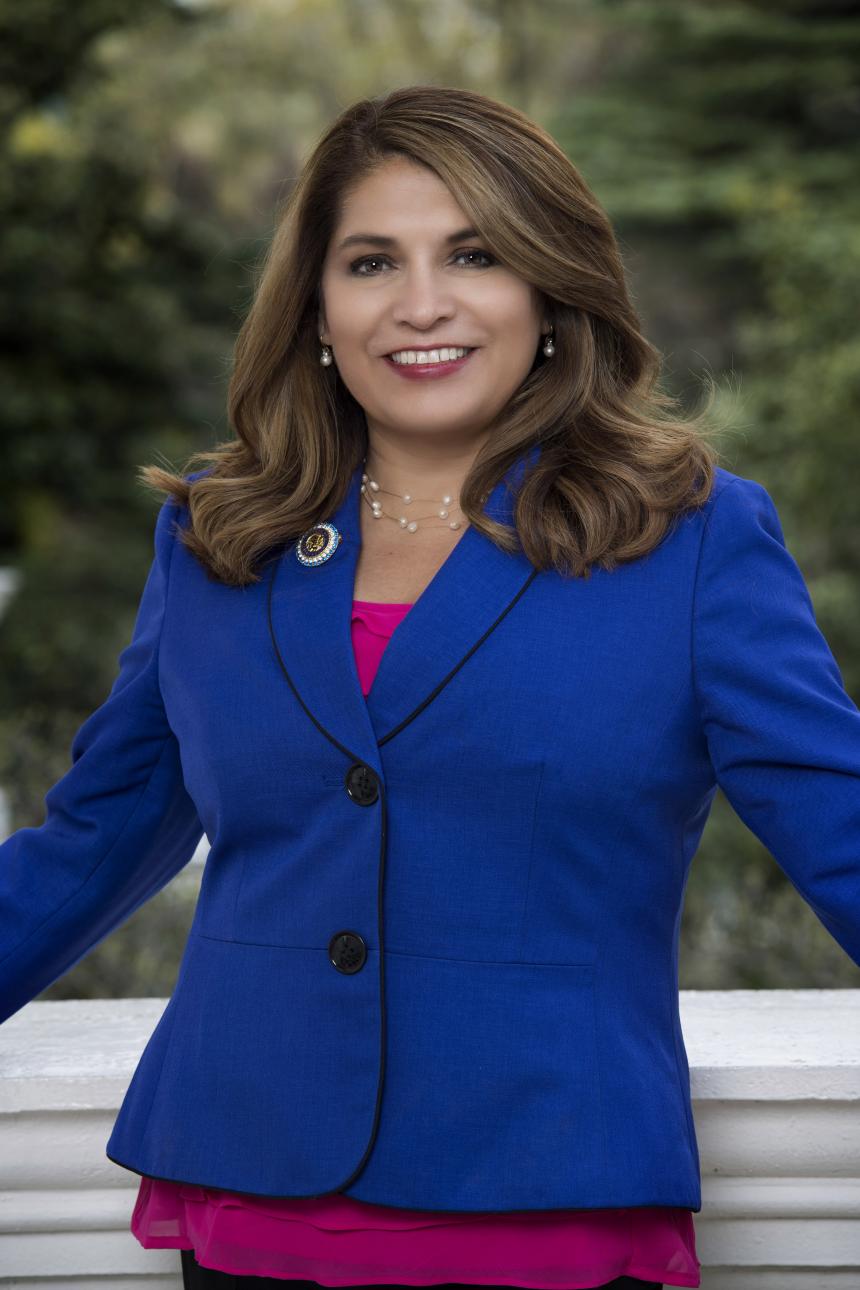
Asm. Sharon Quirk-Silva
Sponsored bills
Existing law establishes the California Community Colleges, under the administration of the Board of Governors of the California Community Colleges, the California State University, under the administration of the Trustees of the California State University, and the University of California, under the administration of the Regents of the University of California, as segments of public postsecondary education in this state. Existing law establishes community college districts, locations of the California State University, and campuses of the University of California throughout the state. Existing law requires each California Community College to designate a staff person as the basic needs coordinator to, among other things, act as a broker in identifying, supporting, and linking students to on- and off-campus housing, food, mental health, and other basic needs services and resources. Existing law establishes the State Department of Social Services and requires the department and the counties to administer public social services programs. Existing law requires a county human services agency to designate at least one employee as a staff liaison to serve as a point of contact for academic counselors and other professional staff at a campus of an institution of public higher education located within the county. Existing law requires a county human services agency, with input from the public institutions of higher learning in the county, to develop protocols for engagement between the agency and a campus of an institution of public higher education located within the county and encourages those entities to consult with specified stakeholders in the development of those protocols. This bill would require a county human services agency to additionally receive input from basic needs directors and basic needs coordinators, as specified, when developing the above-described protocols for engagement between the county human services agency and institutions of public higher education. The bill would require the department, in consultation with staff liaisons and basic needs directors or basic needs coordinators, to develop training on topics related to determining student eligibility for public social services, as specified. The bill would require the department to facilitate that training, as specified. The bill would require the department to convene a workgroup that includes all 58 county staff liaisons and representatives from the segments of postsecondary education, as specified. The bill would require the department, in collaboration with the workgroup, to (1) discuss enrollment trends in public social services programs and (2) identify barriers to enrollment and action to resolve those barriers. By imposing additional duties on counties, this bill would impose a state-mandated local program. This bill would require the department, on or before May 1, 2026, and every 3 years thereafter, to submit a report to the Legislature with findings and recommendations relating to enrollment success trends and services offered by the department that may be available to students attending a campus of an institution of public higher education. The California Constitution requires the state to reimburse local agencies and school districts for certain costs mandated by the state. Statutory provisions establish procedures for making that reimbursement. This bill would provide that, if the Commission on State Mandates determines that the bill contains costs mandated by the state, reimbursement for those costs shall be made pursuant to the statutory provisions noted above.
Existing law requires the governing board of a school district maintaining one or more high schools to include within its membership one or more pupil members if pupils submit a petition for pupil representation to the governing board, as provided. Existing law requires the pupil member to be chosen by the pupils enrolled in the high school or high schools of the school district in accordance with procedures prescribed by the governing board of the school district. Existing law requires the pupil member to have preferential voting rights. Existing law prohibits a pupil member from being included in determining the vote required to carry any measure before the governing board. This bill would require a city or county, as described, to establish a youth commission in response to petitions from youth 13 to 18 years of age, inclusive, residing in their jurisdiction, as specified. Because the bill would add to the duties of cities and counties to respond to petitions from youth, it would constitute a state-mandated local program. This bill would require the governing board of the city or county to prescribe the policies and procedures for the selection of members of the youth commissions and the rights and responsibilities of the youth commissions, subject to specified requirements. These requirements would include that, among other things, a youth commission member receive all open meeting materials presented to the regular members at the same time the materials are presented to the regular members, except for materials that pertain to closed session items. The bill would require a youth commission existing before January 1, 2025, to comply with the requirements of this act on or before January 1, 2027. The bill would also require the governing body of the city or county to require at least one governing body member to attend at least one youth commission meeting per month. The bill would include findings that changes proposed by this bill address a matter of statewide concern rather than a municipal affair and, therefore, apply to all cities, including charter cities. The California Constitution requires the state to reimburse local agencies and school districts for certain costs mandated by the state. Statutory provisions establish procedures for making that reimbursement. This bill would provide that, if the Commission on State Mandates determines that the bill contains costs mandated by the state, reimbursement for those costs shall be made pursuant to the statutory provisions noted above.
Existing law establishes the Department of Motor Vehicles, tasked with issuance and renewal of licenses to drivers. Existing law requires the department to prescribe and provide suitable forms of applications, certificates of ownership, registration cards, driver's licenses, and all other forms that are deemed necessary. This bill would, by January 1, 2026, require the department, in consultation with relevant stakeholders, to develop a Blue Envelope Program. Under the program, the bill would require the blue envelope to contain specified information for requesters with a condition or disability, as specified. The bill would also authorize others, including a parent or legal guardian of a passenger with a disability, to request a blue envelope.
Existing law defines "disabled veteran" for purposes of the Vehicle Code as, among other things, a person who, as a result of injury or disease suffered while on active service with the Armed Forces of the United States, has a disability that has been rated at 100% by the Department of Veterans Affairs. Existing law also defines a "disabled veteran" as a veteran who is unable to move without the aid of an assistant device. This bill would instead define a disabled veteran as a veteran who cannot walk without the use of an assistant device. The bill would expand the definition of "disabled veteran" to include a veteran who cannot walk 200 feet without stopping to rest, a veteran who is severely limited in the ability to walk because of an arthritic, neurological, or orthopedic condition, or a veteran who has visual acuity of 20/200 or less, among other conditions, as specified.
Existing law vests the Public Utilities Commission with regulatory authority over public utilities, including electrical corporations. Existing law authorizes the commission to adopt new, or expand existing, fixed charges, as defined, for the purpose of collecting a reasonable portion of the fixed costs of providing electrical service to residential customers. Under existing law, the commission may authorize fixed charges for any rate schedule applicable to a residential customer account. Existing law requires the commission, no later than July 1, 2024, to authorize a fixed charge for default residential rates. Existing law requires these fixed charges to be established on an income-graduated basis, with no fewer than 3 income thresholds, so that low-income ratepayers in each baseline territory would realize a lower average monthly bill without making any changes in usage. This bill would prohibit modifications to the amount of the income-graduated fixed charge from exceeding changes in inflation, as provided. The bill would make the provisions authorizing the income-graduated fixed charge inoperative on July 1, 2028. The bill, commencing July 1, 2028, would instead permit the commission to authorize fixed charges that, as of January 1, 2015, do not exceed $5 per residential customer account per month for low-income customers enrolled in the California Alternate Rates for Energy (CARE) program and that do not exceed $10 per residential customer account per month for customers not enrolled in the CARE program. The bill would authorize these maximum allowable fixed charges to be adjusted by no more than the annual percentage increase in the Consumer Price Index for the prior calendar year, beginning January 1, 2016. The bill would require the commission to adopt any modification to an existing fixed charge for the collection of a reasonable portion of the fixed costs of providing electrical service to residential customers in a stand-alone proceeding. The bill would prohibit a fixed charge from resulting in an increase to an electrical corporation's revenue requirement. The bill would require the commission, on or before July 1, 2027, but no sooner than 2 years after the adoption of the income-graduated fixed charge, to submit a public report to the relevant policy committees of both houses of the Legislature on the electrical corporations' implementation of the income-graduated fixed charge and other cost-saving options, as specified. Under existing law, a violation of the Public Utilities Act or any order, decision, rule, direction, demand, or requirement of the commission is a crime. Because the provisions of this bill would be a part of the act and therefore a violation of the bill's requirements or of a commission action implementing its requirements would be a crime, the bill would impose a state-mandated local program. The California Constitution requires the state to reimburse local agencies and school districts for certain costs mandated by the state. Statutory provisions establish procedures for making that reimbursement. This bill would provide that no reimbursement is required by this act for a specified reason.
Existing federal law, the Victims of Crime Act of 1984, creates the Crime Victims Fund and authorizes federal financial assistance to states for the purpose of supporting eligible crime victim assistance programs. Existing law creates various programs under the Office of Emergency Services related to crime prevention and education, including, among other things, programs concerning family violence prevention and domestic violence prevention. This bill would require the office to allocate funds, upon appropriation by the Legislature, to fill the gap in the federal Victims of Crime Act funding and to prioritize continuity and stability of crime victim services if the federal grant funding that is awarded to the office is 10% or more lower than the amount awarded in the prior year. The bill would require the office to regularly consult, collaborate with, and consider the recommendations regarding allocation of funding from the Victims of Crime Act Steering Committee.
Existing law authorizes a court to grant pretrial diversion to a defendant suffering from a mental disorder, on an accusatory pleading alleging the commission of a misdemeanor or felony offense, in order to allow the defendant to undergo mental health treatment. Existing law prohibits defendants charged with specified offenses, including murder, from being placed in this diversion program. This bill would add attempted murder to the list of charged offenses that prohibit a defendant from being placed in this diversion program.
Maddy summaryThis bill designates October 2024 as Menopause Awareness Month in California to highlight the health and societal impacts of menopause on women. It acknowledges that millions of women face symptoms that can affect their daily lives and work, noting that women of color are at higher risk for complications like premature menopause and heart disease. The resolution encourages the state to provide better health information and services to support women's well-being before, during, and after this transition. While the text outlines these goals, the bill itself is a formal recognition rather than a law that creates new funding or mandates specific programs.
Existing law vests the Public Utilities Commission with regulatory authority over public utilities, including electrical corporations. Existing law requires every electric utility, defined to include electrical corporations, local publicly owned electric utilities, and electrical cooperatives, to develop a standard contract or tariff for net energy metering, as defined, for generation by a renewable electrical generation facility, as defined, and to make this contract or tariff available to eligible customer-generators, as defined, upon request on a first-come-first-served basis until the time that the total rated generating capacity used by eligible customer-generators exceeds 5% of the electric utility's aggregate customer peak demand. Existing law requires the commission to have developed a 2nd standard contract or tariff for each large electrical corporation, as defined, to provide net energy metering to additional eligible customer-generators in the electrical corporation's service territory and imposes no limitation on the number of new eligible customer-generators entitled to receive service pursuant to this 2nd standard contract or tariff. Existing law authorizes the commission to revise the 2nd standard contract or tariff as appropriate. Pursuant to that authorization, the commission has instituted rulemakings and issued decisions relating to the 2nd standard contract or tariff. This bill would require the commission to conduct an independent cost-of-service analysis evaluating the standard contract or tariff developed by the commission in a specified decision.