

Existing law, the Veterinary Medicine Practice Act, establishes the Veterinary Medical Board within the Department of Consumer Affairs for the licensure and regulation of veterinarians and the practice of veterinary medicine. Under existing law, registered veterinary technicians are authorized to perform animal health care services on animals impounded by a state, county, city, or city and county agency pursuant to the order of a veterinarian licensed or authorized to practice in this state. Existing law makes a violation of the act a crime. This bill would authorize the order established by the veterinarian that authorizes a registered veterinary technician to perform animal health care services, as described, to include, among other things, information pertaining to time periods by which an impounded animal is required to be assessed at intake and monitored while in the custody of an agency, protocols to address the treatment of common medical conditions encountered in impounded animals, and communication requirements between the registered veterinary technician and the supervising veterinarian.
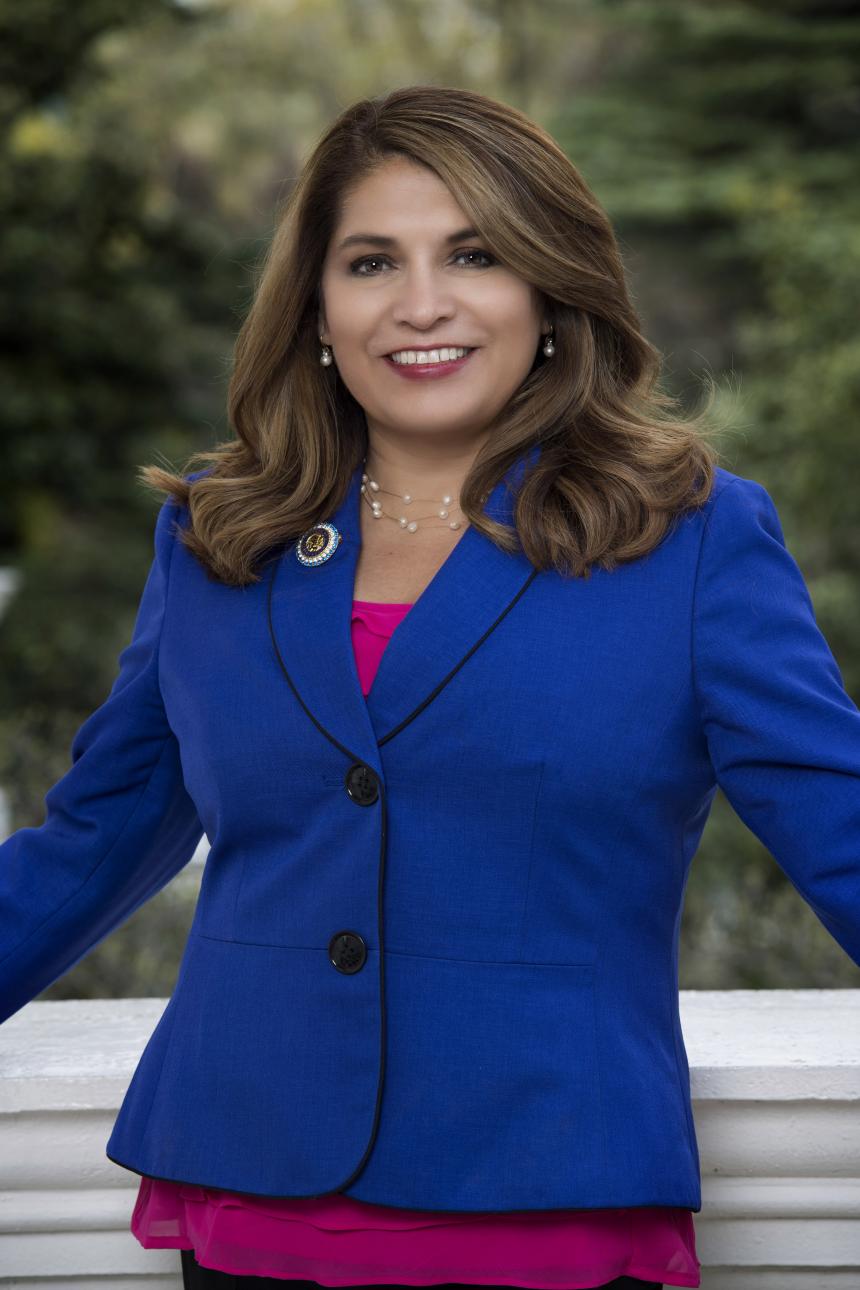
Asm. Sharon Quirk-Silva
Sponsored bills
Maddy summaryThis bill designates specific periods in 2024 as Boat People Awareness Week and Month to honor Vietnamese refugees who fled their country by sea after the Vietnam War. The resolution highlights the historical hardships these individuals faced, including dangerous voyages and high mortality rates, while acknowledging their significant contributions to communities across California. It does not create new laws or funding but serves as a commemorative measure to recognize the resilience and spirit of the Vietnamese refugee community. The text is intended to be shared with the bill's author for public distribution to raise awareness about this historical event.
Maddy summaryThis bill recognizes August 15, 2024, as India's Independence Day and encourages all Californians to participate in celebrations honoring the occasion. It directly affects the residents of California, particularly the state's large Indian American community, by formally acknowledging the historical significance of the date when India gained independence from British rule. The measure does not create new laws or change government operations; instead, it serves as a symbolic gesture to highlight the cultural contributions of Indian Americans and the shared values of democracy and nonviolence between the two nations.
This measure would declare the month of June 2024 to be Portuguese Heritage Month and would recognize June 10 as the Day of Portugal and May 20 as the Day of the Azores.
Maddy summaryThis bill officially recognizes June 21, 2024, as the 2024 International Day of Yoga within the state of California. It does not create new laws or change existing regulations but serves as a formal acknowledgment of the global event. The measure is intended to highlight the history and benefits of yoga as a wellness practice.
This measure would designate the week of June 23, 2024, to June 29, 2024, inclusive, and every third week of June thereafter, as Roadside Assistance Worker Appreciation Week.
(1) Existing law governs the operation of animal shelters by, among other things, setting a minimum holding period for stray dogs and cats and requiring animal shelters to ensure that dogs and cats, if adopted, are spayed or neutered. This bill would require, beginning January 1, 2026, public animal control agencies or shelters or private animal shelters with local contracts for animal care to update any data that they make available on their internet website at least once per month, and would require those agencies and shelters to publish specified information on their internet website, including the number of animals taken in during the prior month and the outcomes for animals over the prior month. By expanding the duties of public animal control agencies and shelters, this bill would impose a state-mandated local program. (2) The California Constitution requires the state to reimburse local agencies and school districts for certain costs mandated by the state. Statutory provisions establish procedures for making that reimbursement. This bill would provide that, if the Commission on State Mandates determines that the bill contains costs mandated by the state, reimbursement for those costs shall be made pursuant to the statutory provisions noted above.
Existing law, the Political Reform Act of 1974, prohibits a public officer from expending, and a candidate from accepting, public moneys for the purpose of seeking elective office. This bill would permit a public officer or candidate to expend or accept public moneys for the purpose of seeking elective office if the state or a local governmental entity established a dedicated fund for this purpose, as specified. The bill would prohibit the public moneys for this dedicated fund from being taken from public moneys that are earmarked for education, transportation, or public safety. This restriction would not apply to charter cities. The Political Reform Act of 1974, an initiative measure, provides that the act may be amended by a statute that becomes effective upon approval of the voters. This bill would require the Secretary of State to submit the provisions of the bill to the voters for approval at the November 5, 2024, general statewide election, as specified.
Existing law establishes the Department of Health Care Access and Information (HCAI) to oversee health planning and health policy research, including the health care workforce research and data center. Existing law, the Nursing Practice Act, establishes the Board of Registered Nursing within the Department of Consumer Affairs for the licensure and regulation of nurses. Existing law provides for the licensure and regulation of health facilities and clinics, as defined, by the State Department of Public Health. Existing law requires an organization that operates, conducts, owns, or maintains a health facility, and the officers thereof, to make and file with HCAI certain reports, including balance sheets and other financial statements. Existing law sets forth related reporting provisions for clinics. This bill would require a health facility or a clinic, whether or not it currently offers prelicensure clinical placement slots, to meet with representatives from an approved school of nursing or approved nursing program, upon request by the school or program, to discuss the clinical placement needs of the school or program. The bill would require a nursing school or program to annually prepare a report on clinical placements for nursing students and to submit it to the board, with updates. The bill would require the report to include the beginning and end dates of all academic terms within the subsequent calendar year for each clinical slot needed by a clinical group with content area and education level, and the number of clinical slots that the school or program has been unable to fill within the preceding calendar year. The bill would require the board to submit that information to HCAI. The bill would require a health facility or a clinic, whether or not it currently offers prelicensure clinical placement slots, to annually prepare and submit to HCAI a report, with updates, on clinical placements for nursing students. The bill would authorize HCAI to decide to phase in the types of health facilities or clinics required to report on clinical placements. Under the bill, the report would include, among other things, the estimated number of days and shifts that will be made available within the subsequent calendar year for student use for each patient population served in the health facility or clinic, as specified. The bill would require HCAI to post the report on its internet website in a manner that allows for the information in the report to be cross-referenced against the above-described information from the nursing school or program. The bill would authorize the board, upon request by a nursing school or program, to assist in identifying clinical placement slot opportunities to meet the clinical placement needs of that school or program, by conferring with health facilities or clinics within the appropriate geographic region of each school or program in an attempt to match available clinical placement slots with needed slots and to encourage the creation of new clinical placement slots at additional clinical training sites to meet school or program needs, as specified. The bill would require the board to report a summary of every request made by an approved school or program and of any assistance provided and the outcome of that assistance. The bill would prohibit any attempt to identify additional clinical placement slots by the board, a health facility, or a clinic from supplanting or disrupting the clinical placement of any nursing student for whom a clinical placement is already in progress, has already been scheduled, or is under agreement for future use by an approved school or program. The bill would condition implementation of its provisions on an appropriation. The bill would also make related legislative findings.
Existing law establishes the Governor's Office of Business and Economic Development, known as "GO-Biz," within the Governor's office to serve the Governor as the lead entity for economic strategy and the marketing of California on issues relating to business development, private sector investment, and economic growth. Existing law establishes, within GO-Biz, the Energy Unit to accelerate the planning, financing, and execution of critical energy infrastructure projects that are necessary for the state to reach its climate, energy, and sustainability policy goals, including by identifying barriers, making recommendations, creating a working group, coordinating between the state's climate and energy agencies, and cooperating with local, regional, federal, and California public and private businesses and investors. Existing law requires the Energy Unit to submit a report to the Legislature on its activities on or before February 1 of each year, as specified. This bill would require the Energy Unit to identify, among other things, nonratepayer-funded energy industry resources, including grants, tax credits, loans, and technical assistance, across local, state, and federal departments and agencies that are available to assist businesses and workers in the transition to a net-zero-powered economy. The bill would require the Energy Unit to work with specified agencies to identify workforce development programs specific to the energy industry and gather data on how education and outreach is conducted to disadvantaged communities, as defined. The bill would also require the Energy Unit, in collaboration with the Small Business Advocate, to identify the participation levels in those energy industry resources by businesses owned by women, minorities, disabled individuals, and veteran-owned businesses, as well as individuals from disadvantaged communities. This bill would require the Energy Unit to hold at least 3 public workshops and engage with stakeholders and specified representatives to develop recommendations on addressing barriers to access to those energy industry resources faced by business-owner groups and individuals who live in disadvantaged communities and how to increase their participation levels to the extent that there are disparities, as specified. The bill would also require the Energy Unit to convene a technical advisory group for related purposes, as specified. The bill would require the Energy Unit to include those findings and recommendations and other related information in its annual report to the Legislature. The bill would also make related legislative findings and declarations.