

Existing law, the Teacher Housing Act of 2016, authorizes a school district to establish and implement programs, as provided, that address the housing needs of teachers and school district employees who face challenges in securing affordable housing. The act restricts programs established under its provisions to teachers and school district employees, with certain exceptions. The act defines the term "teacher or school district employee" for these purposes to mean any person employed by a unified school district maintaining prekindergarten, transitional kindergarten, and grades 1 to 12, inclusive, an elementary school district maintaining prekindergarten, transitional kindergarten, and grades 1 to 8, inclusive, or a high school district maintaining grades 9 to 12, inclusive, including, but not limited to, certificated and classified staff. The act creates a state policy supporting housing for teachers and school district employees and permits school districts and developers in receipt of local or state funds or tax credits designated for affordable rental housing to restrict occupancy to teachers and school district employees, as specified. This bill would expand the authority provided under the act to include programs that address the housing needs of nonprofit organization employees who face challenges in securing affordable housing. The bill would define "nonprofit organization employee" for these purposes to include employees of a nonprofit organization operating early childhood, prekindergarten, or schoolage childcare, classrooms, or programs, or expanded learning classrooms and programs, on school district property with funding from the State Department of Education, the federal Head Start program, or other public funding targeted to children from families of low and moderate income. The bill would make conforming changes to the act in this regard. The bill, for housing made available or a contract for housing entered into on or after January 1, 2025, would require a program established under these provisions to provide teachers, school district employees, and nonprofit organization employees with a right of first refusal to occupy housing acquired, constructed, rehabilitated, or preserved under the act. The bill would require teachers or school district employees to be prioritized before nonprofit organization employees.
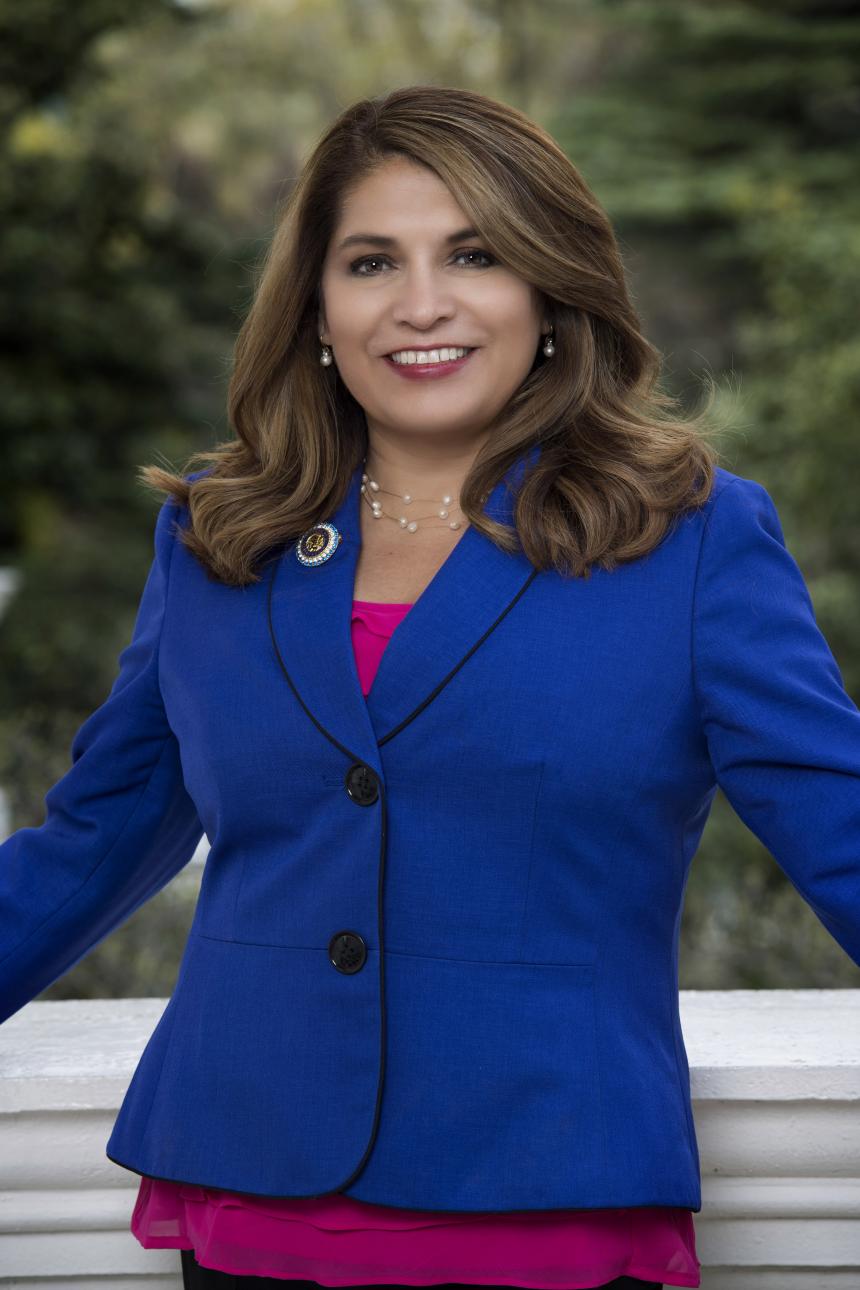
Asm. Sharon Quirk-Silva
Sponsored bills
Existing law requires the planning commission to hold a public hearing on any zoning ordinance or an amendment to a zoning ordinance that changes any property from one zone to another. Existing law, if the proposed ordinance or amendment to a zoning ordinance affects the permitted uses of real property, requires notice of the hearing to be, among other things, mailed or delivered at least 10 days prior to the hearing to the owner of the subject real property, as specified. This bill would instead require notice of the planning commission's hearing on a proposed zoning ordinance or amendment to a zoning ordinance, if the proposed ordinance or amendment to a zoning ordinance affects the permitted uses of real property, to be published, posted, mailed, and delivered, or advertised, as applicable, at least 20 days before the hearing. By imposing increased noticing requirements on a local government that considers a zoning ordinance or amendment to a zoning ordinance, the bill would impose a state-mandated local program. The bill would include findings that changes proposed by this bill address a matter of statewide concern rather than a municipal affair and, therefore, apply to all cities, including charter cities. The California Constitution requires the state to reimburse local agencies and school districts for certain costs mandated by the state. Statutory provisions establish procedures for making that reimbursement. This bill would provide that, if the Commission on State Mandates determines that the bill contains costs mandated by the state, reimbursement for those costs shall be made pursuant to the statutory provisions noted above.
The Early Education Act establishes the California Universal Preschool Planning Grant Program with the goal of expanding access universally to preschool programs for 3- and 4-year-old children across the state through a mixed-delivery system, as defined. The act requires the Superintendent of Public Instruction to establish rules and regulations for the staffing of all preschool programs under contract with the State Department of Education. This bill would, notwithstanding any provision of the act to contrary, require the department to, among other things, provide prospective California state preschool program providers an equitable opportunity to establish a trained workforce and administrative systems, and technical assistance on how to meet the requirements of Title 5 of the California Code of Regulations, as provided. The bill would, notwithstanding any provision of the act to contrary, require the department to, among other things, develop early learning resources, as specified, and to develop and implement a proactive one-time 3-year outreach, capacity building, training, and technical assistance plan that targets prospective and new contractors, as provided. The bill would make its provisions operative only upon appropriation by the Legislature for its purposes.
Existing law, the Teacher Housing Act of 2016, authorizes a school district to establish and implement programs that address the housing needs of teachers and school district employees who face challenges in securing affordable housing, as specified. The act provides that the purpose of the act is to facilitate the acquisition, construction, rehabilitation and preservation of affordable rental housing for teachers and school district employees to allow teachers or school district employees to access and maintain housing stability. The act provides that it specifically creates a state policy supporting housing for teachers and school district employees as described by specified federal law and permits school districts and developers in receipt of local or state funds or tax credits designated for affordable rental housing to restrict occupancy to teachers and school district employees on land owned by school districts, so long as that housing does not violate any other applicable laws. The act defines various terms for these purposes. This bill would authorize the California State University to establish and implement programs that address the housing needs of faculty or California State University employees who face challenges in securing affordable housing, as specified. The bill would provide that the purpose of its provisions are to facilitate the acquisition, construction, rehabilitation and preservation of affordable rental housing for faculty or California State University employees to allow them to access and maintain housing stability. The bill would provide that it specifically creates a state policy supporting housing for faculty or California State University campus employees as described by specified federal law and permits the California State University developers in receipt of local or state funds or tax credits designated for affordable rental housing to restrict occupancy to faculty or California State University employees on land owned by the California State University or a California State University auxiliary organization, as defined, so long as that housing does not violate any other applicable laws. The bill would define various terms for these purposes.
Existing law establishes various programs to address homelessness, including requiring the Governor to create an Interagency Council on Homelessness and establishing the Homeless Emergency Aid program for the purpose of providing localities with one-time grant funds to address their immediate homelessness challenges, as specified. Existing law commits to the Department of Housing and Community Development the administration of various housing assistance programs, including provisions relating to residential hotel rehabilitation and tasks the department, in consultation with each council of governments, with the determination of each region's existing and projected housing need. This bill would, upon an appropriation by the Legislature for this express purpose, require the Department of Housing and Community Development, commencing January 1, 2025, to begin developing the Older Adults and Adults with Disabilities Housing Stability Pilot Program. The bill would require the department, in administering the program, to offer competitive grants to nonprofit community-based organizations, continuums of care, public housing authorities, and area agencies on aging, as specified, to administer a housing subsidy program for older adults and adults with disabilities who are experiencing homelessness or at risk of homelessness, as defined, in up to 5 geographic regions or counties. This bill would require the department, in establishing the program guidelines, to prioritize communities in which a higher proportion of older adult renters face severe rental cost burden than the state average. The bill would create the Older Adults and Adults with Disabilities Housing Stability Fund from which funds would be allocated by the department to selected recipients for a 3-year period for these purposes. This bill would require an award recipient to use grant funds for specified activities, including housing subsidies up to the rent cap, as defined, until the participant is able to access a longer-term subsidy, no longer requires the housing subsidy, or the specified expenditure period expires and would authorize the use of grant funds for relocation costs if a landlord decides not to continue participating in the program or evicts a tenant, as specified. The bill would authorize a grantee to utilize up to 15% of its allocation for landlord recruitment and tenancy acquisition services, landlord incentives, and housing navigation and tenancy transition services, as defined. This bill would require the department to conduct specified oversight activities, including imposing reporting requirements on award recipients and contracting with an independent evaluator to conduct an evaluation of program outcomes and submit that report to the Legislature, as specified.
Existing law requires that a weapon acquired by a specified governmental entity under specified circumstances, including as part of a "gun-buyback" program, be destroyed. This bill would require a law enforcement agency that contracts with a third party for the destruction of firearms or weapons to ensure that the contract for those services prohibits the sale of any parts of, or attachments to, the firearm or other weapon, as specified. The bill would also exempt from the destruction requirement, any firearm obtained through a "gun-buyback" program that is donated to a historical society, museum, or institutional collection, as specified. By requiring a higher level of service for local agencies, this bill would impose a state-mandated local program. This bill would incorporate additional changes to Section 18005 of the Penal Code proposed by SB 1019 and AB 2739 to be operative only if this bill and either one or both of those bills are enacted and this bill is enacted last. The California Constitution requires the state to reimburse local agencies and school districts for certain costs mandated by the state. Statutory provisions establish procedures for making that reimbursement. This bill would provide that, if the Commission on State Mandates determines that the bill contains costs mandated by the state, reimbursement for those costs shall be made pursuant to the statutory provisions noted above.
(1) Under existing law, each school district and county office of education is responsible for the overall development of a comprehensive school safety plan for each of its schools operating kindergarten or any of grades 1 to 12, inclusive, in cooperation with certain local entities. Existing law requires that the plan include identification of appropriate strategies and programs that will provide or maintain a high level of school safety and address the school's procedures for complying with existing laws related to school safety. Existing law requires the comprehensive school safety plan to include the development of procedures for conducting tactical responses to criminal incidents, including procedures related to individuals with guns on school campuses and at school-related functions. This bill would additionally require, as part of the comprehensive school safety plan, if the plan includes procedures to prepare for active shooters or other armed assailants by conducting a drill, the development of specified procedures relating to that drill. Existing law prohibits a chartering authority from denying a petition for the establishment of a charter school unless it makes written factual findings supporting at least one of specified bases for denial. One of those bases for denying a petition is if the petition does not contain a reasonably comprehensive description of the development of a school safety plan that includes the same safety topics required in the comprehensive school safety plan of a school district or county office of education. This bill would authorize a chartering authority to deny a charter school petition that does not include in its proposed development of a school safety plan the same provisions on procedures and policies relating to active shooter and armed assailant drills as are required by the bill in a school district or county office of education comprehensive school safety plan. To the extent the bill imposes additional duties on chartering authorities, which include governing boards of school districts and county boards of education, when reviewing the petition for the establishment of a charter school, the bill would impose a state-mandated local program. The bill would require, on or before June 15, 2025, the State Department of Education to curate and post on its internet website best practices pertaining to school shooter or other armed assailant drills for use by school districts, county offices of education, and charter schools, as provided. The bill would encourage a school district, county office of education, or charter school to comply with these best practices. (2) This bill would incorporate additional changes to Section 32282 of the Education Code proposed by AB 2887, AB 2968, AB 176, and SB 176 to be operative only if this bill and any or all of those bills are enacted and this bill is enacted last. This bill would incorporate additional changes to Section 47605 of the Education Code proposed by AB 2887 to be operative only if this bill and AB 2887 are enacted and this bill is enacted last. This bill would incorporate additional changes to Section 47605.6 of the Education Code proposed by AB 2887 to be operative only if this bill and AB 2887 are enacted and this bill is enacted last. (3) The California Constitution requires the state to reimburse local agencies and school districts for certain costs mandated by the state. Statutory provisions establish procedures for making that reimbursement. This bill would provide that, if the Commission on State Mandates determines that the bill contains costs mandated by the state, reimbursement for those costs shall be made pursuant to the statutory provisions noted above.
Existing law generally regulates the possession of firearms, including imposing storage requirements to prevent children from gaining access to firearms. This bill would, beginning on January 1, 2026, require a person who possesses a firearm in a residence to keep the firearm securely stored when the firearm is not being carried or readily controlled by the person or another lawful authorized user. For purposes of these provisions, a firearm is securely stored if the firearm is maintained within, locked by, or disabled using a certified firearm safety device or secure gun safe that meets specified standards. The bill would make a first and 2nd violation of this offense punishable as an infraction, and a 3rd or subsequent violation punishable as a misdemeanor. The bill would exempt unloaded antique firearms, as defined, or firearms that are permanently inoperable from these provisions. The bill would require the Department of Justice to seek to inform residents about these standards for storage of firearms. By creating a new crime, this bill would impose a state-mandated local program. Existing law makes it a misdemeanor or a felony if a person keeps a firearm within any premises that are under the person's custody or control and the person knows or reasonably should know that a child is likely to gain access to the firearm without the permission of the child's parent or legal guardian, and the child obtains access to the firearm and causes injury, other than great bodily injury, or death or great bodily injury to the child or any other person, or carries that firearm off-premises, as defined, to a public place or a school. Existing law exempts a person from the above provisions if the person has no reasonable expectation, based on objective facts and circumstances, that a child is likely to be present on the premises. This bill would remove these exemptions. The California Constitution requires the state to reimburse local agencies and school districts for certain costs mandated by the state. Statutory provisions establish procedures for making that reimbursement. This bill would provide that no reimbursement is required by this act for a specified reason.
(1) Existing law requires the adopted course of study for grades 1 to 6, inclusive, to include physical education for a total period of time of not less of than 200 minutes each 10 schools days, as specified, and requires the adopted course of study for grades 7 to 12, inclusive, to require all pupils to attend upon the courses of physical education for a total period of time of not less than 400 minutes each 10 schooldays, except as otherwise specifically exempted. This bill would instead authorize the governing board of any school district maintaining any of grades 6 to 12, inclusive, to adopt a policy providing for an alternate term schedule for physical education courses if (A) pupils in grade 6 receive no less than 400 minutes of instruction every 10 days for a semester of not fewer than 18 weeks during the regular school year, for a total of 3,600 instructional minutes for the school year, and pupils in grades 7 to 12, inclusive, receive no less than 800 minutes of instruction every 10 days for semester of not fewer than 18 weeks during the regular school year, for a total of 7,200 instructional minutes for the school year, (B) the physical education program is aligned with the physical education framework adopted by the State Board of Education in that it provides a sequential, articulated, age-appropriate program, (C) the physical education program complies with regulations regarding the course of study requirements for high school physical education programs, as applicable, and (D) pupils are prepared for, and participate in, required physical performance testing, as specified. (2) Existing law requires a pupil to complete designated coursework while in grades 9 to 12, inclusive, in order to receive a diploma of graduation from high school, including, among others, the completion of 2 courses in physical education. This bill would deem an alternate term schedule for physical education, as described above, as satisfying a physical education course requirement. (3) This bill would incorporate additional changes to Section 51210 of the Education Code proposed by AB 1821 to be operative only if this bill and AB 1821 are enacted and this bill is enacted last.
Existing law establishes the Foster Youth Services Coordinating Program, under the administration of the Superintendent of Public Instruction, to provide supplemental funding to county offices of education, or a consortium of county offices of education, to coordinate and ensure that local educational agencies within its jurisdiction are providing services to foster youth pupils pursuant to a foster youth services coordinating plan with the purpose of ensuring positive educational outcomes. The program authorizes a county office of education, or a consortium of county offices of education, to apply to the Superintendent for grant funding to operate an education-based foster youth services coordinating program. If sufficient funds are available, existing law requires each foster youth services coordinating program to identify at least one person as the foster youth educational services coordinator, who is responsible for facilitating educational support, as specified, to any pupil in foster care residing or attending school in the county or consortium of counties. As a condition of receiving funds, existing law requires a foster youth services coordinating program to develop and implement a foster youth services plan that includes, among other things, authorization of a school district, when specified conditions apply, to enter into a temporary agreement with the foster youth services coordinating program to provide tutoring, mentoring, and counseling services to pupils, as provided. This bill instead would authorize a foster youth services coordinating program to provide tutoring, mentoring, and counseling services to a foster youth pupil, if a foster youth educational services coordinator determines, as specified, that the foster youth services coordinator is unable to secure those services provided by the foster youth pupil's school district and if those services are established as needed and identified by the foster youth educational services coordinator. This bill would incorporate additional changes to Section 42921 of the Education Code proposed by AB 3223 to be operative only if this bill and AB 3223 are enacted and this bill is enacted last.