

Existing law requires a person who is incarcerated in state prison or confined in a local detention facility, or a state or local juvenile facility, and who menstruates or experiences uterine or vaginal bleeding to, upon request, have access to, be allowed to use, and continue to use materials necessary for personal hygiene with regard to their menstrual cycle and reproductive system, including, but not limited to, sanitary pads and tampons. This bill would require the person to have ready access to these menstrual products without having to request them. By imposing additional duties on local detention facilities, this bill would impose a state-mandated local program. The California Constitution requires the state to reimburse local agencies and school districts for certain costs mandated by the state. Statutory provisions establish procedures for making that reimbursement. This bill would provide that, if the Commission on State Mandates determines that the bill contains costs mandated by the state, reimbursement for those costs shall be made pursuant to the statutory provisions noted above.
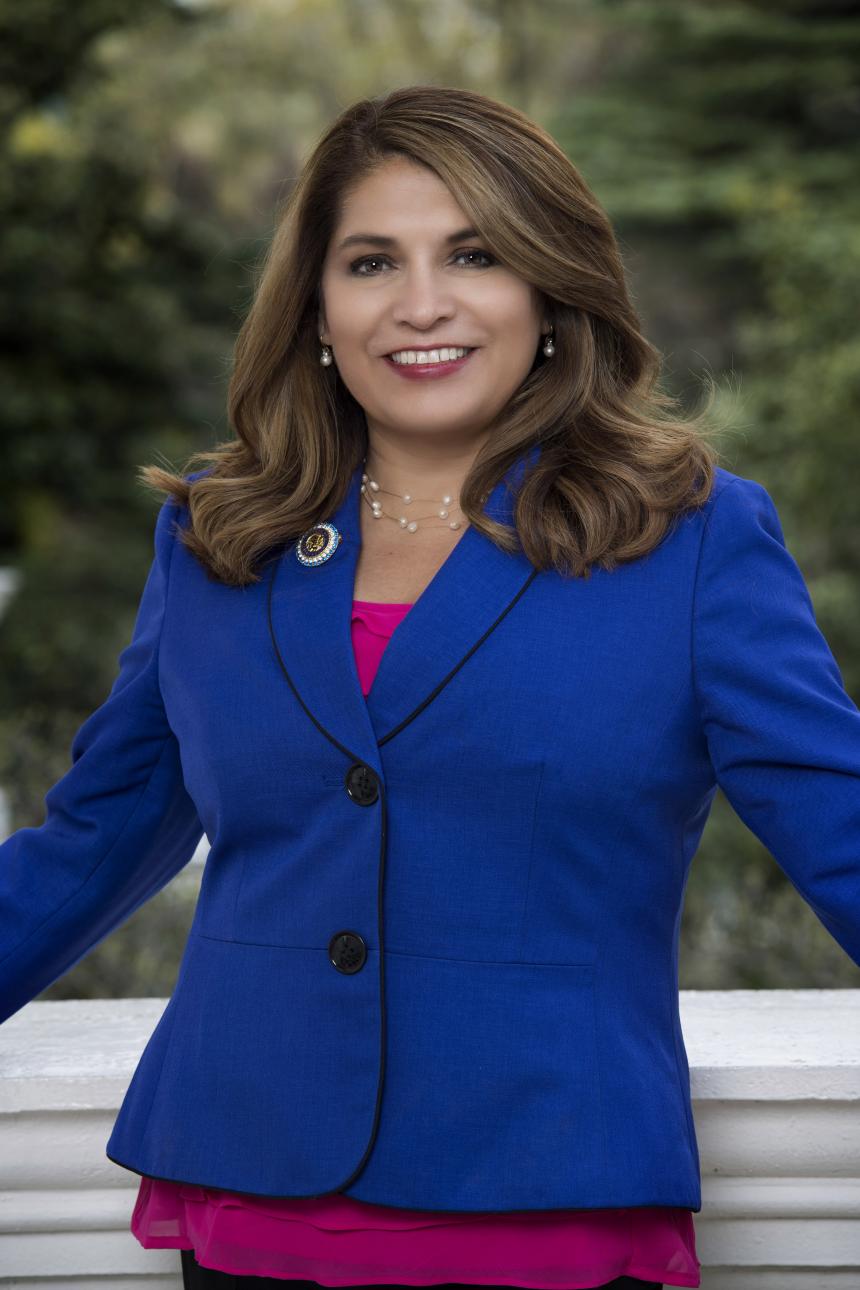
Asm. Sharon Quirk-Silva
Sponsored bills
Existing law, the Planning and Zoning Law, authorizes a local agency, by ordinance or ministerial approval, to provide for the creation of accessory dwelling units in areas zoned for residential use, as specified. Existing law prohibits a local agency from denying a permit for an unpermitted accessory dwelling unit that was constructed before January 1, 2018, because the accessory dwelling unit is in violation of building standards or state or local standards applicable to accessory dwelling units, unless the local agency makes a finding that correcting the violation is necessary to protect the health and safety of the public or the occupants of the structure. Existing law makes those provisions inapplicable to a substandard building, as specified. This bill would instead prohibit a local agency from denying a permit for an unpermitted accessory dwelling unit or junior accessory dwelling unit that was constructed before January 1, 2020, for those violations, unless the local agency makes a finding that correcting the violation is necessary to comply with conditions that would otherwise deem a building substandard. The bill would require a local agency to inform the public about the provisions prohibiting denial of a permit for an unpermitted accessory dwelling unit or junior accessory dwelling unit. The bill would require this information to include a checklist of the conditions that deem a building substandard and to inform homeowners that, before submitting a permit application, the homeowner may obtain a confidential third-party code inspection from a licensed contractor. The bill would prohibit a local agency from requiring a homeowner to pay impact fees or connection or capacity charges except under specified circumstances. By imposing additional duties on local agencies, the bill would impose a state-mandated local program. The bill would authorize an inspector from a local agency, upon receiving an application for a permit for a previously unpermitted accessory dwelling unit or junior accessory dwelling unit constructed before January 1, 2020, to inspect the unit for compliance with health and safety standards and provide recommendations to comply with health and safety standards. The bill would prohibit the local agency from penalizing an applicant for having the unpermitted accessory dwelling unit and would require the local agency to approve necessary permits to correct noncompliance with health and safety standards. The California Constitution requires the state to reimburse local agencies and school districts for certain costs mandated by the state. Statutory provisions establish procedures for making that reimbursement. This bill would provide that, if the Commission on State Mandates determines that the bill contains costs mandated by the state, reimbursement for those costs shall be made pursuant to the statutory provisions noted above.
(1) Existing law requires state agencies, boards, and commissions, in the course of collecting demographic data as to the ancestry or ethnic origin of Californians, to use separate collection categories and tabulations for certain groups, as specified. Existing federal law imposes various requirements on the collection of demographic data, as provided. Existing law establishes the State Department of Public Health, which is responsible for various programs relating to the health and safety of people in the state. Existing law requires the State Department of Public Health to collect and report specified information, including data on violent deaths. This bill would require the department, on or after January 1, 2028, in the course of collecting demographic data as to the ancestry or ethnic origin of California residents for any report that includes rates for major diseases and leading causes of death, as specified, to use separate collection categories and tabulations for Hispanic or Latino groups using standardized federal race and ethnicity categories from the federal Office of Management and Budget's "Standards for Maintaining, Collecting, and Presenting Federal Data on Race and Ethnicity," as specified. The bill would require the department to use separate collection categories and tabulations for each major Latino group and Mesoamerican Indigenous nation, if that group or nation is not included in the standardized federal race and ethnicity categories, as specified. The bill would require the department, when collecting the preferred language of program participants, to include specified languages. Existing law requires state agencies, boards, and commissions to report, as specified, data on collection categories and tabulations for certain groups. Existing law requires the collected data to be made available to the public, except as specified, including, among other things, personal identifying information, which existing law deems confidential. Existing law requires state agencies to update their data collection to reflect additional certain groups as they are reported by the United States Census Bureau, as specified. This bill would require the department to include the collected data in every demographic report on ancestry, ethnic origins, or language of California residents that the department publishes or releases on or after July 1, 2029. The bill would require the department to make available to the public the collected data, except as specified, including, among other things, personal identifying information, which the bill would deem confidential. On or before July 1, 2029, and annually thereafter, the bill would require the department to report to the Legislature on the collected data and the methods used to collect that data. The bill would require the department to update its data collection to reflect additional Latino groups, Mesoamerican Indigenous nations, and Mesoamerican Indigenous language groups as they are reported by the United States Census Bureau, as specified. This bill would authorize the State Department of Public Health to continue to collect and report demographic data in the form that the data was submitted if the data was collected pursuant to federal programs or surveys, by other state entities, or by third-party entities, as specified. (2) Existing constitutional provisions require that a statute that limits the right of access to the meetings of public bodies or the writings of public officials and agencies be adopted with findings demonstrating the interest protected by the limitation and the need for protecting that interest. This bill would make legislative findings to that effect.
Existing law establishes the California State University, under the administration of the Trustees of the California State University, as one of the segments of public postsecondary education in the state. Existing law authorizes the Trustees of the California State University to transmit any revenues, including fees and charges required by the trustees, received by the trustees from extension programs, special session, and other self-supporting instructional programs to the Treasurer and if transmitted, requires the revenues to be deposited in the State University Continuing Education Revenue Fund, a continuously appropriated fund. Existing law appropriates all revenues from that fund to the trustees for the support and development of self-supporting instructional programs of the California State University. The bill would instead appropriate all revenues from the State University Continuing Education Revenue Fund to the trustees for the support and development of instructional programs of the California State University. By expanding the scope of an existing appropriation, the bill would make an appropriation. Existing law requires the chief fiscal officer of each campus of the California State University to deposit and maintain in specified trust accounts, or in the continuously appropriated California State University Trust Fund, specified moneys received in connection with certain sources or purposes, including fees for extension programs, special sessions, and other self-supporting instructional programs. This bill would authorize the trustees to transmit the revenues received by the trustees from extension programs, special session, or self-supporting instructional programs to the chief fiscal officer of a university campus, and would require those transmitted moneys to be deposited in specified trust accounts or in the continuously appropriated California State University Trust Fund. By adding a potential source of revenue to a continuously appropriated fund, the bill would make an appropriation. The bill would require, on or before March 31 of each year, the California State University to submit a report to the Department of Finance and the appropriate fiscal and policy committees of the Legislature on the revenue generated from extension programs, special session, or self-supporting instructional programs, as specified.
Existing unemployment compensation disability law requires workers to pay contribution rates based on, among other things, wages received in employment and benefit disbursement, for payment into the Unemployment Compensation Disability Fund, for purposes of compensating in part for the wage loss sustained by any individual who is unable to work due to the employee's own sickness or injury, among other reasons. Existing law sets forth standards for eligibility to receive unemployment compensation disability benefits. Existing law establishes, within the above state disability insurance program, a family temporary disability insurance program, also known as the paid family leave program, for the provision of wage replacement benefits for up to 8 weeks to workers who take time off work for prescribed purposes, including to care for a seriously ill family member. Existing law requires, for purposes of unemployment compensation disability benefits, the Employment Development Department to issue the initial payment for unemployment compensation disability benefits to a monetarily eligible claimant who is otherwise determined eligible by the department within 14 days of receipt of the claimant's properly completed first disability claim. Existing law provides for purposes of the paid family leave program that eligible workers shall receive benefits generally in accordance with unemployment and disability compensation law. This bill would instead require, for purposes of unemployment compensation disability benefits, the issuance of the initial payment for those benefits within 14 days of receipt of the claimant's properly completed first disability claim or as soon as eligibility begins, whichever is later. The bill would apply the same initial payment issuance schedule applicable to unemployment compensation disability benefits to the paid family leave program and repeal the requirement that eligible workers receive benefits generally in accordance with unemployment and disability compensation law. The bill would make these changes operative when these changes are incorporated in the Employment Development Department's integrated claims management system as part of the EDDNext project. Under the state disability insurance and paid family leave programs, a first claim is required to be filed not later than the 41st consecutive day following the first compensable day with respect to which the claim is made for benefits, as specified. This bill would authorize an individual to initiate the claims process up to 30 days in advance of the anticipated first compensable day. The bill would make these changes operative when the changes are incorporated in the Employment Development Department's integrated claims management system as part of the EDDNext project.
Existing law establishes the California Community Colleges, under the administration of the Board of Governors of the California Community Colleges, the California State University, under the administration of the Trustees of the California State University, and the University of California, under the administration of the Regents of the University of California, as the 3 segments of public postsecondary education in the state. Existing law requires the California State University, on or before December 1 of each year, to submit a report to the Legislature on the investigations and outcomes of sexual harassment reports and formal sexual harassment complaints, and to post the annual reports on its internet website, as provided. This bill would instead require the California State University, on or before December 1 of each year, to submit a report to the Legislature that provides a summation of the activities undertaken by each campus and by the systemwide Title IX office to ensure campus programs and activities are free from sex discrimination, and would revise the content of the report, as provided. The bill would additionally require the California Community Colleges, on or before December 1, 2026, and on or before December 1 every 3 years thereafter, and request the University of California, on or before December 1, 2026, and on or before each December 1 thereafter, to submit an analogous report to the Legislature that provides a summation of the activities undertaken by each district or campus, as applicable, and by each systemwide Title IX office, to ensure campus programs and activities are free from sex discrimination, as provided. The bill would require the office of the Chancellor of the California Community Colleges, and request the University of California, to post certain annual reports on their respective internet websites. The bill would require the California State University, and request the University of California, to present each report during a public meeting of the trustees or the regents, as applicable. This bill would require, on or before September 1, 2026, and on or before each September 1 thereafter, the governing board of each community college district to prepare and submit to the chancellor's office a report on the activities undertaken by each community college district to ensure campus programs and activities are free from sex discrimination, as provided. The bill would require each community college district to post the annual reports on its internet website and to present each report during a public meeting of the governing board of the community college district. By imposing new requirements on community college districts, the bill would impose a state-mandated local program. The California Constitution requires the state to reimburse local agencies and school districts for certain costs mandated by the state. Statutory provisions establish procedures for making that reimbursement. This bill would provide that, if the Commission on State Mandates determines that the bill contains costs mandated by the state, reimbursement for those costs shall be made pursuant to the statutory provisions noted above.
Existing law authorizes a county to establish a homeless adult and family multidisciplinary personnel team, as defined, with the goal of facilitating the expedited identification, assessment, and linkage of homeless individuals to housing and supportive services within that county and to allow provider agencies to share confidential information for the purpose of coordinating housing and supportive services to ensure continuity of care. This bill would authorize counties to also establish a mental health multidisciplinary personnel team, as defined, with the goal of facilitating the expedited identification, assessment, and linkage of justice-involved persons diagnosed with a mental illness to supportive services within that county while incarcerated and upon release from county jail and to allow provider agencies and members of the personnel team to share confidential information, as specified, for the purpose of coordinating supportive services to ensure continuity of care. The bill would require the sharing of information permitted under these provisions to be governed by protocols developed in each county, as specified, and would require each county to provide a copy of its protocols to the State Department of Health Care Services. This bill would authorize the mental health multidisciplinary personnel team to designate qualified persons to be a member of the team for a particular case and would require every member who receives information or records regarding justice-involved persons, as defined, in their capacity as a member of the team to be under the same privacy and confidentiality obligations and subject to the same confidentiality penalties as the person disclosing or providing the information or records. The bill would also require the information or records to be maintained in a manner that ensures the maximum protection of privacy and confidentiality rights.
Existing law classifies certain criminal offenses as a "violent felony" for the purposes of various provisions of the Penal Code, including sentencing enhancements for prior convictions, as well as numerous other provisions. Existing law includes among the list of violent felonies rape accomplished against a person's will by means of force, violence, duress, menace, or fear, or rape accomplished against the victim's will by threat of violent retaliation, but does not include rape of a person unable to give consent due to disability, intoxication, or unconsciousness, rape under false pretenses, or rape accomplished by threat of incarceration, arrest, or deportation. This bill would also include the rape of an intoxicated person wherein the defendant drugged the victim, as specified, in the list of violent felonies. By expanding the scope of an enhancement, this bill would impose a state-mandated local program. The California Constitution requires the state to reimburse local agencies and school districts for certain costs mandated by the state. Statutory provisions establish procedures for making that reimbursement. This bill would provide that no reimbursement is required by this act for a specified reason.
Existing law provides for various memorials and monuments on the grounds of the State Capitol. Existing law requires the Department of General Services to maintain state buildings and grounds. Existing law, the Apology Act for the 1930s Mexican Repatriation Program, makes findings and declarations regarding the unconstitutional removal and coerced emigration of United States citizens and legal residents of Mexican descent, between the years 1929 and 1944, to Mexico from the United States during the 1930s "Mexican Repatriation" Program. Existing law expresses the apology of the State of California to those individuals who were illegally deported and coerced into emigrating to Mexico and requires that a plaque to commemorate those individuals be installed and maintained by the Department of Parks and Recreation in an appropriate public place in the City or County of Los Angeles. This bill would authorize a nonprofit organization representing Mexican Americans or Mexican immigrants to enter into negotiations to plan, construct, and maintain a memorial to Mexican Americans and Mexican immigrants who were forcibly deported from the United States during the Great Depression, as provided. The bill would require the memorial to be located at an appropriate public place in the City or County of Los Angeles. The bill would require the nonprofit organization to enter into negotiations with the Department of General Services and the state agency with jurisdiction over the state property where the memorial is proposed, where applicable, if the nonprofit organization proposes to locate the memorial on state property. The bill would require the nonprofit organization to submit a plan for the memorial to the department and the applicable state agency for review and approval. The bill would require these provisions to be funded exclusively through private sources. This bill would, if the nonprofit organization proposes a site owned by the City of Los Angeles or the County of Los Angeles for location of the memorial, require the nonprofit organization to follow any procedures that the City of Los Angeles or the County of Los Angeles require to consider approving the proposed memorial. This bill would make legislative findings and declarations as to the necessity of a special statute for the City of Los Angeles and the County of Los Angeles.
Existing law, the Elder Abuse and Dependent Adult Civil Protection Act, establishes various procedures for the reporting, investigation, and prosecution of elder and dependent adult abuse. Existing law defines financial abuse for those purposes and provides that it occurs when, among other instances, a person or entity takes, secretes, appropriates, obtains, or retains, or assists in taking, secreting, appropriating, obtaining, or retaining, real or personal property of an elder or dependent adult for a wrongful use or with intent to defraud, or both. Existing law requires a person or entity to be deemed to have taken, secreted, appropriated, obtained, or retained property for a wrongful use if, among other things, the person or entity takes the property and the person or entity knew or should have known that the conduct is likely to be harmful to the elder or dependent adult. Existing law requires the court to award specified costs if a defendant is found liable for financial abuse, as specified. Existing law makes the failure to report, or impeding or inhibiting a report of, among other things, financial abuse of an elder or dependent adult, in violation of certain reporting requirements a misdemeanor. This bill, commencing January 1, 2026, would require a covered person or entity, as defined, to establish an emergency financial contact program for covered accountholders, as specified. The bill would require a covered person or entity to notify a joint accountholder or an emergency financial contact, if one has been provided, if the covered person or entity should reasonably suspect a covered transaction requested by the covered accountholder is the result of financial abuse. The bill would also require a covered person or entity to delay, by at least 3 business days, a covered transaction initiated by a covered accountholder if the covered person or entity should reasonably suspect the transaction is the result of financial abuse and would make a covered person or entity immune from administrative, civil, or other liability that might arise from a delayed or refused transaction. The bill would authorize a covered person or entity to implement an emergency financial contact program for an accountholder who is not an elder or dependent adult, as specified. Existing law provides for the award of attorney's fees and costs, and damages, to a plaintiff when it is proven by a preponderance of the evidence that the defendant is liable for financial abuse of an elder or dependent adult. This bill would, if proven by a preponderance of the evidence, subject a covered person or entity to liability for actual and noneconomic damages, for certain specified violations. The bill would prohibit a nonmanagerial employee of a covered entity or a covered person who is an employee of a covered entity who meets certain specifications from being held personally liable in their individual capacity for specified violations. The bill would make these provisions severable, except as specified.