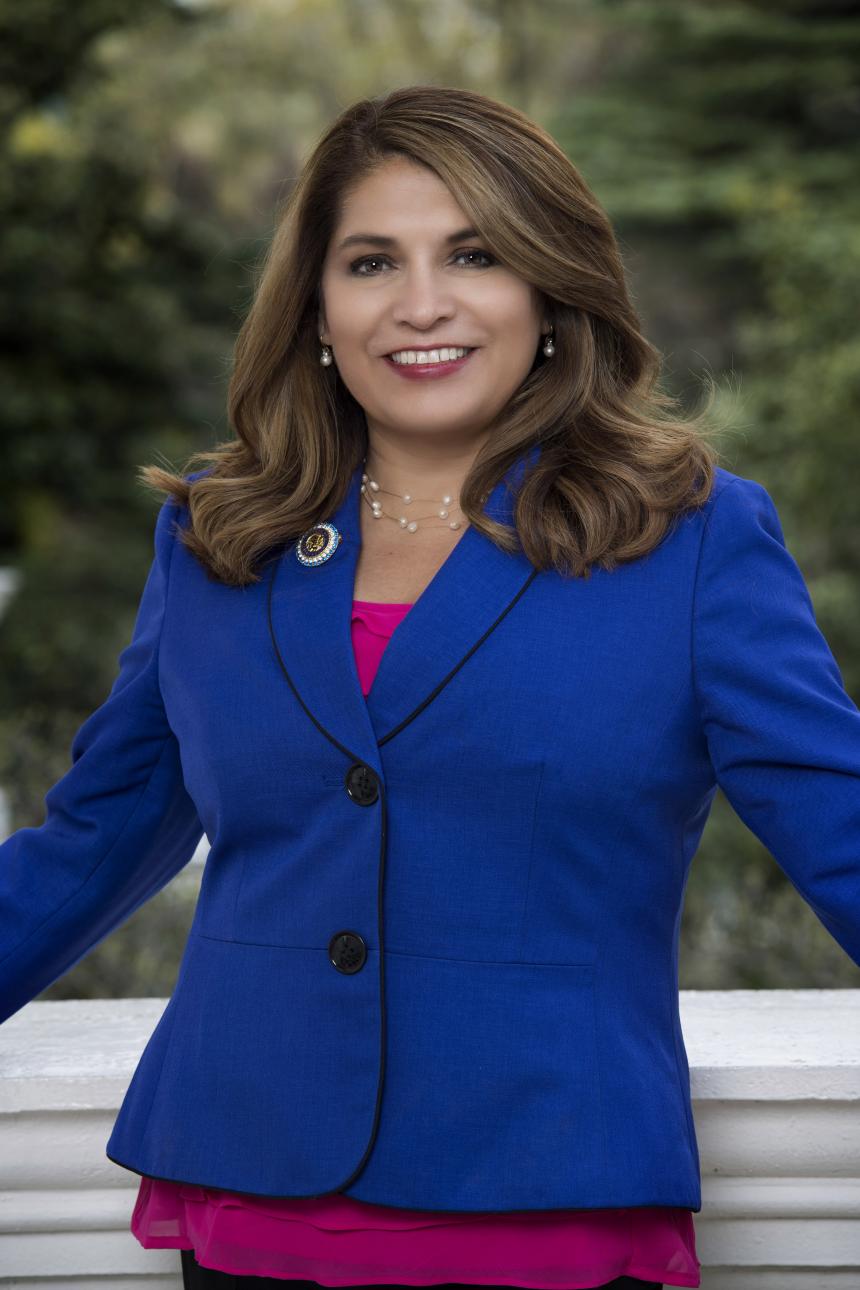
Photo of Sharon Quirk-Silva
D California Assembly · District 67

Asm. Sharon Quirk-Silva

Compare
Total votes
25,127
all sessions
Attendance
94%
1,296 missed
Near the chamber average
With party
98%
of cast votes
Near the chamber average
Bipartisan score
1%
crosses aisle rarely
Near the chamber average
Sponsored
2,398
bills & resolutions
Near the chamber average
Committees
15
assignments
2,398 bills and resolutions

Sponsored bills

Total
2,398
Primary
286
Co-sponsor
2,112
This page
2,398
matching current filters
Primary ACR 12
Signed into law · California Assembly · Lead sponsor
Relative to Fernando Valenzuela Day.

This measure would designate November 1, 2025, as Fernando Valenzuela Day, to highlight the positive impact his legacy created in the Latino and Hispanic community.

Signed into law Sep 23, 2025 0 co-sponsors
Co-sponsor AB 564
Signed into law · California Assembly · Co-sponsor
Cannabis: excise tax: rate increase suspension: report.

Existing law, the Control, Regulate and Tax Adult Use of Marijuana Act (AUMA) , an initiative measure, authorizes a person who obtains a state license under AUMA to engage in commercial adult-use cannabis activity pursuant to that license and applicable local ordinances. The Medicinal and Adult-Use Cannabis Regulation and Safety Act (MAUCRSA) , among other things, consolidates the licensure and regulation of commercial medicinal and adult-use cannabis activities and establishes the Department of Cannabis Control (DCC) within the Business, Consumer Services, and Housing Agency to administer the act. Existing law, the Cannabis Tax Law, imposes an excise tax upon purchasers of cannabis or cannabis products sold in this state at the rate of 15% of the gross receipts of any retail sale by a cannabis retailer, and, as enacted by AUMA, imposed a cultivation tax on all harvested cannabis that entered the commercial market, as specified. Chapter 56 of the Statutes of 2022 (AB 195) amended AUMA to, among other things, discontinue the imposition of the cultivation tax on July 1, 2022. AB 195, beginning in the 2025–26 fiscal year and every 2 years thereafter, requires the California Department of Tax and Fee Administration (CDTFA) to adjust the cannabis excise tax rate by a percentage that will generate an amount of revenue that would have been collected pursuant to the cultivation tax imposed prior to its discontinuation, as specified, not to exceed 19% of the gross receipts of retail sale. Pursuant to that law, the department increased the cannabis excise tax rate to 19% for the 2025–26 fiscal year. This bill would revise the above-described provisions governing the cannabis excise tax rate. Specifically, the bill, for the period from July 1, 2025, to September 30, 2025, inclusive, would retain the existing cannabis excise tax rate of 19%. For the period from October 1, 2025, to June 30, 2028, inclusive, the bill would decrease the excise tax rate to 15%. Beginning in the 2028–29 fiscal year and every 2 years thereafter, the bill would require the department to adjust the cannabis excise tax rate by a percentage that will generate an amount of revenue that would have been collected pursuant to the cultivation tax imposed prior to its discontinuation, as specified, not to exceed 19%. The bill would also require the DCC, in consultation with the CDTFA and the Legislative Analyst's Office, on or before October 1, 2027, to submit a report to the Legislature that analyzes, among other things, the current and future effect of the Cannabis Tax Law on the regulated cannabis market and recommends options for changes to the Cannabis Tax Law to accomplish the intent of AUMA. Existing law requires any bill authorizing a new tax expenditure to contain, among other things, specific goals that the tax expenditure will achieve, detailed performance indicators, and data collection requirements. This bill also would include additional information required for any bill authorizing a new tax expenditure. This bill would take effect immediately as a tax levy.


Signed into law Sep 22, 2025 1 co-sponsor
Co-sponsor AB 49
Signed into law · California Assembly · Co-sponsor
Schoolsites: immigration enforcement.

(1) Existing law prohibits, except as required by state or federal law or as required to administer a state or federally supported educational program, school officials and employees of a school district, county office of education, or charter school from collecting information or documents regarding citizenship or immigration status of pupils or their family members. Existing law requires the superintendent of a school district, the superintendent of a county office of education, and the principal of a charter school, as applicable, to report to the respective governing board or body of the local educational agency in a timely manner any requests for information or access to a schoolsite by an officer or employee of a law enforcement agency for the purpose of enforcing the immigration laws in a manner that ensures the confidentiality and privacy of any potentially identifying information. This bill would prohibit school officials and employees of a local educational agency from allowing an officer or employee of an agency conducting immigration enforcement to enter a nonpublic area of a schoolsite, as defined, for any purpose without being presented with a valid judicial warrant, judicial subpoena, or a court order. The bill would require school officials and employees of a local educational agency, to the extent practicable, to request valid identification of any officer or employee of an agency conducting immigration enforcement seeking to enter a nonpublic area of a schoolsite. The bill would also prohibit a local educational agency and its personnel from disclosing or providing, in writing, verbally, or in any other manner, the education records of or any information about a pupil or a pupil's family and household without the pupil's parents' or guardians' written consent, a school employee, or a teacher to an officer or employee of an agency conducting immigration enforcement without a valid judicial warrant or judicial subpoena, or court order directing the local educational agency or its personnel to do so. By imposing additional duties on local educational agencies, the bill would impose a state-mandated local program. (2) Existing law requires the Attorney General, by April 1, 2018, in consultation with the appropriate stakeholders, to publish model policies limiting assistance with immigration enforcement at public schools, to the fullest extent possible consistent with federal and state law, and ensuring that public schools remain safe and accessible to all California residents, regardless of immigration status, as provided. Existing law requires local educational agencies, by July 1, 2018, to adopt those model policies developed by the Attorney General or equivalent policies. This bill would require the Attorney General, by December 1, 2025, to update those model policies to ensure that the policies align with the above-described prohibitions on school officials and employees of local educational agencies allowing an officer or employee of an agency conducting immigration enforcement to enter a nonpublic area of a schoolsite without a valid judicial warrant or judicial subpoena, or a court order and from disclosing or providing certain information to those officers or employees, as provided. The bill also would require a local educational agency to update its model policy by March 1, 2026, and to make the policy available to the State Department of Education upon request. By imposing additional duties on local educational agencies, the bill would impose a state-mandated local program. (3) This bill would make these provisions severable. (4) The California Constitution requires the state to reimburse local agencies and school districts for certain costs mandated by the state. Statutory provisions establish procedures for making that reimbursement. This bill would provide that, if the Commission on State Mandates determines that the bill contains costs mandated by the state, reimbursement for those costs shall be made pursuant to the statutory provisions noted above. (5) This bill would declare that it is to take effect immediately as an urgency statute.

Signed into law Sep 20, 2025 1 co-sponsor
Co-sponsor SB 627
Signed into law · California Senate · Co-sponsor
Law enforcement: masks.

Existing law makes it a misdemeanor to wear a mask, false whiskers, or any personal disguise, as specified, with the purpose of evading or escaping discovery, recognition, or identification while committing a public offense, or for concealment, flight, evasion, or escape from arrest or conviction for any public offense. This bill would make it a crime for a law enforcement officer to wear a facial covering in the performance of their duties, except as specified. The bill would define law enforcement officer as anyone designated by California law as a peace officer who is employed by a city, county, or other local agency, and any officer or agent of a federal law enforcement agency or law enforcement agency of another state, or any person acting on behalf of a federal law enforcement agency or agency of another state. The bill would make a violation of these provisions punishable as an infraction or a misdemeanor, as specified. By creating a new crime, this bill would impose a state-mandated local program. The bill would require any law enforcement agency operating in California to, by July 1, 2026, maintain and publicly post a written policy limiting the use of facial coverings, as specified. The bill would exempt personnel of any agency from the crime of wearing a facial covering if an agency maintains a policy pursuant to this section no later than July 1, 2026. The bill would deem a policy consistent with these provisions for the purposes of that exception unless a member of the public, an oversight body, or a local governing authority challenges it. The bill would also impose a specified civil penalty against certain officers for tortious conduct, including, but not limited to, false imprisonment or false arrest of an individual while wearing a facial covering. The bill would, if the agency does not address deficiencies within 90 days, authorize the complaining party to proceed to a court of competent jurisdiction for a judicial determination of the exemption, as specified. The bill would define a law enforcement agency for these purposes as any entity of a city, county, or other local agency, that employs anyone designated by California law as a peace officer, any federal law enforcement agency, or any law enforcement agency of another state. By imposing additional duties on local law enforcement agencies, this bill would create a state-mandated local program. This bill would declare its provisions to be severable. This bill would make related findings and declarations. The California Constitution requires the state to reimburse local agencies and school districts for certain costs mandated by the state. Statutory provisions establish procedures for making that reimbursement. This bill would provide that with regard to certain mandates no reimbursement is required by this act for a specified reason. With regard to any other mandates, this bill would provide that, if the Commission on State Mandates determines that the bill contains costs so mandated by the state, reimbursement for those costs shall be made pursuant to the statutory provisions noted above.

Signed into law Sep 20, 2025 1 co-sponsor
Co-sponsor SCR 95
Signed into law · California Senate · Co-sponsor
Relative to Soju Day.

Maddy summarySCR 95 is a ceremonial resolution that would establish September 20, 2025, and every September 20 thereafter, as "Soju Day" in the state. It does not create new laws or regulations, nor does it affect any specific individuals or groups. The resolution solely designates an annual date for recognition and celebration. This is purely symbolic, with no concrete policy changes or practical impact beyond the ceremonial observance.

Signed into law Sep 18, 2025 1 co-sponsor
Co-sponsor SCR 101
Signed into law · California Senate · Co-sponsor
Relative to Taekwondo Day.

This measure would proclaim September 4, 2025, as Taekwondo Day in California and encourage all residents to recognize and celebrate the positive impact of Taekwondo on individuals, families, and communities throughout the state.

Signed into law Sep 18, 2025 1 co-sponsor
Co-sponsor AJR 5
Signed into law · California Assembly · Co-sponsor
Relative to birthright citizenship.

This measure would declare the Legislature's opposition to the unlawful Executive Order No. 14160, entitled "Protecting the Meaning and Value of American Citizenship," ending birthright citizenship as enshrined in the United States Constitution and would affirm the Legislature's commitment to birthright citizenship, as specified.

Signed into law Sep 16, 2025 1 co-sponsor
Co-sponsor ACR 32
Passed · California Assembly · Co-sponsor
Relative to March4Water Month.

This measure would declare the month of March to be March4Water Month in California and would encourage all Californians to participate in activities and programs during March4Water Month to promote awareness, education, and actions that prioritize water as a vital resource for the state's future.

Passed Sep 13, 2025 1 co-sponsor
Showing 241 to 250 of 2,398 bills
Previous 1 … 24 25 26 … 240 Next