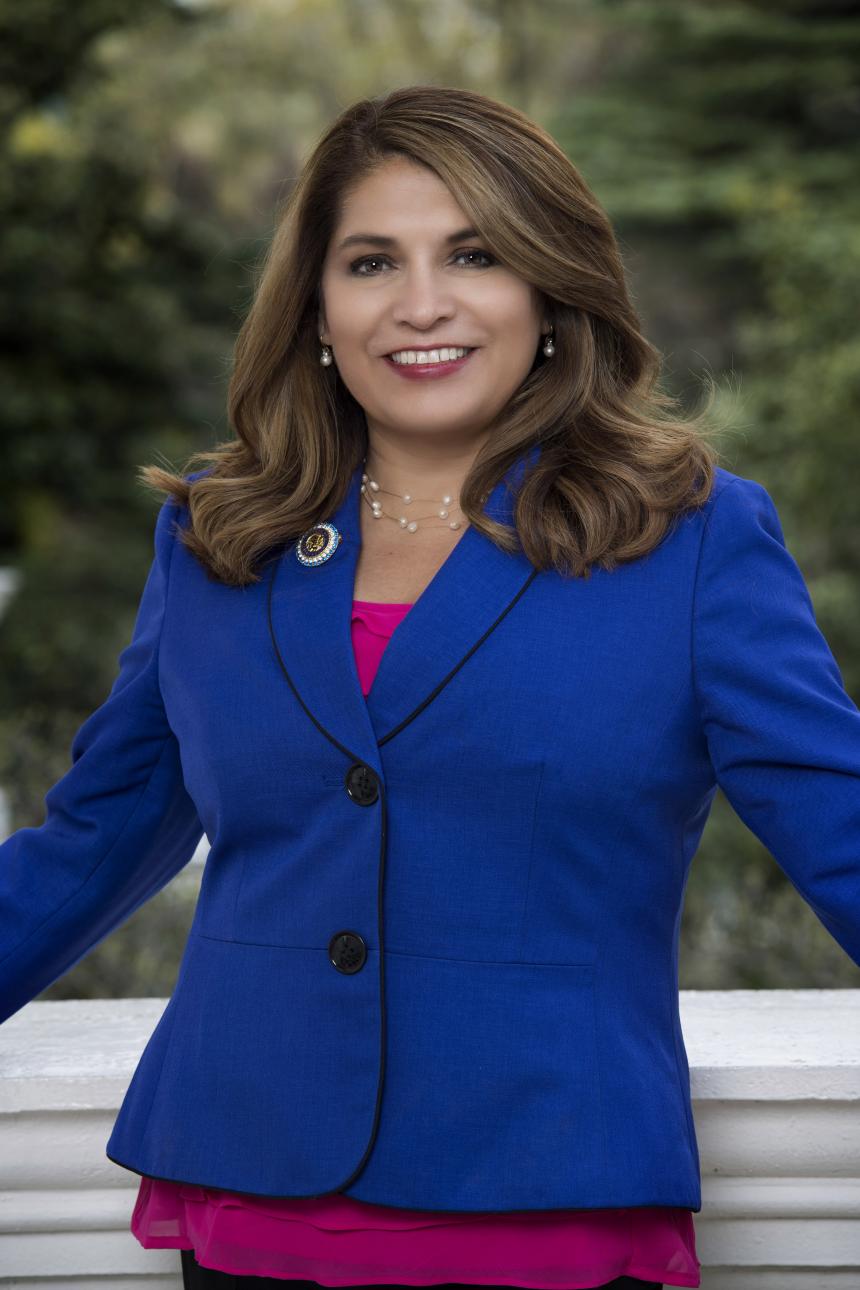
Photo of Sharon Quirk-Silva
D California Assembly · District 67

Asm. Sharon Quirk-Silva

Compare
Total votes
25,127
all sessions
Attendance
94%
1,296 missed
Near the chamber average
With party
98%
of cast votes
Higher than 76% of chamber peers
Bipartisan score
1%
crosses aisle rarely
Lower than 81% of chamber peers
Sponsored
2,398
bills & resolutions
Near the chamber average
Committees
15
assignments
2,398 bills and resolutions

Sponsored bills

Total
2,398
Primary
286
Co-sponsor
2,112
This page
2,398
matching current filters
Co-sponsor ACR 242
Signed into law · California Assembly · Co-sponsor
Relative to California Manufacturing Day.

This measure would declare Friday, October 5, 2018, as California Manufacturing Day and would recognize the importance of California's manufacturing sector. The measure would also commemorate California's manufacturers as they continue to push the bounds of clean technologies that reduce emissions and increase energy efficiency in products and processes.

Signed into law Aug 17, 2018 1 co-sponsor
Co-sponsor AB 1767
Passed · California Assembly · Co-sponsor
California Kickstart My Future Loan Forgiveness Program.

Existing law establishes the Student Aid Commission as the primary state agency for the administration of state-authorized student financial aid programs available to students attending all segments of postsecondary education. Under existing law, the commission, among other things, administers the Cal Grant Program, the Student Opportunity and Access Program, the Assumption Program of Loans for Education, the Graduate Assumption Program of Loans for Education, the Public Interest Attorney Loan Repayment Program, and the California State Work-Study Program. This bill would establish the California Kickstart My Future Loan Forgiveness Program, under the administration of the commission, to provide student loan forgiveness awards for the purpose of alleviating the burden of federal student loan debt for recent graduates meeting specified requirements. The bill would, subject to an available and sufficient appropriation, authorize an eligible applicant to receive a student loan forgiveness award equal to 100% of his or her monthly federal income-driven repayment plan payments for 24 months of repayment under the federal program. The bill would require a recipient, who no longer meets the specified requirements at the time any payment is made under this program, to refund those payments to the state, and would authorize the Franchise Tax Board to recover the payments owed.

Passed Aug 16, 2018 1 co-sponsor
Co-sponsor AB 2704
Passed · California Assembly · Co-sponsor
Special education programs: Family Empowerment Centers on Disability.

Existing law requires the State Department of Education to award grants for the establishment of Family Empowerment Centers on Disability in 32 regions in the state to provide training and services to children and young adults with disabilities and their families. Existing law establishes a minimum base rate of $150,000 for each center awarded a grant and requires a center that receives a grant to complete specified actions related to providing that training and those services. Existing law establishes a Family Empowerment and Disability Council composed of the executive directors of the centers and certain other members and requires the council to, among other actions, develop a uniform tracking and data collection system to be used by each center. This bill would revise and recast the provisions related to Family Empowerment Centers on Disability, including requiring the department to give priority to grant applicants in those of the 32 regions in the state that do not have a center, increasing the minimum base rate for each center awarded a grant from $150,000 to $223,000 commencing with the start of the fiscal year after a center has been established in each of the 32 regions, and, commencing with the 2020–21 fiscal year, providing for an annual cost-of-living adjustment of the grant amount, as specified. The bill would impose additional requirements on centers as a condition of receiving a grant and would require the department, among other actions, to, on or before June 30, 2020, develop a data collection template for use by centers and provide guidance to centers on how to define and report data. The bill would make implementation of the bill's provisions contingent upon an appropriation being made in the annual Budget Act or another statute for its purposes.

Passed Aug 16, 2018 1 co-sponsor
Co-sponsor AB 2292
Passed · California Assembly · Co-sponsor
Child care: reimbursement rates: startup costs: grants.

Existing law, the Child Care and Development Services Act, establishes a system of child care and development services for children up to 13 years of age, and requires the Superintendent of Public Instruction to implement a plan establishing assigned reimbursement rates, per unit of average daily enrollment, to be paid by the state to provider agencies for the provision of those services. Existing law also provides for an adjustment factor to be applied to units of average daily enrollment if a provider agency serves children who meet specified criteria. Existing law provides adjustment factors for infants who are 0 to 18 months of age, and toddlers who are 18 to 36 months of age, and are served in a child day care center, and for infants and toddlers who are 0 to 36 months of age and are served in a family child care home. This bill would increase the adjustment factor for infants who are 0 to 18 months of age and toddlers who are 18 to 36 months of age, would provide that these adjustment factors apply without regard to the kind of facility that the infant or toddler is served by, and would make conforming changes. The bill would establish the Early Education Expansion Program for the purpose of increasing access to inclusive early care and education programs and increasing early learning infrastructure capacity in high-need communities. The bill would require the State Department of Education to award grants on a competitive basis, and would require a grant to be used for one-time infrastructure costs only. The bill would require an applicant to include specified information in its application. The bill would also establish the Early Education Expansion Program for Local Educational Agencies. The bill would require the department to award grants on a competitive basis, and would require the department's Special Education Division and Early Education and Support Division to provide guidance to local educational agencies on serving young children with exceptional needs in the least restrictive environment. The bill would require a grant to be used for one-time infrastructure costs only. The bill would require an applicant to include specified information in its application. The act establishes the California Child Care Initiative Project and provides that the objective of the project is to increase the availability of quality child care programs in the state. This bill would establish in the department the Family Child Care Recruitment and Training Program of 2018, to be administered by the Superintendent, to support the recruitment and training of a new generation of licensed family child care providers. The bill would require the program to provide resources pursuant to the California Child Care Initiative Project as well as startup costs and resources to new family child care providers, among other things, upon appropriation by the Legislature.


Passed Aug 16, 2018 1 co-sponsor
Co-sponsor AB 2124
Passed · California Assembly · Co-sponsor
Human trafficking: vertical prosecution program.

Existing law establishes the Office of Emergency Services, which is required to, among other things, allocate and award funds to communities developing and providing ongoing citizen involvement and crime resistance programs. This bill would require the office, to the extent funds are available for this purpose and until January 1, 2023, to allocate and award funds to up to 11 district attorney offices that employ a vertical prosecution methodology for the prosecution of human trafficking crimes and that meet other specified criteria, including minimum staffing levels for the program. The bill would require the office, on or before January 1, 2021, to submit to the Legislature and the Governor's office a report that describes the counties that received funding pursuant to this program, the number of prosecutions for human trafficking cases filed by the counties receiving funding, the number of human trafficking convictions obtained by those counties, and the sentences imposed for human trafficking crimes in those counties. The bill would be operative only to the extent that funding is provided in the annual Budget Act or another statute for the purposes of the bill.

Passed Aug 16, 2018 1 co-sponsor
Primary AB 916
Passed · California Assembly · Lead sponsor
Income taxes: California work opportunity tax credit.

The Personal Income Tax Law and the Corporation Tax Law allow various credits against the taxes imposed by those laws. This bill, for each taxable year beginning on or after January 1, 2019, and before January 1, 2026, would allow a credit against the taxes imposed under both laws to a qualified employer, as defined, in an amount equal to that allowed under the federal Work Opportunity Tax Credit, as modified. The bill would prohibit the credit from exceeding $2,400 per qualified employee per taxable year. The bill would make related declarations, and would require the Employment Development Department to prepare a specified report, related to the specific goals, purposes, and objectives, performance indicators, and data collection requirements for these credits. This bill would take effect immediately as a tax levy.

Passed Aug 16, 2018 0 co-sponsors
Co-sponsor SCR 107
Signed into law · California Senate · Co-sponsor
Relative to developmental services.

This measure would declare the intent of the Legislature to further support the housing needs of individuals with developmental disabilities by exploring models that facilitate the private donation of homes in perpetuity and would recognize the work of organizations that have developed a property donation program.

Signed into law Aug 15, 2018 1 co-sponsor
Co-sponsor SCR 121
Signed into law · California Senate · Co-sponsor
Relative to the Eagle Staff.

This measure would recognize the history and significance of the Eagle Staff to Native American tribes. The measure would express the Legislature's commitment to inclusiveness for all Native Americans and respect for the traditions and symbolism of the Eagle Staff and would urge state government departments to incorporate these principles into their policies and practices.

Signed into law Aug 10, 2018 1 co-sponsor
Showing 1,791 to 1,800 of 2,398 bills