

Existing federal law, the Indian Child Welfare Act of 1978 (ICWA) , governs the proceedings for determining the placement of an Indian child when that child is removed from the custody of the child's parent or guardian. Existing law specifies that the state is committed to protecting the essential tribal relations and best interest of an Indian child by promoting practices in accordance with ICWA. Existing law authorizes a federally recognized tribe to approve a home for the purpose of foster or adoptive placement of an Indian child pursuant to ICWA and authorizes a tribe to designate a tribal organization to do the same. This bill would establish the Tribally Approved Homes Compensation Program to provide funding to eligible tribes and tribal organizations in California to assist in funding the costs associated with recruiting and approving homes for the purpose of foster or adoptive placement of an Indian child pursuant to ICWA, as described above. The bill would, subject to an appropriation for this purpose in the annual Budget Act, require the State Department of Social Services to provide annual allocations of $75,000 to eligible tribes and tribal organizations in each fiscal year and would require a tribe or tribal organization to submit to the department a letter of intent for funding, as specified, in order to be eligible for the funding allocation. The bill would require a tribe or tribal organization that receives funding pursuant to the program to submit a progress report to the department following the close of the fiscal year in which an allocation was received that includes details about how many homes were approved, recruitment efforts, and challenges experienced during the fiscal year that was funded and would require the department to annually compile those progress reports and submit a report to the Legislature, as specified.
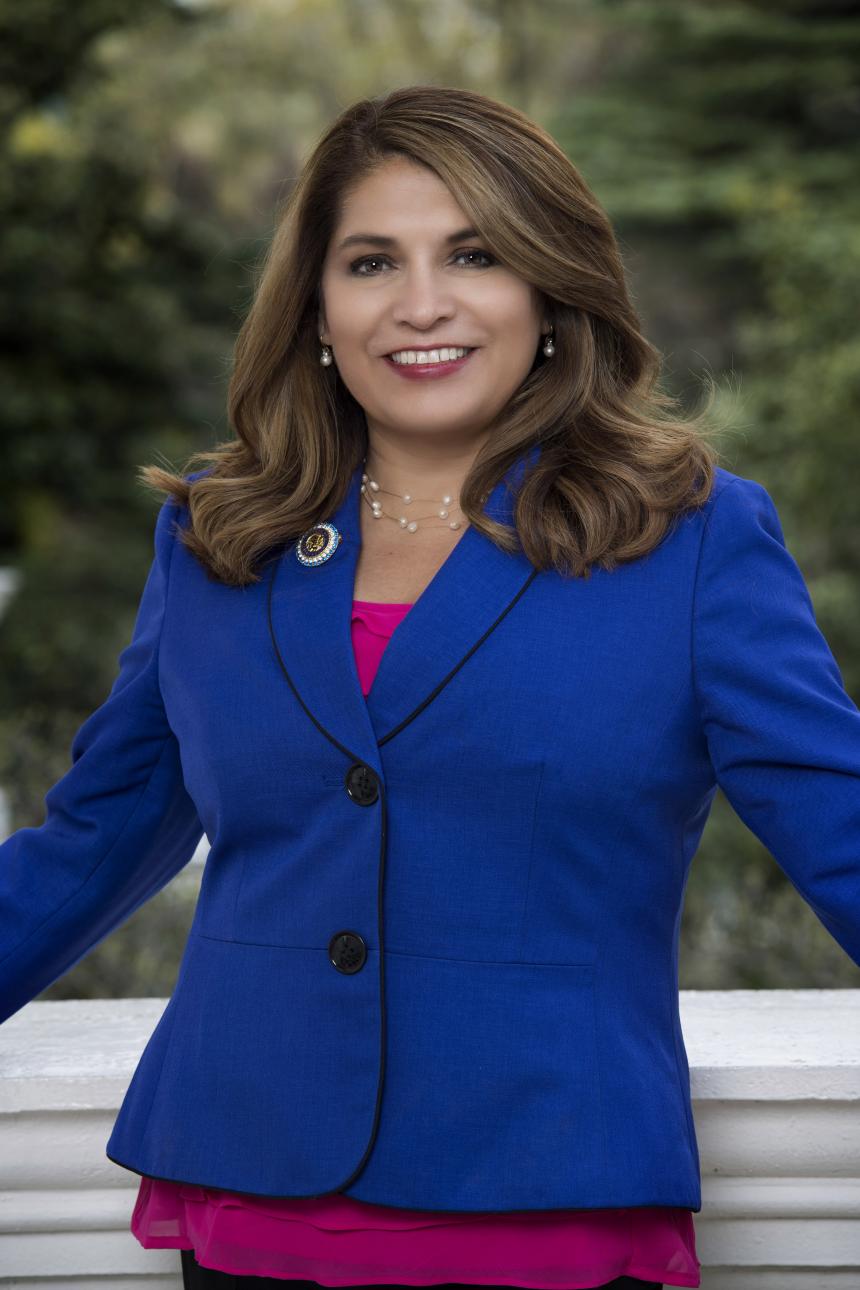
Asm. Sharon Quirk-Silva
Sponsored bills
Existing law requires the State Air Resources Board, on or before June 30, 2014, and until January 1, 2024, to annually aggregate and make available specified information regarding hydrogen-fueled vehicles and, based on that information, evaluate the need for additional publicly available hydrogen-fueling stations, as specified, and report those findings to the State Energy Resources Conservation and Development Commission. Existing law requires the commission to allocate $20,000,000 annually to fund the number of publicly available hydrogen-fueling stations identified by the state board, not to exceed 20% of the moneys appropriated by the Legislature from the Alternative and Renewable Fuel and Vehicle Technology Fund, until there are at least 100 publicly available hydrogen-fueling stations in operation in the state. Existing law requires the commission and the state board, on an annual basis, to jointly review and report progress toward establishing a hydrogen-fueling network that provides the coverage and capacity to fuel vehicles requiring hydrogen fuel that are being placed into operation in the state. Existing law requires the commission and the state board to consider certain information while conducting this review and determine the remaining cost and timing to establish a network of 100 publicly available hydrogen-fueling stations in operation in the state and whether funding from the Clean Transportation Program remains necessary to achieve this goal. This bill would delete the requirement that the state board aggregate and make available specified information and report to the commission on or before June 30, 2014. The bill would instead require the state board, on or before June 30, 2023, and annually thereafter, to determine the number of publicly available hydrogen-fueling stations that are necessary to provide a publicly available hydrogen-fueling station network, taking into consideration the state board's 2020 Mobile Source Strategy and specified goals, recommendations, and data. The bill would delete the requirement that the commission allocate $20,000,000 annually to fund the number of publicly available hydrogen-fueling stations identified by the state board. The bill would instead require the commission to annually allocate from the moneys annually appropriated by the Legislature from the fund an amount determined appropriate by the commission to achieve the goal established by the state board of providing a publicly available hydrogen-fueling station network and to build the number of electric vehicle or "EV" charging stations estimated by the commission its biennial statewide assessment of electric vehicle charging infrastructure, as provided. The bill would require the commission to ensure that certain requirements are met regarding expenditures of the moneys allocated by the commission. The bill would require the commission and the state board, as part of their annual joint review and report, to determine the remaining cost and timing to establish a network of 200 statewide publicly available hydrogen-fueling stations, instead of 100 stations.
(1) Existing law establishes a system of public elementary and secondary schools in this state. This system comprises local educational agencies throughout the state that provide instruction to pupils in kindergarten and grades 1 to 12, inclusive, at schoolsites operated by these agencies. Existing law requires the governing board of a school district and the county superintendent of schools to make applications for free or reduced-price meals available to pupils at all times during each regular schoolday. Existing law authorizes the governing boards of school districts and county superintendents of schools to make applications for free or reduced-price meals electronically available online. Existing law specifies requirements to be met by the governing boards of school districts, county offices of education, and school food authorities that choose to provide access to an online application. This bill would require applications for free or reduced-price meals made electronically available online by school district governing boards or county offices of education to comply with specified requirements, including provisions prohibiting the misuse of information provided online by applicants. The bill would require applications for free and reduced-price meals, which are authorized to be submitted at any time during a schoolday, to be processed within 10 days of submission. To the extent that this provision would impose new duties on local educational agencies, it would constitute a state-mandated local program. The bill would make private third-party vendors who violate its provisions subject to specified civil penalties. The bill would specify that its provisions would not prevent the use of information provided by a school meal applicant from being used by a governmental entity to increase access to a government-administered anti-hunger program. The bill would authorize each school district and county superintendent of schools to establish a secured internet website providing access to an online data collection form as part of the annual enrollment process, and would require the department to host a sample application by July 1, 2024, unless the Superintendent of Public Instruction determines that use of the form would negatively impact the local control funding formula. (2) Existing law provides for the federal Supplemental Nutrition Assistance Program (SNAP) , administered in California as CalFresh, under which each county distributes nutrition assistance benefits provided by the federal government to eligible households. Existing law establishes the California Work Opportunity and Responsibility to Kids (CalWORKs) program, under which each county provides cash assistance and other benefits to qualified low-income families using federal, state, and county funds. Existing law establishes the Medi-Cal program, which is administered by the State Department of Health Care Services and under which qualified low-income persons receive health care benefits. Existing federal law provides for the Pandemic Electronic Benefit Transfer (P-EBT) program, under which the Secretary of Agriculture of the United States is authorized to approve state plans to provide eligible children with temporary emergency nutrition assistance benefits during fiscal years 2020 and 2021 in any case in which a school is closed or has reduced the number of days or hours that students attend the school during a public health emergency designation during which the school would otherwise be in session. This bill would establish the Better Out of School Time (BOOST) Nutrition EBT Program, to be administered by the State Department of Social Services, to provide benefits to eligible pupils during regularly scheduled summer breaks. The bill would make eligible pupils who receive benefits under Medi-Cal, CalFresh, or CalWORKs, or are in foster care. The bill would make implementation of the BOOST Nutrition EBT Program contingent upon an appropriation in the annual Budget Act or another statute for its purposes. The bill would require the department to seek all available funding for, and maximize participation in, the P-EBT program. The bill would also require the department to issue BOOST Nutrition EBT benefits to any pupil who was eligible to receive benefits under the P-EBT program, as of July 1, 2021, for the 5-month period following the end of the P-EBT program, and any child who was eligible to receive benefits under the P-EBT program, as of July 1, 2021, for the 5-month period following the end of the P-EBT program and who also receives benefits under Medi-Cal, CalFresh, or CalWORKs, or is in foster care. By imposing new duties on local educational agencies, the bill would impose a state-mandated local program. (3) The California Constitution requires the state to reimburse local agencies and school districts for certain costs mandated by the state. Statutory provisions establish procedures for making that reimbursement. This bill would provide that, if the Commission on State Mandates determines that the bill contains costs mandated by the state, reimbursement for those costs shall be made pursuant to the statutory provisions noted above.
Existing law establishes the California Emergency Solutions and Housing Program, under the administration of the Department of Housing and Community Development and requires the department to, among other things, provide rental assistance and housing relocation and stabilization services to ensure housing affordability to people who are experiencing homelessness or who are at risk of homelessness. This bill would require the department, subject to an appropriation in the annual Budget Act, to develop and administer a program to award grants to qualified homeless shelters and qualified domestic violence shelters, as described, for the provision of shelter, food, and basic veterinary services for pets owned by people experiencing homelessness or escaping domestic violence. The bill would authorize the department to use up to 5% of the funds appropriated in the annual Budget Act for those purposes for its costs in administering the program.
Existing law establishes the California Community Colleges, under the administration of the Board of Governors of the California Community Colleges, the University of California, under the administration of the Regents of the University of California, and the California State University, under the administration of the Trustees of the California State University, as the 3 segments of public postsecondary education in this state. Existing law establishes the California School Finance Authority, and authorizes the authority to issue revenue bonds to finance projects for a single or several participating parties, defined to include a community college district that undertakes the financing or refinancing of a project. Existing law, the California Educational Facilities Authority Act, authorizes the California Educational Facilities Authority, among other things, to develop student housing on or near public institutions of higher education through the use of agreements with participating nonprofit entities. This bill would establish the California Student Housing Revolving Loan Fund Act of 2022 to provide zero-interest loans to qualifying applicants of the University of California, the California State University, and the California Community Colleges for the purpose of constructing affordable student housing and affordable faculty and staff housing, as specified. The bill would establish the California Student Housing Revolving Fund as a continuously appropriated fund in the State Treasury, thereby making an appropriation. The bill would state the intent of the Legislature to appropriate $5,000,000,000 for purposes of the housing loans. The bill would require the California School Finance Authority and the California Educational Facilities Authority to submit a report, by March 15, 2024, to the Department of Finance and the budget committees of the Assembly and Senate containing information on the act, as provided. The bill would apply certain provisions of the California Educational Facilities Authority Act to the University of California and the California State University for purposes of housing projects, as defined. This bill would declare that it is to take effect immediately as an urgency statute.
This measure would recognize that the Antelope Valley will henceforth be affectionately and acceptably referred to by the State of California as the Aerospace Valley.
This measure would proclaim the week of August 1, 2022, to August 7, 2022, inclusive, as California HPV Vaccine Week in order to increase awareness of the human papillomavirus (HPV) vaccine as a cancer prevention tool and to promote the vaccination of all adolescents who are 9 to 13 years of age, inclusive, throughout California. The measure would urge all health providers and community members to get California adolescents caught up on all routine vaccinations, especially the cancer-preventing HPV vaccine.
This measure would designate the month of October 2022 as California Hindu American Awareness and Appreciation Month. The measure would also recognize and acknowledge the significant contributions made by Californians of Hindu heritage to the state and seek to increase awareness and understanding of the Hindu American community.
This measure would recognize September 20, 2022, and every year on that date thereafter, as California Surfing Day to celebrate the California surfing lifestyle, would commend all those who honor the history, culture, and future of surfing, as well as the sport of surfing and the protection of our beach and ocean environments, would express support for future surfers and encourage potential surfing Olympians to work diligently, and would encourage all Californians to enjoy California Surfing Day.