

Passed Jan 28, 2019
1 co-sponsor
Total votes
25,954
all sessions
Attendance
94%
1,387 missed
Lower than 81% of chamber peers
With party
98%
of cast votes
Near the chamber average
Bipartisan score
1%
crosses aisle rarely
Near the chamber average
Sponsored
2,045
bills & resolutions
Near the chamber average
Committees
4
assignments
2,045 bills and resolutions
Sponsored bills
Total
2,045
Primary
262
Co-sponsor
1,783
This page
2,045
matching current filters
Passed Jan 22, 2019
1 co-sponsor
Employment discrimination: enforcement.
Existing law imposes various restrictions on employers with respect to contracts and applications for employment. A violation of those restrictions is a misdemeanor. Existing law creates the Division of Labor Standards Enforcement, which is under the direction of the Labor Commissioner, and generally commits to the commissioner the authority and responsibility for the enforcement of employment laws. This bill would prohibit a person from, as a condition of employment, continued employment, the receipt of any employment-related benefit, or as a condition of entering into a contractual agreement, prohibiting an applicant for employment, employee, or independent contractor from disclosing to any person an instance of sexual harassment that the employee or independent contractor suffers, witnesses, or discovers in the workplace or in the performance of the contract, or otherwise opposing any lawful practice, or from exercising any right or obligation or participating in any investigation or proceeding with respect to unlawful harassment or discrimination. The bill would also prohibit an employer from requiring any applicant for employment or any employee to waive any right, forum, or procedure for a violation of any provision of the California Fair Employment and Housing Act (FEHA) or other specific statutes governing employment, as a condition of employment, continued employment, the receipt of any employment-related benefit, or as a condition of entering into a contractual agreement. The bill would also prohibit an employer from threatening, retaliating or discriminating against, or terminating any applicant for employment or any employee because of the refusal to consent to the waiver of any right, forum, or procedure for a violation of specific statutes governing employment. The bill would establish a specific exemption from those prohibitions. Because a violation of these prohibitions would be a crime, the bill would impose a state-mandated local program. FEHA makes specified employment and housing practices unlawful and provides procedures for enforcement by the Department of Fair Employment and Housing. FEHA authorizes a person alleging a violation of specified provisions of the act relating to employment discrimination to submit a verified complaint to the Department of Fair Employment and Housing, and requires the department to take actions to investigate and conciliate that complaint. FEHA authorizes the department to bring a civil action on behalf of the person who submitted the complaint upon the failure to eliminate an unlawful practice under these provisions. FEHA requires the department to issue a right-to-sue notice to a person who submitted the complaint if certain conditions occur, and FEHA requires a person who has been issued a right-to-sue notice to bring an action within one year from when the department issued that notice. This bill would additionally make violations of the prohibitions described above, relating to sexual harassment and waivers, unlawful employment practices under FEHA. The California Constitution requires the state to reimburse local agencies and school districts for certain costs mandated by the state. Statutory provisions establish procedures for making that reimbursement. This bill would provide that no reimbursement is required by this act for a specified reason.
Vetoed Sep 30, 2018
1 co-sponsor
Pretrial release and detention: pretrial services.
(1) Existing law, as proposed by SB 10 of the 2017–18 Regular Session, commencing October 1, 2019, requires persons arrested and detained to be subject to a pretrial risk assessment conducted by Pretrial Assessment Services, defined as an entity, division, or program that is assigned the responsibility to assess the risk level of persons charged with the commission of a crime, report the results of the risk determination to the court, and make recommendations for conditions of release of individuals pending adjudication of their criminal case. SB 10 requires the courts to establish pretrial assessment services and authorizes those services to be performed by court employees or through a contract with a local public agency, as specified. SB 10 provides that if no local agency will agree to perform the pretrial assessments, and if the court elects not to perform the assessments, the court may contract with a new local pretrial assessment services agency established specifically to perform the role. SB 10 requires pretrial assessment services to be performed by public employees. This bill, notwithstanding the requirement that pretrial assessment services be performed by public employees, would authorize, until January 1, 2023, a qualified local public agency in the City and County of San Francisco to contract with the existing not-for-profit entity that is performing pretrial services in the city and county to provide continuity and sufficient time to transition the entity's employees into public employment. (2) SB 10 authorizes Pretrial Assessment Services to release a person assessed as being a low risk, as defined, on his or her own recognizance, and additionally requires superior courts to adopt rules authorizing Pretrial Assessment Services to release persons assessed as being a medium risk, as defined, on his or her own recognizance. However, SB 10 prohibits Pretrial Assessment Services from releasing persons who meet specified conditions, including, among others, tier 2 sex offenders subject to registration for a minimum of 20 years and tier 3 sex offenders subject to lifetime registration. This bill would provide that if SB 10 of the 2017–18 Regular Session becomes operative, the release prohibitions described above would be expanded to additionally include persons convicted of sex crimes and certain other offenses subject to the Sex Offender Registration Act, as specified. By increasing the length of time certain persons remain in county jails, this bill would impose a state-mandated local program. (3) The California Constitution requires the state to reimburse local agencies and school districts for certain costs mandated by the state. Statutory provisions establish procedures for making that reimbursement. This bill would provide that, if the Commission on State Mandates determines that the bill contains costs mandated by the state, reimbursement for those costs shall be made pursuant to the statutory provisions noted above.
Signed into law Sep 30, 2018
1 co-sponsor
Diversion: mental disorders.
Existing law authorizes a court to grant pretrial diversion, for a period no longer than 2 years, to a defendant suffering from a mental disorder, on an accusatory pleading alleging the commission of a misdemeanor or felony offense, in order to allow the defendant to undergo mental health treatment. Existing law conditions eligibility on, among other criteria, a court finding that the defendant's mental disorder played a significant role in the commission of the charged offense. Existing law requires, if the defendant has performed satisfactorily in diversion, that the court dismiss the defendant's criminal charges, with a record filed with the Department of Justice indicating the disposition of the case diverted, that the arrest is deemed never to have occurred, and requires the court to order access to the record of the arrest restricted, except as specified. This bill would make defendants ineligible for the diversion program for certain offenses, including murder, voluntary manslaughter, and rape. The bill would authorize a court to require the defendant to make a prima facie showing that the defendant will meet the minimum requirements of eligibility for diversion and that the defendant and the offense are suitable for diversion, as specified. The bill would also require the court, upon request, to conduct a hearing to determine whether restitution is owed to any victim as a result of the diverted offense and, if owed, to order its payment during the period of diversion. The bill would provide that a defendant's inability to pay restitution due to indigence or mental disorder would not be grounds for denial of diversion or a finding that the defendant has failed to comply with the terms of diversion. The bill would also make technical changes.
Signed into law Sep 30, 2018
1 co-sponsor
Commercial fishing: drift gill net shark and swordfish fishery: permit transition program.
(1) Existing law prohibits a person from using or operating, or assisting in using or operating, a boat, aircraft, net, trap, line, or other appliance to take fish for commercial purposes unless the person holds a commercial fishing license issued by the Department of Fish and Wildlife. Existing law prohibits the taking of shark and swordfish for commercial purposes with drift gill nets except under a valid drift gill net shark and swordfish permit (DGN permit) issued to that person that has not been suspended or revoked and is issued to at least one person aboard the boat, except as provided. Existing law authorizes the Director of Fish and Wildlife to close the drift gill net shark and swordfish fishery if, after a public hearing, the director determines the action is necessary to protect the swordfish or thresher shark and mako shark resources and requires the director to reopen the fishery if he or she determines that the conditions that necessitated the closure no longer exist. Existing law authorizes a DGN permit to be transferred to another person under certain circumstances. Under existing law, a violation of these provisions is a crime. The California Ocean Protection Act creates the California Ocean Protection Trust Fund in the State Treasury and authorizes moneys deposited in the fund, upon appropriation by the Legislature, to be expended by the Ocean Protection Council for, among other things, grants or loans to public agencies, nonprofit corporations, or private entities for, or direct expenditures on, projects or activities that protect, conserve, and restore coastal waters and ocean ecosystems including through the acquisition from willing sellers of vessels, equipment, licenses, harvest rights, permits, and other rights and property, to reduce threats to ocean ecosystems and resources. This bill would require the department by March 31, 2020, to establish a voluntary permit transition program that includes specified conditions, including a condition that a permittee who voluntarily surrenders his or her DGN permit and shark or swordfish gill net or nets receive, to the extent that funds for the transition program are available, a specified payment, as prescribed. The bill would require the department to enter into an agreement with a fiscal agent, as defined, for the fiscal agent to receive state and nonstate funds for purposes of the transition program and, upon receipt of adequate funds, to make the payment to a participating permittee. If the department enters into an agreement with a fiscal agent that is a state entity, the bill would continuously appropriate any funds received from nonstate sources to that state entity for purposes of the transition program. The bill would require the Ocean Protection Council to use $1 million of an appropriation made to it in the Budget Act of 2018 for whale and sea turtle entanglement to fund the transition program. The bill would require the department to notify the Legislature within 10 days of the date that the fiscal agent receives $1 million from nonstate sources and secures $1 million through an agreement with the Ocean Protection Council. The bill would require a DGN permit issued pursuant to these provisions to be surrendered or revoked as of January 31 of the 4th year following the department's notification to the Legislature. Because a violation of this provision would be a crime, the bill would impose a state-mandated local program. The bill would, beginning March 31, 2019, prohibit the transfer of a DGN permit. The bill would provide that the provisions dealing with the drift gill net shark and swordfish fishery do not create or recognize a property right in fish expected to be caught using a DGN permit. (2) Existing law establishes a swordfish permit that authorizes a person holding that permit to take, possess aboard a boat, and land swordfish for commercial purposes using specified methods but not including use of a drift gill net. Existing law establishes a fee of $330 for a swordfish permit, as adjusted pursuant to the above-described index, but exempts the holder of a DGN permit from payment of that fee. This bill would also exempt any person who participates in the permit transition program established by the department from payment of the fee for a swordfish permit. (3) Existing law makes it unlawful to use fishing lines, including, but not limited to, troll lines and handlines more than 900 feet in length unless they are used as set lines, as specified. This bill would also exempt from this prohibition fishing lines more than 900 feet in length if they are used as part of deep-set buoy gear authorized under federal law. (4) The California Constitution requires the state to reimburse local agencies and school districts for certain costs mandated by the state. Statutory provisions establish procedures for making that reimbursement. This bill would provide that no reimbursement is required by this act for a specified reason.
Signed into law Sep 27, 2018
1 co-sponsor
Theft: aggregation: organized retail theft.
(1) Existing law, the Safe Neighborhoods and Schools Act, enacted as an initiative statute by Proposition 47, as approved by the electors at the November 4, 2014, statewide general election, requires shoplifting, defined as entering a commercial establishment with the intent to commit larceny where the property taken does not exceed $950, to be punished as a misdemeanor. Proposition 47 requires that the act of shoplifting be charged as shoplifting and prohibits a person who is charged with shoplifting from being charged with burglary or theft of the same property. This bill would, until January 1, 2021, create the crime of organized retail theft which would be defined as acting in concert with one or more persons to steal merchandise from one or more merchant's premises or online marketplace with the intent to sell, exchange, or return the merchandise for value, acting in concert with 2 or more persons to receive, purchase, or possess merchandise knowing or believing it to have been stolen, acting as the agent of another individual or group of individuals to steal merchandise from one or more merchant's premises or online marketplaces as part of a plan to commit theft, or recruiting, coordinating, organizing, supervising, directing, managing, or financing another to undertake acts of theft. The bill would make these crimes punishable as either misdemeanors or felonies, as specified. By creating new crimes, this bill would impose a state-mandated local program. (2) Under existing law, when a public offense is committed in part in one jurisdictional territory and in part in another jurisdictional territory, or the acts constituting or requisite to the consummation of the offense occur in 2 or more jurisdictional territories, the jurisdiction for the offense is in any competent court within either jurisdictional territory. This bill would, until January 1, 2021, additionally establish the jurisdiction of a criminal action for theft, organized retail theft, or receipt of stolen property as including the county where an offense involving the theft or receipt of the stolen merchandise occurred, the county in which the merchandise was recovered, or the county where any act was done by the defendant in instigating, procuring, promoting, or aiding in the commission of the offense. The bill would also, if multiple offenses of theft or other specified crimes all involving the same defendant or defendants and the same merchandise or the same defendant or defendants and the scheme or substantially similar activity occur in multiple jurisdictions, establish that any of those jurisdictions is a proper jurisdiction for all of the offenses. (3) Existing law generally requires that a person arrested for a misdemeanor be released on written notice to appear in court. Existing law allows a peace officer to retain a person in custody on an arrest for a misdemeanor if, among other reasons, there are one or more outstanding arrest warrants for the person, there is reason to believe the person will not appear in court, or there is a reasonable likelihood that the offense will continue or resume. This bill would, until January 1, 2021, allow a peace officer to retain a person arrested for a misdemeanor if there are unresolved failures to appear in court on previous misdemeanor citations, if he or she has been cited, arrested, or convicted for misdemeanor or felony theft from a store or from a vehicle in the previous 6 months, or if there is probable cause to believe that the person arrested is guilty of committing organized retail theft, as defined. By increasing the number of persons subject to detention at the county jail, this bill would create a state-mandated local program. (4) Existing law authorizes a court to issue a bench warrant whenever a defendant fails to appear in court as required by law, as specified. This bill would, until January 1, 2021, authorize the issuance of a bench warrant if a defendant has been cited or arrested for misdemeanor or felony theft from a store or vehicle and has failed to appear in court in connection with that charge or those charges in the previous 6 months. (5) Existing law authorizes a court, with the consent of the defendant and a waiver of the defendant's speedy trial right, to postpone prosecution of a misdemeanor and place the defendant in a pretrial diversion program or a deferred entry of judgment program under specified situations. This bill would, until January 1, 2021, authorize a city or county prosecuting attorney or a county probation department to create a diversion or deferred entry of judgment program for persons who commit repeat theft offenses, as specified. Under the program, the prosecuting attorney may enter into a written agreement to refrain from or defer prosecution on the offense or offenses if the person completes program requirements such as community service and makes adequate restitution or an appropriate substitute for restitution to the establishment or person from which property was stolen. (6) Existing law establishes the Board of State and Community Corrections to provide statewide leadership, coordination, and technical assistance to promote effective state and local efforts and partnerships in California's adult and juvenile criminal justice system. This bill would, until January 1, 2021, additionally require the board to, upon appropriation by the Legislature, award funding for a grant program to 4 or more county superior courts or county probation departments to create demonstration projects to reduce the recidivism of high-risk misdemeanor probationers through the use of risk assessments at sentencing and formal probation. The bill would require the board to develop reporting requirements for each county, as specified, and would require the board to prepare and distribute a report that compiles this information, as specified. The bill would also, until January 1, 2021, require the Department of the California Highway Patrol to, in coordination with the Department of Justice, convene a regional property crimes task force to assist local law enforcement in counties identified by the Department of the California Highway Patrol as having elevated levels of property crime, including, but not limited to, organized retail theft and vehicle burglary. The bill would require the task force to provide local law enforcement in the identified region with logistical support and other law enforcement resources, including, but not limited to, personnel and equipment, as determined to be appropriate by the Commissioner of the California Highway Patrol in consultation with task force members. (7) The bill would provide that its provisions are severable. (8) The California Constitution requires the state to reimburse local agencies and school districts for certain costs mandated by the state. Statutory provisions establish procedures for making that reimbursement. This bill would provide that with regard to certain mandates no reimbursement is required by this act for a specified reason. With regard to any other mandates, this bill would provide that, if the Commission on State Mandates determines that the bill contains costs so mandated by the state, reimbursement for those costs shall be made pursuant to the statutory provisions noted above.
Signed into law Sep 27, 2018
1 co-sponsor
Firearms: license to carry concealed.
Existing law authorizes the sheriff of a county or the chief or other head of a municipal police department of any city or city and county to issue a license to carry a concealed firearm to an applicant for that license if the applicant is of good moral character, good cause exists for issuance of the license, the applicant meets specified residency requirements, and the applicant has completed a specified course of training, acceptable to the licensing authority. Under existing law, the required course of training for an applicant must be no more than 16 hours and must cover firearm safety and laws regarding the permissible use of a firearm. This bill would require that the course of training be at least 8 but not be required to exceed 16 hours. The bill would require the course of training to include instruction on firearm handling and shooting technique and to also include a demonstration by the applicant of shooting proficiency and safe handling of each firearm the applicant will be licensed to carry and to include live-fire exercises conducted on a firing range. The bill would require a licensing authority to establish, and make available to the public, standards it uses when issuing licenses with regards to the live-fire shooting exercises it requires, as specified. By imposing additional requirements on local licensing authorities, this bill would create a state-mandated local program. The California Constitution requires the state to reimburse local agencies and school districts for certain costs mandated by the state. Statutory provisions establish procedures for making that reimbursement. This bill would provide that, if the Commission on State Mandates determines that the bill contains costs mandated by the state, reimbursement for those costs shall be made pursuant to the statutory provisions noted above.
Signed into law Sep 26, 2018
1 co-sponsor
Gun violence restraining orders.
Existing law authorizes a court to issue an ex parte gun violence restraining order prohibiting the subject of the petition from having in his or her custody or control, owning, purchasing, possessing, or receiving, or attempting to purchase or receive, a firearm or ammunition when it is shown that there is a substantial likelihood that the subject of the petition poses a significant danger of harm to himself, herself, or another in the near future by having in his or her custody or control, owning, purchasing, possessing, or receiving a firearm, and that the order is necessary to prevent personal injury to himself, herself, or another, as specified. Existing law requires the ex parte order to expire no later than 21 days after the date on the order. Existing law also authorizes a court to issue a gun violence restraining order prohibiting the subject of the petition from having in his or her custody or control, owning, purchasing, possessing, or receiving, or attempting to purchase or receive, a firearm or ammunition for a period of one year when there is clear and convincing evidence that the subject of the petition, or a person subject to an ex parte gun violence restraining order, as applicable, poses a significant danger of personal injury to himself, herself, or another by having in his or her custody or control, owning, purchasing, possessing, or receiving a firearm, and that the order is necessary to prevent personal injury to himself, herself, or another, as specified. Existing law authorizes renewal of a gun violence restraining order within 3 months of the order's expiration. Petitions for ex parte, one-year, and renewed gun violence restraining orders may be made by an immediate family member of the person or by a law enforcement officer. This bill would similarly authorize, but not require, an employer, a coworker, or an employee of a secondary or postsecondary school that the person has attended in the last 6 months to file a petition for an ex parte, one-year, or renewed gun violence restraining order.
Vetoed Sep 26, 2018
1 co-sponsor
Pesticides: schoolsites: report.
Existing law, the Healthy Schools Act of 2000, requires that the preferred method of managing pests at schoolsites, as defined, is to use effective, least toxic pest management practices and requires schoolsites to maintain records of all pesticides used at the schoolsite for a period of 4 years. Existing law requires schools to provide all staff and parents or guardians of pupils enrolled at a school written notification of, among other things, expected pesticide use at that schoolsite. Existing law requires the Department of Pesticide Regulation to establish an integrated pest management training program in order to facilitate the adoption of a model integrated pest management program and least-hazardous pest control practices by schoolsites and requires certain persons who, in the course of their work, intend to apply a pesticide at a schoolsite to annually complete a training course provided by that department. This bill would require the department to submit a report to the Legislature on or before January 1, 2021, that evaluates the implementation, and the effect of the implementation, of the Healthy Schools Act of 2000 and that provides recommendations on improving the implementation and efficacy of the Healthy Schools Act of 2000.
Signed into law Sep 23, 2018
0 co-sponsors
Ask Maddy
·
AI policy assistant
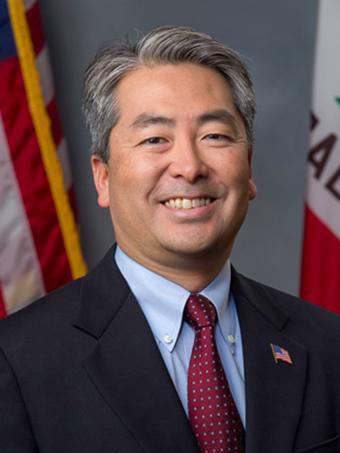
Ask Maddy about Al Muratsuchi
Scope: CA
Hi! I can help you understand Al Muratsuchi's legislative record. What would you like to know?
Try one of these
i
Maddy answers using official bill text and legislative records. Always verify before sharing.
Sources cited inline