

Passed Feb 2, 2023
1 co-sponsor
Total votes
25,976
all sessions
Attendance
97%
714 missed
Higher than 81% of chamber peers
With party
99%
of cast votes
Higher than 87% of chamber peers
Bipartisan score
0%
crosses aisle rarely
Lower than 89% of chamber peers
Sponsored
2,631
bills & resolutions
Higher than 81% of chamber peers
Committees
7
assignments
2,631 bills and resolutions
Sponsored bills
Total
2,631
Primary
293
Co-sponsor
2,338
This page
2,631
matching current filters
Passed Jan 30, 2023
1 co-sponsor
Passed Jan 23, 2023
1 co-sponsor
Pupil rights: restorative justice practices.
Existing law establishes a system of public elementary and secondary schools in this state. Existing law requires suspension to be imposed on a pupil only when other means of correction fail to bring about proper conduct, and specifies that other means of correction may include, among other things, participation in a restorative justice program. This bill would require the State Department of Education to develop evidence-based best practices for restorative justice practice implementation on a school campus and to make these best practices available on the department's internet website on or before June 1, 2024, as specified. The bill would require the department to take specified actions in developing best practices and would encourage the department to, to the extent feasible, take into account resources and best practices that have been identified or developed as part of aligned efforts, as specified.
Signed into law Sep 30, 2022
1 co-sponsor
Wildlife connectivity: transportation projects.
Under existing law, the Department of Fish and Wildlife (DFW) has jurisdiction over the conservation, protection, and management of fish, wildlife, native plants, and habitat necessary for biologically sustainable populations of those species. Existing law authorizes DFW to approve compensatory mitigation credits for wildlife connectivity actions taken under specified programs. Existing law vests the Department of Transportation (Caltrans) with full possession and control of the state highway system. Existing law requires Caltrans to complete assessments of potential barriers to anadromous fish prior to commencing any project using state or federal transportation funds and requires projects to be constructed without presenting barriers to fish passage. This bill would require Caltrans, in consultation with DFW and other appropriate agencies, to establish an inventory of connectivity needs on the state highway system where the implementation of wildlife passage features could reduce wildlife-vehicle collisions or enhance wildlife connectivity, as specified. The bill would require Caltrans, no later than July 1, 2024, to develop and publish the inventory and a list of funded transportation projects with wildlife passage features that address wildlife connectivity needs and would require Caltrans to update the inventory and the project list at least once every 2 years. The bill would require Caltrans, for any project on the state highway system in a connectivity area that adds a traffic lane or that has the potential to significantly impair wildlife connectivity, to perform an assessment, in consultation with DFW, to identify potential wildlife connectivity barriers and any needs for improved permeability, as specified. The bill would require Caltrans to submit the assessment to DFW and, if any structural barrier to wildlife connectivity exists or will be added by the project for target species in the connectivity area, would require the implementing agency to remediate barriers to wildlife connectivity in conjunction with the project. The bill would authorize Caltrans to use compensatory mitigation credits to satisfy these remediation requirements if DFW concurs with the use of those credits. The bill would establish the Transportation Wildlife Connectivity Remediation Program, to be administered by Caltrans, in consultation with DFW, for the purposes of improving wildlife connectivity across transportation systems in connectivity areas. As part of the program, the bill would require Caltrans, upon appropriation by the Legislature, to develop a program of projects that support the remediation and improvement of wildlife connectivity across transportation systems, as specified. The bill would require Caltrans, in concurrence with DFW, to develop guidelines for the implementation of the program following one or more public workshops and an opportunity for the public to provide written comments. The bill would authorize Caltrans to receive compensatory mitigation credits for the implementation of a project in the program if DFW concurs with the creation of those credits. The bill would require the department to update appropriate design guidance, including the Highway Design Manual, by July 1, 2025, to incorporate design concepts for wildlife passage features and related standard plans and specifications as appropriate. The bill would require Caltrans to submit a report to specified committees of the Legislature by July 1, 2028, that includes recommendations for the provisions of the bill and describes the status of its progress in accomplishing the requirements of the bill.
Signed into law Sep 30, 2022
1 co-sponsor
Theft: jurisdiction.
Under existing law, when a public offense is committed in part in one jurisdictional territory and in part in another jurisdictional territory, or the acts constituting or requisite to the consummation of the offense occur in 2 or more jurisdictional territories, the jurisdiction for the offense is in any competent court within either jurisdictional territory. This bill would establish the jurisdiction of a criminal action brought by the Attorney General for theft, organized retail theft, or receipt of stolen property as including the county where an offense involving the theft or receipt of the stolen merchandise occurred, the county in which the merchandise was recovered, or the county where any act was done by the defendant in instigating, procuring, promoting, or aiding in the commission of the offense. The bill would also, if multiple offenses of theft or other specified crimes all involving the same defendant or defendants and the same merchandise, or the same defendant or defendants and the same scheme or substantially similar activity, occur in multiple jurisdictions, establish that any of those jurisdictions is a proper jurisdiction for all of the offenses. The bill would extend jurisdiction to all associated offenses connected together in their commission to the underlying theft offenses.
Signed into law Sep 30, 2022
1 co-sponsor
California State University: emergency response programs: report.
Existing law establishes the California State University, administered by the Trustees of the California State University, as one of the segments of public postsecondary education in this state. The California State University comprises 23 institutions of higher education located throughout the state. Existing law authorizes the trustees to appoint one or more persons to constitute a police department for the headquarters and for each campus of the California State University. This bill would require the Chancellor of the California State University, on or before July 1, 2023, to convene a stakeholder workgroup that includes a representative from specified stakeholders, including faculty, staff, and students. The bill would require the stakeholder workgroup, at a minimum, to evaluate and report on alternative options to current emergency response programs on the campuses of the California State University and alternative dispute resolution options to resolve employee conflicts. The bill would require the stakeholder workgroup to submit a report to the Legislature and the Chancellor of the California State University 9 months after the first meeting of the stakeholder workgroup that includes recommendations to alleviate concerns of current emergency response programs on the campuses of the California State University. The bill would repeal these provisions on July 1, 2027.
Signed into law Sep 30, 2022
0 co-sponsors
Vehicles: toll exemptions.
Under existing law, a person who enters a vehicular crossing becomes liable for any tolls imposed. Existing law prescribes the means by which a toll may be collected or paid, including by the use of an electronic transponder or by means of capturing a license plate number and billing the registered owner. Existing law prohibits a person from evading, or attempting to evade, the payment of tolls on any vehicular crossing or toll highway. A violation of this prohibition is subject to civil penalties, but it is not a crime. This bill would exempt a vehicle that is registered to a veteran, displaying a specialized veteran license plate, as specified, and registered to a transponder or other electronic toll payment device from payment of a toll or related fines on a toll road, toll bridge, toll highway, vehicular crossing, or any other toll facility, except a high-occupancy toll lane. The bill would also make conforming changes. Because this bill would create a new duty by requiring locally owned and operated toll facilities to recognize and exempt eligible vehicles, this bill would impose a state-mandated local program. The California Constitution requires the state to reimburse local agencies and school districts for certain costs mandated by the state. Statutory provisions establish procedures for making that reimbursement. This bill would provide that, if the Commission on State Mandates determines that the bill contains costs mandated by the state, reimbursement for those costs shall be made pursuant to the statutory provisions noted above.
Signed into law Sep 30, 2022
1 co-sponsor
School finance: administrative employees to teacher ratio.
Existing law sets forth the maximum ratios of administrative employees to each 100 teachers in the various types of school districts. Existing law requires the Superintendent of Public Instruction to determine, for each current fiscal year, for each school district in the state, the total number of administrative employees except as provided, the total number of teachers except those serving in positions that are supported by federal funds or by categorical grants from any source and are in programs that require specific teacher/administrator ratios, the total maximum number of administrative employees that should be employed by the school district based upon the application of the appropriate ratio prescribed by law, and the number of administrative employees in excess of the number allowable without penalty, as provided. Existing law, for purposes of determining the allowable ratio of administrative employees to teachers for the San Diego City School District, excludes from the numbers identified pursuant to the above provisions the number of employees and the full-time equivalent of all of the fractional time of employees serving the school district in positions mandated as the result of the school district's court-ordered integration plan. This bill would extend the exclusion described above to the Los Angeles Unified School District. The bill also would, for purposes of calculating the administrative employee-to-teacher ratio in the 2022–23 to 2024–25 fiscal years, inclusive, authorize the Los Angeles Unified School District to include in the definition of "teacher," when calculating the ratio of administrative employees to teachers in the 2022–23 to 2024–25 fiscal years, inclusive, teachers who spend a majority of their time with pupils as intervention specialists or teachers who spend a majority of their time on a school campus providing training, coaching, or professional development to other teachers, or both of those. The bill would require the Los Angeles Unified School District to submit various reports related to the administrative employee-to-teacher ratio to the Superintendent, the Department of Finance, and the budget committees of both houses of the Legislature, as specified. By imposing additional reporting requirements on the Los Angeles Unified School District, the bill would impose a state-mandated local program. The bill also would make conforming and nonsubstantive changes. This bill would make legislative findings and declarations as to the necessity of a special statute for the Los Angeles Unified School District. The California Constitution requires the state to reimburse local agencies and school districts for certain costs mandated by the state. Statutory provisions establish procedures for making that reimbursement. This bill would provide that, if the Commission on State Mandates determines that the bill contains costs mandated by the state, reimbursement for those costs shall be made pursuant to the statutory provisions noted above.
Signed into law Sep 30, 2022
0 co-sponsors
Intermodal marine terminals.
Existing law prohibits an intermodal marine equipment provider or intermodal marine terminal operator, as defined, from imposing per diem, detention, or demurrage charges on an intermodal motor carrier relative to transactions involving cargo shipped by intermodal transport under certain circumstances, including when an intermodal marine terminal decides to divert equipment without 48 hours' notice. This bill would also prohibit an intermodal marine container provider from imposing those charges, extended dwell charges, or commencing or continuing free time, as defined, on a motor carrier, as defined, beneficial cargo owner, or other intermediary relative to transactions involving cargo shipped by intermodal transport under certain circumstances. The bill would instead specify that those circumstances include when the intermodal marine container provider decides to divert equipment from the original interchange location without notice, as described above, and also include when the motor carrier documents an unsuccessful attempt to make an appointment for either a loaded or empty container transaction, as specified. The bill would also specify that those circumstances include when a return or delivery of an intermodal container is delayed because a booked vessel's receiving date changes, and when the obstacle to the cargo retrieval or return of equipment are within the scope of responsibility of the carrier or their agent and beyond the control of the invoices or contracting party. Existing law also prohibits an intermodal marine equipment provider from terminating, suspending, or restricting equipment interchange rights of a motor carrier for specified reasons and from charging back, deducting, or offsetting per diem charges or certain other charges from the motor carrier's freight bill. This bill would also prohibit an intermodal marine container provider from commencing or continuing free time if cargo is unavailable for retrieval and timely notice of cargo availability has not been provided. Existing law defines "intermodal marine terminal" to mean a marine terminal location or facility that engages in discharging or receiving equipment owned, operated, or controlled by an equipment provider. This bill would define "intermodal marine container provider" to mean the entity authorizing delivery or receipt of physical possession of the container with a motor carrier, beneficial cargo owner, or other intermediary. The bill would also define "satellite facility" to mean an intermodal yard, that is not a marine terminal, within the same local commercial territory that supports operations of an intermodal marine container provider or intermodal marine terminal, and would require any provisions related to acts at intermodal marine terminals to also be applied to acts at satellite facilities. This bill would specify that where these provisions are addressed by future federal law or regulation, and the federal law or regulation permits states to exceed the requirements set forth in the federal law or regulation, the more stringent provision shall govern.
Signed into law Sep 30, 2022
1 co-sponsor
Ask Maddy
·
AI policy assistant
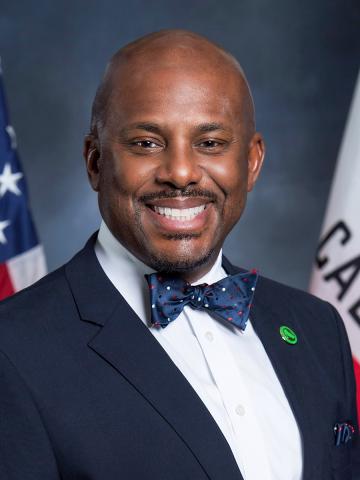
Ask Maddy about Mike Gipson
Scope: CA
Hi! I can help you understand Mike Gipson's legislative record. What would you like to know?
Try one of these
i
Maddy answers using official bill text and legislative records. Always verify before sharing.
Sources cited inline