

Existing law, the Planning and Zoning Law, requires each city, county, and city and county to prepare and adopt a general plan that contains certain mandatory elements, including a housing element. Existing law requires the housing element to identify the existing and projected housing needs of all economic segments of the community. Existing federal law requires a continuum of care, a group organized under the federal McKinney-Vento Homeless Assistance Act, to develop a plan that includes planning for and conducting, at least biennially, a point-in-time count of homeless persons within the geographic area. Existing law requires that information from the point-in-time count be used to, among other things, allocate funding for the Homeless Emergency Aid program and Homeless Housing, Assistance, and Prevention program. This bill would require a city, county, and city and county, within 60 days after the local continuum of care releases the results of a point-in-time count for a city, county, or city and county's jurisdiction, to, among other things, agendize the point-in-time count results at a meeting of the city, county, or city and county and present the steps the city, county, or city and county is taking to prevent and end homelessness, including, but not limited to, consideration of specified actions. By imposing new duties on local agencies, this bill would impose a state-mandated local program. The bill would include findings that changes proposed by this bill address a matter of statewide concern rather than a municipal affair and, therefore, apply to all cities, including charter cities. The California Constitution requires the state to reimburse local agencies and school districts for certain costs mandated by the state. Statutory provisions establish procedures for making that reimbursement. This bill would provide that, if the Commission on State Mandates determines that the bill contains costs mandated by the state, reimbursement for those costs shall be made pursuant to the statutory provisions noted above.
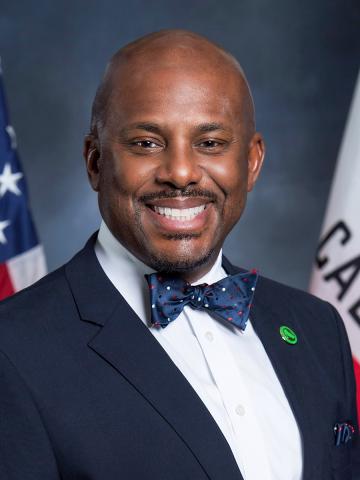
Sponsored bills
Existing law, the Uniform Anatomical Gift Act, authorizes the creation of a not-for-profit entity to be designated as the California Organ and Tissue Donor Registrar and requires that entity to establish and maintain the Donate Life California Organ and Tissue Donor Registry for persons who have identified themselves as organ and tissue donors upon their death. Existing law provides for the Medi-Cal program, administered by the State Department of Health Care Services and under which qualified low-income individuals receive health care services. The Medi-Cal program is, in part, governed and funded by federal Medicaid program provisions. Existing law requires the department, in consultation with the board governing the California Health Benefit Exchange, to develop a single paper, electronic, and telephone application for insurance affordability programs, including Medi-Cal. This bill would require the department to modify the electronic application for insurance affordability programs to add an option for individuals to enroll in the Donate Life California Organ and Tissue Donor Registry. The bill would require the option to include specified check boxes for an applicant to indicate whether to add the applicant's name to the registry. The bill would require the option to be voluntary to complete and to not be a required part of the application. The bill would also require a specified disclosure related to organ and tissue donations to be included with the check boxes described above. The bill would require the department to electronically transmit specified information related to enrollment in the registry on a weekly basis to the Donate Life California nonprofit organization.
Existing law requires the Department of Motor Vehicles to establish the California Legacy License Plate Program, and to create and issue a series of specialized license plates, consisting of one or more of 3 specified designs that replicate license plates from the state's past. Existing law requires the department to collect and hold paid applications for the plates, as specified, and prohibits the department from issuing a specialized license plate until it has received not less than 7,500 paid applications for any one of the particular plates on or before January 1, 2015. This bill would extend the deadline for receipt of the required number of paid applications to January 1, 2025, for plate designs that did not receive the required number of applications by January 1, 2015.
Existing law makes possession of a firearm by certain classes of persons, including a convicted felon, a person convicted of specified misdemeanors, a person has been found mentally incompetent to stand trial, a person has been found not guilty of specified crimes by reason of insanity, or a person has been placed under conservatorship, a crime. Existing law additionally makes it a crime to sell or give possession of a firearm to these classes of persons prohibited from owning a firearm. Existing law requires the Department of Justice, upon submission of firearm purchaser information by a licensed firearm dealer, to examine its records to determine whether a potential firearm purchaser is prohibited by state of federal law from possessing, receiving, owning, or purchasing a firearm. Existing law requires the department to participate in the National Instant Criminal Background Check System. This bill would require the Department of Justice to develop and launch a secure Internet-based platform to allow a person who resides in California to voluntarily add their own name to the California Do Not Sell List. The bill would require the department to ensure that information on the list is uploaded and reflected in the National Instant Criminal Background Check System. The bill would make it a crime, punishable as a misdemeanor, to transfer a firearm to a person who is validly registered on the California Do Not Sell List. By creating a new crime, this bill would impose a state-mandated local program. This bill would allow a person, after a specified period of time, to request removal from the list. The bill would require the State Department of Public Health to create and distribute informational materials about the California Do Not Sell List to general acute care hospitals and acute psychiatric hospitals. The bill would specify that a person presenting in a general acute care hospital or acute psychiatric hospital who is at a substantially elevated risk of suicide should be presented with these informational materials. The bill would specify that any suicide hotline maintained or operated by an entity funded in whole or in part by the state should generally inform callers on how to access the California Do Not Sell List Internet-based platform. The bill would provide that its provisions are severable. The California Constitution requires the state to reimburse local agencies and school districts for certain costs mandated by the state. Statutory provisions establish procedures for making that reimbursement. This bill would provide that no reimbursement is required by this act for a specified reason.
Under existing law, a person who drives a motor vehicle when the person has 0.08% or more, by weight, of alcohol in their blood, is guilty of driving under the influence of alcohol. Existing law defines vehicular manslaughter as the unlawful killing of a human being without malice aforethought, in the driving of a vehicle, where the killing was either the proximate result of the commission of an unlawful act, not amounting to a felony or a lawful act that might produce death, in an unlawful manner, either with or without gross negligence. Under existing law, vehicular manslaughter that is committed while the person was driving under the influence of alcohol is punishable as vehicular manslaughter while intoxicated or gross vehicular manslaughter while intoxicated. Existing law requires the driver of a vehicle involved in an accident resulting in injury to a person, other than that driver, or in the death of a person to immediately stop the vehicle at the scene of the accident and provide specified personal information to the injured person or the occupants of the other vehicle and to any traffic or police officer at the scene of the accident. Under existing law, if a vehicle accident results in permanent, serious injury or death, a person who violates the requirement to stop is subject to punishment by imprisonment in the state prison for 2, 3, or 4 years, or in a county jail for not less than 90 days nor more than one year, or by a specified fine, or both the imprisonment and fine. Existing law provides for the compensation of victims and derivative victims of specified types of crimes by the California Victim Compensation Board from the Restitution Fund, a continuously appropriated fund, for specified losses suffered as a result of those crimes. This bill would authorize the child of a victim of those crimes to collect compensation from the Restitution Fund for loss of support until the child reaches 18 years of age, in an amount not to exceed $100,000. By expanding the authorizations for use of moneys in the continuously appropriated Restitution Fund, this bill would make an appropriation.
(1) Existing law prohibits a person subject to a protective order, as defined, from owning, possessing, purchasing, or receiving a firearm or ammunition while that protective order is in effect. Existing law makes a violation of that prohibition with regard to purchasing or receiving a firearm or ammunition punishable by imprisonment in the county jail for up to one year, by imprisonment in the state prison for 16 months or 2 or 3 years, or by a fine not exceeding $1,000, or by both that imprisonment and fine. Existing law makes a violation of that prohibition with regard to owning or possessing a firearm or ammunition punishable by imprisonment in the county jail for up to one year, or by a fine not exceeding $1,000, or by both that imprisonment and fine. After notice and hearing, this bill would, for protective orders, as specified, issued on or after July 1, 2024, prohibit a person subject to the protective order from owning, possessing, purchasing, or receiving a firearm or ammunition within 3 years after the expiration of the order and make a violation of these provision a crime. The bill would require a court, if they find that the person willfully violated that prohibition within 3 years after the expiration of the order, to impose the maximum fine allowed under existing law. (2) Existing law allows a search warrant to be issued upon various grounds, including when the property or things to be seized include a firearm, if the prohibited firearm is possessed, owned, in the custody of, or controlled by a person against whom a specified protective order has been issued, and the person is served with the order and fails to relinquish the firearm as required by law. This bill would expand the grounds for the search warrant to include a person who is subject to any civil or criminal protective order that includes a prohibition on owning, possessing, or having custody or control of a firearm. (3) Existing law requires the Judicial Council to provide notice on all protective orders issued within the state and requires a restraining order requiring a person to relinquish a firearm or ammunition to state on its face that the respondent is prohibited from owning, possessing, purchasing, or receiving a firearm or ammunition while the protective order is in effect. This bill would require the Judicial Council to also include a statement in the notice that the firearm and ammunition prohibition extends for 3 years after the expiration of the protective order that is issued on or after July 1, 2024. The bill would require a restraining order to include a similar statement. By creating new crimes, this bill would create a state-mandated local program. The California Constitution requires the state to reimburse local agencies and school districts for certain costs mandated by the state. Statutory provisions establish procedures for making that reimbursement. This bill would provide that no reimbursement is required by this act for a specified reason.
Existing law requires that all witnesses take an oath or make an affirmation or declaration prior to testifying. Existing law permits a child under the age 10 or a dependent person with a substantial cognitive impairment, in the court's discretion, to promise to tell the truth in lieu of a taking an oath or making an affirmation or declaration. This bill would increase the age of a child permitted to promise to tell the truth in lieu of taking an oath or making an affirmation or declaration to 11 years of age.
(1) Existing law authorizes the Employment Development Department to administer the disability insurance compensation program, which includes family temporary disability insurance benefits or paid family leave. Existing law requires the department to develop a certification form for an employee taking leave to bond with a minor child within the first year of the child's birth or placement in connection with foster care or adoption. Commencing February 1, 2025, this bill would instead require the department to develop a certification form for an employee taking leave to bond with a minor child within one year of the child's birth, placement of the child in connection with foster care or adoption, or an individual's assumption of responsibilities for the child in loco parentis. (2) Under existing law, the family temporary disability insurance program provides up to 8 weeks of wage replacement benefits to workers who take time off work to care for a seriously ill child, spouse, parent, domestic partner, grandparent, grandchild, sibling, or parent-in-law, to bond with a minor child within one year of the birth or placement of the child in connection with foster care or adoption, or who take time off to participate in a qualifying exigency related to the covered active duty or call to covered active duty of the individual's spouse, domestic partner, child, or parent in the Armed Forces of the United States. Existing law defines certain terms for these purposes. Existing law provides that a worker is not eligible for those benefits in specified circumstances, including, among others, if another family member is ready, willing, and able and available for the same period of time in a day that the individual is providing care or participating in the above-described qualifying exigency, as specified. Existing law authorizes an employer to require a worker to take up to 2 weeks of earned but unused vacation leave before receiving benefits under the program. Commencing February 1, 2025, this bill would expand the program to provide benefits to workers who take time off work to bond with a minor child within one year of assuming responsibilities of a child in loco parentis, as defined. For periods of disability commencing on or after February 1, 2025, the bill would prohibit the application of the above-described eligibility restriction relating to another family member being ready, willing, and able and available for the same period of time. For periods of disability commencing on or after February 1, 2025, the bill would prohibit the application of the authorization for an employer to require a worker to take vacation leave before receiving benefits. The bill would make conforming changes. (3) Under existing law, workers are required to pay contributions to the Unemployment Compensation Disability Fund, a special fund in the State Treasury, and those funds are continuously appropriated for the purpose of providing disability benefits and making payment of administrative expenses. By authorizing expenditure of these funds for a new purpose, this bill would make an appropriation. (4) This bill would incorporate additional changes to Section 2708 of the Unemployment Insurance Code proposed by SB 667 to be operative only if this bill and SB 667 are enacted and this bill is enacted last. (5) This bill would incorporate additional substantive changes to Sections 3301, 3302, and 3303 of the Unemployment Insurance Code proposed by AB 518 to be operative only if this bill and AB 518 are enacted and this bill is enacted last.
Existing law requires, in conformance with federal law, that the Secretary of State and the Department of Motor Vehicles establish and implement the California New Motor Voter Program for the purpose of increasing opportunities for voter registration for qualified voters. Existing law requires the department to transmit to the Secretary of State specified information related to a person's eligibility to vote, which the person provides when applying for a driver's license or identification card or when the person notifies the department of an address change. Existing law requires that if this information transmitted to the Secretary of State constitutes a completed affidavit of registration, the Secretary of State must register or preregister the person to vote, as applicable, unless the person affirmatively declines to register or is ineligible to vote, as specified. This bill would additionally require the Department of Motor Vehicles to transmit specified information to the Secretary of State for a person submitting a driver's license application who provides documentation demonstrating United States citizenship and that the person is of an eligible age to register or preregister to vote. The bill would deem this information to constitute a completed affidavit of registration for such persons, and require the Secretary of State to register or preregister the person to vote, unless the Secretary of State determines they are ineligible. The bill would require, if a person is registered or preregistered to vote in this manner, that the county elections official send a notice to the person advising that they may decline to register or preregister to vote, designate a party preference, or select a language preference. The bill would also require the county elections official to send a notice to a person who is already registered to vote, but for whom the Secretary of State changes their registration information after receiving updated name or address information from the department. This bill would prohibit the department from providing a person the opportunity to attest to meeting voter eligibility requirements when they submit a driver's license application, if the person provides a document to the department during the transaction demonstrating that the person is not a United States Citizen. This bill would expand the definition of "voter registration agency" to include entities designated by the Secretary of State. The bill would require the Secretary of State to establish a schedule whereby specified voter registration agencies must provide the Secretary of State electronic information regarding individuals who are eligible to vote or who provide updated registration information. This bill would make these provisions operative on the earlier of January 1, 2026, or 5 days after the Secretary of State certifies that the information technology infrastructure to substantially implement the bill is functional. The bill would allow the Secretary of State, commencing January 1, 2024, to perform administrative actions necessary to implement these provisions. By imposing new duties on county elections officials with respect to voter registration, the bill would impose a state-mandated local program. The California Constitution requires the state to reimburse local agencies and school districts for certain costs mandated by the state. Statutory provisions establish procedures for making that reimbursement. This bill would provide that, if the Commission on State Mandates determines that the bill contains costs mandated by the state, reimbursement for those costs shall be made pursuant to the statutory provisions noted above.
Existing law requires the State Department of Social Services to establish and supervise a county- or county consortia-administered program to provide cash assistance for aged, blind, or disabled legal immigrants who are not citizens who, due to their immigration status, are not eligible for the Supplemental Security Income/State Supplementary Program for the Aged, Blind, and Disabled, also known as SSI/SSP benefits. Under existing law, an individual is eligible for this program if their immigration status meets SSI/SSP eligibility criteria but they are not eligible for those benefits solely due to their immigration status, as specified. Existing law also requires any person who is found to be eligible by the department for federally funded SSI to apply for SSI benefits. This bill would expand eligibility for that program to aged, blind, and disabled individuals regardless of immigration status if the individual meets the eligibility criteria for the program and is not eligible solely due to their immigration status. This bill would exempt individuals who are not qualified immigrants, as specified, from having to apply for SSI in order to receive benefits. The bill would also delete several inoperative provisions. The bill would make the implementation of these substantive changes contingent upon an appropriation for its express purposes. By expanding county duties under the program, this bill would impose a state-mandated local program. The California Constitution requires the state to reimburse local agencies and school districts for certain costs mandated by the state. Statutory provisions establish procedures for making that reimbursement. This bill would provide that, if the Commission on State Mandates determines that the bill contains costs mandated by the state, reimbursement for those costs shall be made pursuant to the statutory provisions noted above.