

Relative to Ronald Reagan Day.
This measure would declare February 6, 2016, as Ronald Reagan Day.
Signed into law Mar 3, 2016
1 co-sponsor
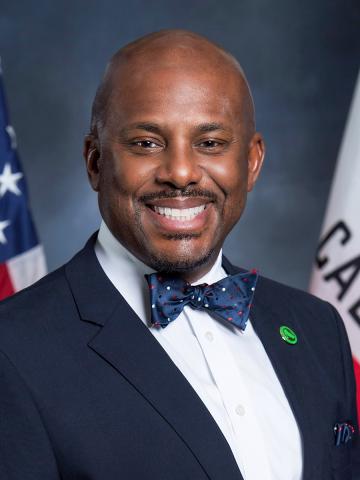
This measure would declare February 6, 2016, as Ronald Reagan Day.
This measure would declare that President Abraham Lincoln be honored on February 12, 2016, the anniversary of his birthday.
The Lanterman Developmental Disabilities Services Act requires the State Department of Developmental Services to contract with regional centers to provide services and supports to individuals with developmental disabilities. Under existing law, regional centers purchase needed services for individuals with developmental disabilities through approved service providers or arrange for those services through other publicly funded agencies. Existing law establishes specified rates and wages to be paid to certain service providers and the rates to be paid for certain developmental services. Existing law requires that rates to be paid to other developmental service providers either be set by the department or negotiated between the regional center and the service provider. Existing law establishes the Medi-Cal program, administered by the State Department of Health Care Services, under which basic health care services are provided to qualified low-income persons. The Medi-Cal program is, in part, governed and funded by federal Medicaid Program provisions. Existing law requires, except as otherwise provided, Medi-Cal provider payments to be reduced, as specified. This bill would appropriate a specified sum to the State Department of Developmental Services to, commencing July 1, 2016, among other things, increase rates and wages for certain developmental services providers and fund incentive payments for competitive integrated employment opportunities and internships for individuals with developmental disabilities. The bill would require the department to submit a rate study to specified committees of the Legislature on or before March 1, 2019, regarding community-based services for individuals with developmental disabilities. The bill would require each regional center to report specified information to the department regarding increased funding for regional center operations. The bill would, for dates of service on or after August 1, 2016, increase the payment rates for intermediate care facilities and skilled nursing facilities that provide services to developmentally disabled individuals under the Medi-Cal program, as specified. The bill would also prohibit the State Department of Health Care Services from seeking to retroactively implement certain Medi-Cal provider payment reductions and limitations with regards to reimbursements for services provided by skilled nursing facilities that are distinct parts of general acute care hospitals for dates of service on or after June 1, 2011, and on or before September 30, 2013, and from seeking to recoup overpayments, as specified. Existing law requires the department and regional centers to annually collaborate to compile specified data relating to purchase of service authorization, utilization, and expenditure by each regional center. Existing law requires each regional center to annually report to the department regarding the regional center's implementation of these requirements, including whether the data indicates a need to reduce disparities in the purchase of services among consumers in the regional center's catchment area and the regional center's recommendations and plan to promote equity, and reduce disparities, in the purchase of services. Existing law requires the department to consult with specified stakeholders to review the data, develop recommendations to help reduce disparities in purchase of service expenditures, and encourage development and expansion of culturally appropriate services, among other things, and to report the status of its efforts during the 2016–17 legislative budget subcommittee hearing process. The bill would also require the department, subject to available funding, to allocate funding to regional centers to assist in implementing specified recommendations and plans, including the recommendations and plans of the regional centers to promote equity, and reduce disparities, in the purchase of services. Existing law requires an entity that receives payments between $250,000 and $500,000 per year from one or more regional centers to obtain either an independent audit or an independent review report of its financial statements, and requires an entity that receives payments that are equal to or more than $500,000 per year to obtain an independent audit. This bill would instead require an entity that receives payments between $500,000 and $2,000,000 from one or more regional centers to obtain an independent review report of its financial statements, and would authorize these entities to apply for, and require the regional center to grant, a 2-year exemption from this requirement if the regional center does not find issues in the independent review report that have an impact on regional center services. The bill would require an entity that receives payments from one or more regional centers that are equal to or more than $2,000,000 to obtain an independent audit and would authorize these entities to apply for, and require the regional center to grant, a 2-year exemption from the audit requirement if the audit resulted in an unmodified opinion, an unmodified opinion with additional communication, or a qualified opinion with issues that are not material. The bill would require a regional center to annually report to the State Department of Developmental Services any exemptions granted pursuant to these provisions.
The Song-Brown Health Care Workforce Training Act creates a state medical contract program to increase the number of students and residents receiving quality education and training in specified primary care specialties or in nursing, and to maximize the delivery of primary care and family physician services to specific areas of California where there is a recognized unmet priority need for those services. The act requires the Director of Statewide Health Planning and Development to, among other things, contract with accredited medical schools, teaching health centers, training programs, hospitals, and other health care delivery systems for those purposes, based on recommendations of the California Healthcare Workforce Policy Commission and in conformity with the contract criteria and program standards established by the commission. This bill would appropriate $300,000,000 from the General Fund to the director for the purpose of funding new and existing graduate medical education physician residency positions, and supporting training faculty, pursuant to the act, for expenditure as specified. The bill would also make related findings and declarations.
Under the Bergeson-Peace Infrastructure and Economic Development Bank Act, the California Infrastructure and Economic Development Bank is established within the Governor's Office of Business and Economic Development with a board of directors having specified duties. The act authorizes the bank to, among other things, issue revenue bonds for the purpose of financing projects, as defined, that relate to infrastructure improvements or to authorize a special purpose trust to issue bonds for the purpose of making loans to a sponsor to be used by a sponsor to pay for the cost of a project. That act allows the bank to give final approval for those actions upon terms it deems necessary or desirable. This bill would make a nonsubstantive change to that latter provision.
This measure would declare the month of January 2016 as Pet Care Education Month and would request Californians to observe the month by ensuring that their companion animals receive the proper preventative care by establishing a financial plan for pet health emergencies and by contributing to charitable organizations that provide low-cost spay and neuter services and vaccinations or funds to help low-income individuals pay for veterinary care.
Existing law establishes a workers' compensation system to compensate an employee for injuries arising out of, and in the course of, his or her employment. Existing law designates illnesses and conditions that constitute a compensable injury for various employees, such as California Highway Patrol members, firefighters, and certain peace officers. These injuries include, but are not limited to, hernia, pneumonia, heart trouble, cancer, meningitis, and exposure to a biochemical substance when the illness or condition develops or manifests itself during a period when the officer or employee is in service of his or her employer, as specified. This bill would expand the coverage of the above provisions relating to compensable injury, to include other, full-time peace officers described pursuant to specified provisions of law. The bill would also expand the coverage of these provisions to include a custody assistant, correctional officer, security officer, or security assistant employed by a public agency, or a peace officer other than a peace officer to whom these provisions already apply. The bill would also make technical and clarifying changes.
The Meyers-Milias-Brown Act regulates the labor relations of local public agencies and their employees. The act grants employees the right to form, join, and participate in the activities of employee organizations for the purposes of representation on all matters of employer-employee relations, and grants recognized employee organizations the right to represent their members in their employment relations with public agencies. The act requires a public agency to grant exclusive or majority recognition to an employee organization if specified requirements are met. This bill would require a public agency, if the public agency becomes the successor employer to a private employer that offers emergency medical transportation services, to immediately recognize a new bargaining unit consisting of the emergency medical transportation employees of the predecessor private employer and recognize an employee organization as the exclusive representative of the new bargaining unit if the employee organization meets specified certification or recognition requirements.