

Existing law, the Alcoholic Beverage Control Act, which is administered by the Department of Alcoholic Beverage Control, regulates the application for, and the issuance and suspension of, alcoholic beverage licenses. Existing law requires moneys collected as fees pursuant to the act to be deposited in the Alcohol Beverage Control Fund, with those moneys generally allocated to the Department of Alcoholic Beverage Control upon appropriation by the Legislature. Existing law makes it a misdemeanor for any on- or off-sale licensee, or agent or employee of the licensee, to sell, give, or deliver to any person any alcoholic beverage between the hours of 2 a.m. and 6 a.m. of the same day, and for any person who knowingly purchases any alcoholic beverages between those hours. This bill, beginning June 1, 2026, would allow an on-sale licensee, or their agent or employee, to sell or give alcoholic beverages until 4 a.m. on Fridays, Saturdays, or specified state holidays within a hospitality zone, defined to include a Hospitality Zone and a Special Event Hospitality Zone established pursuant to the bill's provisions, as specified. The bill would authorize the department to issue, following the adoption of rules and regulations and the satisfaction of any conditions for issuance, as specified, an additional serving hours license that authorizes an on-sale licensee, or their agent or employee, to sell or give alcoholic beverages within the timeframes described above in a hospitality zone, as specified. The bill would authorize an additional service hours license to be used by a licensed premises in a Hospitality Zone if a local governing body, as defined, of the city or county, as applicable, in which the licensed premises is located adopts an ordinance that meets certain requirements, as specified, and submits the ordinance to the department. The bill would also require, before the adoption of that ordinance, local law enforcement to present to the local governing body a late night policing plan that includes specified components, including, among other things, an analysis on the potential impact of creating a hospitality zone on public safety. The bill would authorize an additional service hours license to also be used by a licensed premises in a Special Event Hospitality Zone if a local governing body of the city or county, as applicable, in which the licensed premises is located adopts an ordinance that meets certain requirements and submits the ordinance to the department. The bill would require the ordinance to identify a Special Event Hospitality Zone in which an on-sale licensed premises would be eligible for an additional serving hours license, as specified, or to authorize at least one local department or other local entity to identify Special Event Hospitality Zones in which an on-sale licensed premises would be eligible for an additional serving hours license. The bill would require the local governing body, or the local department or other local entity authorized by the local governing body, to identify a Special Event Hospitality Zone in which an on-sale licensed premises would be eligible for an additional serving hours license subject to certain requirements, including that the local governing body, or the local department or other local entity authorized by the local governing body, draws or otherwise identifies on a map of the local area the boundary of each Special Event Hospitality Zone as specified, and identifies the duration in which each Special Event Hospitality Zone is operative, as specified. The bill, beginning January 1, 2026, would authorize a local governing body to comply with the above-described requirements and submit an ordinance described above to the department. The bill would also authorize the department to review those ordinances. The bill, beginning June 1, 2026, and subject to the department receiving an applicable ordinance described above, would authorize an on-sale licensee to apply for an additional serving hours license. In this regard, the bill would require an applicant for an additional serving hours license to pay a $2,500 fee at the time of application and specify that the fee for an original and annual additional serving hours license is $2,500, and would require these fees to be deposited into the Alcohol Beverage Control Fund. The bill would require the $2,500 fees to be adjusted annually by the department for inflation based on changes to the California Consumer Price Index for All Urban Consumers. The bill would, among other things, prohibit an on-sale licensee from exercising off-sale privileges during the additional serving hours permitted pursuant to an additional serving hours license and specify that an additional serving hours license is not transferrable between on-sale licensed premises. The bill would authorize a local governing body to charge an additional serving hours licensee a fee to fund local law enforcement. The bill would require the department, upon receipt of an application by an on-sale licensee for an additional serving hours license, to make a thorough investigation. The bill would require the applicant to notify law enforcement and residents, who may then file with the department protests and requests for a hearing, as specified. The bill would make it a misdemeanor for any person under 21 years of age to enter and remain in licensed premises during the additional service hours period without lawful business therein punishable by a fine of not less than $200. By creating a new crime, the bill would impose a state-mandated local program. The bill would require the department to adopt rules and regulations to enforce these provisions. The bill would require a city or county, as applicable, that by ordinance identifies, or authorizes a local department or other local entity to identify, a hospitality zone to provide the Legislature an annual report on its impact, as specified. The bill would require the Department of the California Highway Patrol, on or before January 1, 2029, to provide to the Legislature a report on the regional impact of the hospitality zones, as specified, and would authorize regional entities, including law enforcement, to provide information to that department on the impact that the hospitality zones had in their jurisdiction, as specified. The bill would repeal its provisions on January 1, 2031. The California Constitution requires the state to reimburse local agencies and school districts for certain costs mandated by the state. Statutory provisions establish procedures for making that reimbursement. This bill would provide that no reimbursement is required by this act for a specified reason.
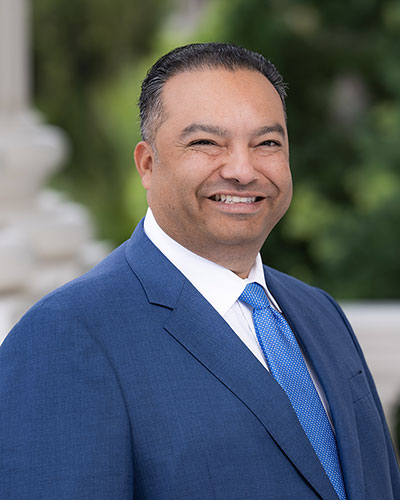
Asm. José Solache
Sponsored bills
This measure would call on the President of the United States to honor his promise to save American lives and communities through forest management and wildfire risk reduction projects, would request that he veto any legislation that defunds the United States Forest Service and work with Congress to protect and improve these programs, and would call for related congressional action.
This measure would applaud the California Girl Scout Councils for 113 years of building girls of courage, confidence, and character, who make the world a better place, and recognize March 12, 2025, as Girl Scout Day in California.
This measure would declare the month of June 2025 to be Portuguese Heritage Month and would recognize June 10 as the Day of Portugal and June 9 as the Day of the Azores.
Maddy summaryThis is a ceremonial House Resolution (not a policy bill) commemorating the 249th anniversary of the Declaration of Independence on July 4, 2025. It contains historical statements about the adoption of the Declaration, referencing key dates, figures like Thomas Jefferson and John Adams, and the document's principles. The resolution has no policy provisions, funding, or direct impact on constituents or laws. It was formally adopted by the California Assembly on June 30, 2025, as a symbolic gesture.
Maddy summaryThis resolution designates April 15, 2025, as California Propane Day. It is a symbolic recognition of the propane industry's contributions to California. The measure does not create new laws or affect regulations; it solely establishes a commemorative date. No specific groups or policies are directly impacted beyond this ceremonial observance.
Maddy summaryACR 67 designates May 10, 2025, as "Stronger Starts for Children Day" in California. This is a symbolic resolution that does not create new laws or programs. It formally recognizes a specific date to highlight children's well-being, without imposing requirements or affecting any specific groups. The measure serves only to commemorate the day through official acknowledgment.
Maddy summaryACR 36 designates the week of May 18-24, 2025, as "Special Districts Week" in California. This ceremonial resolution recognizes special districts - like water, fire, or sanitation districts - that provide essential local services. It has no legal effect or policy changes; it simply encourages public acknowledgment of these districts' roles. The measure directly affects no individuals or entities, as it serves only to highlight existing services.
Maddy summaryACR 23 designates the third week of May 2025 as "Mental Health Peer Appreciation Week" in California. This ceremonial resolution recognizes the contributions of mental health peers - individuals with lived experience who support others in recovery - without creating new laws or funding. It serves as a symbolic acknowledgment by the state, not a policy change affecting services or programs. The bill directly honors mental health peers within California but does not alter existing regulations or provide new resources.
Maddy summaryACR 87 designates May 2025 as Amyotrophic Lateral Sclerosis (ALS) Awareness Month in California. This resolution does not create new laws or impose legal requirements but formally recognizes the importance of raising public awareness about ALS, a progressive neurological disease. It serves as a symbolic gesture by the legislature to highlight ALS research, support for patients, and education efforts during that month. The measure has no direct impact on individuals or existing programs, as it is a non-binding declaration.