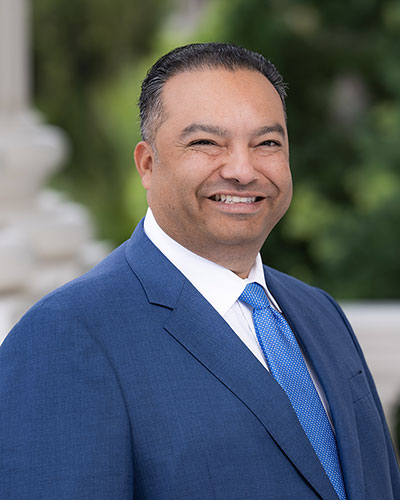
Photo of José Solache
D California Assembly · District 62 On the 2026 ballot

Asm. José Solache

Compare
Total votes
6,269
all sessions
Attendance
97%
135 missed
Near the chamber average
With party
99%
of cast votes
Near the chamber average
Bipartisan score
0%
crosses aisle rarely
Near the chamber average
Sponsored
417
bills & resolutions
Near the chamber average
Committees
12
assignments
417 bills and resolutions

Sponsored bills

Total
417
Primary
41
Co-sponsor
376
This page
417
matching current filters
Co-sponsor HR 67
Passed · California Assembly · Co-sponsor
Relative to All California Day.

Maddy summaryHR 67 designates November 9 as "All California Day" to celebrate California's shared history and cultural ties with Baja California and Baja California Sur. The resolution encourages community events and cultural celebrations across the state to honor this interconnected heritage, including contributions from Indigenous peoples and Mexican heritage communities. As a ceremonial resolution (not a binding law), it has no direct regulatory or financial impact on any specific group or policy. The measure was adopted by the California Assembly on September 4, 2025.

Passed Sep 4, 2025 1 co-sponsor
Co-sponsor HR 58
Passed · California Assembly · Co-sponsor
Relative to California Promotoras Month.

Maddy summaryThis House Resolution (HR 58) declares October 2025 as "California Promotoras Month" to formally recognize the work of promotoras - community health workers who serve as cultural brokers and connect underserved communities (particularly Latino populations) to essential services like health, housing, and disaster response. It acknowledges their role in improving community resilience and access to resources, while highlighting the need for better support, training, and equitable compensation for this workforce. The resolution is symbolic and does not create new laws, funding, or programs; it solely aims to raise awareness and honor promotoras' contributions through a designated month of recognition.

Passed Sep 4, 2025 1 co-sponsor
Co-sponsor HR 70
Passed · California Assembly · Co-sponsor
Relative to Direct Support Professional Recognition Week.

Maddy summaryThis is a symbolic resolution, not a substantive bill. It designates September 7-13, 2025, as "Direct Support Professional Recognition Week" in California. The resolution acknowledges direct support professionals who assist Californians with intellectual and developmental disabilities (IDD) through the state's Lanterman Act system, which serves over 450,000 residents. It formally recognizes their role in enabling community inclusion and independence but does not create new policies, funding, or legal obligations.

Passed Sep 4, 2025 1 co-sponsor
Co-sponsor HR 71
Passed · California Assembly · Co-sponsor
Relative to National Fried Rice Day.

Maddy summaryThis symbolic resolution recognizes September 20, 2025, as National Fried Rice Day in California, highlighting the dish's cultural significance to Asian American communities and its connection to California's rice-growing economy (noting the state's status as the second-largest rice producer). It has no legal effect or policy changes - it serves solely to celebrate culinary traditions and community diversity. The resolution was adopted by the California Assembly with no opposing votes.

Passed Sep 4, 2025 1 co-sponsor
Co-sponsor HR 65
Passed · California Assembly · Co-sponsor
Relative to Filipino American History Month.

Maddy summaryThis House Resolution designates a month as Filipino American History Month in California. It recognizes the historical contributions of Filipino Americans to the state, including early settlement (dating to 1587), agricultural labor, community building (such as "Little Manila" in Stockton), and military service during World War II. As a symbolic resolution, it does not create new laws, policies, or direct effects on any specific group.

Passed Sep 2, 2025 1 co-sponsor
Co-sponsor SB 316
Passed · California Senate · Co-sponsor
High school pupils: voter registration.

(1) Existing law authorizes the administrator of a high school to appoint one or more pupils who are enrolled at that high school to be voter outreach coordinators, as provided. This bill would specify that the administrator of a public or private high school may appoint one or more pupils who are enrolled at that high school to be voter outreach coordinators, as provided. (2) Existing law declares the last two full weeks in April and the last two full weeks in September as "high school voter education weeks," during which time persons authorized by the county elections official are allowed to register students and school personnel on any high school campus, as provided. Existing law establishes the California School for the Deaf, Northern California, the California School for the Deaf, Southern California, and the California School for the Blind, known as the state special schools, under the administration of the State Department of Education, as provided. This bill would, commencing with the 2026–27 school year, require the governing board of a school district, a county board of education, a state special school, and the governing body of a charter school that serves pupils in grade 11 to ensure that each of its pupils receives, at least once before the pupil completes grade 11, information on how to properly preregister to vote and register to vote, as provided. The bill would also require the governing board of a school district, a county board of education, a state special school, and the governing body of a charter school to ensure that, upon request of a pupil or a pupil's parent or guardian, information regarding where to acquire a paper copy of a voter registration card is provided to that pupil, such as a referral to the Secretary of State's internet website. To the extent that this bill would create new duties for local educational agencies or local officials, it would constitute a state-mandated local program. The bill would authorize those educational entities to contract with a third-party nonprofit organization, with demonstrated experience providing nonpartisan youth civic engagement, to implement the requirements of these provisions. (3) The California Constitution requires the state to reimburse local agencies and school districts for certain costs mandated by the state. Statutory provisions establish procedures for making that reimbursement. This bill would provide that, if the Commission on State Mandates determines that the bill contains costs mandated by the state, reimbursement for those costs shall be made pursuant to the statutory provisions noted above.

Passed Aug 29, 2025 1 co-sponsor
Co-sponsor SB 323
Passed · California Senate · Co-sponsor
Student Aid Commission: California Dream Act application.

Existing law exempts a student, other than a nonimmigrant alien, as defined, from paying nonresident tuition at the California State University and the California Community Colleges if the student meets certain requirements. Existing law makes a student who meets these requirements for exemption from nonresident tuition, or who meets equivalent requirements adopted by the Regents of the University of California, eligible to apply for, and participate in, any student financial aid program administered by the state to the full extent permitted by federal law. Existing law requires the Student Aid Commission to establish procedures and forms that enable these students to apply for, and participate in, those student financial aid programs. This bill would require the commission, by the start of the 2026–27 financial aid cycle, to amend the California Dream Act application, and any of its grant processing systems, to clarify and ensure that the application can be used by any student eligible for state financial aid programs, regardless of their eligibility for federal financial aid. The bill would also require the commission to consult with California's public and private colleges and universities to promote the California Dream Act application effectively and inform students and their families of their available financial aid application options, as provided.

Passed Aug 29, 2025 1 co-sponsor
Co-sponsor SB 781
Passed · California Senate · Co-sponsor
Small business.

Existing law establishes the Office of Small Business Advocate within the Governor's Office of Business and Economic Development, led by the Small Business Advocate, and sets forth its powers and duties relating to advocacy on behalf of small business and providing small businesses with the information they need to survive in the marketplace. Existing law requires the advocate to, among other duties, collaborate with the Office of Small Business and Disabled Veteran Business Enterprise Services in their activities under the Small Business Procurement and Contract Act, including promoting small business certification. This bill would require the advocate to also collaborate with local agencies on the development and implementation of local strategies to increase small business participation in local procurement opportunities, as specified. In this connection, the bill would authorize a local agency, as defined, to establish a Small Business Utilization Program (SBUP) to increase small businesses' participation in local agency procurement opportunities. This bill would require an SBUP, to facilitate the participation of small businesses in the provision of goods, information technology, and services to the local agency, to establish a small business certification process. As part of this process, the bill would require the SBUP, to the extent feasible, to include all of specified criteria, including, among other things, a minimum goal of 25% procurement participation for small businesses certification. The bill would authorize a local agency that establishes an SBUP to engage in specified activities to facilitate contract awards to small businesses. This bill would authorize a local agency to submit information on its small business procurement participation to the Office of Small Business Advocate, including progress toward meeting utilization goals. The bill would require the Office of Small Business Advocate, subject to funding being available, and upon appropriation by the Legislature for these purposes, to issue its first data call to local agencies by November 15, 2027, and every year thereafter, as specified. The bill would require the Office of Small Business Advocate to prepare an annual report that may contain, among other things, information received from the data call and to post the report on its internet website within 6 months after each data call. The bill would include related legislative findings. Existing law creates the California Small Business Technical Assistance Program within the California Office of the Small Business Advocate, under the direct authority of the Small Business Advocate. Existing law requires the office to administer the program to provide grants to expand the capacity of small business development technical assistance centers in California that are administered by and primarily funded by federal agencies and other nonprofit small business technical assistance centers, as specified. Existing law sets forth the criteria that an applicant must meet to be eligible to participate in the program. Existing law authorizes specified state funding provided pursuant to these provisions to be used for outreach efforts. This bill would remove provisions that require an applicant to provide a plan of action and commitment to fully draw down all specified federal funds available to it, that authorize the office to require an applicant to provide details relating to the source and amount of nonstate funds, and that require an applicant to demonstrate the ability to fully draw down substantially all federal and private funds available to it in order to be eligible to participate in the program. The bill would authorize an applicant to utilize federal and private funding contracts, as specified. The bill would authorize up to 25% of specified state funding awarded pursuant to these provisions to be used for outreach and limit the awarded funds that may be used for direct program administration expenses to 15%.


Passed Aug 29, 2025 1 co-sponsor
Primary AB 950
Passed · California Assembly · Lead sponsor
Political Reform Act of 1974: advertisements.

(1) Existing law establishes requirements for the disclosure of information related to political advertisements, including the name of the committee that paid for the advertisement and the names of the top contributors to the committee. For certain video, print, electronic media, or text message advertisements, existing law permits the name of the committee that paid for the advertisement to be shortened, as specified. This bill would establish the Billboard DISCLOSE Act. For purposes of the above provision permitting the name of the committee to be shortened, this bill would clarify that a print advertisement includes a yard sign or a billboard and an electronic media advertisement means a graphic, image, animated graphic, or animated image that the online platform hosting the advertisement allows to link to an internet website paid for by the committee, as specified. For certain advertisements, the bill would permit the names of top contributors to be shortened by using approved abbreviations or leaving out words from the top contributor's name, as specified. For certain advertisements, the bill would also specify the order in which required disclosures must appear on the advertisement. (2) For larger printed advertisements such as yard signs and billboards, existing law permits the text of the disclosure to be adjusted so that it does not appear on separate horizontal lines, with the names of the top contributors separated by a comma. This bill would also permit the names of the top contributors to be separated by clearly visible bullet points or by inserting the applicable number (1, 2, or 3) before the names of the 3 largest contributors. The bill would also specify the order in which required disclosures must appear on the advertisement. (3) Under existing law, an advertisement supporting or opposing a candidate that is paid for by an independent expenditure must include a statement that it was not authorized by a candidate or a committee controlled by a candidate. If the advertisement was authorized or paid for by a candidate for another office, the expenditure must instead include a statement that "This advertisement was not authorized or paid for by a candidate for this office or a committee controlled by a candidate for this office." This bill would shorten the above statements, respectively, to "Not paid for by candidate" and "Not paid for by a candidate for this office." The Political Reform Act of 1974, an initiative measure, provides that the Legislature may amend the act to further the act's purposes upon a 23 vote of each house of the Legislature and compliance with specified procedural requirements. This bill would declare that it furthers the purposes of the act.

Passed Aug 29, 2025 0 co-sponsors
Co-sponsor AB 380
Passed · California Assembly · Co-sponsor
Price gouging.

Under existing law, upon the proclamation of a state of emergency by the President of the United States or the Governor, or upon the declaration of a local emergency by the executive officer of any county, city, or city and county, and for 30 days or 180 days, as specified, following the proclamation or declaration of emergency, it is a misdemeanor, punishable by up to one year in county jail, a fine of $10,000, or both that imprisonment and fine, for a person, contractor, business, or other entity to sell or offer to sell certain goods or services for a price of more than 10% greater than the price charged by that person immediately prior to the proclamation or declaration of emergency. This bill would instead make that misdemeanor applicable, for those provisions for which the misdemeanor is applicable for a period of 30 days following the proclamation or declaration of emergency, for a period of 60 days. The bill would, for an entity or person other than a natural person, make that misdemeanor punishable by a fine of $25,000. By expanding the scope of a crime, this bill would impose a state-mandated local program. Under existing law, as described above, it is unlawful to increase the rental price for housing by more than 10%, or evict any residential tenant of residential housing, upon the proclamation or declaration of emergency. Existing law defines "housing" for purposes of these provisions as any rental housing with an initial lease term of no longer than one year. This bill would expand the definition of "housing" to include any rental housing without regard to the length of the initial lease term. The bill would make the prohibitions on increasing the rental price by more than 10% and eviction generally applicable to commercial real property. By expanding the scope of a crime, this bill would impose a state-mandated local program. The California Constitution requires the state to reimburse local agencies and school districts for certain costs mandated by the state. Statutory provisions establish procedures for making that reimbursement. This bill would provide that no reimbursement is required by this act for a specified reason.

Passed Aug 29, 2025 1 co-sponsor
Showing 291 to 300 of 417 bills
Previous 1 … 29 30 31 … 42 Next