

Existing federal law establishes the Supplemental Nutrition Assistance Program (SNAP) , known in California as CalFresh, under which supplemental nutrition assistance benefits allocated to the state by the federal government are distributed to eligible low-income individuals by each county, as administered by the State Department of Social Services. Existing law establishes the California Special Supplemental Nutrition Program for Women, Infants, and Children (WIC Program) , which is administered by the State Department of Public Health and counties and under which nutrition and other assistance are provided to eligible low-income individuals who have been determined to be at nutritional risk. This bill would create the CalFresh and WIC Contingency Fund. Under the bill, moneys in the fund would be available, upon appropriation, to the above-described departments for CalFresh and WIC programs, respectively, solely for the purpose of maintaining continuity of CalFresh or WIC benefits, as applicable, during a federal government shutdown or other federal appropriations lapse, subject to certain conditions. The bill would authorize the State Department of Public Health, during a federal government shutdown or other federal appropriations lapse affecting the WIC Program, to obtain a temporary loan, line of credit, or other short-term financing arrangement for the purpose of maintaining uninterrupted WIC services and benefit issuance. The bill would authorize receipt of a loan for this purpose, subject to approval by the Director of Finance, from certain sources. The bill would set forth terms and conditions for repayment of the loan. The bill would require the departments to seek federal reimbursement for expenditures made from the fund or for loan repayments. Under the bill, any federal reimbursements received would, as applicable, be used for the loan repayments or be deposited into the fund until the fund is restored to its prewithdrawal balance. If either of the departments uses moneys in the fund, the bill would require the department to subsequently report that use to the Legislature. The bill would also require the departments to submit a joint report to the Legislature and the Department of Finance detailing certain information. The bill would make these provisions severable. The bill would make the provisions inoperative on January 20, 2029, and would repeal them as of January 1, 2030. However, the bill would resume any provisions necessary to effectuate the repayment of loans, the receipt of federal reimbursements, or the preparation and submission of required reports, until those obligations are fully satisfied. The bill would require the Department of Finance to determine the amount of unencumbered funds subject to reversion and to effectuate the transfer to the General Fund as soon as practicable following January 20, 2029.
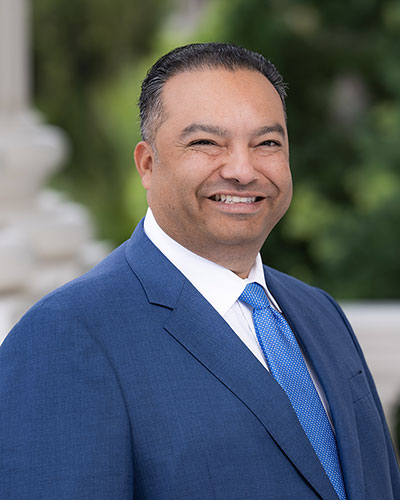
Asm. José Solache
Sponsored bills
Under existing law, it is the policy of the state that every human being has the right to access sufficient affordable and healthy food. Existing law requires all relevant state agencies to consider that state policy when revising, adopting, or establishing policies, regulations, and grant criteria when those policies, regulations, or criteria are pertinent to the distribution of sufficient affordable food. Existing law requires the Department of Food and Agriculture, headed by the Secretary of Food and Agriculture, to promote and protect the agricultural industry of the state. Existing law creates the Office of Farm to Fork in the department and requires the office, to the extent resources are available, to work with the agricultural industry, direct marketing organizations, food policy councils, public health groups, nonprofit and philanthropic organizations, academic institutions, district agricultural associations, county, state, and federal agencies, and other organizations involved in promoting food access to increase the amount of agricultural products available to underserved communities and schools in this state. Under existing law, the State Department of Social Services, headed by the Director of Social Services, implements the Supplemental Nutrition Benefit Program and the Transitional Nutrition Benefit Program. This bill would create the California Healthy Food Financing Initiative Council within the office of the Treasurer, comprising specified members, and would require the council to implement the California Healthy Food Financing Initiative to expand access to nutritious foods in underserved, urban, suburban, tribal, and rural communities, to support programs that connect agricultural products to food assistance systems, and to eliminate food deserts and hunger in California. The bill would require the council to, among other things, define eligibility for the initiative and develop financing options, using public, philanthropic, or private moneys and other resources, to support access to healthy foods for all Californians. The bill would require the secretary, in coordination with the director, on or before July 1, 2027, to prepare recommendations, to be presented upon request to the Legislature, regarding actions that need to be taken to promote food access in the state and to develop strategies to align healthy food financing projects with food assistance programs to improve food affordability and food availability among underserved communities in the state, and would authorize the secretary, in coordination with the director, to establish an advisory group to assist in complying with that requirement, as specified. The bill would establish the California Healthy Food Financing Initiative Fund in the State Treasury, consisting of federal, state, philanthropic, and private funds, for the purpose of expanding access to healthy foods in underserved communities. The bill would require moneys in the fund to be expended, upon appropriation by the Legislature, to leverage other funding, as specified.
Existing law establishes the Homeless Housing, Assistance, and Prevention (HHAP) program for the purpose of providing jurisdictions with grant funds to support regional coordination and expand or develop local capacity to address their immediate homelessness challenges, as specified. Existing law provides for the allocation of funding under the program among continuums of care, cities, counties, and tribes in 6 rounds, with rounds 1 to 5, inclusive, administered by the Interagency Council on Homelessness and round 6 administered by the Department of Housing and Community Development, as provided. Existing law establishes round 7 of the program and states the intent of the Legislature to enact future legislation that specifies the parameters, as specified. To be eligible for round 5 or round 6 base program allocation, existing law requires a jurisdiction that is not a tribe to apply as part of a region and be signatory to a regionally coordinated homelessness action plan that meets specified requirements. This bill would apply to the allocation of funding available under round 8 of the program and require a round 8 regionally coordinated homelessness action plan to include certain components, including a description of programs and interventions provided by smaller jurisdictions, as defined, that serve the objects and goals of the program, as specified. The bill would authorize a region receiving funding under round 8 to allocate a portion of that funding to smaller jurisdictions to support those programs. The bill would prescribe requirements for a smaller jurisdiction to be eligible to receive funding pursuant to these provisions.
Maddy summaryThis bill designates the week of May 17 to May 24, 2026, as National Public Works Week throughout California to honor the contributions of public works professionals. It directly affects engineers, managers, and employees in government and the private sector who maintain essential infrastructure like transportation systems, water supplies, and public buildings. The resolution requests that the Governor issue a proclamation encouraging the public to observe the week with educational programs and activities that highlight the importance of these workers.
Existing law establishes a public school financing system that requires state funding for county superintendents of schools, school districts, and charter schools to be calculated pursuant to a local control funding formula, as specified. Existing law requires the local control funding formula, in part, to be based on average daily attendance, as defined. For purposes of the local control funding formula, existing law requires a school district's fiscal year average daily attendance to be computed using the 2nd principal apportionment regular average daily attendance for the greater of the current fiscal year, the prior fiscal year, or the average of the 3 most recent prior fiscal years, as specified. This bill, for purposes of the local control funding formula, would require a school district's fiscal year average daily attendance to be computed using the average of the 5 most recent prior fiscal years, if that average is greater than the 3 averages described above.
The Personal Income Tax Law allows various credits against the taxes imposed by that law, including a young child tax credit to a qualified taxpayer in a specified amount multiplied by the earned income tax credit adjustment factor, as provided. That law also allows a payment from the continuously appropriated Tax Relief and Refund Account for an amount in excess of tax liability. Existing law defines "qualified taxpayer" for this purpose to include an eligible individual, as defined, who has a qualifying child, defined to be a child younger than 6 years of age as of the last day of the taxable year, and who meets other specified criteria. This bill, for taxable years beginning on or after January 1, 2026, and before January 1, 2038, would instead define a "qualifying child" to mean a child younger than the age limit from the prior taxable year plus one year, as described. The bill, for taxable years beginning on or after January 1, 2038, would define "qualifying child" as being a child younger than 18 years of age, as described. By increasing the payments from the Tax Relief and Refund Account, a continuously appropriated fund, the bill would make an appropriation. Existing law requires any bill authorizing a new tax expenditure to contain, among other things, specific goals that the tax expenditure will achieve, detailed performance indicators, and data collection requirements. This bill would include additional information required for any bill authorizing a new tax expenditure.
Existing law establishes various food assistance programs, including, among others, the federal Supplemental Nutrition Assistance Program (SNAP) , known in California as CalFresh, under which supplemental nutrition assistance benefits allocated to the state by the federal government are distributed to eligible individuals by each county. Existing law declares that it is the established policy of the state that every human being has the right to access sufficient affordable and healthy food. Existing law defines "food insecurity" to mean the occasional or constant lack of access to the food one needs to live a healthy life and the uncertainty of being able to acquire enough food to meet the needs of an individual or household due to insufficient money or other resources. This bill would require the State Department of Social Services to annually conduct a statewide survey to assess food insecurity in the state, modeled after a specified federal survey. The bill would require the first statewide food insecurity survey to be completed on or before July 1, 2028. The bill would require the department, on or before October 1, 2028, and annually thereafter, to make the results of the statewide food insecurity survey publicly available on its internet website. The bill would authorize the department to collaborate or contract with a public research institution or other external vendor to implement these provisions. The bill would prohibit the department from conducting a statewide food insecurity survey during a year in which a federal food security survey is conducted, as specified.
Maddy summaryThis bill designates April 2026 as Second Chance Month in California to raise awareness about opportunities for individuals reentering society after incarceration. The measure is a ceremonial proclamation that does not alter laws, allocate funding, or change government operations. Its primary purpose is to encourage public recognition of the challenges faced by formerly incarcerated people and to highlight available support resources during that specific month.
This measure would proclaim the week of April 20, 2026, to April 24, 2026, inclusive, as California Home Visiting Week, and would encourage all Californians to recognize and celebrate the contributions of home visiting programs and professionals and the families they serve.
Maddy summaryThis bill designates the week of April 19 to April 25, 2026, as Mosquito Awareness Week. The measure is a commemorative resolution that officially recognizes this specific time period to highlight mosquito-related issues. It does not create new laws, impose regulations, or allocate funding, but rather serves to raise public awareness through official designation.