

(1) Existing law establishes the In-Home Supportive Services (IHSS) program, which is administered by the State Department of Social Services, counties, and other entities, under which qualified aged, blind, or disabled persons are provided with supportive services in order to permit them to remain in their own homes. Existing law authorizes a county board of supervisors to elect to contract with a nonprofit consortium to provide for the delivery of in-home supportive services or to establish, by ordinance, a public authority to provide for the delivery of those services, in accordance with certain procedures. Existing law deems a public authority created under these provisions to be the employer of in-home supportive services personnel under the Meyers-Milias-Brown Act, which governs labor relations between local public employers and employees. Existing law also deems a nonprofit consortium contracting with a county to be the employer of in-home supportive services personnel for purposes of collective bargaining over wages, hours, and other terms and conditions of employment. Existing law grants recipients of in-home supportive services the right to hire, fire, and supervise the work of any in-home supportive services personnel providing services for them. Existing law prohibits the state and specified local public employers from deterring or discouraging public employees from becoming or remaining members of an employee organization. Existing law also requires specified public employers to provide exclusive employee representatives access to new employee orientations. Existing law generally grants the Public Employment Relations Board jurisdiction over violations of these provisions. Existing law defines "public employers" who are subject to these provisions as including, among others, public agencies, cities, counties, and districts. This bill would expand the definition of "public employer," for purposes of those provisions, to include an employer who is subject to the In-Home Supportive Services Employer-Employee Relations Act, which the bill would create. The bill would establish a method for resolving disputes regarding wages, benefits, and other terms and conditions of employment between the state and recognized employee organizations representing individual providers. The bill would provide for the right of employees, also known as individual providers under the act, to form, join, and participate in activities of employee organizations for the purposes of representation on all matters within the scope of employee organizations. The bill would define "employee" or "individual provider" for these purposes to mean a person authorized to provide in-home supportive services pursuant to the individual provider mode or waiver personal care services, as prescribed. This bill would, for purposes of collective bargaining, deem the state to be the employer of record of individual providers in each county. The bill would grant the in-home supportive services recipient with the right to hire, fire, and supervise the work of the individual providers providing services to them. Among other things, the bill would specify that individual providers employed by a predecessor agency before January 1, 2026, shall retain employee status and not be required by the state to requalify to receive payment for providing in-home supportive services. Among other things, for purposes of collective bargaining, this bill would provide that existing bargaining units consisting of individual providers in a single county that are represented by the same recognized employee organization shall be deemed merged into the largest possible multicounty bargaining units represented by that employee organization. In counties where no recognized employee organization exists as of January 1, 2026, the bill would specify that a bargaining unit consisting of all employees in that county shall be deemed an appropriate unit for collective bargaining. Under the bill, if individual providers in a county bargaining unit are represented by a recognized employee organization on January 1, 2026, the state would be deemed the successor employer of the predecessor agency for purposes of negotiating a collective bargaining agreement, subject to the obligation to meet and confer in good faith and meet other related legal requirements. This bill would require all recognized employee organizations, as of January 1, 2026, to negotiate jointly on behalf of all bargaining units they represent to reach a single memorandum of understanding with the employer. The bill would authorize the memorandum of understanding to contain addenda reflecting regional or county-level terms and conditions. The bill would establish procedures for voting and ratification of a memorandum of understanding, and for the employer to assume a predecessor agency's rights and obligations under a memorandum of understanding or agreement between a predecessor agency and a recognized employee organization that is in effect on January 1, 2026. This bill would prescribe the duties of the state under the bill, including requiring the Governor to meet and confer in good faith, and to follow specified procedures regarding collective bargaining. If an agreement is reached by a representative of the Governor and the recognized employee organizations, the bill would require those parties to jointly prepare a written memorandum of understanding and present it to the Legislature for determination by majority vote. The bill would require the Governor, for any side letter, appendix, or other addendum to a memorandum of understanding that requires the expenditure of $250,000 or more related to salary and benefits not included in the original memorandum or the Budget Act, to provide that to the Joint Legislative Budget Committee, as specified. The bill would also establish mediation and arbitration procedures that would apply when the parties fail to reach an agreement. This bill would make certain actions by an employer and other entities involved in administering the IHSS program unlawful, including imposing or threatening to impose reprisals on employees or otherwise interfering with the exercise of their rights. The bill would authorize the Public Employment Relations Board to adopt reasonable rules and regulations pursuant to the bill, including the adoption of emergency regulations, as prescribed. (2) Existing law requires the Controller to provide for the administration of payroll deductions and salary reductions, and authorizes the Controller to establish procedures for that purpose. This bill would require the Controller to honor a written authorization for payroll deductions executed by an employee before January 1, 2026, and to make deductions for payments of dues to a recognized employee organization pursuant to the bill consistent with the above-described payroll deduction procedures. (3) Existing law, the California Public Records Act, requires public records to be open to inspection at all times during the office hours of the state or local agency that retains those records, and provides that every person has a right to inspect any public record, except as provided. Existing law provides that certain information regarding persons paid by the state to provide in-home supportive services, or other related public services, are not subject to disclosure under those provisions. Existing law further provides that copies of names, addresses, home telephone numbers, and other identifying information are required to be made available, upon request, to an exclusive bargaining agent and to any employee organization seeking representation rights under specified collective bargaining provisions. This bill would, with respect to the above-described personal identifying information, instead require this information to be made available to the exclusive bargaining agent and any employee organization seeking representation under the bill. The bill would require the state, or a county, public authority, or nonprofit consortium organized pursuant to the IHSS program, to promptly make the information available to the requesting entity. This bill would revise the IHSS program provisions to require the state to assume responsibilities as set forth in the bill. The bill would also require a county or city and county to continue to have certain IHSS program-related functions set forth in county ordinance or contract performed in accordance with specified provisions. (4) Existing law requires prospective providers of in-home supportive services to complete an in-person provider orientation at the time of enrollment that is developed by the department, in consultation with counties, that includes requirements to be an eligible IHSS provider and other related matters. This bill additionally would require that in-person provider orientation include any other information required to be communicated to prospective providers by a memorandum of understanding, appendix, or side letter between recognized employee organizations and the state. Existing law requires a specified mediation process, including a factfinding panel recommending settlement terms, to be held if a public authority or nonprofit consortium and an employee organization fail to reach agreement on a bargaining contract with in-home supportive service (IHSS) workers on or after October 1, 2023. This bill would make that provision inoperative. The bill would also require the department to appoint an IHSS Advisory Committee to provide ongoing advice and recommendations regarding in-home supportive services, as specified. The bill would require the employer, prior to finalizing a memorandum of understanding with one or more organizations that are the designated representatives of in-home services providers, to consult with specified advisory committee representatives to obtain input on county and public authority programmatic and fiscal implications. Existing law requires the state and counties to share the annual cost of providing IHSS pursuant to a specified cost ratio. Existing law requires all counties to have a rebased County IHSS Maintenance of Effort (MOE) , and requires the rebased MOE to be adjusted only by an inflation factor of 4% and for the annualized cost of increases in provider wages, health benefits, or other benefits that are locally negotiated, mediated, or imposed, as prescribed. This bill would prohibit the rebased County IHSS MOE from being adjusted based on any provision of any memorandum of understanding, or addenda, appendices, or side letters thereto, between the state and recognized employee organizations. Existing law requires the state to pay 100% of the allowable nonfederal share of county administration and public authority administration costs for each county, until the county's share of the General Fund moneys appropriated for this purpose is exhausted, and then requires the county to pay 100% of the remaining nonfederal share of county administration and public authority administration costs, as specified. This bill would require the state to also pay 100% of the nonfederal share of county administration and public authority administration costs for each county of any administration costs resulting from the provisions of any memorandum of understanding, or addenda, appendices, or side letters thereto, between the state and recognized employee organizations. Existing law, the Bagley-Keene Open Meeting Act, requires, with specified exceptions, that all meetings of a state body be open and public. This bill would exempt the IHSS Advisory Committee from the act. This bill would make other related changes. By imposing new duties on local government officials, the bill would impose a state-mandated local program. (5) This bill would include findings that changes proposed by this bill address a matter of statewide concern and, therefore, apply to all counties. (6) The California Constitution requires local agencies, for the purpose of ensuring public access to the meetings of public bodies and the writings of public officials and agencies, to comply with a statutory enactment that amends or enacts laws relating to public records or open meetings and contains findings demonstrating that the enactment furthers the constitutional requirements relating to this purpose. This bill would make legislative findings to that effect. (7) Existing constitutional provisions require that a statute that limits the right of access to the meetings of public bodies or the writings of public officials and agencies be adopted with findings demonstrating the interest protected by the limitation and the need for protecting that interest. This bill would make legislative findings to that effect. (8) The California Constitution requires the state to reimburse local agencies and school districts for certain costs mandated by the state. Statutory provisions establish procedures for making that reimbursement. This bill would provide that with regard to certain mandates no reimbursement is required by this act for a specified reason. With regard to any other mandates, this bill would provide that, if the Commission on State Mandates determines that the bill contains costs so mandated by the state, reimbursement for those costs shall be made pursuant to the statutory provisions noted above.
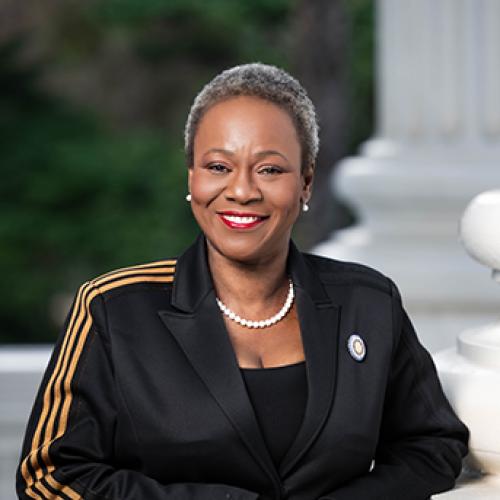
Asm. Tina McKinnor
Sponsored bills
This measure would call on the state's Representatives in Congress to support legislation to repeal all of the provisions of the federal One Big Beautiful Bill Act that adversely affect Social Security, Medicare, and Medicaid programs, to oppose privatization of these programs, and to protect and improve these programs, and would call on the President of the United States to immediately restore program staffing levels, to work with Congress to protect and improve these programs, and to disavow any efforts to privatize Social Security.
Maddy summaryACR 83 designates May 22, 2025, as California Maritime Day. This symbolic resolution does not create new laws or impose obligations but serves to recognize and honor California's maritime industry and its historical significance. It has no direct impact on individuals, businesses, or policy implementation. The measure is purely commemorative and aligns with the state's tradition of acknowledging key sectors through designated days.
Maddy summaryHR 67 designates November 9 as "All California Day" to celebrate California's shared history and cultural ties with Baja California and Baja California Sur. The resolution encourages community events and cultural celebrations across the state to honor this interconnected heritage, including contributions from Indigenous peoples and Mexican heritage communities. As a ceremonial resolution (not a binding law), it has no direct regulatory or financial impact on any specific group or policy. The measure was adopted by the California Assembly on September 4, 2025.
Maddy summaryThis House Resolution (HR 58) declares October 2025 as "California Promotoras Month" to formally recognize the work of promotoras - community health workers who serve as cultural brokers and connect underserved communities (particularly Latino populations) to essential services like health, housing, and disaster response. It acknowledges their role in improving community resilience and access to resources, while highlighting the need for better support, training, and equitable compensation for this workforce. The resolution is symbolic and does not create new laws, funding, or programs; it solely aims to raise awareness and honor promotoras' contributions through a designated month of recognition.
Maddy summaryThis is a symbolic resolution, not a substantive bill. It designates September 7-13, 2025, as "Direct Support Professional Recognition Week" in California. The resolution acknowledges direct support professionals who assist Californians with intellectual and developmental disabilities (IDD) through the state's Lanterman Act system, which serves over 450,000 residents. It formally recognizes their role in enabling community inclusion and independence but does not create new policies, funding, or legal obligations.
Maddy summaryThis symbolic resolution recognizes September 20, 2025, as National Fried Rice Day in California, highlighting the dish's cultural significance to Asian American communities and its connection to California's rice-growing economy (noting the state's status as the second-largest rice producer). It has no legal effect or policy changes - it serves solely to celebrate culinary traditions and community diversity. The resolution was adopted by the California Assembly with no opposing votes.
Maddy summaryThis House Resolution designates a month as Filipino American History Month in California. It recognizes the historical contributions of Filipino Americans to the state, including early settlement (dating to 1587), agricultural labor, community building (such as "Little Manila" in Stockton), and military service during World War II. As a symbolic resolution, it does not create new laws, policies, or direct effects on any specific group.
Existing law imposes certain requirements on grocery employers, as defined, upon the purchase or change in control of a grocery establishment, including requiring a successor grocery employer to retain eligible grocery workers for a specified period after transfer of the grocery establishment. This bill would prohibit a grocery retail store or a retail drug establishment, as those terms are defined, from providing a self-service checkout option for customers unless specified conditions are satisfied, including having at least one manual checkout station staffed by an employee who is available to any given customer at the time that a self-service checkout option is made available to that customer. This bill would require a grocery retail store or retail drug establishment that offers self-service checkout to include self-service checkout in the employer's illness and prevention program, as required by regulations of the Division of Occupational Safety and Health. The bill also would require a grocery retail store or retail drug establishment that intends to implement self-checkout to notify workers and their collective bargaining representatives at least 60 days in advance of the implementation, as specified. The bill would not preempt any city, county, or city and county ordinance that provides equal or greater protection to workers. This bill would make an employer who violates the bill's provisions subject to a civil penalty of $1,000 per violation per day, not to exceed an aggregate penalty of $200,000.
Existing law establishes the California Violence Intervention and Prevention Grant Program, administered by the Board of State and Community Corrections, to award competitive grants for the purpose of violence intervention and prevention. Existing law establishes the Youth Reinvestment Grant Program within the Board of State and Community Corrections to grant funds, upon appropriation, to local jurisdictions and Indian tribes for the purpose of implementing trauma-informed diversion programs for minors, as specified. Existing law requires the governing board of a school district to give diligent care to the health and physical development of pupils and authorizes the governing board of a school district to employ properly certified persons for the work. Existing law requires a school of a school district or county office of education and a charter school to notify pupils and parents or guardians of pupils no less than twice during the school year on how to initiate access to available pupil mental health services on campus or in the community, or both, as provided. Existing law requires the State Department of Public Health, in cooperation with the State Department of Education, to establish a Public School Health Center Support Program, upon appropriation by the Legislature, to assist school health centers, which are defined as centers or programs, located at or near local educational agencies, that provide age-appropriate health care services at the program site or through referrals, as specified. This bill would create the Community Violence Interdiction Grant Program to be administered by the California Health and Human Services Agency to provide funding to local community programs for community-driven solutions to decrease violence in neighborhoods and schools. The bill would specify the types of programs the grant funds may be used for, including, but not limited to, programs that create and enhance recreation- and health-based interventions for youth during peak times of violence and the creation and operation of school-based health centers. The bill would require the agency to develop an application process and criteria for funding and would require the agency to administer the grant program, as specified. The bill would require, beginning July 31, 2026, and annually thereafter, the Director of Finance and the Legislative Analyst's Office to calculate the savings to the state from the closure of state prisons, as specified, and would require the Director of Finance to certify the results of the calculation to the Controller no later than August 1 of each fiscal year. The bill would create the Community Violence Interdiction Grant Fund and would require moneys in the fund to be made available, only upon appropriation by the Legislature, to the agency for the purposes of the Community Violence Interdiction Grant Program. The bill would require that the Controller, before August 15, 2026, and annually thereafter, upon appropriation by the Legislature, transfer from the General Fund to the Community Violence Interdiction Grant Fund the total amount of savings from the closure of state prisons so calculated.