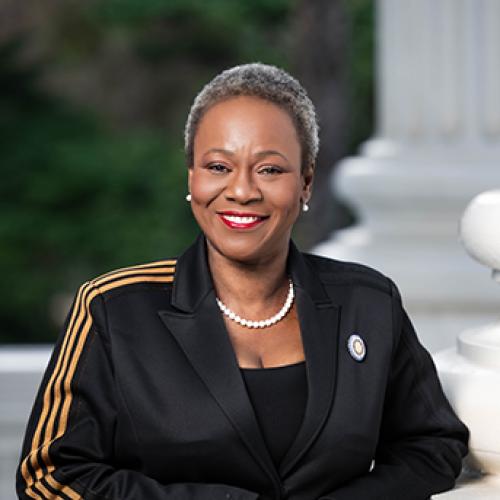
Photo of Tina McKinnor
D California Assembly · District 61 On the 2026 ballot

Asm. Tina McKinnor

Compare
Total votes
10,628
all sessions
Attendance
91%
873 missed
Near the chamber average
With party
99%
of cast votes
Near the chamber average
Bipartisan score
0%
crosses aisle rarely
Near the chamber average
Sponsored
967
bills & resolutions
Near the chamber average
Committees
9
assignments
967 bills and resolutions

Sponsored bills

Total
967
Primary
87
Co-sponsor
880
This page
967
matching current filters
Co-sponsor HR 100
Passed · California Assembly · Co-sponsor
Relative to Vaisakhi.

Maddy summaryThis House Resolution officially recognizes Vaisakhi as a significant cultural and religious observance for Sikh, Hindu, and Buddhist communities in California. The bill formally acknowledges the festival's historical roots as a harvest celebration and its modern importance for Sikhs, who mark the day with religious ceremonies and the initiation of new members into the Khalsa faith. By designating April 14, 2026, as the date for this recognition, the resolution encourages Californians to participate in the festivities and expresses respect for the diverse traditions associated with the holiday.

Passed Apr 13, 2026 1 co-sponsor
Primary AB 1833
In committee · California Assembly · Lead sponsor
Consumer Driving Data Protection Act of 2026.

The Insurance Rate Reduction and Reform Act of 1988, an initiative measure enacted by Proposition 103, as approved by the voters at the November 8, 1988, statewide general election, prohibits specified insurance rates from being approved or remaining in effect that are excessive, inadequate, unfairly discriminatory, or otherwise in violation of the act. Under the act, rates and premiums for automobile insurance are determined based on specified factors, including the insured's driving safety record. Existing law authorizes the provisions of Proposition 103 to be amended by a statute that furthers the purposes of the act and is enacted by the Legislature with a 23 vote. This bill, the Consumer Driving Data Protection Act of 2026, would authorize a consumer to opt to use telematics to establish their driving record, thus amending Proposition 103. The bill would prohibit the use of telematics data for a purpose other than rating private passenger automobile insurance. The bill would require a rate application under which telematics would be used to establish an insured's driving record to include specified materials related to the insurer's telematics program. This bill would prohibit an insurer that uses telematics from taking specified actions, including conditioning eligibility for a discount upon participation in a telematics program, unless the discount is approved by the commissioner. The bill would also set forth consent and privacy requirements for the collection and use of telematics data. The bill would authorize the commissioner to impose specified penalties for violations of the bill's provisions, including civil penalties and suspension of an insurer's telematics program. The bill would declare that its provisions further the purposes of Proposition 103.

In committee Apr 13, 2026 0 co-sponsors
Primary AB 2616
In committee · California Assembly · Lead sponsor
Hiring of real property: indoor temperature.

(1) Existing law declares that it is the established policy of the state that all dwelling units shall be able to attain and maintain a safe maximum indoor temperature. Existing law regulates the terms and conditions of residential tenancies. Existing law requires that any building with a dwelling unit maintain certain characteristics in order to be tenantable, including the maintenance in good working order of heating facilities that conformed with applicable law at the time of installation. This bill would add a safe method in which the dwelling unit can be maintained at the maximum indoor temperature of not more than 82 degrees Fahrenheit by a nonmechanical cooling method to the list of characteristics required for the dwelling unit to be tenantable, as provided. The bill would authorize the landlord and tenant to mutually agree to provide the safe method by a mechanical and nonmechanical method, by January 1, 2030. The bill would prohibit the landlord from passing through to the tenant the cost of providing the safe method. The bill would require the landlord to properly dispose unused refrigerants pursuant to regulations promulgated by the State Air Resources Board, if an air conditioning unit required by these provisions is replaced. This bill would require a landlord to permit a tenant to install or use, at the tenant's own cost, a portable cooling device, as defined, or other nonmechanical cooling method to maintain the indoor temperature of a dwelling unit below 82 degrees Fahrenheit, as provided. The bill would require the tenant to provide the landlord 5 calendar days advanced notice, prior to installing or using a portable cooling device or other nonmechanical cooling method, as provided. The bill would apply these provisions only to leases entered into, amended, or extended on or after January 1, 2028. (2) Existing law authorizes the Department of Housing and Community Development to provide technical assistance for specified purposes. This bill would require the department to create a dedicated website offering free technical assistance and resources for landlords and tenants to comply with the above-described provisions.

In committee Apr 7, 2026 0 co-sponsors
Co-sponsor HR 87
Passed · California Assembly · Co-sponsor
Relative to school accountability.

Maddy summaryThis bill urges state and local education leaders to formally evaluate new reporting requirements by asking six specific questions about their purpose, audience, value, feasibility, duplication, and duration. It aims to reduce administrative burdens on school districts by ensuring that any new data collection efforts directly support student learning rather than diverting resources. The resolution calls on the Legislature, Governor, and various state agencies to adopt this structured analysis process before implementing additional planning or accountability mandates. By promoting a more coherent system, the bill seeks to help schools use public funds more effectively for classrooms and pupil well-being.

Passed Apr 6, 2026 1 co-sponsor
Primary AB 1963
In committee · California Assembly · Lead sponsor
Hiring of real property: portable screening reports: disclosure of application materials.

Existing law regulates the terms and conditions of residential tenancies, including imposing specified requirements on a security for a rental agreement for residential property. Existing law defines security as any payment, fee, deposit, or charge that is imposed to reimburse the landlord for costs associated with processing a new tenant or that is imposed as an advance payment of rent, used for any purpose, as provided. Existing law authorizes a landlord, or the landlord's agent, who receives a request to rent a residential property from an applicant to charge that applicant an application screening fee to cover the costs of obtaining information about the applicant, as provided. Existing law authorizes a landlord to accept a reusable tenant screening report, as provided, and prohibits the landlord from charging the applicant specified fees, including an application screening fee, if the landlord accepts the reusable tenant screening report. Existing law defines a reusable tenant screening report as a consumer report that, among other things, was prepared within the previous 30 days by a consumer reporting agency at the request and expense of the applicant and is available to the landlord at no cost to access or use. Existing law defines "unfair competition" to include any unlawful, unfair, or fraudulent business act or practice and unfair, deceptive, untrue, or misleading advertising and subjects a person who engages, has engaged, or proposes to engage in unfair competition to various remedies and penalties. This bill would repeal the provisions authorizing a landlord to accept reusable tenant screening reports and would, instead, require a landlord to accept from a prospective tenant a portable screening report prepared by a tenant screening company approved by the Department of Housing and Community Development, as provided. The bill would define various terms for these purposes, including defining a "portable screening report" as a consumer report prepared by a tenant screening company that, among other things, is dated within 45 days before submission to the landlord and costs the prospective tenant no more than $45. The bill would prohibit a landlord from, among other things, charging the prospective tenant specified fees associated with processing the rental application, including an application fee, or requiring the prospective tenant to undergo or pay for an additional background check, credit check, or tenant screening, if the prospective tenant provides a portable screening report under these provisions. The bill would require a landlord to advise a prospective tenant in an advertisement for a dwelling unit and before accepting any application materials for a dwelling unit on certain obligations of the landlord regarding portable screening reports. If the landlord rejects an application after reviewing the portable screening report provided by the tenant under these provisions, the bill would require a landlord to provide the prospective tenant with the specific reasons for rejection in writing, as provided. The bill would require the Department of Housing and Community Development to post on its internet website information for prospective tenants about these provisions. This bill would also require a landlord to provide in writing a complete and itemized disclosure of all application requirements to the prospective tenant before accepting any application materials. The bill would require that the disclosure, among other things, be provided in a clear, plain-language, and standardized format, as prescribed by the Department of Housing and Community Development. The bill would prohibit a landlord from adding, modifying, or requesting additional application requirements from a prospective tenant, except as provided, and prohibit a landlord from denying an application based a prospective tenant's failure to provide an application requirement that was not disclosed. The bill would specify that a violation of these provisions is an act of unfair competition, as described above. This bill would make a landlord who violates either of the above-described provisions liable to a prospective tenant in a civil action, as provided. The bill would require a prospective tenant to provide a landlord with an opportunity to cure the violation before bringing a civil action, as provided. The bill would additionally authorize the Attorney General to bring a civil action to seek specified remedies based on violations of its provisions. The bill would provide that these remedies are in addition to any other remedies. This bill would declare that its provisions are severable.


In committee Mar 31, 2026 0 co-sponsors
Co-sponsor HR 94
Passed · California Assembly · Co-sponsor
Relative to Major League Baseball Opening Day 2026.

Maddy summaryThis legislative resolution honors Major League Baseball Opening Day 2026 and celebrates the sport's deep historical and cultural significance within California. It acknowledges the state's status as home to five MLB teams and recognizes the contributions of players, coaches, staff, and fans to the community. The text expresses gratitude to team owners and executives for their investment in the franchises while pledging continued support for baseball in the state. Ultimately, the bill serves as a commemorative statement rather than enacting new laws or policy changes.

Passed Mar 26, 2026 1 co-sponsor
Co-sponsor HR 90
Passed · California Assembly · Co-sponsor
Relative to Nowruz.

Maddy summaryThis House Resolution recognizes March 21, 2026, as the International Day of Nowruz in California to honor the Persian New Year celebrated by over 300 million people globally. The bill highlights Nowruz as a 3,000-year-old tradition symbolizing renewal, peace, and community unity that is observed by diverse groups including Afghan, Iranian, Armenian, and Jewish communities, as well as Americans of various backgrounds. By formally acknowledging this date, the resolution aims to celebrate cultural heritage and strengthen ties among different peoples within the state.

Passed Mar 26, 2026 1 co-sponsor
Co-sponsor AB 2156
Signed into law · California Assembly · Co-sponsor
Holidays: Farmworkers Day.

Existing law designates specific days as holidays in this state, including Cesar Chavez Day on March 31, and requires the Governor to annually proclaim March 31 as Cesar Chavez Day. This bill would instead designate March 31 as Farmworkers Day and would require the Governor to annually proclaim March 31 as Farmworkers Day. This bill would declare that it is to take effect immediately as an urgency statute.

Signed into law Mar 26, 2026 1 co-sponsor
Co-sponsor ACR 134
Signed into law · California Assembly · Co-sponsor
Relative to Black History Month.

This measure would recognize February 2026 as the centennial anniversary of Black History Month, urge all citizens to join in celebrating the accomplishments of African Americans during Black History Month, and encourage the people of California to recognize the many talents of African Americans and the achievements and contributions they make to their communities to create equity and equality for education, economics, and social justice. The measure would recognize the significance in protecting the fundamental human rights enshrined in the United States Constitution and its Amendments, the United States Bill of Rights, and the California Constitution, as specified. The measure would also affirm the commitment of the Legislature all people are equal and shall be treated with respect and dignity and shall enjoy the equal application of the law for which the Legislature has been entrusted.

Signed into law Mar 19, 2026 1 co-sponsor
Co-sponsor ACR 132
Signed into law · California Assembly · Co-sponsor
Relative to Rare Disease Day.

This measure would designate February 28, 2026, as Rare Disease Day and, with respect to rare diseases and disorders, would recognize the importance of improving awareness, encouraging accurate and early diagnosis, and supporting national and global efforts to develop effective treatments, diagnostics, and cures.

Signed into law Mar 19, 2026 1 co-sponsor
Showing 171 to 180 of 967 bills
Previous 1 … 17 18 19 … 97 Next