Maddy summaryCalifornia House Resolution 118 is a commemorative measure that formally welcomes the 2026 FIFA World Cup to the state and commends the tournament's organizers, players, and supporters. The resolution highlights the historical significance of soccer in California and its role in promoting international unity and economic benefits through tourism. It does not enact new laws or regulations but serves as a symbolic gesture of support for the event.
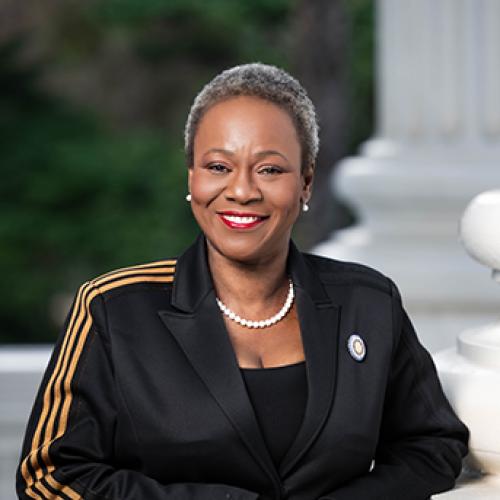
Asm. Tina McKinnor
Sponsored bills
Maddy summaryThis bill designates June 9, 2026, as FSGS Awareness Day to highlight focal segmental glomerulosclerosis, a rare kidney disease that causes scarring and can lead to kidney failure. The resolution aims to increase public understanding of the condition, which disproportionately affects African American communities and often requires dialysis or transplants. By establishing an official awareness day, the bill seeks to support patients and families while encouraging efforts to improve early diagnosis and access to specialized care.
The California Financing Law (CFL) generally regulates consumer loan lending practices by finance lenders, brokers, and program administrators. The CFL makes a willful violation of its provisions a crime. This bill would prescribe requirements on loans provided to consumers for the purpose of advancing residential real property rent payments for certain finance lenders and servicers, including prohibiting more than 2 installment payments for the loans, specifying the amount that may be charged for late fees, prescribing disclosure requirements, and prohibiting advertising 0% APR for the loan unless specified conditions are met. By expanding the scope of a crime under the CFL, this bill would impose a state-mandated local program. The California Constitution requires the state to reimburse local agencies and school districts for certain costs mandated by the state. Statutory provisions establish procedures for making that reimbursement. This bill would provide that no reimbursement is required by this act for a specified reason.
This resolution would state, among other things, that the Legislature supports the establishment of a Mexican Consulate in the County of Kern to strengthen the state's relationship with Mexico and empower immigrant communities.
This measure would express the intent of the Legislature to formalize a sister-state relationship between the State of Zacatecas in Mexico and the State of California, in recognition of their shared heritage, economic opportunities, and mutual commitment to prosperity, dignity, and understanding.
This measure would establish a formal sister state relationship between the State of California and Lagos State, Nigeria, to promote collaboration across key strategic areas.
The Personal Income Tax Law and the Corporation Tax Law allow various credits against the taxes imposed by those laws, including numerous motion picture credits. Existing law, for taxable years beginning on or after January 1, 2025, allows a motion picture credit (motion picture credit 4.0) to be allocated by the California Film Commission on or after July 1, 2025, and before July 1, 2030, in an amount equal to 20% or 25% of qualified expenditures for the production of a qualified motion picture in this state, and limits the aggregate amount of the credit that may be allocated for a fiscal year to $330,000,000, as specified. Existing law requires the California Film Commission to certify a credit amount equal to 96 percent of the total credit allocated to a qualified taxpayer, unless the qualified taxpayer chooses to submit a diversity workplan and the California Film Commission determines that the qualified taxpayer has met or made a good-faith effort to meet the diversity goals in its diversity workplan, as specified. This bill, for motion picture credit 4.0, if a qualified taxpayer chooses to submit a diversity workplan, would remove the good faith effort standard, and instead would require the California Film Commission to determine whether the qualified taxpayer met the diversity goals in its diversity workplan, as provided. The bill would also correct erroneous cross-references in those provisions. Existing law also allows a credit for taxable years beginning on or after January 1, 2022, and before January 1, 2032, in an amount equal to 20% or 25%, or as modified, of qualified expenditures paid or incurred during the taxable year by a qualified motion picture produced in this state at a certified studio construction project. Existing law defines a qualified motion picture for these purposes in the same manner as the motion picture credit and additionally requires that the qualified motion picture provide a diversity workplan that is approved by the commission. Existing law requires the California Film Commission to increase a qualified motion picture applicant's credit percentage by 4 percentage points if the applicant has met or made a good faith effort to meet the diversity goals in its diversity workplan. This bill, for taxable years beginning on or after January 1, 2025, would remove the good faith effort standard, and instead would allow the California Film Commission to increase a qualified motion picture applicant's credit percentage by 4 percentage points if the applicant has met the diversity goals in its diversity workplan. This bill would include a change in state statute that would result in a taxpayer paying a higher tax within the meaning of Section 3 of Article XIIIA of the California Constitution, and thus would require for passage the approval of 23 of the membership of each house of the Legislature. This bill would take effect immediately as a tax levy.

This measure would recommit to formalizing the sister state relationship between the State of Jalisco in Mexico and the State of California, as specified.
Maddy summaryThis bill designates the month of May 2026 as National Stroke Awareness Month. The primary effect is to officially recognize this time period for public education and awareness campaigns regarding stroke prevention and treatment. It does not alter laws, allocate funding, or impose new requirements on individuals or organizations. The measure serves as a symbolic gesture to highlight the importance of stroke awareness during the specified month.
Existing law authorizes various local governmental entities, subject to certain limitations and approval requirements, to levy a transactions and use tax for general or specific purposes, in accordance with the procedures and requirements set forth in the Transactions and Use Tax Law, including a requirement that the combined rate of all taxes that may be imposed in accordance with that law in any county not exceed 2%. This bill would authorize, until December 31, 2031, the County of Los Angeles, by an ordinance adopted by the county, to levy a tax pursuant to the Transactions and Use Tax Law at a rate not to exceed 0.5% for general and special purposes, subject to voter approval, as specified. The bill would also authorize, until December 31, 2031, the County of Contra Costa, by an ordinance adopted by the county, to levy a tax pursuant to the Transactions and Use Tax Law at a rate not to exceed 0.625% for general or specific purposes, subject to voter approval, as specified. The bill would authorize those taxes to exceed the 2% limit described above. This bill would make legislative findings and declarations as to the necessity of a special statute for the Counties of Contra Costa and Los Angeles. This bill would declare that it is to take effect immediately as an urgency statute.