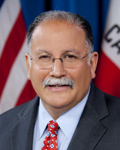
Photo of Jose Medina
D California Assembly · District 61 · Former member

Asm. Jose Medina

Compare
Total votes
20,618
all sessions
Attendance
97%
536 missed
Near the chamber average
With party
99%
of cast votes
Near the chamber average
Bipartisan score
0%
crosses aisle rarely
Near the chamber average
Sponsored
1,627
bills & resolutions
Near the chamber average
Committees
0
assignments
1,627 bills and resolutions

Sponsored bills

Total
1,627
Primary
153
Co-sponsor
1,474
This page
1,627
matching current filters
Co-sponsor ACR 115
Passed · California Assembly · Co-sponsor
Relative to gun-related businesses.

This measure would urge each bank with which the State of California has a business relationship to evaluate its commercial relationship with gun manufacturers and to consider the repercussions of that relationship, and urge all banks to discuss their lending practices with their shareholders and to adopt lending practices that mirror the people of California's values of protecting citizens before profit.

Passed Sep 1, 2020 1 co-sponsor
Co-sponsor AB 664
Passed · California Assembly · Co-sponsor
Workers' compensation: injury: COVID-19.

Existing law establishes a workers' compensation system, administered by the Administrative Director of the Division of Workers' Compensation, to compensate an employee for injuries sustained in the course of employment. Existing law creates a disputable presumption that specified injuries sustained in the course of employment of a specified member of law enforcement or a specified first responder arose out of and in the course of employment. Existing law allows for a claim to be presumed compensable if it has not been rejected within 90 days of filing, as specified. Existing law imposes a duty on an employer to provide certain safety materials and adopt safety practices as necessary. A failure to meet this duty, under specified circumstances, is a misdemeanor. This bill would, until July 1, 2024, define "injury," for certain state and local firefighting personnel, peace officers, certain correctional and law enforcement personnel, as described, certain health care employees who provide direct patient care at an acute care hospital, and certain fire and rescue services coordinators who work for the Office of Emergency Services to include illness or death resulting from COVID-19, that is diagnosed on or after January 1, 2020, if certain circumstances apply. The bill would create a disputable presumption, as specified, that the injury arose out of and in the course of the employment. The bill would require a claim to be presumed compensable, if not rejected within 30 days, as specified. This bill would explicitly add emergency equipment or personal protective equipment, as described, to those materials required to be provided by an employer. A failure to comply with this additional requirement would not constitute a misdemeanor. This bill would declare that it is to take effect immediately as an urgency statute.

Passed Sep 1, 2020 1 co-sponsor
Co-sponsor AB 2167
Passed · California Assembly · Co-sponsor
Residential property insurance: high fire risk areas: study.

The Insurance Rate Reduction and Reform Act of 1988, an initiative measure enacted by Proposition 103, as approved by the voters at the November 8, 1988, statewide general election, prohibits specified insurance rates from being approved or remaining in effect that are excessive, inadequate, unfairly discriminatory, or otherwise in violation of the act. The act requires an insurer that wishes to change a rate to file a complete rate application with the Insurance Commissioner, as specified. This bill would require the commissioner to investigate, study, and prepare a report that addresses specific issues relating to ratemaking for residential property insurance policies in high fire risk areas. The bill would require the study to address the extent to which the commissioner may use its authority to create one or more market assistance plans to ensure that residential property insurance is fair, available, and affordable in high fire risk communities, the costs and benefits of authorizing insurers to include the cost of reinsurance as part of the rate for residential property insurance, and the extent to which the establishment of a public wildfire catastrophe model would be appropriate for use in residential property insurance ratemaking. The bill would require the commissioner, on or before July 1, 2022, to submit the report to the Chairpersons of the Assembly and Senate Committees on Insurance, the Speaker of the Assembly, the President pro Tempore of the Senate, and the Governor. The bill would repeal these provisions on January 1, 2025.

Passed Sep 1, 2020 1 co-sponsor
Co-sponsor SB 292
Passed · California Senate · Co-sponsor
Wildfire risk reporting.

Existing law creates the Department of Insurance, headed by the Insurance Commissioner, and prescribes the commissioner's powers and duties. Existing law requires the commissioner to conduct or commission various studies and prepare various reports relating to the business of insurance. This bill would require the commissioner, on or before July 1, 2022, to complete a study on wildfire risk and insurance, including market-based approaches.

Passed Aug 31, 2020 1 co-sponsor
Primary AB 1930
Passed · California Assembly · Lead sponsor
Public postsecondary education: University of California and California State University: student eligibility policy.

Existing law establishes the University of California, under the administration of the Regents of the University of California, and the California State University, under the administration of the Trustees of the California State University, as the 2 segments of public postsecondary education in the state generally authorized to grant baccalaureate degrees. The Donahoe Higher Education Act sets forth the missions and functions of the segments of postsecondary education in this state. Provisions of the act apply to the University of California only to the extent that the regents act, by appropriate resolution, to make those provisions applicable. A provision of the act expresses the intent of the Legislature that, in determining the standards and criteria for undergraduate and graduate admissions to the University of California and the California State University, the governing bodies of the segments develop processes that, among other things, strive to be fair and are easily understandable. This bill would require the trustees, and request the regents, before making any change in undergraduate student eligibility policy that adds new eligibility requirements, as described, that impact students across its segment, to engage in discussions with and coordinate with other educational segments that will be impacted by the policy in order to understand the impacts of the policy and try to align their respective student eligibility policies. The bill would also require the trustees, and request the regents, to commission an independent study by a third-party research organization to assess the impact of the change in student eligibility policy on the eligibility rates of the graduates of public secondary schools who are members of underrepresented student groups. The bill would also require, or request, as applicable, if either the trustees or the regents approve a change in student eligibility policy that adds new eligibility requirements that impact students across its segment, that an implementation committee, with members selected as designated, be convened to develop a multiyear plan for that segment to work with the public elementary and secondary school system, the California Community Colleges, and the governing body of the other segment to implement the change, and would require in those circumstances annual progress reports to the Governor, the Legislature, and the governing body of the other segment, as specified. If such a change in student eligibility requirements is approved by either the trustees or the regents between January 1, 2020, and the operative date of this bill, the bill would additionally require the trustees or request the regents, as applicable, to commission an independent study by a third-party research organization to assess the actual impact of this change, as specified. This bill would declare that it is to take effect immediately as an urgency statute.


Passed Aug 20, 2020 0 co-sponsors
Co-sponsor AB 3205
Passed · California Assembly · Co-sponsor
Regions Rise Grant Program.

Existing law, the Economic Revitalization Act, establishes the Governor's Office of Business and Economic Development, also known as "GO-Biz," in state government within the Governor's office under the control of a director. The act requires GO-Biz to serve as the Governor's lead entity for economic strategy and the marketing of California on issues relating to business development, private sector investment, and economic growth. This bill would establish the Regions Rise Grant Program within the Governor's Office of Business and Economic Development for the purpose of supporting inclusive, cross-jurisdictional, and innovative processes that lead to inclusive strategies to address barriers and challenges confronting communities in creating economic prosperity for all. The bill would define "region" as a geographic area comprised of one or more counties and cities that form a functional economy. This bill would require the office to develop and implement a process for the awarding of competitive grants to eligible applicants. This bill would define an eligible applicant as a regional collective comprised of public and private stakeholders who organize themselves around one or more community challenges or priorities impacting a region and meet certain requirements established in the bill. The process for awarding grants would be required to meet certain minimum conditions, including, but not limited to, that the funds awarded be available for a period of 3 years, and that the application contain specified information. The bill would require the office, upon appropriation by the Legislature, to issue grants to qualified regional collectives as specified. The bill would also require the regional collective receiving funding to submit a copy of its annual and final report, as provided, to the office and each city and county within the areas identified in their application as the geographic boundary of their work.

Passed Aug 20, 2020 1 co-sponsor
Co-sponsor AB 2478
Passed · California Assembly · Co-sponsor
International medical graduates: study.

Existing law, the Medical Practice Act, establishes the Medical Board of California for the licensure and regulation of physicians and surgeons. Existing law establishes the University of California at Los Angeles David Geffen School of Medicine's International Medical Graduate Program to allow selected international medical graduates in a preresidency training program at the University of California, Los Angeles David Geffen School of Medicine, Department of Family Medicine to receive hands-on clinical instruction, as prescribed. This bill would require the board to conduct a study by January 1, 2022, on achieving specified goals relating to expanding the existing pool of international medical graduates. The bill would require the board, on or before January 1, 2022, to prepare and submit to the Legislature a report with recommendations to achieve those goals.

Passed Aug 20, 2020 1 co-sponsor
Co-sponsor AB 1460
Signed into law · California Assembly · Co-sponsor
California State University: graduation requirement: ethnic studies.

Existing law establishes the California State University and its various campuses under the administration of the Board of Trustees of the California State University. Existing law requires the trustees to adopt rules and regulations not inconsistent with the laws of this state for the governance of the trustees, their appointees and employees, and the California State University. Existing regulations require students of the California State University to complete courses in American history and American government or pass comprehensive examinations in those fields in order to graduate, with specified requirements and exceptions. This bill, commencing with the 2021–22 academic year, would require the California State University to provide for courses in ethnic studies at each of its campuses. The bill, commencing with students graduating in the 2024–25 academic year, would require the California State University to require, as an undergraduate graduation requirement, the completion of, at minimum, one 3-unit course in ethnic studies, as specified.

Signed into law Aug 17, 2020 1 co-sponsor
Primary AB 2783
Passed · California Assembly · Lead sponsor
Alarm company operators: advertisements.

Existing law provides for the licensure and regulation of alarm company operators by the Bureau of Security and Investigative Services within the Department of Consumer Affairs. Existing law requires an advertisement by a licensee soliciting or advertising the licensee's business to contain the licensee's name and license number as they appear in the records of the bureau. Existing law imposes monetary penalties of a $500 fine for the first violation and $1,000 for each subsequent violation. Existing law also imposes criminal penalties for violating these provisions. This bill would authorize a licensee that maintains an internet website, to have any radio or television broadcast billboard advertisement by the licensee soliciting or advertising business direct potential customers to the licensee's online landing pages for the license information required above. By expanding the scope of a crime, the bill would impose a state-mandated local program. The California Constitution requires the state to reimburse local agencies and school districts for certain costs mandated by the state. Statutory provisions establish procedures for making that reimbursement. This bill would provide that no reimbursement is required by this act for a specified reason.

Passed Aug 8, 2020 0 co-sponsors
Showing 461 to 470 of 1,627 bills
Previous 1 … 46 47 48 … 163 Next