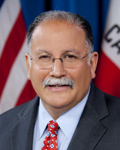
Photo of Jose Medina
D California Assembly · District 61

Asm. Jose Medina

Compare
Total votes
20,618
all sessions
Attendance
97%
536 missed
Near the chamber average
With party
99%
of cast votes
Near the chamber average
Bipartisan score
0%
crosses aisle rarely
Near the chamber average
Sponsored
1,627
bills & resolutions
Near the chamber average
Committees
0
assignments
1,627 bills and resolutions

Sponsored bills

Total
1,627
Primary
153
Co-sponsor
1,474
This page
1,627
matching current filters
Co-sponsor ACR 44
Signed into law · California Assembly · Co-sponsor
Relative to Women's Small Business Month.

This measure would designate the month of October 2021 as Women's Small Business Month and encourage all citizens to recognize the economic importance of women's small businesses in California.

Signed into law Feb 22, 2022 1 co-sponsor
Co-sponsor ACR 29
Signed into law · California Assembly · Co-sponsor
Relative to opioid epidemic.

This measure would designate the month of September 2021 as Opioid Awareness Month in California.

Signed into law Feb 22, 2022 1 co-sponsor
Co-sponsor ACR 93
Signed into law · California Assembly · Co-sponsor
Relative to Childhood Cancer Awareness Month.

This measure would proclaim the month of September 2021 as Childhood Cancer Awareness Month in California and state the commitment of the Legislature to support efforts to find cures for, and achieve prevention of, childhood cancer.

Signed into law Feb 22, 2022 1 co-sponsor
Primary AB 1456
Vetoed · California Assembly · Lead sponsor
Student financial aid: Cal Grant Reform Act.

(1) Existing law establishes the Cal Grant A and B Entitlement awards, the California Community College Transfer Entitlement awards, the Competitive Cal Grant A and B awards, the Cal Grant C awards, and the Cal Grant T awards under the administration of the Student Aid Commission, and establishes eligibility requirements for these awards for participating students attending qualifying institutions. This bill would enact the Cal Grant Reform Act, which would revise and recast the provisions establishing and governing the existing Cal Grant Program into a new Cal Grant Program. The bill would specify that the Cal Grant Reform Act would only become operative upon the appropriation by the Legislature, in the annual Budget Act or another statute, of sufficient funds to fully implement its provisions. The bill would authorize the commission to adopt emergency regulations to implement the Cal Grant Reform Act. The new Cal Grant Program would also include a Cal Grant 2 Program and a Cal Grant 4 Program, with eligibility requirements as specified. The provisions rendering several existing provisions of the Cal Grant Program inoperative would take effect on July 1, 2024, or on a date determined in the annual Budget Act, whichever date is later. The Cal Grant Reform Act would become operative for students to apply for aid beginning October 1, 2023, and to receive aid for the 2024–25 academic year. The bill would require the Trustees of the California State University, and request the Regents of the University of California, to adopt a statement of policy on or before June 30, 2023, on how their institutional aid programs address student basic needs and how these institutional funds are prioritized for disbursement. The bill would require the University of California, the California State University, private nonprofit and for-profit institutions of higher education, and community college districts whose students receive Cal Grant aid to report specified data to the Department of Finance, the Legislative Analyst's Office, and the higher education policy and fiscal committees of the Legislature for each academic year, starting with the 2021–22 academic year, by March 31 of the subsequent academic year. To the extent that this provision would impose new duties on community college districts, it would constitute a state-mandated local program. (2) This bill would incorporate additional changes to Section 66025.9 of the Education Code proposed by SB 512 to be operative only if this bill and SB 512 are enacted and this bill is enacted last. (3) This bill would incorporate additional changes to Section 76300 of the Education Code proposed by AB 1113 to be operative only if this bill and AB 1113 are enacted and this bill is enacted last. (4) The California Constitution requires the state to reimburse local agencies and school districts for certain costs mandated by the state. Statutory provisions establish procedures for making that reimbursement. This bill would provide that, if the Commission on State Mandates determines that the bill contains costs mandated by the state, reimbursement for those costs shall be made pursuant to the statutory provisions noted above.


Vetoed Feb 10, 2022 0 co-sponsors
Primary AB 375
Vetoed · California Assembly · Lead sponsor
Community colleges: part-time employees.

Existing law establishes the California Community Colleges under the administration of the Board of Governors of the California Community Colleges. Existing law authorizes the establishment of community college districts under the administration of community college governing boards, and authorizes these districts to provide instruction at community college campuses throughout the state. Existing law requires community colleges, as a condition of receiving funding allocated for the Student Success and Support Program, to negotiate in good faith with the exclusive representatives for part-time, temporary faculty, the terms of reemployment preference for part-time, temporary faculty assignments based on minimum standards up to the range of 60% to 67% of a full-time equivalent load and a regular evaluation process for part-time, temporary faculty, as specified. This bill would instead require community colleges, as a condition of receiving funding allocated for the Student Equity and Achievement Program, to negotiate in good faith with the exclusive representatives for part-time, temporary faculty on the terms of the reemployment preference for part-time, temporary faculty assignments and the regular evaluation process for part-time, temporary faculty. The bill would instead require that negotiation on reemployment preference for part-time, temporary faculty assignments be based on the minimum standards not exceeding 80% to 85% of a full-time equivalent load, and would prohibit the community college district from restricting the terms of the negotiated agreement to less than that range, unless explicitly agreed upon by an individual part-time, temporary faculty member and the district. The bill would require the community college district to commence the negotiation of these terms no later than the expiration of any negotiated agreement in effect on January 1, 2022, and for any community college district that does not have a collective bargaining agreement in effect as of January 1, 2022, upon the effective date of the bill. The bill would make conforming changes and repeal obsolete provisions. Under existing law, a person employed to teach adult or community college classes for not more than 67% of the hours per week of a full-time employee having comparable duties, excluding substitute service, is classified as a temporary employee and not a contract employee. This bill would change the maximum time a part-time, temporary employee may teach, without becoming a contract employee, to 85% of the hours per week of a full-time employee having comparable duties.

Vetoed Feb 10, 2022 0 co-sponsors
Showing 231 to 240 of 1,627 bills
Previous 1 … 23 24 25 … 163 Next