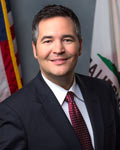
Photo of Eric Linder
R California House · District 60

Rep. Eric Linder

Compare
Total votes
10,705
all sessions
Attendance
93%
514 missed
Lower than 87% of chamber peers
With party
95%
of cast votes
Lower than 82% of chamber peers
Bipartisan score
3%
crosses aisle rarely
Higher than 78% of chamber peers
Sponsored
554
bills & resolutions
Near the chamber average
Committees
0
assignments
554 bills and resolutions

Sponsored bills

Total
554
Primary
66
Co-sponsor
488
This page
554
matching current filters
Primary AB 2342
In committee · California House · Lead sponsor
State of emergency.

Existing law empowers the Governor to proclaim a state of emergency in an area affected or likely to be affected when the Governor finds that specified circumstances exist and either the Governor is requested to do so by the mayor or chief executive in the case of a city or by the chairman of the board of supervisors or the county administrative officer in the case of a county, or the Governor finds that the local authority is inadequate to cope with the emergency. This bill would require the governor to approve a request from a city or county within 60 days of receiving the request, except if the Governor has requested federal emergency assistance or a federal declaration of a major disaster.

In committee Apr 20, 2016 0 co-sponsors
Co-sponsor ACR 133
Signed into law · California House · Co-sponsor
Relative to Women and Girls in STEM Week.

This measure would designate April 3, 2016, to April 9, 2016, inclusive, as Women and Girls in STEM Week and would encourage all citizens and community organizations to support the observance of California Women and Girls in STEM Week by encouraging and celebrating women in the STEM fields.

Signed into law Apr 19, 2016 1 co-sponsor
Co-sponsor ACR 114
Signed into law · California House · Co-sponsor
Relative to Grand Jury Awareness Month.

This measure would proclaim the month of March 2016 as Grand Jury Awareness Month in California, recognize those who volunteer in a grand jury, and encourage all Californians to learn about its role in the judicial system.

Signed into law Apr 14, 2016 1 co-sponsor
Primary AB 1707
In committee · California House · Lead sponsor
Public records: response to request.

The California Public Records Act requires state and local agencies to make public records available for inspection, unless an exemption from disclosure applies. Existing law requires an agency to justify withholding any record by demonstrating that the record is exempt under express provisions of the act or that the public interest served by not disclosing the record clearly outweighs the public interest served by disclosure. The act requires a response to a written request for public records that includes a denial of the request, in whole or in part, to be in writing. This bill would require the written response demonstrating that the record in question is exempt under an express provision of the act also to identify the type or types of record withheld and the specific exemption that justifies withholding that type of record. Because local agencies would be required to comply with this new requirement, this bill would impose a state-mandated local program. The California Constitution requires local agencies, for the purpose of ensuring public access to the meetings of public bodies and the writings of public officials and agencies, to comply with a statutory enactment that amends or enacts laws relating to public records or open meetings and contains findings demonstrating that the enactment furthers the constitutional requirements relating to this purpose. This bill would make legislative findings to that effect. The California Constitution requires the state to reimburse local agencies and school districts for certain costs mandated by the state. Statutory provisions establish procedures for making that reimbursement. This bill would provide that no reimbursement is required by this act for a specified reason.

In committee Apr 12, 2016 0 co-sponsors
Co-sponsor AB 1565
In committee · California House · Co-sponsor
Developmental services: funding.

The Lanterman Developmental Disabilities Services Act requires the State Department of Developmental Services to contract with regional centers to provide services and supports to individuals with developmental disabilities. Under existing law, the regional centers purchase needed services for individuals with developmental disabilities through approved service providers or arrange for those services through other publicly funded agencies. This bill would require the department to submit a plan to the Legislature by August 1, 2017, to ensure the sustainability, quality, and transparency of community-based services for individuals with developmental disabilities. The bill would require the department to regularly consult with stakeholders in developing the plan and would require the plan to address specified topics, including, among others, recommendations for a comprehensive approach to funding regional center operations in a sustainable and transparent manner that enables regional centers to deliver high-quality services to consumers. Existing law requires that contracts or agreements between regional centers and service providers in which the rates between the regional center and the service provider are determined through negotiations to ensure that not more than 15% of regional center funds be spent on administrative costs, as described. This bill would instead provide that the percentage of the funds that may be spent on administrative costs varies depending on the total value, annually, of the payments received by a service provider from all regional centers. Existing law establishes specified rates to be paid to certain service providers and the rates to be paid for certain developmental services. Existing law requires that rates to be paid to other developmental service providers either be set by the department or negotiated between the regional center and the service provider. Existing law prohibits certain provider rate increases, but authorizes increases to those rates as necessary to adjust employee wages to meet the state minimum wage law. This bill would increase the rates established by existing law, as specified, and would require an increase to the rates set by the department and the rates negotiated between regional centers and service providers, as specified. The bill would also require the department, when setting rates for community care facilities serving people with developmental disabilities, to ensure that the rates permit the viability of those facilities by establishing different rates for each facility size, as determined by the number of beds available, that reflect reasonable differences in the cost structure of facilities with differing numbers of beds. The bill would require the department to adopt emergency regulations implementing that provision. Existing law requires each regional center to submit, on or before August 1 of each year, to the department and the State Council on Developmental Disabilities a program budget plan for the subsequent budget year. Existing law provides that, to the extent feasible, all funds appropriated for developmental disabilities programs be allocated to those programs by August 1 of each year and designates the department as the agency responsible for the processing, audit, and payment of funds made available to regional centers. This bill would require the department to increase the funding paid to a regional center for the regional center's operating budget, beginning July 1, 2016, by 10% above the amount the regional center otherwise would have received under the department's core staffing formula, and, beginning July 1, 2017, by 10% above the amount the regional center otherwise would have received under the department's core staffing formula, plus a percentage equal to the percentage of any increase in the California Consumer Price Index since July 1, 2016. The bill would also require the department to increase the funding provided to a regional center to enable the regional center and the regional center's purchase-of-service vendors to fund certain costs related to minimum wage requirements. This bill would declare that it is to take effect immediately as an urgency statute.


In committee Apr 12, 2016 1 co-sponsor
Primary AB 1877
In committee · California House · Lead sponsor
Lewd or obscene conduct.

Existing law provides that any person who exposes his or her person, or the private parts thereof, in a public place or in any place where there are present other persons to be offended or annoyed by that act is guilty of a misdemeanor, except as specified. A 2nd or subsequent conviction of that act, or a first conviction of that act after a prior conviction for a specified lewd or lascivious act, is a felony punishable by imprisonment in the state prison. This bill would instead make a first conviction of exposing oneself when it occurs in state prison or a county jail punishable as a felony in the state prison, and make a first conviction of that act after a prior conviction requiring registration as a sex offender punishable as a felony in the state prison. Because this bill would increase the penalties for an existing crime, it would impose a state-mandated local program. The California Constitution requires the state to reimburse local agencies and school districts for certain costs mandated by the state. Statutory provisions establish procedures for making that reimbursement. This bill would provide that no reimbursement is required by this act for a specified reason.

In committee Apr 5, 2016 0 co-sponsors
Showing 121 to 130 of 554 bills
Previous 1 12 13 14 56 Next