This measure would recognize the 50th anniversary of hip hop on August 11, 2023, as a time of celebration, pride, and nostalgia for the citizens of California.
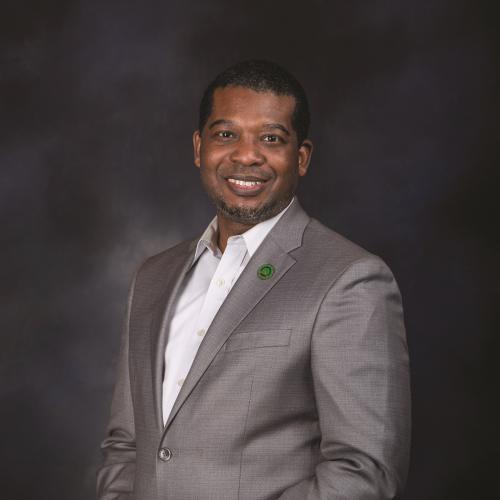
Asm. Corey Jackson
Sponsored bills
Existing law establishes the state prisons under the jurisdiction of the Department of Corrections and Rehabilitation. Existing law requires the Department of Corrections and Rehabilitation to begin reducing private in-state male contract correctional facilities and reducing the capacity of state-owned and operated prisons or in-state leased or contract correctional facilities, as specified. Existing law establishes the Governor's Office of Business and Economic Development (GO-Biz) , which serves the Governor as the lead entity for economic strategy and the marketing of California on issues relating to business development, private sector investment, and economic growth. This bill would establish the California Prison Redevelopment Commission, under the direction of the Director of GO-Biz and consisting of 15 members, including, among others, representatives from the Department of Corrections and Rehabilitation, the Department of Finance, and the Department of General Services, and members appointed by the Governor, the Speaker of the Assembly, and the Senate Rules Committee, as specified. This bill would specify that the task of the commission is to prepare a report with the commission's findings and recommendations that deliver a set of clear and credible recommendations for creative uses of closed prison facilities that will turn those sites into community assets, as specified. This bill would require the commission to submit a report to the Legislature by August 1, 2024, detailing the commission's findings and recommendations. The bill would repeal these provisions as of January 1, 2026, and would make related findings and declarations. The bill would provide that its requirements are operative only upon an appropriation by the Legislature for the bill's purposes.
The California Constitution provides that the University of California constitutes a public trust, and requires the university to be administered by the Regents of the University of California, a corporation in the form of a board, with full powers of organization and government, subject to legislative control only for specified purposes. The California Native American Graves Protection and Repatriation Act of 2001 requires all agencies and museums, which is defined to include higher education institutions, that receive state funding and have possession or control over collections of California Native American human remains and associated funerary objects to inventory those remains and objects for repatriation to the appropriate California Indian tribes, as specified. As a condition for using state funds to handle and maintain Native American human remains and cultural items, this bill would require the office of the President of the University of California to comply with various requirements regarding repatriation of Native American human remains and cultural items, as provided.
The Political Reform Act of 1974 prohibits a person, other than a small contributor committee or political party committee, from making to a candidate for elective state, county, or city office, and prohibits those candidates from accepting from a person, a contribution totaling more than $3,000 per election, as that amount is adjusted by the Fair Political Practices Commission in January of every odd-numbered year to reflect changes in the Consumer Price Index. This bill would apply those contribution limits to candidates for school district, community college district, and other special district elections. The bill would make certain other provisions of the act relating to contribution limits applicable to candidates for district office. However, the bill would authorize school districts, community college districts, and other special districts to impose contribution limits on candidates for district office that differ from the limits imposed by the act, as provided. This bill would retain the existing provisions of law until January 1, 2025, and on that date would repeal the existing law and make operative the provisions of the bill described in this paragraph. The act makes a knowing or willful violation of its provisions punishable as a misdemeanor and subject to specified penalties. By adding new contribution limits to the act, the bill would expand the scope of an existing crime and thereby create a state-mandated local program. The California Constitution requires the state to reimburse local agencies and school districts for certain costs mandated by the state. Statutory provisions establish procedures for making that reimbursement. This bill would provide that no reimbursement is required by this act for a specified reason. The Political Reform Act of 1974, an initiative measure, provides that the Legislature may amend the act to further the act's purposes upon a 23 vote of each house of the Legislature and compliance with specified procedural requirements. This bill would declare that it furthers the purposes of the act.
(1) Existing law generally requires electronic poll books, ballot manufacturers and finishers, ballot on demand systems, voting systems, and remote accessible vote by mail systems to be approved by the Secretary of State before their use in an election. This bill would authorize the Secretary of State to impose additional conditions of approval for these purposes. (2) Existing law requires a ballot card manufacturer, ballot card finisher, or ballot on demand system vendor to notify the Secretary of State and affected local elections officials in writing within 2 business days after discovering any flaw or defect that could adversely affect the future casting or tallying of votes. This bill would instead require a ballot card manufacturer, ballot card finisher, or ballot on demand system vendor to provide that notice within 24 hours. (3) Under existing law, specified election materials, including voted ballots, are required to be kept by county elections officials for 22 months for elections involving a federal office or for 6 months for all other elections. This bill would add paper cast vote records to the list of materials county elections officials are required to keep. The bill would also require county elections officials to keep certain electronic data for 22 months for elections involving a federal office or for 6 months for all other elections. By imposing additional duties on county elections officials, this bill would create a state-mandated local program. (4) Under existing law, it is a felony punishable by imprisonment for 2 to 4 years to interfere or attempt to interfere with the secrecy of voting or ballot tally software program sources codes or to knowingly, and without authorization, possess a key to a voting machine that has been adopted and will be used. This bill would specify that, with respect to the secrecy of voting or ballot tally software program sources codes, the phrase interferes or attempts to interfere with, includes but is not limited to, knowingly, and without authorization, providing unauthorized access to, or breaking the chain of custody to, certified voting technology during the lifecycle of that certified voting technology, or any finished or unfinished ballot cards. The bill would also expand the crime of knowing and unauthorized possession of a key to a voting machine that has been adopted and will be used to include knowing and unauthorized possession of credentials, passwords, or access keys to a voting machine that has been adopted and will be used. By expanding the scope of an existing crime, this bill would create a state-mandated local program. The bill would authorize the destruction or secure disposal of certified voting technology at the end of lifecycle with the written approval of the Secretary of State and the manufacturer. The bill would also require specified actions to be taken for any part or component of certified voting technology for which the chain of custody has been compromised or for which security has been breached or attempted to be breached, including that the technology be removed from service immediately. (5) Existing law prohibits a voting system from being connected to the internet and from receiving or transmitting wireless communications or wireless data transfers. This bill would prohibit establishing a network connection to any device not directly used and necessary for voting system functions and would prohibit communication by or with any component of the voting system by wireless or modem transmission. The bill would require a voting system to be used in a configuration of parallel central election management systems separated by an air-gap, as defined. (6) The California Constitution requires the state to reimburse local agencies and school districts for certain costs mandated by the state. Statutory provisions establish procedures for making that reimbursement. This bill would provide that with regard to certain mandates no reimbursement is required by this act for a specified reason. With regard to any other mandates, this bill would provide that, if the Commission on State Mandates determines that the bill contains costs so mandated by the state, reimbursement for those costs shall be made pursuant to the statutory provisions noted above.

This measure would declare that the Legislature should pass laws that halt the importation of cobalt or any product using cobalt mined in Africa using child slave labor and encourage the production of cobalt and other critical minerals ethically sourced from within the United States.
This measure would recognize July 17, 2023, to July 23, 2023, as Outdoor Worker Appreciation Week.
This measure would declare the month of October 2023 as Sudden Infant Death Syndrome (SIDS) Awareness Month.