

Former law, Chapter 319 of the Statutes of 2020, until July 1, 2023, established a task force to, among other things, identify, compile, and synthesize the relevant corpus of evidentiary documentation of the institution of slavery that existed within the United States and the colonies, as specified, and to recommend the form of compensation that should be awarded, the instrumentalities through which it should be awarded, and who should be eligible for this compensation. Existing law, the California Fair Employment and Housing Act, establishes the Civil Rights Department and sets forth its powers and duties, including, among others, receiving, investigating, and prosecuting complaints alleging violations of civil rights, as specified. This bill would establish the Bureau for Descendants of American Slavery within the department, under the control of the deputy director, who would be appointed by the Governor and confirmed by the Senate. The bill would require the bureau to create a Genealogy Division, as specified, and to verify an individual's status as a descendant and would require proof of an individual's descendant status to be a qualifying criterion for benefits authorized by the state for descendants. The bill would also require the bureau to create an Education and Outreach Division and a Legal Affairs Division. The bill would impose various requirements on the bureau relating to the collection, storage, and disclosure of personal and genetic information, as specified. The bill would authorize the bureau to receive moneys from any federal, state, or local grant and from any nongovernmental entity, as specified. This bill would make implementation of its provisions contingent upon appropriation by the Legislature, as specified. This bill would include findings and declarations relating to a gift of public funds. Existing constitutional provisions require that a statute that limits the right of access to the meetings of public bodies or the writings of public officials and agencies be adopted with findings demonstrating the interest protected by the limitation and the need for protecting that interest. This bill would make legislative findings to that effect.
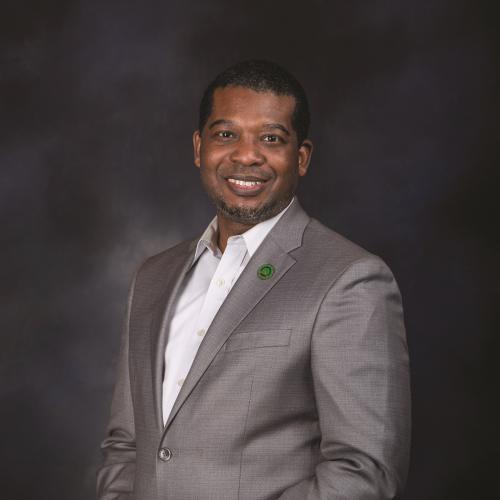
Asm. Corey Jackson
Sponsored bills
Existing law establishes the Early Childhood Policy Council to advise the Governor, the Legislature, and the State Department of Social Services on statewide early learning and care policy. Existing law imposes various duties on the council, including, among others, requiring the council to prepare a formal public annual report on the work of the council and providing specific recommendations to the Governor, the Legislature, and the department on all aspects of the state's early childhood education system. This bill would require the above-described report to include, at a minimum, the successes, challenges, and gaps in the state's early childhood education systems and recommendations to facilitate advancing the state's vision for children, families, and communities. The bill would require the council to annually submit the report to the appropriate fiscal and policy committees of the Legislature. The bill would also require the council to develop policy proposals and budget requests for the Legislature to consider related to facility needs, workforce needs, and family access.
Existing sales and use tax laws impose taxes on retailers measured by the gross receipts from the sale of tangible personal property sold at retail in this state, or on the storage, use, or other consumption in this state of tangible personal property purchased from a retailer for storage, use, or other consumption in this state. The California Alternative Energy and Advanced Transportation Financing Authority Act establishes the California Alternative Energy and Advanced Transportation Financing Authority. The act authorizes, until January 1, 2026, the authority to provide financial assistance to a participating party by authorizing exclusions from sales and use tax for certain projects, including those that promote California-based manufacturing, California-based jobs, advanced manufacturing, the reduction of greenhouse gases, or a reduction in air and water pollution or energy consumption. The Sales and Use Tax Law, for the purposes of the taxes imposed pursuant to that law, until January 1, 2026, excludes the lease or transfer of title of tangible personal property constituting one of those projects to any contractor for use in the performance of a construction contract for a participating party that will use that property as an integral part of the approved project. This bill would extend to January 1, 2028, the authorization to provide financial assistance in the form of a sales and use tax exclusion for projects approved by the authority. The bill would add electrical generation facilities using nuclear fusion technology to the types of projects qualifying for this sales and use tax exclusion. The bill would, on and after January 1, 2026, for an applicant that, together with its parent corporation and subsidiaries, employs 500 or more employees, prohibit the authority from approving a project unless the applicant certifies that the applicant and its subcontractors will comply with certain labor requirements. The bill would make other conforming changes. This bill would take effect immediately as a tax levy.
Existing law declares the public policy of the state regarding labor organization, including, among other things, that it is necessary for a worker to have full freedom of association, self-organization, and designation of representatives of their own choosing, to negotiate the terms and conditions of their employment, and to be free from the interference, restraint, or coercion of employers of labor, or their agents, in the designation of such representatives or in self-organization or in other concerted activities for the purpose of collective bargaining or other mutual aid or protection. Existing law establishes the Public Employment Relations Board (PERB) in state government as a means of resolving disputes and enforcing the statutory duties and rights of specified public employers and employees under various acts regulating collective bargaining. Under existing law, PERB has the power and duty to investigate an unfair practice charge and to determine whether the charge is justified and the appropriate remedy for the unfair practice. Existing law, the federal National Labor Relations Act (NLRA) , establishes a comprehensive statutory scheme regulating unfair labor practices on the part of employers and labor organizations in industries affecting interstate commerce, and vests in the National Labor Relations Board (NLRB) the power to conduct elections to determine employee representatives and to prevent unfair labor practices affecting commerce. Existing law, the California Public Records Act, requires that public records, as defined, be available to the public for inspection and made promptly available to any person. This bill would expand PERB's jurisdiction by authorizing a worker, to petition PERB to protect and enforce prescribed rights under specified circumstances, including if the worker is employed in a position subject to the NLRA but the NLRB has expressly or impliedly ceded jurisdiction. The bill would authorize PERB to, among other things, decide unfair labor practice cases pursuant to a specified timeline and order all appropriate relief for a violation, including civil penalties, as prescribed. In order to pursue relief from PERB, the bill would require a covered worker or their representative to file an unfair practice charge or petition that includes specified information, including, where applicable, the original charge or petition filed with the NLRB. The bill would require PERB to hold the supporting documentation and evidence confidential and maintain it as part of its investigatory file and would exempt this documentation and evidence from the California Public Records Act. If PERB determines, among other things, it has insufficient resources to process certain cases or doing so would prevent it from meeting specified statutory deadlines, the bill would require PERB to process and prioritize charges, as specified. The bill would also establish the Public Employment Relations Board Enforcement Fund (fund) in the State Treasury, would require the above-described civil penalties to be deposited into the fund, and would make moneys in the fund available upon appropriation by the Legislature to PERB for the purpose of administering the above-specified provisions. The bill would authorize PERB to rely on its own decisions and precedent under the NLRA and would authorize review of its decisions by a state appellate court, as specified. Existing law, the Alatorre-Zenovich-Dunlap-Berman Agricultural Labor Relations Act of 1975, grants agricultural employees the right to form and join labor organizations and engage in collective bargaining, as specified, and prohibits agricultural employers and labor organizations from engaging in unfair labor practices. Those provisions establish the Agricultural Labor Relations Board (ALRB) and empower the ALRB to prevent any person from engaging in those practices. Existing law establishes various definitions for these purposes. Existing law requires the ALRB to follow applicable precedents of the NLRA. This bill would specify that the ALRB has exclusive jurisdiction in all phases of the administration of the act, and to determine whether any person or entity meets one or more of those definitions. The bill would instead authorize the board to follow applicable precedents of the NLRA, but would not obligate the board to follow precedents where the ALRB deems it inappropriate to do so. This bill would make related findings and declarations and would make its provisions severable. Existing constitutional provisions require that a statute that limits the right of access to the meetings of public bodies or the writings of public officials and agencies be adopted with findings demonstrating the interest protected by the limitation and the need for protecting that interest. This bill would make legislative findings to that effect.
This measure would designate November 1, 2025, as Fernando Valenzuela Day, to highlight the positive impact his legacy created in the Latino and Hispanic community.
This measure would recognize the importance of California Native American Day, celebrated this year on September 26, 2025, and the annual California Indian Cultural Awareness Conference, to the enhancement of awareness of California Indian culture.
Maddy summaryACR 13 designates September 21, 2025, as the International Day of Peace within the state. This ceremonial resolution recognizes the United Nations-established day without creating new laws or affecting any specific group. It serves as a formal proclamation by the state legislature to acknowledge global efforts toward peace. The bill has no policy implications or financial impact.
Existing law makes it a misdemeanor to wear a mask, false whiskers, or any personal disguise, as specified, with the purpose of evading or escaping discovery, recognition, or identification while committing a public offense, or for concealment, flight, evasion, or escape from arrest or conviction for any public offense. This bill would make it a crime for a law enforcement officer to wear a facial covering in the performance of their duties, except as specified. The bill would define law enforcement officer as anyone designated by California law as a peace officer who is employed by a city, county, or other local agency, and any officer or agent of a federal law enforcement agency or law enforcement agency of another state, or any person acting on behalf of a federal law enforcement agency or agency of another state. The bill would make a violation of these provisions punishable as an infraction or a misdemeanor, as specified. By creating a new crime, this bill would impose a state-mandated local program. The bill would require any law enforcement agency operating in California to, by July 1, 2026, maintain and publicly post a written policy limiting the use of facial coverings, as specified. The bill would exempt personnel of any agency from the crime of wearing a facial covering if an agency maintains a policy pursuant to this section no later than July 1, 2026. The bill would deem a policy consistent with these provisions for the purposes of that exception unless a member of the public, an oversight body, or a local governing authority challenges it. The bill would also impose a specified civil penalty against certain officers for tortious conduct, including, but not limited to, false imprisonment or false arrest of an individual while wearing a facial covering. The bill would, if the agency does not address deficiencies within 90 days, authorize the complaining party to proceed to a court of competent jurisdiction for a judicial determination of the exemption, as specified. The bill would define a law enforcement agency for these purposes as any entity of a city, county, or other local agency, that employs anyone designated by California law as a peace officer, any federal law enforcement agency, or any law enforcement agency of another state. By imposing additional duties on local law enforcement agencies, this bill would create a state-mandated local program. This bill would declare its provisions to be severable. This bill would make related findings and declarations. The California Constitution requires the state to reimburse local agencies and school districts for certain costs mandated by the state. Statutory provisions establish procedures for making that reimbursement. This bill would provide that with regard to certain mandates no reimbursement is required by this act for a specified reason. With regard to any other mandates, this bill would provide that, if the Commission on State Mandates determines that the bill contains costs so mandated by the state, reimbursement for those costs shall be made pursuant to the statutory provisions noted above.
This measure would proclaim the month of October 2025 as California Firefighter Appreciation Month and October 4, 2025, as California Firefighters Memorial Day.
This measure would declare the Legislature's opposition to the unlawful Executive Order No. 14160, entitled "Protecting the Meaning and Value of American Citizenship," ending birthright citizenship as enshrined in the United States Constitution and would affirm the Legislature's commitment to birthright citizenship, as specified.