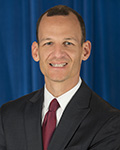
Photo of Kevin McCarty
D California Assembly · District 6 · Former member

Asm. Kevin McCarty

Contact Email
Compare
Total votes
24,221
all sessions
Attendance
94%
1,034 missed
Near the chamber average
With party
99%
of cast votes
Near the chamber average
Bipartisan score
0%
crosses aisle rarely
Near the chamber average
Sponsored
1,989
bills & resolutions
Near the chamber average
Committees
0
assignments
1,989 bills and resolutions

Sponsored bills

Total
1,989
Primary
257
Co-sponsor
1,732
This page
1,989
matching current filters
Primary AB 646
Signed into law · California Assembly · Lead sponsor
Elections: voter eligibility.

Existing law prohibits a person who is on parole for the conviction of a felony from voting, registering to vote, or preregistering to vote. This bill would remove those prohibitions, thereby allowing a person on parole to preregister, register, and vote and make other technical and conforming changes. This bill would become operative only if ACA 6 of the 2019–20 Regular Session is approved by the voters.

Signed into law Sep 30, 2020 0 co-sponsors
Co-sponsor AB 1196
Signed into law · California Assembly · Co-sponsor
Peace officers: use of force.

Existing law authorizes a peace officer to make an arrest pursuant to a warrant or based upon probable cause, as specified. Under existing law, an arrest is made by the actual restraint of the person or by submission to the custody of the arresting officer. Existing law authorizes a peace officer to use reasonable force to effect the arrest, to prevent escape, or to overcome resistance. Existing law requires law enforcement agencies to maintain a policy on the use of force, as specified. Existing law requires the Commission on Peace Officer Standards and Training to implement courses of instruction for the regular and periodic training of law enforcement officers in the use of force. This bill would prohibit a law enforcement agency from authorizing the use of a carotid restraint or a choke hold, as defined. By requiring local agencies to amend use of force policies, this bill would impose a state-mandated local program. The California Constitution requires the state to reimburse local agencies and school districts for certain costs mandated by the state. Statutory provisions establish procedures for making that reimbursement. This bill would provide that, if the Commission on State Mandates determines that the bill contains costs mandated by the state, reimbursement for those costs shall be made pursuant to the statutory provisions noted above.

Signed into law Sep 30, 2020 1 co-sponsor
Primary AB 2342
Vetoed · California Assembly · Lead sponsor
Parole.

(1) Existing law requires that specified persons who have been released on parole from state prison who were not imprisoned for a violent felony, a serious felony, or an offense requiring registration as a sex offender, and who have been on parole for a period of 6 months, be discharged from parole unless the Department of Corrections and Rehabilitation recommends to the Board of Parole Hearings that the person should be retained, and the board, for good cause, determines that the person is to be retained. Existing law additionally requires specified persons who have been released on parole from state prison who were imprisoned for a serious felony or an offense requiring registration as a sex offender, and who have been on parole continuously for one year since release from confinement, to be similarly discharged from parole. Finally, existing law requires that specified persons who have been released on parole from state prison who were imprisoned for a violent felony, and who have been released on parole for a period not exceeding 3 years and have been on parole continuously for 2 years since release from confinement, or who have been released on parole for a period not exceeding 5 years and have been on parole continuously for 3 years since release from confinement, be similarly discharged from parole. This bill would create a program under which the length of a parolee's period of parole could be reduced through credits earned by successfully completing specified education, training, or treatment programs, or by participating in volunteer service, while adhering to the conditions of parole. The bill would make this program inapplicable to a person who is required to register as a sex offender. The bill would, if AB 1304 is enacted, additionally require this program to award credits for participation in substance abuse treatment programs, as specified. (2) Under existing law, an inmate is released to the county of their residence before incarceration or, when the interest of public safety is best served, to another location specified by the Board of Parole Hearings. Existing regulations prohibit a parolee from traveling more than 50 miles from their residence without the approval of a parole agent. The bill would also increase the 50-mile travel restriction for a parolee who successfully participates in the parole credit program, subject to certain restrictions. The bill would require the Department of Corrections and Rehabilitation and the Board of Parole Hearings to adopt regulations to carry out this program, as specified. This bill would, as a condition of continued state funding, prohibit any entity that receives state funds and provides services and programs in the fields of education, job training, workforce placement, health, or housing, from denying access to services or programs to a person on the basis that the person is currently or previously has been on parole or postrelease community supervision.

Vetoed Sep 30, 2020 0 co-sponsors
Primary AB 1185
Signed into law · California Assembly · Lead sponsor
County board of supervisors: sheriff oversight.

Existing law establishes the office of the sheriff in each county to preserve peace, and authorizes the sheriff to sponsor, supervise, or participate in any project of crime prevention, rehabilitation of persons previously convicted of crime, or the suppression of delinquency. Existing law requires a board of supervisors to supervise the official conduct of all county officers and ensure that they faithfully perform their duties. This bill would authorize a county to establish a sheriff oversight board to assist the board of supervisors with those duties as they relate to the sheriff, either by action of the board of supervisors or through a vote of county residents. This bill would authorize a county, either by action of the board of supervisors or through a vote of county residents, to establish an office of the inspector general to assist the board of supervisors with these duties as they relate to the sheriff. The bill would authorize the chair of the oversight board and the inspector general to issue a subpoena or subpoena duces tecum when deemed necessary to investigate a matter within their jurisdiction.

Signed into law Sep 30, 2020 0 co-sponsors
Primary AB 1506
Signed into law · California Assembly · Lead sponsor
Police use of force.

Existing law requires law enforcement agencies to maintain a policy on the use of force, as specified. Existing law requires the Commission on Peace Officer Standards and Training to implement courses of instruction for the regular and periodic training of law enforcement officers in the use of force. Existing law requires law enforcement agencies to report to the Department of Justice, as specified, any incident in which a peace officer is involved in a shooting or use of force that results in death or serious bodily injury. This bill would create a division within the Department of Justice to, upon the request of a law enforcement agency, review the use-of-force policy of the agency and make recommendations, as specified. This bill would require a state prosecutor to investigate incidents of an officer-involved shooting resulting in the death of an unarmed civilian, as defined. The bill would make the Attorney General the state prosecutor unless otherwise specified or named. The bill would authorize the state prosecutor to prepare a written report, and would require the state prosecutor to post any reports made on a public internet website. The bill would require, commencing July 1, 2023, the Attorney General to operate a Police Practices Division within the department to review, upon the request of a local law enforcement agency, the use of deadly force policies of that law enforcement agency and make recommendations, as specified. The bill would require the department to implement these provisions subject to an appropriation for this purpose.

Signed into law Sep 30, 2020 0 co-sponsors
Co-sponsor AB 3121
Signed into law · California Assembly · Co-sponsor
Task Force to Study and Develop Reparation Proposals for African Americans.

Existing law requests the Regents of the University of California to assemble a colloquium of scholars to draft a research proposal to analyze the economic benefits of slavery that accrued to owners and the businesses, including insurance companies and their subsidiaries, that received those benefits, and to make recommendations to the Legislature regarding those findings. Existing law requires the Insurance Commissioner to request and obtain information from insurers licensed and doing business in this state regarding any records of slaveholder insurance policies issued by any predecessor corporation during the slavery era. Existing law requires insurers to research and report to the commissioner on insurance policies that provided coverage for injury to, or death of, enslaved people. This bill would establish the Task Force to Study and Develop Reparation Proposals for African Americans, with a Special Consideration for African Americans Who are Descendants of Persons Enslaved in the United States, consisting of 9 members, appointed as provided. The bill would require the Task Force to, among other things, identify, compile, and synthesize the relevant corpus of evidentiary documentation of the institution of slavery that existed within the United States and the colonies. The bill would require the Task Force to recommend, among other things, the form of compensation that should be awarded, the instrumentalities through which it should be awarded, and who should be eligible for this compensation. The bill would require the Task Force to submit a written report of its findings and recommendations to the Legislature. The bill would authorize reimbursement of the members' expenses only to the extent an appropriation therefor is made in the Budget Act. The bill would state that any state level reparations authorized under these provisions are not to be considered a replacement for any reparations enacted at the federal level. The bill would repeal these provisions on July 1, 2023.

Signed into law Sep 30, 2020 1 co-sponsor
Co-sponsor AB 3216
Vetoed · California Assembly · Co-sponsor
Unemployment: rehiring and retention: state of emergency.

Existing law governs employment relations, defines the contract of employment, and establishes the obligations of employers to their employees. This bill would require an employer, as defined, to offer its laid-off employees specified information about job positions that become available for which the laid-off employees are qualified, and to offer positions to those laid-off employees based on a preference system, in accordance with specified timelines and procedures. The bill would define the term "laid-off employee" to mean any employee who was employed by the employer for 6 months or more in the 12 months preceding the state of emergency giving rise to the application of the bill's provisions, and whose most recent separation from active service was due to a public health directive, government shutdown order, lack of business, a reduction in force, or other economic, nondisciplinary reason related to the state of emergency, as defined. The bill would also require an incumbent employer, within 15 days after the execution of a transfer document, to provide to the successor employer specified information pertaining to eligible employees and would require the successor employer to maintain and hire from a preferential hiring list for a specified time period. The bill would authorize an employee to enforce violations of these provisions by filing an action with the Division of Labor Standards and would authorize various remedies, including hiring and reinstatement rights and awarding of back pay.

Vetoed Sep 30, 2020 1 co-sponsor
Co-sponsor AB 2617
Signed into law · California Assembly · Co-sponsor
Firearms: gun violence restraining orders.

Existing law allows a court to issue an order restraining an individual from possessing a firearm for the duration of the order. Existing law allows the court to issue a temporary emergency gun violence restraining order on an ex parte basis if the possession of a firearm by the subject of the petition poses an immediate and present danger. Existing law requires a law enforcement officer who requests a temporary emergency gun violence restraining order to take certain steps, including filing a copy of the order with the court as soon as practicable after issuance. This bill would instead require the law enforcement officer to file a copy of the order with the court as soon as practicable, but not later than 3 court days, after issuance. Under existing law, a person who owns or possesses a firearm or ammunition with the knowledge that they are prohibited from doing so by a gun violence restraining order is guilty of a misdemeanor and shall be prohibited from having custody or control of, owning, purchasing, possessing, or receiving, or attempting to purchase or receive, a firearm or ammunition for a 5-year period, commencing upon the expiration of the existing gun violence restraining order. This bill would specify that this offense also applies to persons who are subject to certain gun violence restraining orders, as described, issued by an out-of-state jurisdiction. This bill would state that its provisions are severable. By expanding the application of an existing crime, this bill would impose a state-mandated local program. The California Constitution requires the state to reimburse local agencies and school districts for certain costs mandated by the state. Statutory provisions establish procedures for making that reimbursement. This bill would provide that no reimbursement is required by this act for a specified reason.

Signed into law Sep 29, 2020 1 co-sponsor
Co-sponsor AB 2746
Vetoed · California Assembly · Co-sponsor
Funding accountability: state funding for homelessness.

Existing law provides for various public social services programs, including, among others, the California Work Opportunity and Responsibility to Kids (CalWORKs) program, under which each county provides cash assistance and other benefits to qualified low-income families and individuals. Existing law also provides for various funding programs under which state agencies allocate or grant funding to specified entities for purposes of addressing various issues relating to homelessness. This bill would require a recipient, as defined, that receives state funds for specified CalWORKs programs related to homeless assistance, the Housing and Disability Income Advocacy Program, or state funds appropriated in the Budget Act of 2019 for a Whole Person Care pilot program, to submit a report containing specified information regarding the use of state funds to the appropriate agency. The bill would require the recipient to submit that report on a form and method provided by the agency annually. This bill would require every agency to post all reports received on its internet website within 30 days of receipt and provide notice of the posting to specified offices and committees of the Legislature. The bill would also require every agency to aggregate all reports received by October 1 of every year into one report and send the report to the Department of Finance by December 1 of every year, commencing with the year 2021. The bill would also require the Department of Finance to post the aggregated report on its internet website by December 31 of every year, commencing with the year 2021, in a manner that is easily accessible by the public and provide notice of the posting to the Legislature, as provided. By requiring counties to provide reports relating to CalWORKs, this bill would impose a state-mandated local program. The California Constitution requires the state to reimburse local agencies and school districts for certain costs mandated by the state. Statutory provisions establish procedures for making that reimbursement. This bill would provide that, if the Commission on State Mandates determines that the bill contains costs mandated by the state, reimbursement for those costs shall be made pursuant to the statutory provisions noted above.

Vetoed Sep 29, 2020 1 co-sponsor
Co-sponsor SB 912
Vetoed · California Senate · Co-sponsor
California Fostering Connections to Success Act.

Existing law, the California Fostering Connections to Success Act, revises and expands the scope of various programs relating to the provision of cash assistance and other services to and for the benefit of certain foster and adopted children, and other children who have been placed in out-of-home care, including children who receive Aid to Families with Dependent Children-Foster Care (AFDC-FC) , Adoption Assistance Program, California Work Opportunity and Responsibility to Kids (CalWORKs) , and Kinship Guardianship Assistance Payment (Kin-GAP) benefits. Among other provisions, the act extends specified foster care benefits to nonminor dependents up to 21 years of age, if specified conditions are met. Existing law defines a nonminor dependent for these purposes as a foster child who is a current dependent child or ward of the juvenile court, or who is a nonminor under the transition jurisdiction of the juvenile court pursuant to a voluntary reentry agreement, and in accordance with a transitional independent living case plan who has attained 18 years of age while under an order of foster care placement by the juvenile court and is not older than 21 years of age. Existing law authorizes the juvenile court to retain jurisdiction over any person who is found to be a ward of the juvenile court until the ward attains 21 years of age. On March 4, 2020, the Governor proclaimed a state of emergency to exist in California as a result of the threat of COVID-19. Executive Order No. N-53-20, signed by the Governor on April 17, 2020, and as extended by Executive Order No. N-69-20, signed by the Governor on June 15, 2020, authorizes temporary waivers of certain foster youth program requirements to ensure continuity of care in response to the COVID-19 pandemic. Under this bill, a nonminor dependent who turned 21 years of age between March 4, 2020, and June 30, 2021, inclusive, would be eligible to continue receiving extended foster care support through June 30, 2021. The bill would, for a state of emergency declared by the Governor on or after January 1, 2021, as specified, require that extended foster care support continue for 6 months from the date of the declaration for a nonminor dependent who turns 21 years of age while the state of emergency is in effect. The bill would also, for any state of emergency declared by the Governor on or after January 1, 2021, require a nonminor dependent who is unable to meet certain participation conditions or to qualify for an exception, as specified, to continue to receive foster care support for 6 months from the date of the declaration. The bill would also, for a ward or nonminor dependent, that meets the above criteria for expanded eligibility to receive foster care support, allow the court to retain jurisdiction over that ward or nonminor dependent, as specified. The bill would authorize the Governor to extend these provisions under specified circumstances. By expanding the application of the above county-administered programs and imposing additional duties on county employees, the bill would impose a state-mandated local program. Existing law continuously appropriates moneys from the General Fund to defray a portion of county costs under the CalWORKs program. This bill would provide that the continuous appropriation would not be made for purposes of implementing the bill. The California Constitution requires the state to reimburse local agencies and school districts for certain costs mandated by the state. Statutory provisions establish procedures for making that reimbursement. This bill would provide that with regard to certain mandates no reimbursement is required by this act for a specified reason. With regard to any other mandates, this bill would provide that, if the Commission on State Mandates determines that the bill contains costs so mandated by the state, reimbursement for those costs shall be made pursuant to the statutory provisions noted above. This bill would declare that it is to take effect immediately as an urgency statute.


Vetoed Sep 28, 2020 1 co-sponsor
Showing 931 to 940 of 1,989 bills
Previous 1 … 93 94 95 … 199 Next