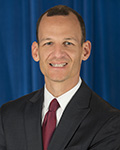
Photo of Kevin McCarty
D California Assembly · District 6 · Former member

Asm. Kevin McCarty

Contact Email
Compare
Total votes
24,221
all sessions
Attendance
94%
1,034 missed
Near the chamber average
With party
99%
of cast votes
Near the chamber average
Bipartisan score
0%
crosses aisle rarely
Near the chamber average
Sponsored
1,989
bills & resolutions
Near the chamber average
Committees
0
assignments
1,989 bills and resolutions

Sponsored bills

Total
1,989
Primary
257
Co-sponsor
1,732
This page
1,989
matching current filters
Co-sponsor AB 393
Failed · California Assembly · Co-sponsor
Early Childhood Development Act of 2020.

The Early Childhood Development Act of 2020 sets forth legislative findings and declarations regarding the need for an integrated early childhood learning and care system to promote high-quality, affordable learning to comprehensively and effectively serve children and families and to address societal inequities and disproportionalities. This bill would make additional legislative findings and declarations regarding childcare supportive services. This bill would require the State Department of Social Services to report on various topics related to early childhood supports in light of the COVID-19 pandemic by October 1, 2021. This bill would declare that it is to take effect immediately as an urgency statute.

Failed Feb 1, 2022 1 co-sponsor
Co-sponsor AB 10
Failed · California Assembly · Co-sponsor
Pupil instruction: in-person instruction: distance learning.

(1) Existing law establishes a system of public elementary and secondary education in this state, and authorizes local educational agencies throughout the state to provide instruction to pupils in kindergarten and grades 1 to 12, inclusive. Existing law establishes procedures for the apportionment of state funds to these local educational agencies. Existing law, for purposes of calculating apportionments for the 2020–21 fiscal year, requires a local educational agency to offer in-person instruction and authorizes these agencies to offer distance learning, as specified. This bill would specify that the requirement to provide in-person instruction applies when that instruction is allowed under state and local public health orders. (2) Existing law establishes criteria for local educational agencies to offer distance learning for the 2020–21 school year, including as a result of an order or guidance from a state public health officer or local public health officer, or for pupils who are medically fragile or would be put at risk by in-person instruction or who are self-quarantining. This bill would specify that, from March 1, 2021, to June 30, 2021, inclusive, distance learning is authorized on an agency-wide or schoolwide level as a result of an order from a state public health officer or a local public health officer requiring school campus closure. The bill would also include, in addition to pupils, certificated employees who are medically fragile or who are self-quarantining within the scope of this provision. (3) Existing law requires local educational agencies to offer in-person instruction to the greatest extent possible and to develop written procedures for tiered reengagement strategies for all pupils who are absent from distance learning for more than 3 schooldays or 60% of the instructional days in a school week. This bill would require local educational agencies to publicly adopt plans that offer in-person instruction within 2 weeks of local or state public health orders allowing school campuses to be open, and that outline all local educational agency plans to meet local and state public health school campus safety standards. The bill would also require each local educational agency to implement the written procedures for the tiered reengagement strategies for all pupils who are absent from distance learning for more than 3 schooldays or 60% of the instructional days in a school week, as specified. The bill would also require local educational agencies to develop and implement written procedures for tiered reengagement strategies for all unduplicated pupils who are performing significantly below grade level, with a priority for pupils in kindergarten or grades 1 to 3, inclusive, and pupils at risk of not graduating from high school. Because these provisions would impose new duties on local educational agencies, they would create a state-mandated local program. (4) The California Constitution requires the state to reimburse local agencies and school districts for certain costs mandated by the state. Statutory provisions establish procedures for making that reimbursement. This bill would provide that, if the Commission on State Mandates determines that the bill contains costs mandated by the state, reimbursement for those costs shall be made pursuant to the statutory provisions noted above. (5) This bill would declare that it is to take effect immediately as an urgency statute.

Failed Feb 1, 2022 1 co-sponsor
Co-sponsor AB 1470
Failed · California Assembly · Co-sponsor
Ending Military Suicide Task Force.

Existing law, the California Suicide Prevention Act of 2000, allows the State Department of Health Care Services, contingent upon appropriation, to establish and implement a suicide prevention, education, and gatekeeper training program to reduce the severity, duration, and incidence of suicidal behaviors. Existing law authorizes the State Department of Public Health to establish the Office of Suicide Prevention to, among other things, convene experts and stakeholders, including, but not limited to, stakeholders representing populations with high rates of suicide, to encourage collaboration and coordination of resources for suicide prevention. This bill would require the department to establish an Ending Military Suicide Task Force to systematically reduce military suicides and to develop a plan to eliminate all military suicides in the state, as specified. Commencing June 1, 2023, the bill would require the task force to submit a specified report to the Governor and the Legislature on the state of veteran suicide prevention, as specified, including, among other things, an analysis of the plans, activities, strategies, and programs undertaken pursuant to the task force's recommendations and their effects on reducing military suicides in the state.

Failed Feb 1, 2022 1 co-sponsor
Primary AB 594
Failed · California Assembly · Lead sponsor
Law enforcement policies.

Under existing law, a peace officer is justified in using deadly force when the officer reasonably believes, based on the totality of the circumstances, that such force is necessary to defend against an imminent threat of death or serious bodily injury to the officer or another person, or to apprehend a fleeing felon, as specified. Existing law requires each law enforcement agency to maintain a policy that provides guidelines on the use of force, and to annually furnish specified information to the Department of Justice regarding the use of force by peace officers employed by that agency. Existing law requires the Attorney General to investigate incidents of an officer-involved shooting resulting in the death of an unarmed civilian, as specified. This bill would, for deadly use of force incidents other than those required to be investigated by the Attorney General, require an agency to cause a criminal investigation of these incidents to be conducted, and would prohibit a law enforcement agency from having primary responsibility for conducting the criminal investigation into those incidents involving an officer employed by that agency. This bill would instead provide alternative protocols for investigations of those incidents, including investigation by the district attorney's office, another law enforcement agency, or a multidisciplinary and multiagency task force. The bill would specify that these requirements apply only to a criminal investigation and not to any administrative or disciplinary investigation. The bill would also require each agency to adopt a written policy, or amend their existing written policy on the criminal investigation of officer-involved deadly use of force incidents, to be compliant with the requirements of this bill, and to make that policy available to the public, as specified. By placing new requirements on local law enforcement agencies, this bill would impose a state mandate. The California Constitution requires the state to reimburse local agencies and school districts for certain costs mandated by the state. Statutory provisions establish procedures for making that reimbursement. This bill would provide that, if the Commission on State Mandates determines that the bill contains costs mandated by the state, reimbursement for those costs shall be made pursuant to the statutory provisions noted above.


Failed Feb 1, 2022 0 co-sponsors
Co-sponsor AB 656
Failed · California Assembly · Co-sponsor
Child welfare system: racial disparities.

Existing law establishes the jurisdiction of the juvenile court, which may adjudge children to be dependents of the court under certain circumstances, including when the child suffered or there is a substantial risk that the child will suffer serious physical harm, or a parent fails to provide the child with adequate food, clothing, shelter, or medical treatment. Existing law establishes the grounds for removal of a dependent child from the custody of their parents or guardian, and establishes procedures to determine temporary placement of a dependent child. Existing law generally governs the provision of child welfare services, which is defined to mean public social services that are directed toward the accomplishment of specified purposes, including protecting and promoting the welfare of all children and preventing the unnecessary separation of children from their families. This bill would, subject to an appropriation in the annual Budget Act, require the State Department of Social Services to establish a 3-year pilot program for the purpose of addressing racial disparities in the child welfare system in at least 5 counties, which shall be selected to participate on a voluntary basis in the pilot program according to criteria developed by the department. The bill would require a program that receives funding pursuant to these provisions to utilize a blind removal strategy when deciding whether a child should be removed from their parents' home, as specified. The bill would require the department to submit to the Legislature an evaluation of the pilot programs and their impact and effectiveness, including, but not be limited to, monitoring the program's effect on the rate of Black, Native American, and Latinx children who were removed.

Failed Feb 1, 2022 1 co-sponsor
Co-sponsor AB 1223
died · California Assembly · Co-sponsor
Firearms and ammunition: excise tax.

Existing law establishes the California Violence Intervention and Prevention (CalVIP) Grant Program, administered by the Board of State and Community Corrections, to award competitive grants for the purpose of violence intervention and prevention. Existing law imposes various taxes, including taxes on the privilege of engaging in certain activities. The Fee Collection Procedures Law, the violation of which is a crime, provides procedures for the collection of certain fees and surcharges. This bill, the Gun Violence Prevention, Healing, and Recovery Act, would, commencing July 1, 2023, and subject to an appropriation as specified, impose an excise tax in the amount of 10% of the sales price of a handgun and 11% of the sales price of a long gun, rifle, firearm precursor part, and ammunition, as specified. The tax would be collected by the state pursuant to the Fee Collection Procedures Law. The bill would require that the revenues collected be deposited in the Gun Violence Prevention, Healing, and Recovery Fund, which the bill would establish in the State Treasury. This bill would include a change in state statute that would result in a taxpayer paying a higher tax within the meaning of Section 3 of Article XIII A of the California Constitution, and thus would require for passage the approval of 23 of the membership of each house of the Legislature. Because this bill would expand the scope of the Fee Collection Procedures Law, the violation of which is a crime, this bill would impose a state-mandated local program. The California Constitution requires the state to reimburse local agencies and school districts for certain costs mandated by the state. Statutory provisions establish procedures for making that reimbursement. This bill would provide that no reimbursement is required by this act for a specified reason. This bill would declare that it is to take effect immediately as an urgency statute.

died Feb 1, 2022 1 co-sponsor
Co-sponsor AB 1361
Failed · California Assembly · Co-sponsor
Childcare and developmental services: preschool: expulsion and suspension: mental health services: reimbursement rates.

(1) The Child Care and Developmental Services Act, administered by the State Department of Education, provides for a comprehensive, coordinated, and cost-effective system of childcare and development services for children from infancy to 13 years of age and their parents, including a full range of supervision, health, and support services through full- and part-time programs, which includes general childcare programs, family childcare home education network programs, and the California state preschool program. Existing law, commencing July 1, 2021, transfers responsibility for the administration of specified childcare and development services programs from the State Department of Education to the State Department of Social Services. Existing law requires statutory references to the Superintendent of Public Instruction, for purposes of the programs transferred to the State Department of Social Services on July 1, 2021, to instead be construed to mean the State Department of Social Services. The act prohibits a contracting agency, as part of the state preschool program, from expelling or unenrolling a child because of a child's behavior, except as provided. Existing law requires the State Department of Social Services to consider, in determining whether to issue a citation or impose a civil penalty to a state preschool program, whether the program is in the process of complying with the above law relating to expulsion or unenrollment. This bill would revise and recast the above provisions relating to the expulsion or unenrollment of a child from the state preschool program and would include a general childcare and development program and family childcare home education network program as part of those provisions, as provided. The bill would also establish requirements for the use of suspensions in the programs described above. The bill would require these programs to maintain records on expulsion and suspension, as provided. The bill would require, no later than January 1, 2024, and annually thereafter, the State Department of Education and the State Department of Social Services to collect and publish aggregate data on this information, as provided. The bill would require those departments, on or before July 1, 2022, to issue guidance for programs, within their respective jurisdictions, on implementing these requirements. The bill would also require those departments to collaborate to create guidelines for offering additional support and additional staff training for programs with exceptionally high numbers of suspension and expulsion, as specified. The bill would also prohibit the State Department of Social Services from issuing a citation or imposing a civil penalty to a child daycare facility if the facility is complying with specified standards. (2) The California Child Day Care Facilities Act generally requires the State Department of Social Services to license, inspect, and regulate various types of child daycare facilities, defined to include, among others, family daycare homes and daycare centers. A person who willfully or repeatedly violates any provision of the act or any rule or regulation promulgated under the act is guilty of a crime. The bill would also require a licensed child daycare facility, as specified, to utilize positive, age-appropriate behavior management strategies, as specified, and would require those licensed child daycare facilities to develop guidelines for expulsion and suspension. The bill would require, on or before July 1, 2022, the State Department of Social Services to issue guidance to implement those requirements. By expanding the scope of an existing crime, the bill would impose a state-mandated local program. (3) Existing law requires the cost to a childcare provider agency of providing an early childhood mental health consultation service, as defined, to be reimbursable if certain requirements are met, including that the consultation service is provided on a schedule of sufficient and consistent frequency and that is supervised and provided by specified mental health professionals. This bill would update the definition of mental health consultation service, revise the requirements relating to the nature and frequency of the consultation service provided, and expand the types of mental health care professionals who can provide the consultation service, as specified. The bill would require, among other things relating to the consultants, the contracting agency to ensure, within the first 30 days upon hire or start of consultation service, that a consultant have specified training. Existing law requires, in order to reflect the additional expense of serving children who meet specified criteria, the provider agency's reported child days of enrollment for these children be multiplied by specified adjustment factors. Existing law requires the adjustment factor for specified children who are served in the state preschool program, in general childcare and development programs, or in a family childcare home education network setting funded by a general childcare and development program, where early childhood mental health consultation services are provided, to be 1.05. This bill would increase that adjustment factor to 1.1. (4) The California Constitution requires the state to reimburse local agencies and school districts for certain costs mandated by the state. Statutory provisions establish procedures for making that reimbursement. This bill would provide that no reimbursement is required by this act for a specified reason.

Failed Feb 1, 2022 1 co-sponsor
Co-sponsor AB 568
Failed · California Assembly · Co-sponsor
Early learning and care.

(1) Existing law establishes childcare resource and referral programs, which are established to serve a defined geographic area and provide prescribed services. Among the services provided by these programs is the establishment of a referral process that responds to parental need for information, that is provided with full recognition of the confidentiality rights of parents, and that makes referrals to licensed child daycare facilities, as specified. In providing these services, childcare resource and referral programs are required to maintain ongoing documentation of requests for service, including, among other types of data, the number or calls and contacts to the childcare information and referral program or component, the ages of children served, and the reason that the childcare is needed. This bill would express the intent of the Legislature to enact legislation that, through greater data transparency and accountability, addresses the suspension and expulsion of African American and Hispanic children in early learning and care settings at disproportionate rates and inequitable access to high-quality early learning and care. The bill would add to the documentation required to be maintained by childcare resource and referral programs the number of requests for care by age of the child, race and ethnicity of the child, hours of care needed by race and ethnicity of the child, and the facility type requested by race and ethnicity of the child. (2) Existing law establishes the Cradle-to-Career Data System Workgroup to assess and recommend data system structural components, processes, and options for expansion and enhancement of data system functionality with respect to data collected as young persons make their way through early learning and on to elementary, secondary, and postsecondary education. This bill would require the State Department of Social Services, in conjunction with the State Department of Education, to develop and maintain the Early Learning and Care Dashboard, a web-based system for publicly reporting data regarding the California state preschool program and specified early learning and care programs, no later than January 1, 2024. The bill would require the dashboard to, subject to all applicable federal and state privacy protections, report information that would include, among other things, enrollment by race, ethnicity, and age in each type of early learning and care program, the total number of complaints related to discrimination or exclusion, by race and age of the child and early learning or childcare facility type, and the total number of children with an individualized education program or individualized family service plan who enrolled in the California state preschool program and were suspended or expelled, by race and ethnicity. The bill would authorize the Cradle-to-Career Data System Workgroup to make recommendations for additions or modifications to the dashboard no later than January 1, 2025. (3) Existing law provides for the licensure and regulation of child daycare facilities by the State Department of Social Services and imposes various training requirements on employees of child daycare facilities. This bill would require the department, in conjunction with the State Department of Education, to establish the antibias education grant program to enable selected regional leads to offer training, coaching, and professional development to early learning and care staff. The bill would require an application to become a regional lead to include specified components and require the department to give preference to applicants with certain characteristic or qualifications, including, among others, applicants that demonstrate a history of providing antibias, implicit bias, or antiracism training to early learning and care providers, parents, teachers, or its own staff. The bill would require a regional lead selected by the department to offer antibias education to early learning and care providers located in all counties in the region for which it is the regional lead. The bill would require funding to be allocated to each regional lead based on the number of children in its region, but would prohibit a regional lead from receiving less than $250,000. The bill would make the implementation of these provisions contingent on an appropriation for these purposes in the annual Budget Act.

Failed Feb 1, 2022 1 co-sponsor
Co-sponsor AB 1316
died · California Assembly · Co-sponsor
School accountability: financial and performance audits: charter schools: contracts.

(1) Existing law provides for the licensure and regulation of various professions and vocations by boards within the Department of Consumer Affairs. Existing law establishes the California Board of Accountancy, which is within the Department of Consumer Affairs, and requires the board to license and regulate accountants in this state. This bill would require the board to prescribe rules relating to the requirements established in this bill for all licensees who plan, direct, or approve any financial or compliance audit report on school districts, county offices of education, and charter schools, as described in (6) below. (2) Existing law requires the Controller, in consultation with the Department of Finance and the State Department of Education, to develop a plan to review and report on financial and compliance audits, and with representatives of other entities, to recommend the statements and other information to be included in the audit reports filed with the state by local educational agencies, and to propose the content of an audit guide. This bill would require the Education Audits Appeal Panel to include in the audit guide, Standards and Procedures for Audits of California K–12 Local Educational Agencies, certain requirements on school districts, county offices of education, charter schools, and certified public accountants and public accountants who audit local educational agencies relating to attendance accounting documentation for independent study, including requiring these certified public accountants and public accountants to analyze enrollment at a charter school classified as a nonclassroom-based charter school each fiscal year, and to report to the State Department of Education any instance where enrollment increases or decreases by more than 5% at the charter school during any month over the prior month. By imposing additional duties on local educational agencies, the bill would impose a state-mandated local program. (3) Existing law, whenever in the Education Code the power to contract is invested in the governing board of a school district or any member thereof, authorizes that power, by a majority vote of the governing board, to be delegated to its district superintendent, or to any persons the district superintendent may designate, or if there is no district superintendent, to any other officer or employee of the district that the governing board may designate, as specified. Existing law similarly authorizes the designation of school district officers or employees to exercise the authority to purchase supplies, materials, apparatus, equipment, and services on behalf of the district. In the event of malfeasance in office, existing law requires the school district officer or employee invested by the governing board with the power to contract to be personally liable for any and all moneys of the school district paid out as a result of the malfeasance. This bill would add to existing law similar provisions relating to charter school governing bodies and charter school officials that may be designated by those governing bodies in these instances. (4) Existing law establishes the State Department of Education, under the administration of the Superintendent of Public Instruction, and assigns to it numerous duties relating to the governance and financing of the public elementary and secondary schools of this state. This bill would establish the Office of Inspector General in the department. The bill would provide for the appointment of the Inspector General by the Governor, subject to confirmation by a vote of the majority of the membership of the Senate. The bill would require the Inspector General to conduct and supervise audits and investigations relating to the programs and operations of the department, to provide leadership and coordination and recommend policies to prevent and detect fraud and abuse in programs and operations of the department, and to provide a means for keeping the Superintendent and the Legislature fully and currently informed about problems and deficiencies relating to the administration of the programs and operations of the department and the necessity for and progress of corrective actions that the Inspector General deems to be appropriate. (5) Existing law, with specified exceptions, authorizes school districts to operate programs of multitrack year-round scheduling at one or more schools within the district. This bill, beginning in the 2022–23 school year, would prohibit a school district or charter school from operating a program of multitrack year-round scheduling unless a multitrack calendar is authorized by the State Board of Education due to impacted facilities, as specified. (6) Existing law requires county superintendents of schools to provide for an audit of all funds under their jurisdiction and control, and requires the governing boards of each local educational agency to either provide for an audit of the books and accounts of the agency or make arrangements with county superintendents of schools to provide for that auditing. This bill, commencing with the 2022–23 fiscal year Guide for Annual Audits of K–12 Local Education Agencies and State Compliance Reporting, would require the Controller to include instructions requiring specified supplemental information and schedules in audit report components for charter school audits. The bill would require the instructions to ensure that all school districts, county offices of education, and charter schools are audited annually. The bill would also require specified training to be provided, pursuant to regulations adopted, on or before January 1, 2023, by the California Board of Accountancy, in consultation with other entities as prescribed, to certified public accountants and public accountants who audit local educational agencies, including charter schools. The bill would also require the board, in consultation with the prescribed entities, to adopt regulations, on or before January 1, 2023, providing for peer review of certified public accountants and public accountants, as specified. (7) Existing law requires the Commission on Teacher Credentialing, among other duties, to establish standards for the issuance and renewal of credentials, certificates, and permits. Existing law requires a county superintendent of schools to monitor and review school district certificated employee assignment practices, as provided. Existing law requires a county superintendent of schools to submit an annual report to the commission and the State Department of Education summarizing the results of all assignment monitoring and reviews. Existing law requires the commission to administer a State Assignment Accountability System to provide local educational agencies with a data system for assignment monitoring. Existing law requires the commission to annually use data it receives from the department to produce an initial data file of vacant positions and assignments that do not have a clear match of credential to assignment. Existing law requires a monitoring authority to review and determine any potential misassignments, as defined, reported in and identified through the system for local educational agencies within its authority, as provided. Existing law grants the commission the authority to make a final determination for all potential misassignments. Existing law requires, commencing with the 2020-21 school year, the commission to make annual misassignment and vacant position data publicly available on its internet website. Existing law specifies that, for these purposes, in a charter school, "misassignment" applies only to employees in teaching positions. This bill would delete the provision that limits the application of "misassignment" in charter schools only to employees in teaching positions. To the extent that this provision would create new duties for county superintendents of schools, it would constitute a state-mandated local program. The bill would require teachers of certain courses offered by a local educational agency to hold the certificate, permit, or other document required by the commission for that assignment and be monitored. The bill would require any person who is employed by a vendor providing direct services to pupils at a local educational agency for which certification qualifications are established to hold the certificate, permit, or other document required by the commission for their assignment, or would require supervision of pupils by an appropriate credentialholder, as specified, during services provided by the vendor. The bill would require direct services to pupils provided by the vendor to be standards-aligned curriculum. (8) Existing law establishes a system of financing public elementary and secondary schools in this state. This system includes the apportionment of state funds to local educational agencies based, to a significant degree, on the average daily attendance of pupils as reported to the State Department of Education by those local educational agencies. This bill would require the department to provide a report, including specified data, to the Legislature relating to the possible integration of the California Longitudinal Pupil Achievement Data System and the average daily attendance apportionment data system. The bill would authorize the State Board of Education to adopt regulations as it deems appropriate and consistent with these provisions. The bill would also, upon the operative date of the bill, require, as specified, the state board to adopt regulations specifying that the record of daily engagement is no longer required of a charter school day of nonclassroom-based independent study attendance. (9) The Charter Schools Act of 1992 authorizes the establishment, operation, and governance of charter schools. Existing law requires a petition to establish a charter school to include reasonably comprehensive descriptions of certain things, including the manner in which annual, independent financial audits shall be conducted, and the manner in which audit exceptions and deficiencies shall be resolved to the satisfaction of the chartering authority. The bill would require, not later than May 1 of each fiscal year, each chartering authority to provide for an audit of all funds of charter schools authorized by that authority, and would expressly require the governing body of each charter school to either provide for an audit of the books and accounts of the charter school or to make arrangements with the chartering authority to provide for that audit, as specified. The bill would require each chartering authority to certify specified data relating to the verification of the reporting of average daily attendance by nonclassroom-based charter schools. The bill would require the state board, in consultation with the Superintendent, to revise regulations to require charter schools to report periodic and annual financial data in the same manner and on the same form prescribed for school districts. The bill would phase in, from the 2023–24 fiscal year to the 2025–26 fiscal year, inclusive, and based on the average daily attendance of the charter school, the requirement that charter schools report this data in the same manner and on the same form prescribed for school districts. The bill would require the state board to appoint an advisory committee on charter schools that would include representatives from school district superintendents, charter schools, teachers, members of the governing boards of school districts, county superintendents of schools, and the Superintendent. The bill would limit the size of the totality of nonclassroom-based charter schools that a school district may authorize based on the average daily attendance of the school district. The bill would establish the Charter Authorizing Support Team program, which would be implemented only upon an appropriation for its purposes in the annual Budget Act or other statute, to be administered by the County Office Fiscal Crisis and Management Assistance Team, as an initiative to expand uniform charter school authorizing and oversight practices. The bill would specify the goals and proposed activities of the program, including the appointment of a 12-member advisory board with designated membership and responsibilities. The bill would require the Legislative Analyst's Office to submit to the Governor and the appropriate education policy and budget committees, on or before December 1, 2026, an evaluation of the program. The bill would require charter schools, in addition to complying with existing requirements relating to minimum minutes of instruction, to adhere to designated minimum schoolday requirements in applicable statutes generally relating to school districts. Existing law authorizes a chartering authority to charge for the actual costs of supervisorial oversight of a charter school (A) not to exceed 1% of the revenue of the charter school, or (B) not to exceed 3% of the revenue of the charter school if the charter school is able to obtain substantially rent-free facilities from the chartering authority. The bill would gradually change the costs a chartering authority can charge such that, on and after July 1, 2023, the chartering authority could charge for the actual costs of supervisorial oversight of a charter school (A) not to exceed 3% of the revenue of the charter school, or (B) not to exceed 2% of the revenue of the charter school if the charter school is able to obtain substantially rent-free facilities from the chartering authority. On and after July 1, 2022, the bill would require charter schools to comply with specified requirements relating to the expenditure of public funds for the payment of vendors, and would require the extent of the charter school's compliance with these requirements to be reviewed and reported as part of the annual, independent financial audit that the charter school is required to submit. The bill would revise and recast provisions of the act relating to the reporting of average daily attendance by charter schools, and would distinguish between the reporting of average daily attendance for classroom-based instruction and the reporting of average daily attendance for nonclassroom-based instruction. To the extent that these additions to the act would impose new duties on local educational agencies, they would constitute a state-mandated local program. The bill would also make various conforming changes to the act. (10) Existing law requires community school and independent study average daily attendance to be claimed by school districts, county superintendents of schools, and charter schools only for pupils who are residents of the county in which the apportionment claim is reported, or who are residents of a county immediately adjacent to the county in which the apportionment claim is reported. This bill would delete the provision allowing community school and independent study average daily attendance to be claimed by nonclassroom-based charter schools for residents of a county immediately adjacent to the county in which the apportionment claim is reported. (11) Existing law authorizes the governing boards of school districts and county offices of education to offer independent study to meet the educational needs of pupils when certain requirements are met. Existing law prohibits courses that are required for high school graduation from being offered exclusively through independent study. This bill would recast and revise provisions related to the calculation of average daily attendance for independent study pupils, and extend the scope of those provisions to charter schools. These provisions would become operative on July 1, 2022. (12) Existing law prohibits a school district or county office of education from being eligible to receive apportionments for independent study by pupils unless the school district or county office has adopted written policies, and implemented those policies, in accordance with rules and regulations adopted by the Superintendent, as specified. This bill would extend this prohibition to charter schools, and would add requirements to the independent study policies and procedures. The bill would require that an independent study written agreement, with specified content, be agreed to and signed, under penalty of perjury. This provision would impose a state-mandated local program by imposing new duties on local educational agencies and by creating a new crime. The bill would require the course of study, including specific courses, offered through independent study to be annually certified by a school district, county office of education, or charter school governing board or body resolution, to be of the same rigor and educational quality as an equivalent classroom-based course of study, and to be aligned to relevant local and state content standards. These provisions would become operative on July 1, 2022, and to the extent that they impose new duties on local educational agencies, would constitute a state-mandated local program. (13) This bill would make certain provisions relating to independent study, and rendered duplicative by other provisions added by this bill, inoperative on July 1, 2022, and would repeal these provisions as of January 1, 2023. (14) The Local Agency Public Construction Act regulates, among other things, the letting of contracts by school district governing boards involving an expenditure of more than $50,000 for specified purposes, including the purchase of equipment, materials, or supplies to be furnished, sold, or leased to the district, services other than construction services, and repairs, including maintenance, as defined. This bill would extend to charter schools the provisions of the act that currently apply to school districts. To the extent the bill would impose additional duties on charter schools, the bill would impose a state-mandated local program. (15) The California Constitution requires the state to reimburse local agencies and school districts for certain costs mandated by the state. Statutory provisions establish procedures for making that reimbursement. This bill would provide that with regard to certain mandates no reimbursement is required by this act for a specified reason. With regard to any other mandates, this bill would provide that, if the Commission on State Mandates determines that the bill contains costs so mandated by the state, reimbursement for those costs shall be made pursuant to the statutory provisions noted above.
died Feb 1, 2022 1 co-sponsor
Co-sponsor AB 1500
Failed · California Assembly · Co-sponsor
Safe Drinking Water, Wildfire Prevention, Drought Preparation, Flood Protection, Extreme Heat Mitigation, and Workforce Development Bond Act of 2022.

The California Drought, Water, Parks, Climate, Coastal Protection, and Outdoor Access For All Act of 2018, approved by the voters as Proposition 68 at the June 5, 2018, statewide primary direct election, authorizes the issuance of bonds in the amount of $4,100,000,000 pursuant to the State General Obligation Bond Law to finance a drought, water, parks, climate, coastal protection, and outdoor access for all program. Article XVI of the California Constitution requires measures authorizing general obligation bonds to specify the single object or work to be funded by the bonds and further requires a bond act to be approved by a 23 vote of each house of the Legislature and a majority of the voters. This bill would enact the Safe Drinking Water, Wildfire Prevention, Drought Preparation, Flood Protection, Extreme Heat Mitigation, and Workforce Development Bond Act of 2022, which, if approved by the voters, would authorize the issuance of bonds in the amount of $7,080,000,000 pursuant to the State General Obligation Bond Law to finance projects for safe drinking water, wildfire prevention, drought preparation, flood protection, extreme heat mitigation, and workforce development programs. This bill would provide for the submission of these provisions to the voters at the June 7, 2022, statewide primary election. This bill would declare that it is to take effect immediately as an urgency statute.

Failed Feb 1, 2022 1 co-sponsor
Showing 731 to 740 of 1,989 bills
Previous 1 … 73 74 75 … 199 Next