

Law enforcement policies.
Summary
Under existing law, a peace officer is justified in using deadly force when the officer reasonably believes, based on the totality of the circumstances, that such force is necessary to defend against an imminent threat of death or serious bodily injury to the officer or another person, or to apprehend a fleeing felon, as specified. Existing law requires each law enforcement agency to maintain a policy that provides guidelines on the use of force, and to annually furnish specified information to the Department of Justice regarding the use of force by peace officers employed by that agency. Existing law requires the Attorney General to investigate incidents of an officer-involved shooting resulting in the death of an unarmed civilian, as specified. This bill would, for deadly use of force incidents other than those required to be investigated by the Attorney General, require an agency to cause a criminal investigation of these incidents to be conducted, and would prohibit a law enforcement agency from having primary responsibility for conducting the criminal investigation into those incidents involving an officer employed by that agency. This bill would instead provide alternative protocols for investigations of those incidents, including investigation by the district attorney's office, another law enforcement agency, or a multidisciplinary and multiagency task force. The bill would specify that these requirements apply only to a criminal investigation and not to any administrative or disciplinary investigation. The bill would also require each agency to adopt a written policy, or amend their existing written policy on the criminal investigation of officer-involved deadly use of force incidents, to be compliant with the requirements of this bill, and to make that policy available to the public, as specified. By placing new requirements on local law enforcement agencies, this bill would impose a state mandate. The California Constitution requires the state to reimburse local agencies and school districts for certain costs mandated by the state. Statutory provisions establish procedures for making that reimbursement. This bill would provide that, if the Commission on State Mandates determines that the bill contains costs mandated by the state, reimbursement for those costs shall be made pursuant to the statutory provisions noted above.
Bill status
failed
1 of 4 stages cleared
Introduction
Feb 2021
Committee Review
Floor Vote
Governor
Introduced Feb 11, 2021
Last action Feb 1, 2022
Floor votes
How they voted
No floor votes recorded yet.
Full legislative history
Actions timeline
Total actions
11
Key actions
5
Committee
8
Amendments
1
Feb 1, 2022
Lower · Passed
From committee: Filed with the Chief Clerk pursuant to Joint Rule 56.
lower
Jan 20, 2022
Lower · Passed
In committee: Held under submission.
lower
May 20, 2021
Lower · Passed
In committee: Hearing postponed by committee.
lower
Apr 14, 2021
Committee
In committee: Set, first hearing. Referred to APPR. suspense file.
lower
Mar 24, 2021
Lower · Passed
From committee: Do pass and re-refer to Com. on APPR. (Ayes 5. Noes 1.) (March 23). Re-referred to Com. on APPR.
lower
Mar 17, 2021
Committee
Re-referred to Com. on PUB. S.
lower
Mar 16, 2021
Introduced
From committee chair, with author's amendments: Amend, and re-refer to Com. on PUB. S. Read second time and amended.
lower
Feb 18, 2021
Committee
Referred to Com. on PUB. S.
lower
Feb 12, 2021
Lower · Passed
From printer. May be heard in committee March 14.
lower
1 primary · 0 co-sponsors
Sponsors
Role
Legislator
Party
State
District
P
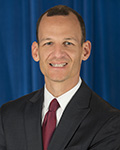
Kevin McCarty
DDemocratic
Ask Maddy
·
AI policy assistant
Ask Maddy about AB 594
Scope: CA
Hi! I can help you understand AB 594. What would you like to know?
Try one of these
i
Maddy answers using official bill text and legislative records. Always verify before sharing.
Sources cited inline