

Passed Jan 18, 2024
1 co-sponsor
Total votes
24,221
all sessions
Attendance
94%
1,034 missed
Near the chamber average
With party
99%
of cast votes
Near the chamber average
Bipartisan score
0%
crosses aisle rarely
Near the chamber average
Sponsored
1,989
bills & resolutions
Near the chamber average
Committees
0
assignments
1,989 bills and resolutions
Sponsored bills
Total
1,989
Primary
257
Co-sponsor
1,732
This page
1,989
matching current filters
Passed Jan 16, 2024
1 co-sponsor
Relative to Women's Small Business Month.
This measure would declare October 2023 as Women's Small Business Month and encourage all citizens to recognize the economic importance of women's small business in California.
Passed Jan 4, 2024
1 co-sponsor
Child custody: child abuse and safety.
Existing law governs the determination of child custody and visitation in contested proceedings. Existing law requires the court, for purposes of deciding custody, to determine the best interests of the child based on certain factors, including the nature and amount of contact with both parents and, consistent with specified findings, requires the court's primary concern to be the health, safety, and welfare of the child. Existing law prohibits the ordering of family reunification services as part of a child custody or visitation rights proceeding. Existing law authorizes the court, upon making certain findings, to require the parent or parents, or any other party involved in a custody or visitation dispute, and the minor child to participate in outpatient counseling, as specified. This bill, Piqui's Law: Keeping Children Safe from Family Violence Act, would prohibit the court from ordering family reunification treatments, programs, or services, including, but not limited to, camps, workshops, therapeutic vacations, or educational programs that, as a condition of enrollment or participation, require or result in, among other things, the use of private youth transporters or private transportation agents, as specified, a no-contact order, or a transfer of physical or legal custody of the child. Existing law requires the Judicial Council to establish judicial training programs for individuals who perform duties in domestic violence matters. Existing law requires the training programs to include a domestic violence session in any orientation session for newly appointed or elected judges and an annual training session in domestic violence. Existing law requires the training programs to include instruction in all aspects of domestic violence, including, but not limited to, the detriment to children of residing with a person who perpetrates domestic violence. This bill would instead require the Judicial Council to establish judicial training programs for individuals, including judicial officers and referees, who perform duties in domestic violence or child custody matters, including, among other topics, child sexual abuse and coercive control, as specified. The bill would require the Judicial Council to submit an annual report on these training programs, commencing on or before January 1, 2025, to the Legislature and relevant policy committees, that includes the titles of the training courses being offered and the number of judicial officers that attended each training.
Signed into law Oct 13, 2023
1 co-sponsor
Minor league baseball players.
Existing law provides that 8 hours of labor constitute a day's work unless it is otherwise expressly stipulated in a collective bargaining agreement, and requires that any work in excess of specified hours in one workday or one workweek be compensated at a rate higher than the regular rate of pay for the employee, as specified. Existing law authorizes, upon the proposal of an employer, employees of an employer to adopt a regularly scheduled alternative workweek that authorizes work by the affected employees for no longer than 10 hours per day within a 40-hour workweek without the payment to the affected employees of an overtime rate of compensation, as specified. Existing law prohibits an employer from employing an employee for a work period of more than 5 hours per day without providing the employee with a meal period, as specified, but, notwithstanding these provisions, existing law authorizes the Industrial Welfare Commission to adopt a working condition order permitting a meal period to commence after 6 hours of work if specified conditions are met. Under existing law, the Industrial Welfare Commission issues wage orders that regulates wages, hours, and working conditions in various occupations, including Wage Order No. 10-2001, which regulates the amusement and recreation industry. This bill would provide that these provisions do not apply to a person who is covered by a contract to play baseball at the minor league level with a labor organization that has at least 10 years of experience representing baseball players and who is compensated pursuant to the terms of a valid collective bargaining agreement that expressly provides for the wages, hours of work, working conditions of employees, payment for time worked during the off-season and spring training, and final and binding arbitration of disputes. The bill would require the Department of Industrial Relations to amend and republish Wage Order No. 10-2001 to provide that specified provisions of the wage order do not apply to a person subject to these provisions, as specified. Existing law requires an employer, semimonthly or at the time of payment of wages, to furnish an employee an accurate, itemized, written statement containing specified information regarding the amounts earned, hours worked, and the employee's identity, among other things, subject to certain variations. Existing law provides that an itemized wage statement furnished by an employer pursuant to these provisions is not required to show total hours worked by the employee if, among other things, the employee is exempt from the payment of minimum wage and overtime under specified law. This bill would provide that an itemized wage statement furnished by an employer pursuant to these provisions is not required to show total hours worked by an employee if the employee is exempt from the payment of minimum wage and overtime under the bill's provisions described above. Existing law, the Administrative Procedure Act, governs, among other things, the procedures for the adoption, amendment, or repeal of regulations by state agencies. Existing law also describes procedures for the promulgation of regulations by the Industrial Welfare Commission. This bill would exempt these provisions from the rulemaking procedures described above. Existing constitutional provisions require that a statute that limits the right of access to the meetings of public bodies or the writings of public officials and agencies be adopted with findings demonstrating the interest protected by the limitation and the need for protecting that interest. This bill would make legislative findings to that effect. This bill would declare that it is to take effect immediately as an urgency statute.
Signed into law Oct 13, 2023
1 co-sponsor
Vehicles.
Existing law prohibits a local authority from enacting or enforcing an ordinance on matters covered by the Vehicle Code unless expressly authorized by the Vehicle Code. Existing law authorizes local authorities to adopt rules and regulations by ordinance or resolution regarding specified matters, including, among others, crossing guards, the operation of bicycles, the removal of illegally parked vehicles, and cruising, as defined. This bill would remove the authorization for a local authority to adopt rules and regulations by ordinance or regulation regarding cruising. Existing law makes it unlawful to operate a passenger vehicle, or commercial vehicle under 6,000 pounds, that has been modified from its original design so that any portion of the vehicle, other than the wheels, has less clearance from the surface of a level roadway than the clearance between the roadway and the lowermost portion of any rim of any wheel in contact with the roadway. This bill would repeal that prohibition. This bill would incorporate additional changes to Section 21100 of the Vehicle Code proposed by AB 825 and SB 50 to be operative only if this bill and AB 825, this bill and SB 50, or this bill, AB 825, and SB 50 are enacted and this bill is enacted last.
Signed into law Oct 13, 2023
1 co-sponsor
Teachers: professional development: Bilingual Teacher Professional Development Program: eligibility.
(1) Existing law establishes the Bilingual Teacher Professional Development Program, administered by the State Department of Education, in consultation with the Commission on Teacher Credentialing, for teachers seeking to provide instruction in bilingual and multilingual settings. Existing law, for the 2023–24 fiscal year, appropriates $20,000,000 from the General Fund to the Superintendent of Public Instruction for purposes of the program, to be available for grants totaling $4,000,000 each fiscal year, from the 2023–24 fiscal year to the 2027–28 fiscal year, inclusive, as provided. Existing law requires the department to allocate grant funding to eligible local educational agencies, including county offices of education, school districts, charter schools, or a consortia of local educational agencies for purposes of providing professional development services to teachers or paraprofessionals who satisfy specified requirements, but exempts participants who are currently enrolled in, or have completed, the Asian Language Bilingual Teacher Education Program from those requirements that apply to teachers. This bill would also exempt participants who are currently enrolled in, or have completed, programs to support bilingual teacher education in languages in the classroom, such as Arabic, Cantonese, Mandarin, Spanish, Tagalog, and Vietnamese, and other languages, as represented in an instructional program, from those specified requirements that apply to teachers. By expanding the scope of eligibility for purposes of an appropriation, the bill would make an appropriation. (2) Existing requires Bilingual Teacher Professional Development Program grant recipients to provide to the department, by July 1, 2026, a preliminary report, and, by January 1, 2029, a final report, on the number of participants who were issued bilingual authorizations, the number of previously authorized teachers who have participated in the program and subsequently returned to bilingual teaching assignments, and the number of teachers who are still working at least 50% of the time in a bilingual setting. This bill would extend the deadline for the final report by one year to January 1, 2030. (3) Funds appropriated by this bill would be applied toward the minimum funding requirements for school districts and community college districts imposed by Section 8 of Article XVI of the California Constitution.
Signed into law Oct 13, 2023
1 co-sponsor
Community colleges: exemption from nonresident tuition fee: residence near the California-Mexico border.
(1) Existing law establishes the California Community Colleges, under the administration of the Board of Governors of the California Community Colleges, as one of the segments of public postsecondary education in this state. Existing law establishes community college districts throughout the state and authorizes them to operate campuses and provide instruction to students. Existing law authorizes community college districts to admit nonresident students, and requires that nonresident students be charged a nonresident tuition fee unless an exemption applies. Existing law includes among these exemptions any nonresident who is both a citizen and resident of a foreign country if the nonresident has demonstrated a financial need, as specified. Existing law authorizes the attendance of certain exempted, nonresident students to be reported as resident full-time equivalent students (FTES) for state apportionment purposes. This bill would additionally exempt from the nonresident tuition fee a nonresident, low-income student who: (1) is a resident of Mexico, (2) registers for lower division courses at Cuyamaca College, Grossmont College, Imperial Valley College, MiraCosta College, Palomar College, San Diego City College, San Diego Mesa College, San Diego Miramar College, or Southwestern College, and (3) has residence within 45 miles of the California-Mexico border, as provided. The bill would, in any academic year, prohibit more than 150 FTES at each of these community colleges from being exempted from payment of the nonresident tuition fee. The bill would require the governing boards of the community colleges that choose to use this exemption to adopt one uniform policy to determine a student's residence classification, establish procedures for an appeal and review of the residence classification, and determine whether a student is low income. The bill also would require the governing boards of the community colleges that choose to use this exemption, as a condition of its students receiving the exemption described above, to collaborate with each other to ensure the adoption of the uniform policy. The bill would additionally authorize the attendance of nonresident students who receive this exemption to be reported as resident FTES for state apportionment purposes, as specified. The bill would provide that a nonresident student exempted under the above-mentioned exemption is not exempted pursuant to the existing provision involving any nonresident who is both a citizen and resident of a foreign country. The bill would require the governing boards of the community colleges that choose to use this exemption, on or before January 1, 2028, to jointly submit a report to the Legislature that includes, but is not limited to, the demographics, attendance rate, and class completion rate of nonresident students who receive the exemption described above. The bill's provisions would become inoperative on July 1, 2028, and would be repealed on January 1, 2029, as specified. The bill would also make related findings and declarations. (2) This bill would make legislative findings and declarations as to the necessity of a special statute for Cuyamaca College, Grossmont College, Imperial Valley College, MiraCosta College, Palomar College, San Diego City College, San Diego Mesa College, San Diego Miramar College, and Southwestern College. (3) This bill would not become operative unless the Board of Governors of the California Community Colleges enters into an attendance agreement that provides reciprocal rights to California residents attending a university in the State of Baja California that reasonably conforms to the benefits conferred upon residents of Mexico pursuant to certain provisions of the bill, as provided.
Signed into law Oct 13, 2023
1 co-sponsor
Vehicles: speed safety system pilot program.
Existing law establishes a basic speed law that prohibits a person from driving a vehicle upon a highway at a speed greater than is reasonable or prudent given the weather, visibility, traffic, and highway conditions and in no event at a speed that endangers the safety of persons or property. This bill would authorize, until January 1, 2032, the Cities of Los Angeles, San Jose, Oakland, Glendale, and Long Beach, and the City and County of San Francisco to establish a Speed Safety System Pilot Program if the system meets specified requirements. The bill would require a participating city or city and county to adopt a Speed Safety System Use Policy and a Speed Safety System Impact Report before implementing the program, and would require the participating city or city and county to engage in a public information campaign at least 30 days before implementation of the program, including information relating to when the systems would begin detecting violations and where the systems would be utilized. The bill would require a participating city or city and county to issue warning notices rather than notices of violations for violations detected within the first 60 calendar days of the program. The bill would also require a participating city or city and county to develop uniform guidelines for, among other things, the processing and storage of confidential information. The bill would designate all photographic or administrative records, not including data about the number of violations issued or the speeds at which they were issued for, made by a system as confidential, and would only authorize public agencies to use and allow access to these records for specified purposes. This bill would specify that any violation of a speed law recorded by a speed safety system authorized by these provisions would be subject only to the provided civil penalties. The bill would, among other things, provide for the issuance of a notice of violation, an initial review, an administrative hearing, and an appeals process, as specified, for a violation under this program. The bill would require any program created pursuant to these provisions to offer a diversion program for indigent speed safety system violation recipients, as specified. The bill would require a city or city and county participating in the pilot program to submit a report to evaluate the speed safety system to determine the system's impact on street safety and economic impact on the communities where the system is utilized. Existing law establishes a $25 filing fee for specified appeals and petitions. This bill would require a $25 filing fee for an appeal challenging a notice of violation issued as a result of a speed safety system until January 1, 2032. Existing constitutional provisions require that a statute that limits the right of access to the meetings of public bodies or the writings of public officials and agencies be adopted with findings demonstrating the interest protected by the limitation and the need for protecting that interest. This bill would make legislative findings to that effect. This bill would make legislative findings and declarations as to the necessity of a special statute for the Cities of Los Angeles, San Jose, Oakland, Glendale, and Long Beach, and the City and County of San Francisco.
Signed into law Oct 13, 2023
1 co-sponsor
Individuals with disabilities: The Dignity for All Act.
Existing law includes the terms "mentally retarded persons," "mentally retarded children," "retardation," and "handicap." This bill, The Dignity for All Act, would make nonsubstantive changes to those provisions to eliminate this obsolete terminology. The bill would repeal obsolete provisions of law.
Signed into law Oct 13, 2023
1 co-sponsor
Ask Maddy
·
AI policy assistant
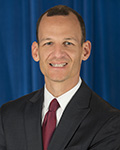
Ask Maddy about Kevin McCarty
Scope: california
Hi! I can help you understand Kevin McCarty's legislative record. What would you like to know?
Try one of these
i
Maddy answers using official bill text and legislative records. Always verify before sharing.
Sources cited inline