

Passed Jan 28, 2019
1 co-sponsor
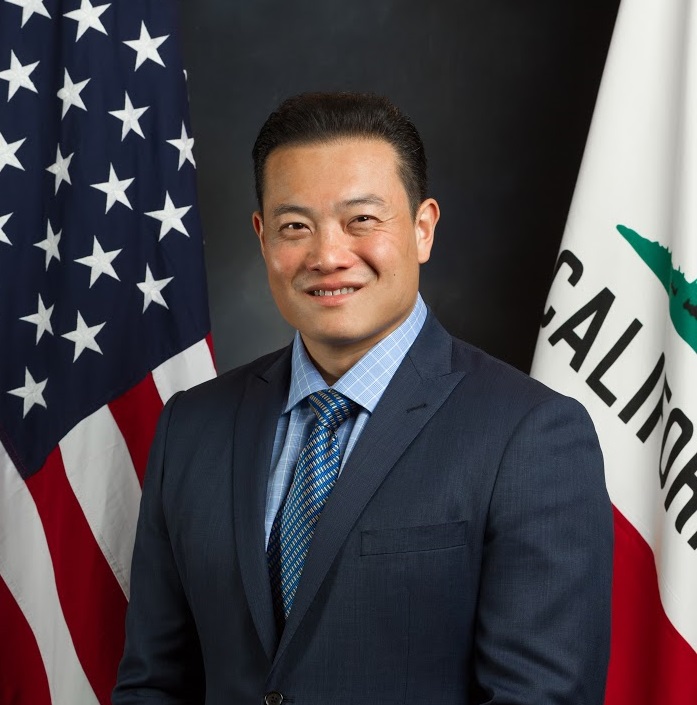
Asm. Phillip Chen
Total votes
21,436
all sessions
Attendance
81%
3,567 missed
Lower than 85% of chamber peers
With party
98%
of cast votes
Near the chamber average
Bipartisan score
1%
crosses aisle rarely
Near the chamber average
Sponsored
1,732
bills & resolutions
Higher than 82% of chamber peers
Committees
9
assignments
1,732 bills and resolutions
Sponsored bills
Total
1,732
Primary
225
Co-sponsor
1,507
This page
1,732
matching current filters
Public employee retirement systems: prohibited investments: Turkey.
The California Constitution grants the retirement board of a public employee retirement system plenary authority and fiduciary responsibility for investment of moneys and administration of the retirement fund and system. The California Constitution qualifies this grant of powers by reserving to the Legislature the authority to prohibit investments if it is in the public interest and the prohibition satisfies standards of fiduciary care and loyalty required of a retirement board. Existing law prohibits the boards of administration of the Public Employees' Retirement System and State Teachers' Retirement System from making investments in certain countries and in thermal coal companies, as specified, subject to the boards' plenary authority and fiduciary responsibility for investment of moneys and administration of the systems. This bill, upon the passage of a federal law that imposes sanctions on Turkey for failure to acknowledge the Armenian Genocide, would prohibit the boards of administration of the Public Employees' Retirement System and State Teachers' Retirement System from making additional or new investments, or renewing existing investments, of public employee retirement funds in an investment vehicle in Turkey that is issued by the government of Turkey or that is owned, controlled, or managed by the government of Turkey. The bill would require the boards to liquidate existing investments in Turkey in these types of investment vehicles within 6 months of the passage of a federal law imposing those sanctions on Turkey. The bill would require these boards, within one year of the passage of a federal law imposing those sanctions on Turkey, to make a specified report to the Legislature and the Governor regarding these actions. The bill would specify that its provisions do not require a board to take any action that the board determines in good faith is inconsistent with its constitutional fiduciary responsibilities to the retirement system. The bill would indemnify from the General Fund and hold harmless the present, former, and future board members, officers, and employees of, and investment managers under contract with, the boards, in connection with actions relating to these investments. The bill would repeal these provisions if a determination is made by the Department of State or the Congress of the United States, or another appropriate federal agency, that the government of Turkey has officially acknowledged its responsibility for the Armenian Genocide.
Vetoed Sep 30, 2018
1 co-sponsor
State parks: visitors: animals: dogs.
Under existing law, the Department of Parks and Recreation administers and manages the state park system. Existing law permits visitors to bring animals into units of the state park system when the Director of Parks and Recreation determines that it is in the public interest, subject to certain conditions. This bill would require the department to establish and maintain on its Internet Web site a comprehensive, up-to-date list of each unit with information on whether the unit or a portion of the unit allows dogs and additional specified information.
Signed into law Sep 29, 2018
1 co-sponsor
Conservatorship: serious mental illness and substance use disorders.
(1) Existing law establishes a procedure for the appointment of a conservator for a person who is determined to be gravely disabled as a result of a mental health disorder or an impairment by chronic alcoholism, as specified, pursuant to a petition to the superior court by an officer conducting an investigation and concurring with a recommendation of conservatorship. Existing law also establishes a procedure for the appointment of other types of conservatorship or a guardianship as ordered by the probate court. Existing law, the Assisted Outpatient Treatment Demonstration Project Act of 2002, known as Laura's Law, until January 1, 2022, grants each county the authority to offer certain assisted outpatient treatment services for a person who meets specified criteria, including, among others, that the person is suffering from a mental illness, that the person has a history of lack of compliance with treatment for the person's mental illness, and that the person is in need of assisted outpatient treatment, as specified. Laura's Law authorizes designated persons to request the county behavioral health director to file a petition in the superior court for an order for assisted outpatient treatment. This bill would establish a procedure, for the County of Los Angeles, the County of San Diego, and the City and County of San Francisco, if the board of supervisors of the respective county or city and county authorizes the application of these provisions subject to specified requirements, for the appointment of a conservator for a person who is incapable of caring for the person's own health and well-being due to a serious mental illness and substance use disorder, as specified, for the purpose of providing the least restrictive and most clinically appropriate alternative needed for the protection of the person. The bill would prohibit a conservatorship from being established under these provisions if a conservatorship or guardianship exists under the above-described provisions. This bill would make the establishment of a conservatorship pursuant to these provisions subject to, among other things, a finding by the court that the behavioral health director of the county or the city and county has previously attempted by petition to obtain a court order authorizing assisted outpatient treatment pursuant to Laura's Law for the person for whom conservatorship is sought, that the petition was denied or the assisted outpatient treatment was insufficient to treat the person's mental illness, and that assisted outpatient treatment would be insufficient to treat the person in the instant matter in lieu of a conservatorship. This bill would require a conservatorship initiated under these provisions to automatically terminate one year after the appointment of the conservator by the superior court, or shorter if ordered by the court, except as specified. This bill would authorize the Judicial Council to adopt rules, forms, and standards necessary to implement these provisions. (2) This bill would require the County of Los Angeles, the County of San Diego, and the City and County of San Francisco, subject to the county's or city and county's election to apply these provisions, to establish a working group, comprised of representatives of local agencies and disability rights advocacy groups, among others, to conduct an evaluation of the effectiveness of the implementation of the conservatorship provisions described above in addressing the needs of persons with serious mental illness and substance use disorders. The bill would require each working group to prepare and submit a preliminary report to the Legislature on its findings and recommendations no later than January 1, 2021, and a final report no later than January 1, 2023. (3) This bill would repeal, on January 1, 2024, all of the provisions relating to the new conservatorship procedure and the working group, as described above in paragraphs (1) and (2) . (4) This bill would make legislative findings and declarations as to the necessity of a special statute for the County of Los Angeles, the County of San Diego, and the City and County of San Francisco.
Signed into law Sep 27, 2018
1 co-sponsor
Workers' compensation: off-duty peace officer.
Existing law establishes a workers' compensation system, administered by the Administrative Director of the Division of Workers' Compensation, to compensate an employee for injuries sustained in the course of his or her employment. Existing law requires workers' compensation proceedings to commence within one year of specified dates and circumstances, including, among others, the date of injury. Existing law provides that whenever any peace officer, as defined, is injured, dies, or is disabled from performing his or her duties as a peace officer by reason of engaging in the apprehension or attempted apprehension of law violators or suspected law violators, or protection or preservation of life or property, or the preservation of the peace anywhere in this state, including the local jurisdiction in which he or she is employed, but is not at the time acting under the immediate direction of his or her employer, the peace officer or his or her dependents, as the case may be, shall be accorded by his or her employer all of the same benefits, including the benefits that the peace officer or his or her dependents would have received had that peace officer been acting under the immediate direction of his or her employer. Existing law provides that any injury, disability, or death incurred under the circumstances described in this section shall be deemed to have arisen out of and been sustained in the course of employment for purposes of workers' compensation and all other benefits. This bill would state that an employer, at its discretion or in accordance with specified policies, is not precluded from accepting liability for compensation for an injury sustained by a peace officer by reason of engaging in the apprehension or attempted apprehension of law violators or suspected law violators, or protection or preservation of life or property, or the preservation of the peace, outside the state of California, but who was not at the time acting under the immediate direction of his or her employer, including any claims for injuries sustained by peace officers during the October 1, 2017, mass shooting in Las Vegas, Nevada, if the employer determines providing compensation serves its public purposes. The bill, for purposes of worker's compensation claims filed for injuries sustained during the October 1, 2017, mass shooting in Las Vegas, Nevada, would deem the date of injury as the operative date of these provisions. The bill would provide that acceptance of liability shall not affect the determination of whether or not the peace officer acted within the scope of his or her employment for any other purpose.
Signed into law Sep 23, 2018
1 co-sponsor
Sales and use taxes: exemption: charitable thrift stores.
Existing sales and use tax laws impose taxes on retailers measured by gross receipts from the sale of tangible personal property sold at retail in this state, or on the storage, use, or other consumption in this state of tangible personal property purchased from a retailer for storage, use, or other consumption in this state. The Sales and Use Tax Law provides various exemptions from this tax, including an exemption for retail items sold by thrift stores operated by nonprofit organizations, if the purpose of that thrift store is to obtain funding for medical, hospice, or social services provided to individuals with HIV or AIDS by the nonprofit organization, as provided. This exemption will be repealed January 1, 2019. This bill would extend the operation of this exemption until January 1, 2029. The Bradley-Burns Uniform Local Sales and Use Tax Law authorizes counties and cities to impose local sales and use taxes in conformity with the Sales and Use Tax Law, and existing laws authorize districts, as specified, to impose transactions and use taxes in accordance with the Transactions and Use Tax Law, which generally conforms to the Sales and Use Tax Law. Amendments to the Sales and Use Tax Law are automatically incorporated into the local tax laws. Existing law requires the state to reimburse counties and cities for revenue losses caused by the enactment of sales and use tax exemptions. This bill, by automatically incorporating the amendments made to the Sales and Use Tax Law by the bill, would also extend the operation of the exemption indefinitely for those local sales and use taxes and transactions and use taxes. This bill would provide that, notwithstanding Section 2230 of the Revenue and Taxation Code, no appropriation is made and the state shall not reimburse any local agencies for sales and use tax revenues lost by them pursuant to this bill. This bill would take effect immediately as a tax levy.
Signed into law Sep 23, 2018
1 co-sponsor
Motorized scooter: use of helmet: maximum speed.
Existing law generally prescribes the operation of a motorized scooter, defined as 2-wheeled device that has handlebars, has a floorboard that is designed to be stood upon when riding, and is powered by an electric motor or by a source other than electric power. Existing law requires a driver's license or permit to operate a motorized scooter. Existing law prohibits the operation of a motorized scooter on a highway with a speed limit in excess of 25 miles per hour unless the motorized scooter is operated within a Class II bike lane. Existing law prohibits an operator of a motorized scooter from operating the motorized scooter without wearing a properly fitted and fastened helmet meeting specified standards. Existing law prohibits a person from operating a motorized scooter at a speed in excess of 15 miles per hour. A violation of prescriptions or prohibitions regarding motorized scooters is a crime. This bill would permit a local authority to authorize the operation of a motorized scooter on a highway with a speed limit of up to 35 miles per hour and would additionally allow for operation of a motorized scooter on a highway with a higher speed limit if the motorized scooter is operated within a Class IV bikeway. The bill would specify that the existing maximum 15 mile per hour speed limit for the operation of a motorized scooter applies regardless of a higher speed limit applicable to the highway. The bill would require the operator of a motorized scooter to wear a helmet only if the operator is under 18 years of age.
Signed into law Sep 19, 2018
1 co-sponsor
Hazardous waste: used oil.
Existing law, as part of the hazardous waste control laws, authorizes the Department of Toxic Substances Control to regulate the disposal of hazardous waste, including used oil. Existing law exempts used oil from regulation by the department if the used oil meets the requirements for recycled oil or meets other specified conditions, including that the used oil is not hazardous waste pursuant to criteria adopted by the department. Existing law requires a generator of used oil to test and certify that the used oil meets the conditions for exemption from regulation before transportation from the generator location. A violation of the hazardous waste control laws is a crime. This bill would provide that the testing of used oil from a generator of highly controlled used oil, as defined, is required only once per year for the purpose of determining whether the used oil is hazardous waste for purposes of the exemption from regulation. The bill would authorize a generator of highly controlled used oil to use the results of that test and any prior tests of the same kind to certify that the used oil is not hazardous waste, as specified. The bill would require a generator of highly controlled used oil to include a signed certification statement with each shipment of that oil that the generator claims is exempt from regulation. The bill would require the generator to maintain with the certification statement records of the tests on which the certification is based and would make the records subject to audit and verification by the Department of Toxic Substances Control, the unified program agency, or the Department of Resources Recycling and Recovery. Because a violation of these provisions would be a crime, the bill would impose a state-mandated local program. The California Constitution requires the state to reimburse local agencies and school districts for certain costs mandated by the state. Statutory provisions establish procedures for making that reimbursement. This bill would provide that no reimbursement is required by this act for a specified reason.
Signed into law Sep 17, 2018
0 co-sponsors
Vehicle towing and storage.
Existing law authorizes the impoundment and storage of vehicles under a variety of circumstances, including, among others, when the vehicle has been issued 5 or more notices of parking violations to which the owner or person in control of the vehicle has not responded, as specified. Existing law establishes procedures for the release of a vehicle so impounded and stored, and generally requires payment of penalties and towing and storage fees, as applicable, for the release of the vehicle. Existing law requires a person operating or in charge of a storage facility where vehicles are stored pursuant to those provisions to accept a valid bank credit card or cash for payment of towing and storage fees by the registered owner, legal owner, or owner's agent in connection with release of the vehicle. Existing law makes the facility civilly liable, as specified, for refusing to accept a valid credit card. A violation of these provisions is also a crime. This bill would require the person at the storage facility to accept any valid bank credit card, debit card, cash, or any combination of those for payment of towing and storage fees from the registered or legal owner of the vehicle, the agent of the registered or legal owner, or a licensed repossessor. The bill would provide that the credit or debit card need not be in the name of the person who has received a vehicle release. The bill would require that, if a storage facility's credit card or debit card machine is inoperable or if the transaction cannot be completed for a reason other than the denial of the card, the storage facility call its merchant processing center to process the transaction. The bill would require that, if a customer's credit card or debit card is declined, the storage facility make its telephone available for the customer to call his or her credit card or debit card company. The bill would make the facility civilly liable for refusing or willfully failing to accept a valid credit or debit card. The bill would make additional conforming changes. By expanding the scope of an existing crime, this bill would impose a state-mandated local program. The California Constitution requires the state to reimburse local agencies and school districts for certain costs mandated by the state. Statutory provisions establish procedures for making that reimbursement. This bill would provide that no reimbursement is required by this act for a specified reason.
Vetoed Sep 14, 2018
0 co-sponsors
Relative to the Amtrak National Network.
This measure would urge the Congress and the President of the United States to support the retention of, and investment in, the Amtrak National Network of passenger trains, specifically the California Zephyr, the Coast Starlight, the Southwest Chief, and the Sunset Limited, as vital components of the state's rail program and would also urge Congress to reject President Trump's proposed Fiscal Year 2019 federal budget cuts to Amtrak and restore full funding for the Amtrak National Network through the appropriations process.
Signed into law Sep 12, 2018
1 co-sponsor
Ask Maddy
·
AI policy assistant
Ask Maddy about Phillip Chen
Scope: california
Hi! I can help you understand Phillip Chen's legislative record. What would you like to know?
Try one of these
i
Maddy answers using official bill text and legislative records. Always verify before sharing.
Sources cited inline