

Existing law requires the Secretary for Environmental Protection to implement a unified hazardous waste and hazardous materials management regulatory program, known as the unified program. Existing law requires every county to apply to the secretary to be certified to implement the unified program, and authorizes a city or local agency that meets specified requirements to apply to the secretary to be certified to implement the unified program, as a certified unified program agency, or CUPA. Existing law authorizes a state or local agency that has a written agreement with a CUPA, and is approved by the secretary, to implement or enforce one or more of the unified program elements as a participating agency. Existing law defines "unified program agency," to mean the CUPA or its participating agencies, as provided. Existing law requires the secretary to establish a statewide information management system capable of receiving all data collected by the CUPA or participating agency and reported by regulated businesses. Existing law requires a business that handles a hazardous material and that meets any of specified conditions, including handling a specified amount of a hazardous material, to establish and implement a business plan for a response to a release or threatened release of the hazardous material and to electronically submit the plan annually to the statewide information management system. Federal law requires the owner or operator of a facility required to prepare or have available a material safety data sheet for a hazardous chemical under the federal Occupational Safety and Health Act of 1970 to prepare and submit an emergency and hazardous chemical inventory form to the local emergency planning committee, the state emergency response commission, and the fire department with jurisdiction over the facility. Federal law requires that inventory form to include specified information and requires additional information, referred to as "tier II" information, to be included upon request by any of those entities. Existing law requires the owner or operator of certain aboveground storage tanks to file with the statewide information management system a tank facility statement that includes specified information. Existing law provides that an owner or operator that submits a business plan to the statewide information management system and that complies with other specified law satisfies the requirement to file a tank facility statement. This bill would require a business with a facility that is not required to submit tier II information pursuant to the above-mentioned federal provision and is not subject to the provisions governing those aboveground storage tanks to submit its business plan once every three years, instead of annually.
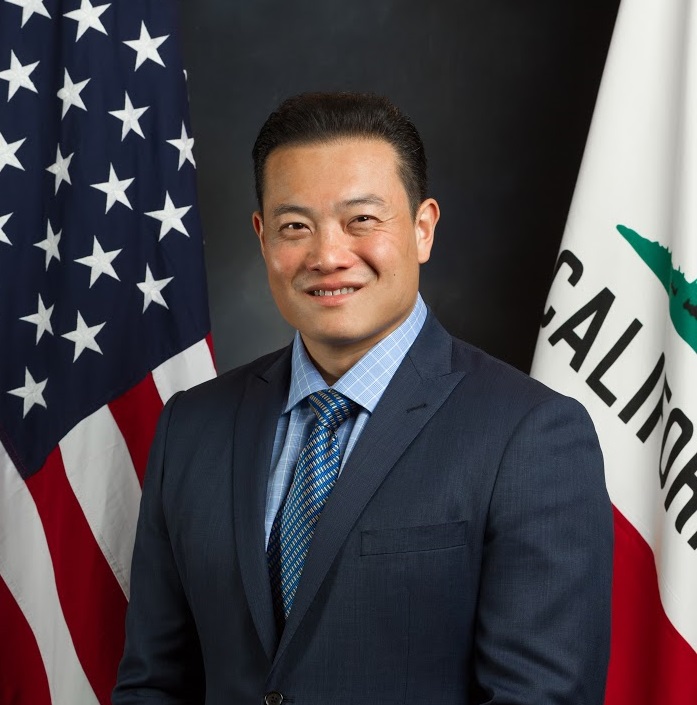
Asm. Phillip Chen
Sponsored bills
Existing law, the Alarm Company Act, establishes the Bureau of Security and Investigative Services, within the Department of Consumer Affairs and sets forth its powers and duties over the licensure, registration, and regulation of alarm company operators and alarm agents. That act does not prevent local authorities of any city, county, or city and county from doing certain things, including enacting ordinances governing false alarm activations and responses or requiring a person who owns, leases, rents, or otherwise possesses an alarm system to obtain a permit to operate the alarm system. This bill would, notwithstanding those provisions, prohibit a city, county, or city and county that requires a person who owns, leases, rents, or otherwise possesses an alarm system to obtain a local use permit to operate the alarm system from fining an alarm company for requesting dispatch to a customer, whether residential or commercial, that does not have a current local use permit if it was not the alarm company's legal responsibility to obtain the local use permit for the customer or renew the local use permit for the customer or, if it is the alarm company's legal responsibility to renew the local use permit for the customer, the alarm company was not notified that the customer's local use permit had expired.
This measure would designate the portion of Interstate 505 between the Interstate 80 interchange and the Vaca Valley Parkway in the County of Solano as the CHP Officer Kirk Griess Memorial Highway. The measure would request the Department of Transportation to determine the cost of appropriate signs showing this special designation and, upon receiving donations from nonstate sources covering that cost, to erect those signs.
Existing law requires a person who regularly transacts business in the state for profit under a fictitious business name to file a fictitious business name statement in accordance with prescribed requirements and to file a new statement after a change in the facts set forth in the statement. Existing law requires that these statements be filed with county clerks. Existing law authorizes a county to require a registrant that mails a fictitious business name statement to a county clerk's office for filing to submit a completed and notarized affidavit of identity. Existing law also authorizes a county clerk to require an agent acting for a person filing a fictitious business statement, generally referred to as a registrant, to submit a notarized statement signed by the registrant declaring the registrant has authorized the agent to submit the filing on behalf of the registrant. This bill would authorize a county clerk to accept an electronic acknowledgment verifying the identity of the registrant using a remote identity proofing process ensuring the registrant's identification, as specified, for purposes of filing fictitious business name statements, as described above.
Existing law requires that any person be granted access to a gated community for a reasonable period of time for the sole purpose of performing lawful service of process or service of subpoena, as specified. This bill would expand that access requirement to include covered multifamily dwellings, as defined.
Existing federal law establishes the federal Pell Grant Program under Title IV of the federal Higher Education Act of 1965 to provide need-based grant awards to low-income students in order to promote access to postsecondary education. This measure would respectfully request the Congress and the President of the United States to immediately take action to increase the maximum annual amount of the federal Pell Grant Program award from $6,195 to at least $7,500 to further help low-income college students alleviate the burden of postsecondary education debt.
This measure would dedicate the month of May 2019 as Maternal Mental Health Awareness Month.
This measure would proclaim the week of May 20, 2019, to May 26, 2019, inclusive, to be Emergency Medical Services Week in California.