Maddy summaryThis bill designates May 2026 as Amyotrophic Lateral Sclerosis Awareness Month in California to highlight the challenges faced by people living with this progressive neurodegenerative disease. The resolution calls on the public to support research, advocate for increased funding, and show solidarity with patients and their families. It does not create new laws or change government programs but serves as a symbolic gesture to raise awareness about ALS.
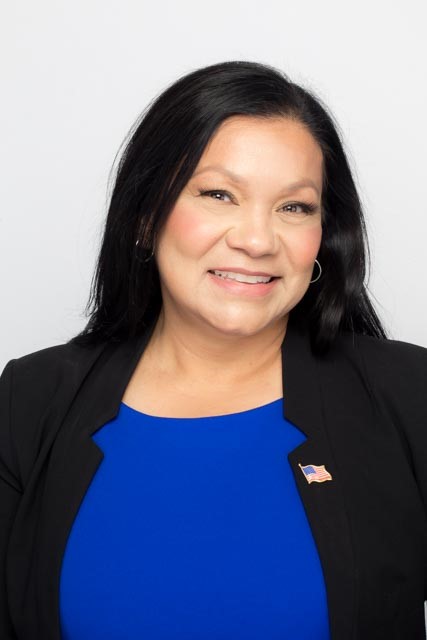
Asm. Leticia Castillo
Sponsored bills
The Personal Income Tax Law and the Corporation Tax Law allow various credits against the taxes imposed by those laws. This bill would, for taxable years beginning on or after January 1, 2027, and before January 1, 2032, allow a credit against those taxes equal to 50% of the cost of a backup electricity generator or solar battery, as specified, by a qualified taxpayer, as defined, for use in a residence or commercial property. The bill would limit the credit to $5,000 per residence or commercial property in the case of the purchase of a backup electricity generator, and to $7,500 in the case of a solar battery. The bill would only apply these provisions in taxable years for which an appropriation is made in the Budget Act or another statute for the purposes of administering the credits. Existing law requires any bill authorizing a new tax expenditure to contain, among other things, specific goals the tax expenditure will achieve, detailed performance indicators, and data collection requirements. This bill would include additional information required for any bill authorizing a new tax expenditure. This bill would take effect immediately as a tax levy.
Maddy summaryThis House Resolution officially designates May 4, 2026, as Star Wars Day in California. The bill honors the science fiction franchise created by George Lucas, highlighting his connection to Modesto and the series' cultural impact. It serves as a commemorative measure to recognize the fan celebration that began with the pun "May the Fourth be with you."
Maddy summaryThis House Resolution designates the week of May 5 as Cinco de Mayo Week to honor the historical victory of Mexican forces at the Battle of Puebla and the contributions of Latinos in California. The bill recognizes the role of Latino Americans in defending democratic institutions, both during the American Civil War and in supporting the Republic of Mexico against French intervention. It highlights the cultural, economic, and civic achievements of the Latino community while urging Californians to celebrate the holiday with appropriate ceremonies and activities.
Maddy summaryThis House Resolution designates April 27, 2026, as a day to honor the excellence and dedication of California's janitorial and cleaning workforce. The measure directly affects janitors and other property service workers who maintain sanitary environments in workplaces, schools, hospitals, and public spaces. By proclaiming this specific date, the resolution aims to bring public appreciation to the often invisible labor of these frontline professionals who contribute to public health and safety. The text highlights the essential role these workers play in reducing disease spread and supporting a healthy economy without imposing new regulations or funding requirements.
This measure would designate the portion of State Route 94 from Potrero Valley Road to Bell Valley Truck Trail in the County of San Diego as the Border Patrol Agent Daniel H. Salazar Memorial Highway. The measure would request the Department of Transportation to determine the cost of appropriate signs showing this special designation and, upon receiving donations from nonstate sources covering that cost, to erect those signs.
This measure would designate a specified portion of State Route 101 in the County of Humboldt as the Assembly Member Patty Berg Memorial Highway. The measure would request that the Department of Transportation determine the cost of appropriate signs showing this special designation and, upon receiving donations from nonstate sources sufficient to cover the cost, to erect those signs.
The Personal Income Tax Law and the Corporation Tax Law allow various credits against the taxes imposed by those laws. This bill, for taxable years beginning on or after January 1, 2027, and before January 1, 2032, would allow a credit against the taxes imposed by those laws for specified agricultural businesses that operate on at least 50 acres of land, as provided, equal to 25% of the business's qualified expenditures, as defined. The bill would increase the credit to 30% of qualified expenditures if the taxpayer purchases specified low-emission equipment or the qualified taxpayer has qualified expenditures related to operations in a high or very high fire hazard severity zone, as specified. The bill would limit the credit to no more than $1,000,000. The bill would cap the aggregate amount of the credit allowed at $250,000,000 for each taxable year, and would require a taxpayer to request a credit reservation from the Department of Food and Agriculture, as provided. The bill would require the Department of Food and Agriculture to coordinate with the Franchise Tax Board for the administration of the credit. The bill would require the Franchise Tax Board and the Department of Food and Agriculture to share specified information, and would make the unauthorized disclosure of that information a misdemeanor. By expanding the scope of a crime, this bill would impose a state-mandated local program. Existing law requires any bill authorizing a new tax expenditure to contain, among other things, specific goals, purposes, and objectives that the tax expenditure will achieve, detailed performance indicators, and data collection requirements. This bill would also include additional information required for any bill authorizing a new tax expenditure. The California Constitution requires the state to reimburse local agencies and school districts for certain costs mandated by the state. Statutory provisions establish procedures for making that reimbursement. This bill would provide that no reimbursement is required by this act for a specified reason. This bill would take effect immediately as a tax levy.
Existing state sales and use tax laws impose a tax on retailers measured by the gross receipts from the sale of tangible personal property sold at retail in this state or on the storage, use, or other consumption in this state of tangible personal property purchased from a retailer for storage, use, or other consumption in this state. The Sales and Use Tax Law provides various exemptions from those taxes. This bill would, on and after January 1, 2027, and before January 1, 2032, exempt from those taxes the gross receipts from the sale of, and the storage, use, or other consumption of, infant car seats, as defined. Existing law requires a bill authorizing a new tax expenditure to contain, among other things, specific goals the tax expenditure will achieve, detailed performance indicators, and data collection requirements. This bill would include additional information required for any bill authorizing a new tax expenditure. The Bradley-Burns Uniform Local Sales and Use Tax Law authorizes counties and cities to impose local sales and use taxes in conformity with the Sales and Use Tax Law, and existing laws authorize districts, as specified, to impose transactions and use taxes in accordance with the Transactions and Use Tax Law, which generally conforms to the Sales and Use Tax Law. Amendments to the Sales and Use Tax Law are automatically incorporated into the local tax laws. This bill would provide that the exemption created by the bill does not apply to local sales and use taxes or transactions and use taxes. Existing law imposes or dedicates certain state sales and use tax rates for local funding, including through the Local Revenue Fund 2011. Existing law requires the state to reimburse counties and cities for revenue losses caused by the enactment of sales and use tax exemptions. This bill would provide that, notwithstanding Section 2230 of the Revenue and Taxation Code, no appropriation is made and the state shall not reimburse any local agencies for sales and use tax revenues lost by them pursuant to this bill. This bill would take effect immediately as a tax levy.

Maddy summaryThis House Resolution designates April 2025 as Sexual Assault Awareness Month in California and formally recognizes April 30, 2025, as Denim Day. It encourages all Californians to wear jeans on Denim Day to symbolize that no one "invites" or "deserves" sexual assault, reinforcing the message that a survivor’s clothing is never relevant to consent. The resolution references California’s existing law (AB 939, 2021), which prohibits using a survivor’s attire as evidence of consent in sexual assault cases. As a symbolic gesture - not a new law - it aims to raise public awareness and support survivors, aligning with California’s established victim-centered approach to sexual violence.