

Existing law establishes the Governor as the primary state officer representing California's interest in international affairs, to the extent that representation is not in conflict with federal law or the California Constitution. Existing law establishes the Lieutenant Governor as the Chair of the Commission for Economic Development to improve trade opportunities for California, and develop international partnerships for foreign companies to do business in the state and for California. Existing law requires the Office of Planning and Research to maintain and update a list of all state agreements made with foreign governments. Existing law additionally requires the Director of the Governor's Office of Business and Economic Development to provide the Legislature with an updated strategy for international trade and investment, that includes, at a minimum, specified components, once every 5 years. This bill would require the Governor to establish the California-Ireland Trade Commission within the Governor's Office of Business and Economic Development as an advisory body to the Governor and the Legislature, consisting of specified appointed members, upon availability of sufficient funding resources for this purpose, as provided. The bill would establish the various purposes of the commission, which would include advancing bilateral trade and investment between California and Ireland. This bill would require the commission to report its findings, results, and recommendations to the Governor and the Legislature within one year of its initial organizational meeting and by February 1 of each succeeding year, as specified. The bill would require the Governor's Office of Business and Economic Development to consider the commission's recommendations when updating its strategy for international trade and investment. The bill would include related legislative findings.
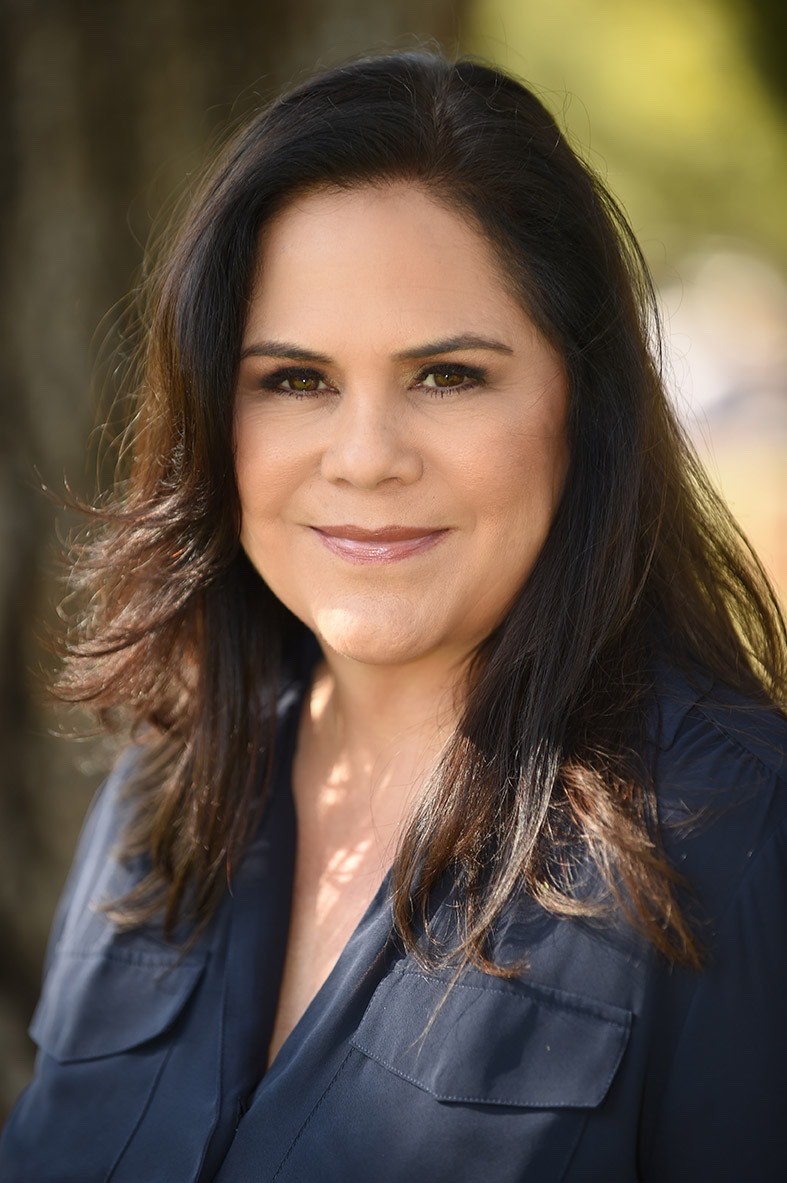
Asm. Lisa Calderon
Sponsored bills
The California Global Warming Solutions Act of 2006 establishes the State Air Resources Board as the state agency responsible for monitoring and regulating sources emitting greenhouse gases. The act authorizes the state board to include the use of market-based compliance mechanisms in regulating those emissions. The implementing regulations adopted by the state board provide for the direct allocation of greenhouse gas allowances to electrical corporations pursuant to a market-based compliance mechanism. Existing law vests the Public Utilities Commission (PUC) with regulatory authority over public utilities, including electrical corporations. Existing law requires the PUC to continue a program of assistance to low-income electric and gas customers with annual household incomes that are no greater than 200% of the federal poverty guidelines, as specified, which is referred to as the California Alternate Rates for Energy (CARE) program. Existing law also requires the PUC to continue a program of assistance to residential customers of the state's 3 largest electrical corporations consisting of households of 3 or more persons with total household annual gross income levels between 200% and 250% of the federal poverty guideline level, which is referred to as the Family Electric Rate Assistance (FERA) program. Existing law, except as provided, requires revenues received by an electrical corporation as a result of the direct allocation of greenhouse gas allowances to be credited directly to residential, small business, and emissions-intensive trade-exposed retail customers of the electrical corporation, commonly known as the California Climate Credit. This bill would exclude residential customers from receiving the California Climate Credit if they are not enrolled in the CARE or FERA program and their total electricity bills for the previous year were less than $300. Under existing law, a violation of the Public Utilities Act, or of an order, decision, rule, direction, demand, or requirement of the commission, is a crime. Because the provisions of this bill would be part of the Public Utilities Act, and a violation of a commission action implementing its requirements would be a crime, the bill would impose a state-mandated local program. The California Constitution requires the state to reimburse local agencies and school districts for certain costs mandated by the state. Statutory provisions establish procedures for making that reimbursement. This bill would provide that no reimbursement is required by this act for a specified reason.
Existing law generally regulates classes of insurance, including residential property insurance. Existing law requires an insurer to send various notices to a policyholder at specified intervals. This bill would require an admitted insurer to notify a residential property insurance policyholder that aerial images may be taken or obtained of the insured property, as specified, unless a claim has been submitted or is pending on the property and the images will be used only for evaluating the claim. The bill would require the insurer to provide the aerial images upon request, as specified, and would require the notice to include instructions regarding how a policyholder may make that request. This bill would prohibit an admitted insurer from basing a decision to terminate insurance coverage, as defined, on an aerial image taken more than 180 days prior to sending notice of that decision to the policyholder, except as specified. The bill would require an admitted insurer that bases a decision to terminate insurance coverage on an aerial image to provide the policyholder with that aerial image, notice of that decision, and the opportunity to dispute the accuracy of the image, and to verify remediation, before the effective date of the decision to terminate insurance coverage. This bill would make the above-described provisions operative on July 1, 2026.
This measure would call on members of the United States Congress to oppose reductions to funding that negatively impact educational services for students with disabilities and would call on the President of the United States and Congress to ensure that services and funding for students with disabilities are uninterrupted.
This measure would recognize February 2025 as Black History Month, urge all citizens to join in celebrating the accomplishments of African Americans during Black History Month, and encourage the people of California to recognize the many talents of African Americans and the achievements and contributions they make to their communities to create equity and equality for education, economics, and social justice. The measure would also recognize the significance in protecting citizens' right to vote and remedying racial discrimination in voting.
Maddy summaryThis is a commemorative resolution, not a bill with policy changes. It recognizes key historical milestones of transgender people in California, including Indigenous gender diversity documented in 1775, 19th-century transgender figures in San Francisco's Tenderloin, early activism like the 1959 Cooper Do-nuts Riot, and legal precedents such as Sir Lady Java's 1967 employment discrimination case. The resolution has no binding effect and does not create new laws or directly affect any individuals or groups. It serves solely to honor these historical contributions.
Maddy summaryThis House Resolution designates September as "Student Parent Month" in California. It recognizes the approximately 400,000 student parents across the state - over half a million children - and aims to raise awareness of their needs. The resolution does not create new policies or funding but encourages colleges, policymakers, and communities to honor student parents and support their educational success. It follows California’s prior legislative actions (like AB 2881 and AB 2458) that established concrete support mechanisms for student parents.
Maddy summaryThis resolution designates August 2025 as "Chicano Heritage Month" in California. It symbolically recognizes the historical contributions of Chicanos/Chicanas to U.S. society, including their role in cultural, educational, and political movements. The resolution encourages all Californians to acknowledge and celebrate this heritage, without creating new programs, funding, or legal requirements. It directly affects the public by promoting awareness of this cultural identity, aligning with similar declarations like Santa Ana's 2021 adoption. The resolution was unanimously passed by the California Assembly on August 25, 2025.
Maddy summaryThis is a ceremonial House Resolution (not a bill), designating August 2, 2025, as California Disc Golf Day and the month of August 2025 as California Disc Golf Month. It recognizes disc golf's historical origins in California and its community benefits, including physical activity and mental well-being. The resolution has no policy impact, funding requirements, or direct effect on any individuals or organizations. It serves solely as a symbolic acknowledgment of the sport's popularity.
Maddy summaryHouse Resolution 50 designates November 25, 2025, as "Elimination of Violence Against Women Day" in California. It also recognizes the International Day for the Elimination of Violence Against Women on that date and urges policymakers to advance year-round efforts to prevent and eliminate violence against women and girls. This resolution does not create new laws or funding but serves as a symbolic statement of commitment from the California State Assembly. It directly affects the state government and policymakers by formally acknowledging the issue and encouraging ongoing action.