

Existing law, the Alatorre-Zenovich-Dunlap-Berman Agricultural Labor Relations Act of 1975, grants agricultural employees the right to form and join labor organizations and engage in collective bargaining with respect to wages, terms of employment, and other employment conditions, and authorizes employees to elect exclusive bargaining representatives for these purposes. Existing law creates the Agricultural Labor Relations Board and prescribes its composition, duties, and powers. Existing law authorizes the board to hold hearings and conduct investigations and requires that certain procedures be the exclusive method of redressing unfair labor practices. Under existing law, any person who willfully resists, prevents, or interferes with a member of the board or its agents or agencies in the performance of their duties is guilty of a misdemeanor. Existing law requires the board to certify the results of an election conducted by secret ballot of employees in a collective bargaining unit to designate a collective bargaining representative, unless the board determines there are sufficient grounds to refuse to do so. Existing law further provides that if the board refuses to certify an election because of employer misconduct that would render slight the chances of a new election reflecting the free and fair choice of employees, the labor organization shall be certified as the bargaining representative for the bargaining unit. This bill would refer to the election by secret ballot process as a polling place election. The bill would establish alternative procedures to the polling place election and authorize a labor organization to be certified as the exclusive bargaining representative of a bargaining unit through either a labor peace election or a non-labor peace election, as prescribed, dependent on whether an employer enrolls and agrees to a labor peace election for labor organization representation campaigns. The bill would provide that a labor peace election or a non-labor peace election permits a bargaining unit to summarily select a labor organization as its representative for collective bargaining purposes without using the existing polling place process. Under the bill, a labor peace election would be a mail ballot election and a non-labor peace election would establish a process for the submission of a petition with proof of majority support, subject to certification by the board. Among other provisions, the bill would require for both alternative procedures that an employer respond to the board with regard to a petition, including providing a specified list of employees to the board. By expanding the definition of a crime, this bill would impose a state-mandated local program. This bill would establish a schedule for agricultural employers to indicate to the board whether they agree to a labor peace compact, defined to mean an agreement by the employer to, among other things, make no statements for or against union representation to its employees or publicly, in any written or oral form, at any time during employee hire, rehire, or orientation, or after certain documents regarding organization are filed with the board. The bill would prohibit a labor peace compact from prohibiting an employer from communicating truthful statements to employees regarding workplace policies or benefits, as specified. The bill would require the board to develop an online web-based labor peace election process that will allow employers to indicate their labor peace choice online, and that will allow labor organizations to see whether a specific agricultural employer has agreed to a labor peace election campaign. This bill would repeal the above provisions on January 1, 2028. This bill would prescribe civil penalties to be imposed upon an agricultural employer who commits an unfair labor practice in an amount not to exceed $10,000 for each violation, and would increase that sum to an amount not to exceed $25,000 for specified violations. The bill would require the board to consider specified factors in determining the amount of a civil penalty pursuant to these provisions. The bill would also authorize the board to impose personal liability for these penalties upon a director or officer of an employer in certain circumstances. Existing law authorizes a person aggrieved by the final order of the board granting or denying in whole or in part the relief sought for an unfair labor practice, to obtain a review of the order in a specified court of appeal by filing in the court a written petition requesting that the order of the board be modified or set aside. This bill would require an employer who appeals or petitions for a writ of review of any order of the board involving make-whole, backpay, or other monetary awards to employees, to post an appeal bond in the amount of the entire economic value of the order, as specified, and would provide for the bond to be forfeited under specified conditions. This bill would state that its provisions are severable. The California Constitution requires the state to reimburse local agencies and school districts for certain costs mandated by the state. Statutory provisions establish procedures for making that reimbursement. This bill would provide that no reimbursement is required by this act for a specified reason.
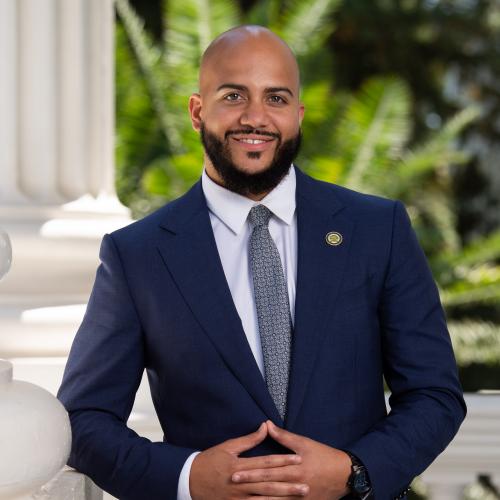
Asm. Isaac Bryan
Sponsored bills
(1) The Baldwin Hills Conservancy Act establishes, until January 1, 2026, in the Natural Resources Agency, the Baldwin Hills Conservancy, created with the purpose, among other purposes, to acquire and manage public lands within the Baldwin Hills area, as defined. This bill would provide that the purposes of the conservancy additionally include acquiring and managing public lands within the southern Ballona Creek Watershed and Upper Dominguez Channel area, rename the conservancy the Baldwin Hills and Urban Watersheds Conservancy, and make conforming changes. The bill would repeal the January 1, 2026, sunset date, thereby extending the act indefinitely. (2) The act requires the conservancy's governing board to consist of 13 voting members, including one member from the Los Angeles County Board of Supervisors within whose district the majority of the Baldwin Hills area is located. The act requires 6 of these members to be appointed by the Governor with 4 out of that 6 to be residents of specified areas. This bill would delete the above provisions relating to those members and expand the voting membership of the conservancy's board to consist of 15 voting members by including the mayors of the Cities of Los Angeles and Culver City, an appointee from the South Bay Cities Council of Governments, and a member of the Los Angeles County Board of Supervisors representing District 2. The bill would require the Governor to appoint 5 of the voting members, who are nominated by a city council or a neighborhood empowerment group, as provided. The act requires the conservancy's board to also consist of 7 nonvoting members. This bill would expand the nonvoting membership of the conservancy's board to consist of 12 nonvoting members by including the Director of the Los Angeles County Department of Public Works, among others, as provided. (3) The act requires the conservancy to do certain things, including develop and coordinate an integrated program of resource stewardship so that the entire area is managed for optimum recreational and natural resource values, as provided. This bill would also require the entire area to be managed for optimum climate resilience. The act also requires the conservancy, as part of its duties, to approve conservancy funded projects, enter into a memorandum of understanding with the Department of Parks and Recreation, and approve a specified master, plan by May 1, 2002, as provided. This bill would delete these duties and would instead require the conservancy to carry out projects and activities to further the purposes of the act, study the potential environmental and recreational uses of the Baldwin Hills, southern Ballona Creek Watershed, and Upper Dominguez Channel area, and develop and adopt a proposed watershed and open-space plan for improvements in the conservancy territory, as provided. The bill would require a report on this plan to be provided to the Legislature on or before January 1, 2024. The bill would establish the Baldwin Hills, Southern Ballona Creek Watershed, and Upper Dominguez Channel Urban Watershed Improvement Program, to be administered by the conservancy, for climate change adaptation improvements and to protect, conserve, and restore the health and resilience of the watersheds and communities of the region, in support of the requirements described above, as provided. (4) The act requires the conservancy to administer any funds appropriated to it and any revenue generated by public agencies for the Baldwin Hills area and contributed to the conservancy, and authorizes the conservancy to expend those funds for capital improvements, land acquisition, or support of the conservancy's operations. This bill would expressly require the conservancy to additionally administer any funds appropriated to it from a future bond act or local initiative measure, as provided.
Existing law establishes the jurisdiction of the juvenile court, which may adjudge children to be dependents of the court under certain circumstances. Existing law establishes the grounds for removal of a dependent child from the custody of the child's parents or guardian and generally requires the court to order the social worker to provide designated child welfare services, including family reunification services. Existing law requires a court to order reasonable services, including reunification services, if a parent or guardian is incarcerated, institutionalized, or detained by the United States Department of Homeland Security, or has been deported to the parent or guardian's country of origin, unless the court determines by clear and convincing evidence that those services would be detrimental to the child considering specified factors, including, among other things, the length of the sentence, the nature of the crime, and the degree of detriment to the child if services are not offered. This bill would prohibit the denial of reunification services for parents and guardians who are in custody before conviction, as specified. To the extent that the bill would impose additional duties on local entities and social workers, the bill would impose a state-mandated local program. The California Constitution requires the state to reimburse local agencies and school districts for certain costs mandated by the state. Statutory provisions establish procedures for making that reimbursement. This bill would provide that no reimbursement is required by this act for a specified reason.
Existing law provides for the regulation of disability insurers by the Department of Insurance. Under existing law, disability insurance includes health insurance and blanket disability insurance that covers hospital, medical, or surgical benefits. Existing law requires, among other things, a health insurer to offer, market, and sell all of its health benefit plans to all individuals and dependents in each service area in which the insurer provides health care services, and requires all individual health benefit plans to be renewable, as specified. Existing law also requires a health insurer to establish specified enrollment periods and to provide specified levels of insurance coverage. Under existing law, a health insurer is required to consider the claims experience of all insureds and enrollees as a single risk pool for rating purposes in the individual market. This bill, for policy years beginning on or after January 1, 2024, would require student health insurance coverage, as defined, to be considered individual health insurance coverage. The bill would define student health insurance coverage as a blanket disability policy provided to students enrolled in an institution of higher education and to their dependents, that covers hospital, medical, or surgical benefits. The bill, except as specified, would require a blanket disability insurance policy that meets the definition of student health insurance coverage to comply with insurance provisions that are applicable to nongrandfathered individual health insurance, including, among others, essential health benefits requirements and annual limits on out-of-pocket expenses. The bill would exempt student health insurance coverage from certain requirements otherwise applicable to health insurers and health benefit plans, including the establishment of specified enrollment periods, guaranteed availability and renewability, specified coverage level requirements, and single risk pool rating requirements. The bill would require a notice be provided in the student health insurance enrollment materials informing a student, or dependent of a student, of the requirement that California residents and their dependents obtain health coverage and various options to meet this requirement. Existing law prohibits the alteration of any written application for any disability policy by any person other than the applicant without the applicant's consent, except as specified. Under existing law, the making of any other alteration without the consent of the applicant is a misdemeanor. This bill would subject student health insurance coverage to this prohibition. Because this bill would expand the application of an existing crime, it would impose a state-mandated local program. The California Constitution requires the state to reimburse local agencies and school districts for certain costs mandated by the state. Statutory provisions establish procedures for making that reimbursement. This bill would provide that no reimbursement is required by this act for a specified reason.
(1) Existing law provides for the establishment of various special districts that may support and finance housing development, including affordable housing special beneficiary districts that are authorized to promote affordable housing development with certain property tax revenues that a city or county would otherwise be entitled to receive. Existing law, the San Francisco Bay Area Regional Housing Finance Act, establishes the Bay Area Housing Finance Authority to raise, administer, and allocate funding for affordable housing in the San Francisco Bay area, as defined, and provide technical assistance at a regional level for tenant protection, affordable housing preservation, and new affordable housing production. This bill, the Los Angeles County Regional Housing Finance Act, would establish the Los Angeles County Affordable Housing Solutions Agency and would state that the agency's purpose is to increase the supply of affordable housing in Los Angeles County by providing for significantly enhanced funding and technical assistance at a regional level for renter protections, affordable housing preservation, and new affordable housing production, as specified. The bill would require a board composed of 21 voting members and one nonvoting member from Los Angeles County, as specified, to govern the agency. This bill would permit the board to determine its organizational structure and to delegate specified powers. The bill would require the board to form an oversight committee composed of 11 members and one nonvoting member to assist in the development of funding guidelines, implementation of agency programs, and approval of an expenditure plan, as specified. The bill would require the board to provide for annual audits of the agency's general administration, accounts, and records, including an independent financial and performance audit for bonds secured by ad valorem property taxes, and provide for financial reports. The bill would include findings that the provisions proposed by this bill address a matter of statewide concern rather than a municipal affair and, therefore, apply to all cities within Los Angeles County, including charter cities. This bill would authorize the agency to, among other things, raise and allocate new revenue, incur and issue bonds and other indebtedness, and place on the ballot in Los Angeles County, including all of its incorporated cities, funding measures, in accordance with applicable constitutional and statutory requirements, to raise and allocate funds to the county, the cities in the county, and other public agencies and affordable housing projects within its jurisdiction for purposes of preserving and enhancing existing housing, funding renter protection programs, and financing new construction of housing developments, as specified. In this regard, the bill would authorize the entity, among other things, to impose various special taxes, including a parcel tax and a documentary transfer tax, within its jurisdiction, and to issue bonds secured by the levy of ad valorem property taxes, in accordance with applicable constitutional requirements, and revenue bonds payable from the revenues of the agency, other than revenues generated from ad valorem property taxes. The bill would require that revenue generated by the agency pursuant to these provisions be used for specified housing purposes and would require the agency to distribute those funds in accordance with specified requirements, including the adoption of an annual plan by the board. This bill would require that revenue be allocated according to a geographic distribution schedule, as specified. Existing law defines "public works," for the purposes of regulating public works contracts, as, among other things, construction, alteration, demolition, installation, or repair work done under contract and paid for, in whole or in part, out of public funds. Existing law further requires that, except as specified, not less than the general prevailing rate of per diem wages be paid to workers employed on public works and imposes misdemeanor penalties for a willful violation of this requirement. Under this bill, a construction or rehabilitation project receiving certain funding associated with the agency, as described, would constitute a public work for which prevailing wages are required to be paid. The bill would also provide that certain projects with 40 units or greater are eligible to receive funding or financing from the agency only if all construction and rehabilitation is subject to the City of Los Angeles Department of Public Works PLA, as defined and specified, except that if a specific countywide project labor agreement, as defined, is negotiated, then the bill would provide that those projects are eligible for funding or financing from the agency only if all construction and rehabilitation is subject to that labor agreement rather than the Department of Public Works PLA, as specified. Because the willful violation of prevailing wage requirements when engaged in these public works projects would result in the imposition of misdemeanor penalties, this bill would impose a state-mandated local program. (2) The California Environmental Quality Act (CEQA) requires a lead agency, as defined, to prepare, or cause to be prepared, and certify the completion of an environmental impact report on a project that it proposes to carry out or approve that may have a significant effect on the environment or to adopt a negative declaration if it finds that the project will not have that effect. CEQA also requires a lead agency to prepare a mitigated negative declaration for a project that may have a significant effect on the environment if revisions in the project would avoid or mitigate that effect and there is no substantial evidence that the project, as revised, would have a significant effect on the environment. CEQA includes exemptions from its environmental review requirements for numerous categories of projects. This bill would exempt from the CEQA requirements certain actions taken by the agency. (3) This bill would make legislative findings and declarations as to the necessity of a special statute for Los Angeles County. (4) By adding to the duties of local officials with respect to elections procedures for revenue measures on behalf of the agency, this bill would impose a state-mandated local program. The California Constitution requires the state to reimburse local agencies and school districts for certain costs mandated by the state. Statutory provisions establish procedures for making that reimbursement. This bill would provide that with regard to certain mandates no reimbursement is required by this act for a specified reason. With regard to any other mandates, this bill would provide that, if the Commission on State Mandates determines that the bill contains costs so mandated by the state, reimbursement for those costs shall be made pursuant to the statutory provisions noted above.
(1) Existing law requires a county coroner to hold inquests to inquire into and determine the circumstances, manner, and cause of violent, sudden, or unusual deaths, including deaths related to or following known or suspected self-induced or criminal abortion. Existing law requires a coroner to register a fetal death after 20 weeks of gestation, unless it is the result of a legal abortion. If a physician was not in attendance at the delivery of the fetus, existing law requires the fetal death to be handled as a death without medical attendance. Existing law requires the coroner to state on the certificate of fetal death the time of fetal death, the direct causes of the fetal death, and the conditions, if any, that gave rise to these causes. This bill would delete the requirement that a coroner hold inquests for deaths related to or following known or suspected self-induced or criminal abortion, and would delete the requirement that an unattended fetal death be handled as a death without medical attendance. The bill would prohibit using the coroner's statements on the certificate of fetal death to establish, bring, or support a criminal prosecution or civil cause of damages against a person who is immune from liability based on their actions or omissions with respect to their pregnancy or actual, potential, or alleged pregnancy outcome, or who aids a pregnant person in exercising their rights under the Reproductive Privacy Act, as specified. (2) Existing law, the Reproductive Privacy Act, provides that every individual possesses a fundamental right of privacy with respect to their personal reproductive decisions. Existing law prohibits the state from interfering with a pregnant person's right to choose or obtain an abortion before the fetus is viable or when it is necessary to protect the life and health of the pregnant person. Under existing law, an abortion is unauthorized if either the person performing the abortion is not a health care provider that is authorized to perform an abortion or the fetus is viable. Existing law, the Tom Bane Civil Rights Act, authorizes an individual whose exercise or enjoyment of rights secured by the Constitution or laws of the United States, or of rights secured by the Constitution or laws of this state, has been interfered with, or attempted to be interfered with, to institute or prosecute in their own name and on their own behalf an action for damages, as prescribed. This bill would prohibit a person from being subject to civil or criminal liability, or otherwise deprived of their rights, based on their actions or omissions with respect to their pregnancy or actual, potential, or alleged pregnancy outcome or based solely on their actions to aid or assist a woman or pregnant person who is exercising their reproductive rights. The bill would clarify that an abortion is unauthorized if performed by a person other than the pregnant person and either the person performing the abortion is not a health care provider that is authorized to perform an abortion or the fetus is viable. The bill would authorize a party whose rights are protected by the Reproductive Privacy Act to bring a civil action against an offending state actor when those rights are interfered with by conduct or by statute, ordinance, or other state or local rule, regulation, or enactment in violation of the act, as specified, and would require a court, upon a motion, to award reasonable attorneys' fees and costs to a prevailing plaintiff. The bill would also authorize a person aggrieved by a violation of the Reproductive Privacy Act to bring a civil action pursuant to the Tom Bane Civil Rights Act. The bill would provide for the indemnification of employees or former employees of public agencies who were acting within the scope of their employment. (3) This bill would incorporate additional changes to Section 123466 of the Health and Safety Code proposed by AB 2091 to be operative only if this bill and AB 2091 are enacted and this bill is enacted last.
The California Constitution provides that the University of California constitutes a public trust, and requires the university to be administered by the Regents of the University of California, a corporation in the form of a board, with full powers of organization and government, subject to legislative control only for specified purposes. Existing law establishes the Hastings College of the Law, under the governance of an 11-member Board of Directors of the Hastings College of the Law, within the University of California. Existing law provides that the college shall forever be known and designated as the Hastings College of the Law. Under existing law, six directors constitutes a quorum for the transaction of all business of the college's board of directors. Existing law requires one of the directors to always be an heir or representative of Serranus Clinton (S.C.) Hastings and all other directors to serve 12-year terms. Existing law requires vacancies occurring in the board of directors other than the death or resignation of the heir or representative of S.C. Hastings to be filled by the Governor and approved by the Senate. This bill would instead provide that the college shall be designated as the College of the Law, San Francisco, as provided. The bill would make conforming changes. The bill would specify that a majority of directors constitutes a quorum for the transaction of all of the board of directors' business, and would require all directors to serve 12-year terms, except as provided. The bill would require all vacancies occurring on the board of directors, including a vacancy of the heir or representative of S.C. Hastings, to be filled by the Governor and approved by the Senate. This bill would incorporate additional changes to Section 67385 of the Education Code proposed by AB 1467 to be operative only if this bill and AB 1467 are enacted and this bill is enacted last.
Existing law authorizes the Department of Motor Vehicles to issue and renew driver's licenses, as specified. Existing law also authorizes the department to issue identification cards. Existing law requires the department to issue a restricted driver's license to an eligible applicant who is unable to submit satisfactory proof that their presence in the United States is authorized under federal law if they meet all other qualifications for licensure and provide satisfactory proof of identity and California residency. Existing law also authorizes the department to issue an identification card to a person documented under the federal Deferred Action for Childhood Arrivals program. This bill would, among other things, require the department to, by no later than July 1, 2027, issue a restricted identification card to an eligible applicant who is unable to submit satisfactory proof that their presence in the United States is authorized under federal law if they provide satisfactory proof of identity and California residency, as specified. Existing law requires the restricted licenses and identification cards to include a recognizable feature on the front of the cards, such as the letters "DP" instead of "DL" and "IC" instead of "ID." This bill would delete the provision requiring a recognizable feature on the cards. Existing law prohibits California law enforcement agencies from cooperating, as specified, with federal immigration authorities. Existing law prohibits the disclosure of certain documents provided by an applicant to the department, except in response to a subpoena for individual records in a criminal proceeding or a court order, or in response to a law enforcement request to address an urgent health or safety need, as specified. This bill would specify that immigration enforcement, as defined, does not constitute an urgent health and safety need for those purposes, and would prohibit a government agency or department, law enforcement agency, commercial entity, or other person from obtaining, accessing, using, or otherwise disclosing, noncriminal history information maintained by the department, for the purpose of immigration enforcement. The bill would make other conforming changes. This bill would incorporate additional changes to Section 12926 of the Government Code proposed by SB 523 to be operative only if this bill and SB 523 are enacted and this bill is enacted last.
(1) Existing law establishes the jurisdiction of the juvenile court, which is permitted to adjudge certain children to be a ward or a dependent of the court under certain circumstances, and authorizes the juvenile court to retain jurisdiction over those persons until they attain 21 years of age. Existing law authorizes nonminors who have not yet attained 21 years of age and who exited foster care at or after the age of majority to petition the court to resume dependency jurisdiction or to assume transition jurisdiction over the nonminor. Under existing law, the county welfare department is required to submit reports at the first regularly scheduled review hearing after a dependent child has attained 16 years of age, at the last regularly scheduled review hearing before a dependent child attains 18 years of age, and at every regularly scheduled review hearing thereafter, verifying that specified information, documents, and services have been provided to the child or nonminor. This bill would require certain additional verifications to be included in those reports, including, among other things, verification that specified information has been included in the child's or nonminor's case plan. Existing law prohibits the court from terminating jurisdiction over a nonminor dependent who has attained 18 years of age until the county welfare department has submitted a report verifying that it has provided all of the information, documents, and services referred to above to the nonminor dependent, or in the case of a nonminor dependent who, after reasonable efforts by the county welfare department, cannot be located, verifying the efforts made to make that information and those documents and services available to the nonminor dependent. This bill would additionally prohibit jurisdiction from being terminated over a nonminor dependent who has attained 21 years of age until the county welfare department has provided the nonminor dependent that information and those documents and services and, if the nonminor dependent has not secured housing, until the county welfare department has submitted a report to the court verifying that specified requirements have been met. The bill would extend the authority of the court to retain jurisdiction over a nonminor dependent who has attained 21 years of age for the limited purpose of complying with those requirements. The bill would authorize a nonminor dependent over whom jurisdiction has been extended pursuant to that authorization to continue receiving the support and services they were entitled to receive immediately prior to attaining 21 years of age, and benefits equal to the amount of Aid to Families with Dependent Children-Foster Care (AFDC-FC) program benefits, until jurisdiction has been terminated. By imposing additional duties on county welfare departments, this bill would impose a state-mandated program. (2) Existing law establishes the AFDC-FC program, under which counties provide payments to foster care providers on behalf of qualified children in foster care. Existing law establishes a schedule of basic rates to be paid for the care and supervision of each foster child. Existing law also establishes the Kinship Guardianship Assistance Payment Program (Kin-GAP) , which provides aid on behalf of eligible children who have a kinship guardianship, and the Approved Relative Caregiver Funding Program (ARC) , which provides payments to approved relative caregivers who are caring for children and nonminor dependents who are ineligible for AFDC-FC payments. Existing law requires, when a child is living with a parent who receives AFDC-FC or Kin-GAP benefits, or ARC payments, that the rate paid to the foster care provider on behalf of the parent include an additional amount, known as an infant supplement, for the care and supervision of the child. Existing law makes a pregnant minor or nonminor dependent eligible for the infant supplement, referred to in this instance as an expectant parent benefit, for the 3-month period immediately prior to the month the birth is anticipated. This bill would expand eligibility for the expectant parent benefit to include minors and nonminor dependents who are under the dependency jurisdiction of the juvenile court and who would be eligible to have foster care benefits paid on their behalf but for the minor or nonminor dependent not residing in an approved placement. The bill would require the department to develop and implement automated payments for these purposes, as specified. Because counties would administer these extended benefits, this bill would impose a state-mandated local program. (3) Existing law authorizes a county to pay, in addition to the basic rate, a clothing allowance to provide additional clothing for a child. This bill would require a county, if the county opts to provide a clothing allowance, to provide the clothing allowance to a minor or nonminor dependent who is under the dependency jurisdiction of the juvenile court and who would be eligible to have foster care benefits paid on their behalf but for the minor or nonminor dependent not residing in an approved placement. The bill would require the department to develop and implement automated payments for these purposes, as specified. (4) The California Constitution requires the state to reimburse local agencies and school districts for certain costs mandated by the state. Statutory provisions establish procedures for making that reimbursement. This bill would provide that no reimbursement is required by this act for a specified reason.
Existing law establishes various offenses for a person who places or displays certain symbols, marks, signs, emblems, and other physical impressions, including, but not limited to, a Nazi swastika, hangs nooses, or burns or desecrates crosses or other religious symbols on private and nonprivate property, as specified, with the intent to terrorize a person, as specified. Existing law, for the first conviction, punishes a person who hangs a noose or places or displays a sign, mark, symbol, emblem, or other physical impression with the intent to terrorize a person, as specified, with imprisonment in county jail not to exceed one year, a fine not more than $5,000, or both the fine and imprisonment, and with imprisonment in county jail not to exceed one year, a fine not to exceed $15,000, or both the fine and imprisonment for a subsequent conviction. Existing law, for a person who engages in a pattern of conduct by placing or displaying certain symbols, as specified, allows a person's punishment to be increased to imprisonment of 16 months or 2 or 3 years, a fine not more than $10,000, or both. Existing law punishes a person convicted of burning or desecrating a religious symbol with imprisonment for 16 months or 2 or 3 years, by a fine of not more than $10,000, or by both the fine and imprisonment, or imprisonment in a county jail not to exceed one year, by a fine not to exceed $5,000, or both the fine and imprisonment for the first conviction, and the same punishment for a subsequent conviction except the misdemeanor fine increases to $15,000. This bill would expand these offenses to include hanging a noose, placing or displaying a sign, mark, symbol, emblem, or other physical impression, including, but not limited to, a Nazi swastika, and burning, desecrating, or destroying a religious symbol, such as a cross, at schools and public places, generally, as specified, for the purpose of terrorizing a person, as specified. The bill would, for the first conviction, punish a person who hangs a noose, places or displays certain symbols, or burns or desecrates a religious symbol, as specified, with imprisonment for 16 months or 2 or 3 years, by a fine of not more than $10,000, or both the fine and imprisonment, or by imprisonment in a county jail not to exceed one year, by a fine not to exceed $5,000, or by both the fine and imprisonment. For a 2nd or subsequent conviction under these provisions, the bill would punish a person with imprisonment for 16 months or 2 or 3 years, by a fine of not more than $15,000, or by both the fine and imprisonment, or by imprisonment in a county jail not to exceed one year, by a fine not to exceed $10,000, or by both the fine and imprisonment. This bill would state the intent of the Legislature is to criminalize, for the purpose of terrorizing a person, the display or placement of the Nazi swastika and not swastikas associated with Hinduism, Buddhism, and Jainism. By creating a new crime, this bill would impose a state-mandated local program. The California Constitution requires the state to reimburse local agencies and school districts for certain costs mandated by the state. Statutory provisions establish procedures for making that reimbursement. This bill would provide that no reimbursement is required by this act for a specified reason.