

Existing law establishes the state prisons under the jurisdiction of the Department of Corrections and Rehabilitation. Existing law places county jails under the jurisdiction of the sheriff for the confinement of persons sentenced to imprisonment for the conviction of a crime. This bill would require every jail, prison, public or privately operated detention facility, and a facility in which individuals are subject to confinement or involuntary detention to develop and follow written procedures governing the management of segregated confinement, as specified. The bill would require those facilities to document the use of segregated confinement by, among other things, providing written orders of that confinement to the individual confined, as specified. The bill would prohibit those facilities from involuntarily placing an individual in segregated confinement if the individual belongs to a special population, including, among others, that the individual has a mental or physical disability or that the individual is under 26 years of age or over 59 years of age. The bill would require the facility to periodically check on the individual and have a medical or mental health professional periodically assess the individual. This bill would require a facility to offer out-of-cell programming to individuals in segregated confinement for at least 4 hours per day, not including time spent on housekeeping or in paid employment. The bill would also authorize a facility to use segregated confinement to help treat and protect against the spread of communicable disease, under certain circumstances. This bill would prohibit a facility from holding an individual in segregated confinement for more than 15 consecutive days and no more than 45 days in a 180-day period, as specified. This bill would also prohibit a facility from imposing limitations on services, treatment, or basic needs; conducting out-of-cell programming opportunities in a smaller cage or therapy module; placing an individual in segregated confinement on the basis of confidential information, as specified; using specified restraints when an individual is in segregated confinement; and using segregated confinement as a means of protecting an individual. This bill would require a facility administrator or chief physician to conduct a secondary review of a person in segregated confinement's dispute regarding qualification in the special populations category. This bill would require facilities to create and publish monthly, semiannual, and annual reports, as specified. The bill would require the Office of the Inspector General and the Board of State and Community Corrections to assess each facility's compliance with the act, as specified. This bill would require local and state authorities to promulgate regulations or directives to implement the act, where applicable. The bill would declare these provisions to be severable. By imposing additional duties on county jails, this bill would create a state-mandated local program. The California Constitution requires the state to reimburse local agencies and school districts for certain costs mandated by the state. Statutory provisions establish procedures for making that reimbursement. This bill would provide that, if the Commission on State Mandates determines that the bill contains costs mandated by the state, reimbursement for those costs shall be made pursuant to the statutory provisions noted above.
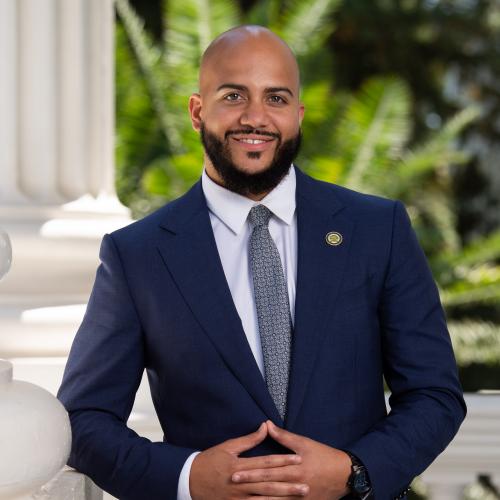
Asm. Isaac Bryan
Sponsored bills
Existing law establishes a workers' compensation system, administered by the Administrative Director of the Division of Workers' Compensation, to compensate an employee for injuries arising out of and in the course of their employment. Existing law requires an injured employee to file a claim form with the employer. Under existing law, except for specified injuries, if liability is not rejected within 90 days after the date the claim form is filed with the employer, the injury is presumed compensable and the presumption is rebuttable only by evidence discovered subsequent to the 90-day period. For certain injuries or illnesses, including hernia, heart trouble, pneumonia, or tuberculosis, among others, sustained in the course of employment of a specified member of law enforcement or a specified first responder, this bill would reduce those time periods to 75 days. The bill would make other conforming changes. Existing law prohibits aggregate disability payments for a single injury occurring on or after January 1, 2008, causing temporary disability from extending for more than 104 compensable weeks within a period of 5 years from the date of injury, except if an employee suffers from certain injuries or conditions. This bill would, for specified firefighters and peace officers claiming illness or injury related to cancer, increase the number of compensable weeks to 240 without limitation as to time from the date of injury. Existing law requires that certain proceedings, including proceedings for the enforcement against the employer or an insurer of any liability for compensation, be instituted before the Workers' Compensation Appeals Board. Existing law authorizes the appeals board to fix and determine, in its award, the total amount of compensation to be paid and specify the manner of payment, or may fix and determine the weekly disability payment to be made and order payment during the continuance of disability. Existing law requires that when payment of compensation has been unreasonably delayed or refused, either prior to or subsequent to the issuance of an award, the amount of the unreasonably delayed or refused payment be increased up to 25% or up to $10,000, whichever is less. Existing law requires the appeals board to use its discretion to accomplish a fair balance and substantial justice between the parties. This bill would require, if liability for an injury has been unreasonably rejected for specified claims of injury or illness, including hernia, heart trouble, pneumonia, or tuberculosis, among others, sustained in the course of employment of a specified member of law enforcement or a specified first responder, the amount of the penalty to be 5 times the amount of the benefits unreasonably delayed due to the rejection of liability. The bill would limit the penalty to no more than $50,000. The bill would require the appeals board to determine the question of whether the rejection of liability is reasonable. The bill would apply this provision to all injuries, without regard to whether the injury occurs before, on, or after the operative date of the bill. Existing law requires the Administrative Director of the Division of Workers' Compensation, among other duties, to develop a workers' compensation information system in consultation with the Insurance Commissioner and the Workers' Compensation Insurance Rating Bureau, with certain data to be collected electronically. This bill would require the division, upon an appropriation by the Legislature, to identify and amend its existing data collection processes to include collection of the date on which a claimant is notified of acceptance, denial, or conditional denial of liability.
(1) The California Constitution requires the Citizens Redistricting Commission to draw district lines for the election of Members of the State Senate, Assembly, Congress, and the State Board of Equalization. The commission is required to approve final maps and certify them to the Secretary of State by August 15 in each year ending in the number one. Existing law requires the Secretary of State to provide each Member of the Senate, Assembly, and the State Board of Equalization, and each Member of Congress from California, with one copy of a map of the Member's district. This bill would instead require the Secretary of State, upon receipt of certified final maps from the Citizens Redistricting Commission, to provide electronic copies of the maps to county elections officials, the Chief Clerk of the Assembly, the Senate Committee on Rules, the California congressional delegation, and the State Board of Equalization. (2) Existing law requires the Department of Corrections and Rehabilitation to furnish to the Legislature and the Citizens Redistricting Commission certain information regarding each inmate incarcerated in a state correctional facility on the decennial Census Day, including the residential address at which the inmate was domiciled before the inmate's current term of incarceration. Under the existing law, the Legislature requests the Citizens Redistricting Commission to deem each incarcerated person as residing at that person's last known place of residence rather than at the institution of that person's incarceration. This bill would instead require the commission to deem each incarcerated person as residing at that person's last known place of residence, except as provided.
Existing law delegates to the Department of Child Support Services and local child support agencies the responsibility for collecting and enforcing child support obligations, including child support delinquencies, as defined. Existing law requires the State Department of Social Services to promulgate regulations for county child welfare departments, including, but not limited to, any case of separation or desertion of a parent from a child that results in foster care assistance payments, payments for a minor child placed in the same home as a minor or nonminor dependent parent, and California Work Opportunity and Responsibility to Kids (CalWORKs) payments to a caretaker relative of a child who comes within the jurisdiction of the juvenile court. Existing law requires those regulations to require the county child welfare department to determine whether it is in the best interests of the child or nonminor to have the case referred to the local child support agency for child support services, as specified. This bill would require the county child welfare department, in making that determination, to presume that the payment of support by the parent is likely to pose a barrier to the proposed reunification. The bill would require the department to revise its regulations to implement those changes on or before October 1, 2023. To the extent that this bill increases the duties of the county child welfare department, the bill would impose a state-mandated local program. The bill would make related findings and declarations. The California Constitution requires the state to reimburse local agencies and school districts for certain costs mandated by the state. Statutory provisions establish procedures for making that reimbursement. This bill would provide that no reimbursement is required by this act for a specified reason.
Existing law authorizes a registered voter of an electoral jurisdiction to seek the recall of an officer of that jurisdiction by publishing or posting a notice of intention to circulate a recall petition. Existing law requires the notice of intention to contain, among other things, a statement of the reasons for the proposed recall and the signatures of a specified number of proponents of the recall. Under existing law, within 7 days of the filing of the notice of intention, the officer sought to be recalled may file an answer to the proponents' statement of reasons for the recall. Existing law requires a recall petition to include, among other things, the notice of intention and the officer's answer. This bill would increase the number of signatures required to be included in the notice of intention, with the total number of necessary signatures determined by the type of office held by the officer sought to be recalled, as provided. The bill would require, for a recall of a member of the governing board of a school district, the recall petition to include an estimate of the cost of conducting the special election. The bill would require, for a recall of a local officer, the county elections official to make a copy of the recall petition available for public examination for 10 days, as provided. The bill would authorize a voter of the applicable electoral jurisdiction or the elections official, during those 10 days, to seek a writ of mandate or injunction requiring any or all of the statement of the proponents or the answer of the officer to be amended or deleted. The bill would require a court to issue a writ of mandate or injunction only upon clear and convincing proof that the material in question is false, misleading, or inconsistent with the applicable requirements for recall petitions. By requiring local elections officials to make recall petitions available for public inspection, the bill would create a state-mandated local program. Existing law requires the governing board of a local government entity to issue an order calling an election if the elections official certifies to the board that the recall proponents gathered sufficient signatures to hold a recall election for an officer of the local government entity. Existing law requires the election to be held not less than 88 days and not more than 125 days from the issuance of the order. This bill would permit the election to be consolidated with a regularly scheduled election conducted within 180 days after the issuance of the order. This bill would incorporate additional changes to Section 11041 of the Elections Code proposed by AB 2582 to be operative only if this bill and AB 2582 are enacted and this bill is enacted last. The California Constitution requires the state to reimburse local agencies and school districts for certain costs mandated by the state. Statutory provisions establish procedures for making that reimbursement. This bill would provide that, if the Commission on State Mandates determines that the bill contains costs mandated by the state, reimbursement for those costs shall be made pursuant to the statutory provisions noted above.
Existing law authorizes a parking citation processing agency, as defined, to collect an unpaid parking penalty by requesting the Department of Motor Vehicles to place a registration hold on the vehicle to which the citations have been issued, or by obtaining a civil judgment against the registered owner of the vehicle, as specified. Existing law requires a processing agency to offer a payment plan for unpaid parking citations to qualified indigent persons. This bill would require a processing agency, if it seeks to collect an unpaid parking penalty by requesting the Department of Motor Vehicles to place a registration hold on the vehicle, to forgive at least $1,500 in parking fines and fees annually for a qualified homeless person, provide certain information regarding the parking citation forgiveness program, including on its internet website, and collect and have readily available specified information.
Existing provisions of the California Constitution provide that the University of California constitutes a public trust and require the university to be administered by the Regents of the University of California (regents) , a corporation in the form of a board, with full powers of organization and government, subject to legislative control only for specified purposes, including any competitive bidding procedures as may be applicable to the university by statute for specified purposes, including the purchasing of materials, goods, and services. Existing law requires the regents, except as provided, to let all contracts involving an expenditure of $100,000 or more annually for goods and materials or services, excepting personal or professional services, to the lowest responsible bidder meeting certain specifications, or to reject all bids. Existing policy of the regents establishes a general prohibition on contracting out for services and functions that can be performed by university staff, with certain exceptions, establishes employment standards for contract employees, and provides for the conversion of contract employees to university employment under prescribed circumstances. This bill would make it unlawful for any vendor, as defined, to accept payment above a specified threshold from the university pursuant to a contract for prescribed services if the vendor is performing services or supplying the university with employees to perform services who are paid less than the higher of the total compensation rate specified in the vendor's contract with the university or as required by university policy. The bill would require a vendor to provide those employees with prescribed written notice relating to compensation. The bill would require a vendor, twice yearly, to provide basic payroll information, as defined, to the university and members of any joint labor-management committee or similar meeting body established with the exclusive representative of university employees who perform the same or similar services. The bill would also require a vendor to provide specified additional written notice, including specific text, relating to the release of basic payroll information, to all employees who agree to perform services for the university or continue doing so. The bill would also require basic payroll information for an individual employee who performs services for the university, on request, to be made available for inspection by that individual employee or that individual employee's designated representative or to be furnished to that individual employee or that individual employee's authorized representative. This bill would authorize an employee or university employee to provide a vendor with written notice of a violation of the bill and the opportunity to correct and cure the violation and thereafter file suit only if the vendor fails to provide prescribed documentation. The bill would establish remedies, including civil penalties and restitution, for prevailing claimants and would provide for the disqualification of the vendor, for a minimum of 5 years, from submitting any bid to the university, or executing, renewing, or extending any contract with or otherwise receiving payment from the university in exchange for services. The bill would make its provisions severable.
Existing law prohibits the state from seeking a criminal conviction or sentence on the basis of race, ethnicity, or national origin, as specified, and, in a case in which judgment has not been entered prior to January 1, 2021, allows a petition to be filed alleging a violation of that prohibition. Existing law authorizes a court that finds a violation of that prohibition to impose specified remedies, including, among other things, vacating the conviction or sentence and ordering new proceedings. This bill would additionally authorize that petition to be filed for cases in which a judgment was entered as final prior to January 1, 2021, as specified, and in cases in which a juvenile disposition resulted in a commitment to the Division of Juvenile Justice, as specified. The bill would, if a motion under these provisions is based on the conduct or statements by the judge, require the judge to disqualify themselves from those proceedings. The bill would additionally make other technical changes. Existing law allows a defendant to file a motion requesting disclosure of all evidence related to a potential violation of the prohibition on seeking a criminal conviction or sentence on the basis of race, ethnicity, or national origin, and requires the court to order the records to be released upon a showing of good cause. If the records are not privileged, existing law allows the court to permit the prosecution to redact information prior to disclosure. This bill would require the court, upon a showing of good cause, to order disclosure unless a statutory privilege or constitutional privacy right cannot be adequately protected by redaction or a protective order. Under existing law, a conviction or sentence is unlawfully imposed on the basis of race, ethnicity, or national origin if the defendant proves, among other things, that the defendant was charged or convicted of a more serious offense than defendants of other races, ethnicities, or national origins, or received a longer or more severe sentence, and the evidence establishes that the prosecution more frequently sought or obtained convictions for more serious offenses against people who share the defendant's race, ethnicity, or national origin, as specified, or if a longer or more severe sentence was more frequently imposed on defendants of a particular race, ethnicity, or national origin, as specified. Existing law requires this determination to be made pursuant to statistical evidence or aggregate data, as specified. This bill would allow that evidence to include nonstatistical evidence and would require the court to consider the totality of the evidence in determining whether a significant difference in seeking or obtaining convictions or in imposing sentences has been established. The bill would require the court to consider whether systemic and institutional racial bias, racial profiling, and historical patterns of racially biased policing and prosecution may have contributed to, or caused differences observed in, the data or impacted the availability of data overall. This bill would incorporate additional changes to Section 1473 of the Penal Code proposed by SB 467 to be operative only if this bill and SB 467 are enacted and this bill is enacted last.
Existing regulation requires that a state prison provide a prisoner with use of a telephone consistent with their assigned privilege group. Existing law provides that the sheriff of each county may maintain an inmate welfare fund to be kept in the treasury of the county into which, among other funds, any rebates or commissions received from a telephone company attributable to the use of pay telephones that are primarily used by inmates, is required to be deposited. Existing law contains numerous provisions governing the incarceration and detention of juveniles, including the right to maintain and continue frequent contacts with family members through telephone calls for those confined in a facility of the Division of Juvenile Facilities. This bill would require that a state prison, or a state, county, or city youth residential placement or detention center provide voice communication services to incarcerated persons free of charge to the person initiating and the person receiving the communication, subject to the operational discretion of the Department of Corrections and Rehabilitation in a state-operated facility, as specified. The bill would prohibit a county, city, or state agency from receiving revenue for the provision of communication services to persons in its custody. To the extent this bill would mandate that a local government provide a new program or higher level of service, the bill would impose a state-mandated local program. Existing law vests the Public Utilities Commission with regulatory authority over public utilities, including telephone corporations. Existing law requires the commission to require telephone corporations to provide customer service to telecommunication customers that includes, but is not limited to, reasonable statewide service quality standards. This bill would require the commission to establish service quality standards for incarcerated persons calling services, as defined, to be adhered to by communication service providers rendering services to state or local correctional or detention facilities. Under existing law, a violation of any order, decision, rule, direction, demand, or requirement of the commission is a crime. Because a violation of a commission action implementing this bill's requirements would be a crime, the bill would impose a state-mandated local program. The California Constitution requires the state to reimburse local agencies and school districts for certain costs mandated by the state. Statutory provisions establish procedures for making that reimbursement. This bill would provide that with regard to certain mandates no reimbursement is required by this act for specified reasons. With regard to any other mandates, this bill would provide that, if the Commission on State Mandates determines that the bill contains costs so mandated by the state, reimbursement for those costs shall be made pursuant to the statutory provisions noted above.
Existing law designates specific days as holidays in this state. Existing law designates holidays on which community colleges and public schools are required to close, including days appointed by the President. Existing law entitles state employees, with specified exceptions, to be given time off with pay for specified holidays. This bill would add June 19, known as "Juneteenth," to the list of state holidays. The bill would specify that holidays created by federal legislation signed by the President are considered days appointed as holidays for the purposes of the above-described provisions requiring community colleges and public schools to close. The bill would authorize state employees to elect to take time off with pay in recognition of Juneteenth, as specified. This bill would incorporate additional changes to Sections 45203, 79020, and 88203 of the Education Code proposed by AB 1801 to be operative only if this bill and AB 1801 are enacted and this bill is enacted last. This bill would incorporate additional changes to Sections 6700, 19853, and 19853.1 of the Government Code proposed by AB 1801 and AB 2596 to be operative only if this bill and either or both AB 1801 and AB 2596 are enacted and this bill is enacted last.