

Passed Jan 21, 2020
1 co-sponsor
Total votes
24,138
all sessions
Attendance
98%
333 missed
Higher than 98% of chamber peers
With party
99%
of cast votes
Higher than 90% of chamber peers
Bipartisan score
0%
crosses aisle rarely
Lower than 93% of chamber peers
Sponsored
1,963
bills & resolutions
Higher than 76% of chamber peers
Committees
0
assignments
1,963 bills and resolutions
Sponsored bills
Total
1,963
Primary
251
Co-sponsor
1,712
This page
1,963
matching current filters
Sickle Cell Disease Awareness Month.
This measure would recognize September 2020 as Sickle Cell Disease Awareness Month and encourage the Legislature to appropriate funds for research, treatment, and monitoring of sickle cell disease, and for related education and outreach.
Passed Jan 15, 2020
1 co-sponsor
Affordable Housing and Community Development Investment Program.
Existing property tax law requires the county auditor, in each fiscal year, to allocate property tax revenue to local jurisdictions in accordance with specified formulas and procedures, subject to certain modifications. Existing law requires an annual reallocation of property tax revenue from local agencies in each county to the Educational Revenue Augmentation Fund (ERAF) in that county for allocation to specified educational entities. Existing law authorizes certain local agencies to form an enhanced infrastructure financing district, affordable housing authority, transit village development district, or community revitalization and investment authority for purposes of, among other things, infrastructure, affordable housing, and economic revitalization. This bill would establish in state government the Affordable Housing and Community Development Investment Program, which would be administered by the Affordable Housing and Community Development Investment Committee. The bill would authorize a city, county, city and county, joint powers agency, enhanced infrastructure financing district, affordable housing authority, community revitalization and investment authority, transit village development district, or a combination of those entities, to apply to the Affordable Housing and Community Development Investment Committee to participate in the program and would authorize the committee to approve or deny plans for projects meeting specific criteria. The bill would also authorize certain local agencies to establish an affordable housing and community development investment agency and authorize an agency to apply for funding under the program and issue bonds, as provided, to carry out a project under the program. The bill would require the Affordable Housing and Community Development Investment Committee to adopt guidelines for plans. Subject to the Legislature enacting a budget bill for the applicable fiscal year that specifies the amount for the committee to allocate pursuant to the program, the bill would require the committee to approve no more than $200,000,000 per year from July 1, 2021, to June 30, 2026, and $250,000,000 per year from July 1, 2026, to June 30, 2030, in transfers from a county's ERAF for applicants for plans approved pursuant to this program. This bill would provide that eligible projects include, among other things, the predevelopment, development, acquisition, rehabilitation, and preservation of workforce and affordable housing, certain transit-oriented development, and projects promoting strong neighborhoods. The bill would require the Affordable Housing and Community Development Investment Committee, upon approval of a plan and subject to specified conditions, to issue an order directing the county auditor to transfer an amount of ad valorem property tax revenue that is equal to the affordable housing and community development investment amount approved by the committee, except as provided, from the county's ERAF. The bill would require the county auditor to either deposit that amount into the Affordable Housing and Community Development Investment Fund, which this bill would create in the treasury of each county, or, if the applicant is a specified type of authority or special district to transfer to the city or county that created the authority or district an amount of property tax revenue equal to the amount approved by the Affordable Housing and Community Development Investment Committee for that authority or district. The bill would require the city or county that created the district to, upon receipt, transfer those funds to the authority or district in an amount equal to the affordable housing and community development investment amount for that authority or district. By imposing additional duties on local officials, the bill would impose a state-mandated local program. The bill would authorize applicants to use approved amounts to incur debt or issue bonds or other financing to support an approved project. The bill also would require each applicant that has received funding to submit annual reports, as specified, and would require the Affordable Housing and Community Development Investment Committee to provide a report to the Joint Legislative Budget Committee, if it approves funding under the program, that includes certain project information. Section 8 of Article XVI of the California Constitution sets forth a formula for computing the minimum amount of revenues that the state is required to appropriate for the support of school districts and community college districts for each fiscal year. This bill would require the Director of Finance to adjust the percentage of General Fund revenues appropriated for school districts and community college districts for these purposes in a manner that ensures that the transfers from a county's ERAF pursuant to the Affordable Housing and Community Development Investment Program have no net fiscal impact upon the total amount of the General Fund revenue and local property tax revenue allocated to school districts and community college districts pursuant to Section 8 of Article XVI of the California Constitution, as specified. The California Constitution requires the state to reimburse local agencies and school districts for certain costs mandated by the state. Statutory provisions establish procedures for making that reimbursement. This bill would provide that, if the Commission on State Mandates determines that the bill contains costs mandated by the state, reimbursement for those costs shall be made pursuant to the statutory provisions noted above.
Vetoed Jan 13, 2020
1 co-sponsor
Relative to mental health and substance use treatment.
This measure would urge specified state departments and the Attorney General to use their authority to ensure that health care service plans and health insurers subject to their authority comply with the federal Paul Wellstone and Pete Domenici Mental Health Parity and Addiction Equity Act of 2008.
Passed Jan 9, 2020
1 co-sponsor
Mental health: involuntary commitment.
Under existing law, if a person, as a result of a mental disorder, is a danger to others, or to themselves, or is gravely disabled, the person may, upon probable cause, be taken into custody and placed in a facility designated by the county and approved by the State Department of Health Care Services as a facility for 72-hour treatment and evaluation. Existing law prohibits specified mental health personnel from taking certain actions that interfere with a peace officer seeking to transport, or having transported, a person detained for 72-hour treatment and evaluation. This bill would make technical, nonsubstantive changes to these provisions.
In committee Jan 8, 2020
0 co-sponsors
Lead-acid batteries.
(1) The Lead-Acid Battery Recycling Act of 2016 prohibits a person from disposing, or attempting to dispose, of a lead-acid battery at a solid waste facility or on or in any land, surface waters, watercourses, or marine waters, but authorizes a person to dispose of a lead-acid battery at certain locations. The act requires, until March 31, 2022, a manufacturer battery fee of $1 to be imposed on a manufacturer of lead-acid batteries for each lead-acid battery it sells at retail to a person in California, or that it sells to a dealer, wholesaler, distributor, or other person for retail sale in California. The act requires the manufacturer battery fee to be paid to the California Department of Tax and Fee Administration and requires dealers and manufacturers of lead-acid batteries to register with the department. The act defines "manufacturer" for these purposes. This bill would, on and after April 1, 2022, increase the amount of the manufacturer battery fee to $2 and would provide that the fee would continue indefinitely. The bill, on and after January 1, 2020, would authorize a person who manufactures a lead-acid battery and is not subject to the jurisdiction of the state to agree in writing with the importer, as defined, of that lead-acid battery to pay the manufacturer battery fee on behalf of the importer. The bill would require the department, on or before January 1, 2022, to submit to the Legislature a report that includes, among other things, any regulations or policies adopted by the department for purposes of ensuring compliance with the registration, returns, reporting, payments, audits, refunds, or collection requirements related to the manufacturer battery fee. The bill would require a manufacturer, if a lead-acid battery is sold or will be used in a manner or for a purpose entitling the manufacturer to regard the purchase as not subject to the manufacturer battery fee, to obtain written documentation from the purchaser certifying that the lead-acid battery will be used in a manner or for a purpose entitling the manufacturer to regard the purchase as not subject to the manufacturer battery fee. The bill would make a purchaser who subsequently sells or uses the lead-acid battery, such that no exception to the requirement to pay the applicable fee or fees applies, liable for the payment of any applicable fees. The act requires manufacturer battery fees remitted pursuant to the act to be credited against amounts owed by the manufacturer to the state under a judgment or determination of liability under specific hazardous materials provisions or any other law for removal, remediation, or other response costs relating to a release of a hazardous substance from a lead-acid battery recycling facility. This bill would additionally require that manufacturer battery fees remitted pursuant to the act be credited to the account of the manufacturer remitting those fees. The bill would require that a person who agrees in writing to pay the manufacturer battery fee on behalf of an importer be credited for a payment of the manufacturer battery fee only if certain conditions are met, including that the person provide to the importer of a lead-acid battery a statement that includes specified information on the invoice, contract, or other record documenting the transaction. The bill would relieve an importer of a lead-acid battery who receives that statement in a timely manner from liability for the manufacturer battery fee that would otherwise be imposed on the sale of that battery, provided that the manufacturer remits payment of the manufacturer battery fee to the state for the sale of that battery. The bill would authorize an importer who has paid the manufacturer battery fee and who receives an untimely statement that the fee has been paid for that battery to file a claim for a refund of any overpaid fees. The bill would authorize the department to disclose the name, address, account number, and account status of a person registered with the department to pay the manufacturer battery fee. The bill would provide that account status does not include the amount of the manufacturer battery fee paid by any person, except as provided. (2) The act imposes a California battery fee on a person for specified types of replacement lead-acid batteries purchased from a dealer. This bill would provide, on and after January 1, 2020, if a new motor vehicle dealer sells or leases to a person a used vehicle into which the new motor vehicle dealer has incorporated a replacement lead-acid battery, that the California battery fee does not apply to the person with regard to that replacement lead-acid battery. The bill would require a dealer, if a lead-acid battery is sold or will be used in a manner or for a purpose entitling the dealer to regard the purchase as not subject to the California battery fee, to obtain written documentation from the purchaser certifying that the lead-acid battery will be used in a manner or for a purpose entitling the dealer to regard the purchase as not subject to the California battery fee. The bill would make a purchaser who subsequently sells or uses the lead-acid battery, such that no exception to the requirement to pay the applicable fee or fees applies, liable for the payment of any applicable fees. (3) This bill would require the Department of Toxic Substances Control to establish a Lead-Acid Battery Recycling Facility Investigation and Cleanup Program, or LABRIC Program, which would be responsible for identifying areas of the state that are eligible for expenditure of moneys from the Lead-Acid Battery Cleanup Fund for certain purposes. The bill would require the program to provide public notice of the initiation of the investigation or site evaluation of any area reasonably suspected to have been contaminated by the operation of a lead-acid battery recycling facility. The bill would require the department, upon completion of an investigation or site evaluation, to provide notice and an opportunity for comment on the proposed designation of a site as determined with reasonable certainty to have been contaminated by releases from the operation of a facility known to have been a lead-acid battery recycling facility. The bill would provide that expenditure from the fund for purposes of further investigation or evaluation for a site is no longer authorized if, within 2 years of a public notice of the initiation of the investigation or evaluation, the department is unable to designate a site as determined with reasonable certainty to have been contaminated by the operation of a lead-acid battery recycling facility. (4) The act creates in the State Treasury the Lead-Acid Battery Cleanup Fund and requires that the fees collected pursuant to the act, except for specified administrative expenses, be deposited into the fund, and provides that moneys in the fund are available upon appropriation by the Legislature to the department for specified activities, including the investigation, site evaluation, cleanup, remedial action, removal, monitoring, or other response actions at any area of the state that is reasonably suspected to have been contaminated by the operation of a lead-acid battery recycling facility, and for the repayment of specified loans. This bill would revise the authorization for expenditure from the fund to permit expenditure for cleanup, remedial action, removal, monitoring, or other response actions to address contamination directly attributable to releases from a facility known to have been a lead-acid battery recycling facility at any area of the state that the department determines with reasonable certainty was contaminated by releases from the operation of that lead-acid battery recycling facility. The bill would authorize expenditure of moneys from the fund for the repayment of the loans described above only after the other specified activities have been fully funded in a given fiscal year. This bill would declare that it is to take effect immediately as an urgency statute.
Signed into law Oct 13, 2019
1 co-sponsor
Census: interference with the census: California Census Bill of Rights and Responsibilities.
Existing law requires the Secretary of State to include on the secretary's internet website information designed to educate the public regarding, and encourage participation in, the federal decennial census. This bill would authorize the Secretary of State to work with the California Census Office and the California Complete Count Committee to promulgate a Census Bill of Rights and Responsibilities no later than February 1, 2020, as specified. The bill would allow the Census Bill of Rights and Responsibilities to be made available on the California Census Office internet website. Existing law imposes various civil and criminal penalties on persons who falsely represent themselves to be another person under specified circumstances or for specified purposes. This bill would make it a misdemeanor for any person to falsely represent themselves as a census taker or to falsely assume some or all of the activities of a census taker with the intent to interfere with the operation of the census or with the intent to obtain information or consent to an otherwise unlawful search or seizure. By creating a new crime, this bill would impose a state-mandated local program. The California Constitution requires the state to reimburse local agencies and school districts for certain costs mandated by the state. Statutory provisions establish procedures for making that reimbursement. This bill would provide that no reimbursement is required by this act for a specified reason.
Signed into law Oct 12, 2019
0 co-sponsors
Courthouses: Privilege from civil arrest.
Existing law prohibits specified conduct inside public buildings owned and occupied, or leased and occupied, by the state. Existing law provides that a judicial officer has the power to preserve and enforce order in judicial proceedings and to compel obedience to judicial orders, as specified. This bill would clarify the power of judicial officers to prohibit activities that threaten access to courthouses, including by protecting the privilege from arrest at a courthouse. The bill would provide that no person shall be subject to civil arrest in a courthouse while attending a court proceeding or having legal business in the courthouse.
Signed into law Oct 12, 2019
1 co-sponsor
Education: at-promise youth.
Existing law uses the term "at-risk" to describe youth for purposes of various provisions of the Education and Penal Codes. This bill would delete the term "at-risk" and would replace it with the term "at-promise" for purposes of these provisions. The bill would, for purposes of the Education Code, define "at-promise" to have the same meaning as "at-risk." The bill would also make other technical, nonsubstantive changes.
Signed into law Oct 12, 2019
1 co-sponsor
California Law Enforcement Telecommunications System: immigration.
Existing law requires the Department of Justice to maintain a statewide telecommunications system for use by law enforcement agencies. Existing law also requires the Attorney General, upon the advice of an advisory committee, to adopt policies, practices and procedures, and conditions of qualification for connection to the system. Existing law, the California Values Act, generally prohibits, with exceptions, a California law enforcement agency from using its moneys or personnel to investigate, detain, or arrest persons for immigration enforcement purposes. This bill would, commencing January 1, 2020, consistent with the California Values Act, prohibit subscribers to the system from using information other than criminal history information transmitted through the system for immigration enforcement purposes, as defined. The bill would also prohibit subscribers to the system from using the system for purposes of investigating violations of a specified federal law if a violation of that federal law is the only criminal history in an individual's record. The bill would, commencing July 1, 2021, with exceptions, require any inquiry submitted through the statewide telecommunications system for information other than criminal history information to include a reason for the inquiry. The bill would also, commencing July 1, 2021, authorize the Attorney General, and personnel they so authorize, to conduct investigations, as provided, as the Attorney General deems appropriate to monitor compliance with these provisions.
Signed into law Oct 12, 2019
1 co-sponsor
Ask Maddy
·
AI policy assistant
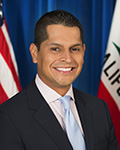
Ask Maddy about Miguel Santiago
Scope: CA
Hi! I can help you understand Miguel Santiago's legislative record. What would you like to know?
Try one of these
i
Maddy answers using official bill text and legislative records. Always verify before sharing.
Sources cited inline