

Affordable Housing and Community Development Investment Program.
Summary
Existing property tax law requires the county auditor, in each fiscal year, to allocate property tax revenue to local jurisdictions in accordance with specified formulas and procedures, subject to certain modifications. Existing law requires an annual reallocation of property tax revenue from local agencies in each county to the Educational Revenue Augmentation Fund (ERAF) in that county for allocation to specified educational entities. Existing law authorizes certain local agencies to form an enhanced infrastructure financing district, affordable housing authority, transit village development district, or community revitalization and investment authority for purposes of, among other things, infrastructure, affordable housing, and economic revitalization. This bill would establish in state government the Affordable Housing and Community Development Investment Program, which would be administered by the Affordable Housing and Community Development Investment Committee. The bill would authorize a city, county, city and county, joint powers agency, enhanced infrastructure financing district, affordable housing authority, community revitalization and investment authority, transit village development district, or a combination of those entities, to apply to the Affordable Housing and Community Development Investment Committee to participate in the program and would authorize the committee to approve or deny plans for projects meeting specific criteria. The bill would also authorize certain local agencies to establish an affordable housing and community development investment agency and authorize an agency to apply for funding under the program and issue bonds, as provided, to carry out a project under the program. The bill would require the Affordable Housing and Community Development Investment Committee to adopt guidelines for plans. Subject to the Legislature enacting a budget bill for the applicable fiscal year that specifies the amount for the committee to allocate pursuant to the program, the bill would require the committee to approve no more than $200,000,000 per year from July 1, 2021, to June 30, 2026, and $250,000,000 per year from July 1, 2026, to June 30, 2030, in transfers from a county's ERAF for applicants for plans approved pursuant to this program. This bill would provide that eligible projects include, among other things, the predevelopment, development, acquisition, rehabilitation, and preservation of workforce and affordable housing, certain transit-oriented development, and projects promoting strong neighborhoods. The bill would require the Affordable Housing and Community Development Investment Committee, upon approval of a plan and subject to specified conditions, to issue an order directing the county auditor to transfer an amount of ad valorem property tax revenue that is equal to the affordable housing and community development investment amount approved by the committee, except as provided, from the county's ERAF. The bill would require the county auditor to either deposit that amount into the Affordable Housing and Community Development Investment Fund, which this bill would create in the treasury of each county, or, if the applicant is a specified type of authority or special district to transfer to the city or county that created the authority or district an amount of property tax revenue equal to the amount approved by the Affordable Housing and Community Development Investment Committee for that authority or district. The bill would require the city or county that created the district to, upon receipt, transfer those funds to the authority or district in an amount equal to the affordable housing and community development investment amount for that authority or district. By imposing additional duties on local officials, the bill would impose a state-mandated local program. The bill would authorize applicants to use approved amounts to incur debt or issue bonds or other financing to support an approved project. The bill also would require each applicant that has received funding to submit annual reports, as specified, and would require the Affordable Housing and Community Development Investment Committee to provide a report to the Joint Legislative Budget Committee, if it approves funding under the program, that includes certain project information. Section 8 of Article XVI of the California Constitution sets forth a formula for computing the minimum amount of revenues that the state is required to appropriate for the support of school districts and community college districts for each fiscal year. This bill would require the Director of Finance to adjust the percentage of General Fund revenues appropriated for school districts and community college districts for these purposes in a manner that ensures that the transfers from a county's ERAF pursuant to the Affordable Housing and Community Development Investment Program have no net fiscal impact upon the total amount of the General Fund revenue and local property tax revenue allocated to school districts and community college districts pursuant to Section 8 of Article XVI of the California Constitution, as specified. The California Constitution requires the state to reimburse local agencies and school districts for certain costs mandated by the state. Statutory provisions establish procedures for making that reimbursement. This bill would provide that, if the Commission on State Mandates determines that the bill contains costs mandated by the state, reimbursement for those costs shall be made pursuant to the statutory provisions noted above.
Bill status
vetoed
4 of 5 stages cleared
Introduction
Dec 2018
Committee Review
Aug 2019
Senate Passage
May 2019
Assembly Passage
Sep 2019
Vetoed
Jan 2020
Introduced Dec 3, 2018
Vetoed Jan 13, 2020
Floor votes · Senate May 29, 2019 · Assembly Sep 10, 2019
How they voted
29–2
Passed · 3 other
Total votes 34
May 29, 2019
D
Democratic26
100% Yea
R
Republican8
37% Yea
Vote distribution
All Yea
All Nay
Mixed
No data
Full legislative history
Actions timeline
Total actions
45
Key actions
12
Committee
8
Amendments
5
Jan 13, 2020
Vetoed
Veto sustained.
upper
Oct 13, 2019
Vetoed
In Senate. Consideration of Governor's veto pending.
upper
Oct 13, 2019
Vetoed
Vetoed by the Governor.
upper
Sep 11, 2019
Upper · Passed
Assembly amendments concurred in. (Ayes 29. Noes 9. Page 2845.) Ordered to engrossing and enrolling.
upper
Sep 10, 2019
Introduced
In Senate. Concurrence in Assembly amendments pending.
upper
Sep 10, 2019
Lower · Passed
Read third time. Passed. (Ayes 55. Noes 19. Page 3313.) Ordered to the Senate.
lower
Sep 5, 2019
Lower · Passed
Read third time and amended.
lower
Aug 30, 2019
Lower · Passed
From committee: Do pass. (Ayes 12. Noes 6.) (August 30).
lower
Jul 11, 2019
Lower · Passed
From committee: Do pass as amended and re-refer to Com. on APPR. (Ayes 6. Noes 0.) (July 10).
lower
Jul 3, 2019
Lower · Passed
From committee: Do pass and re-refer to Com. on L. GOV. (Ayes 6. Noes 1.) (July 3). Re-referred to Com. on L. GOV.
lower
Jun 10, 2019
Committee
Referred to Coms. on H. & C.D. and L. GOV.
lower
May 29, 2019
Upper · Passed
Read third time. Passed. (Ayes 31. Noes 4. Page 1362.) Ordered to the Assembly.
upper
May 24, 2019
Upper · Passed
Read third time and amended.
upper
May 21, 2019
Upper · Passed
Read second time and amended. Ordered to third reading.
upper
May 20, 2019
Upper · Passed
From committee: Do pass as amended. (Ayes 4. Noes 2. Page 1086.) (May 16).
upper
Apr 4, 2019
Upper · Passed
From committee: Do pass as amended and re-refer to Com. on APPR. (Ayes 9. Noes 1. Page 551.) (April 2).
upper
Mar 20, 2019
Upper · Passed
From committee: Do pass as amended and re-refer to Com. on HOUSING. (Ayes 6. Noes 0. Page 384.) (March 20).
upper
Jan 24, 2019
Committee
Referred to Coms. on GOV. & F. and HOUSING.
upper
Dec 3, 2018
Introduced
Introduced. Read first time. To Com. on RLS. for assignment. To print.
upper
1 primary · 16 co-sponsors
Sponsors
Role
Legislator
Party
State
District
P

Jim Beall
DDemocratic
Co

Anna Caballero
DDemocratic
Co

Anthony Portantino
DDemocratic
Co

Ash Kalra
DDemocratic
Co
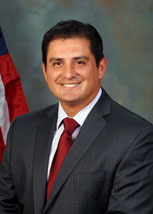
Ben Hueso
DDemocratic
Co

Buffy Wicks
DDemocratic
Co

Cecilia Aguiar-Curry
DDemocratic
Co

Henry Stern
DDemocratic
Co

Jesse Gabriel
DDemocratic
Co

Kevin Mullin
DDemocratic
Co

Miguel Santiago
DDemocratic





Ask Maddy
·
AI policy assistant
Ask Maddy about SB 5
Scope: CA
Hi! I can help you understand SB 5. What would you like to know?
Try one of these
i
Maddy answers using official bill text and legislative records. Always verify before sharing.
Sources cited inline