

Existing law, the Medical Practice Act, establishes the Medical Board of California to license and regulate the practice of medicine. Existing law establishes within the act the Licensed Physicians from Mexico Program, which authorizes the board to issue a limited number of nonrenewable 3-year physician's and surgeon's licenses to physicians from Mexico who are licensed, certified, or recertified and in good standing in their medical specialty in Mexico and who meet specified other requirements. This bill would establish the Doctors from El Salvador Program for the purpose of permitting licensed physicians from El Salvador to practice medicine in California for up to 3 years. The bill would require the program to be developed in consultation with representatives from a community health clinic in California that has an established partnership and framework with specified universities in El Salvador and would require the program to, among other things, recruit and vet candidates and assist candidates for the program in El Salvador to meet all program requirements. The bill would require the board to issue a nonrenewable 3-year physician and surgeon's license to a person who is licensed, certified, or recertified, and in good standing in the applicable medical specialty in El Salvador and who meets other requirements of the program. This bill would require a licensee in the program to practice only in the nonprofit community health center that offered the licensee employment and the corresponding hospital. The bill would require a federally qualified health center employing a licensee in the program to take certain actions, including creating and maintaining medical quality assurance protocols for those licensees. The bill would also require the federally qualified health centers to work with a California medical school or residency program to conduct 10 secondary reviews of randomly selected patient encounters with each of those licensees every 6 months, as specified. The bill would also require the faculty from the medical school or residency program and federally qualified health center chief medical officers to jointly develop 2 quality assurance seminars to be attended by the licensees. This bill would require an evaluation of the program to be conducted 12 months after the program has commenced by one of specified universities in El Salvador and an unspecified medical school in southern California, except that if the evaluation does not begin within 18 months of commencement of the program, the bill would require the Director of Consumer Affairs to select an independent consultant to conduct the evaluation. The bill would require progress reports to be provided to the Legislature on achievable time intervals beginning in the 2nd year of implementation of the program. The bill would require the board to coordinate with the community health center, as specified, to ensure that the number of program participants that are issued a license does not exceed a certain number of licensees, based on the year in which the applicant applies. The bill would establish various fees to be deposited in the Contingent Fund of the Medical Board of California or the CURES Fund, as specified. This bill would make legislative findings and declarations as to the necessity of a special statute.
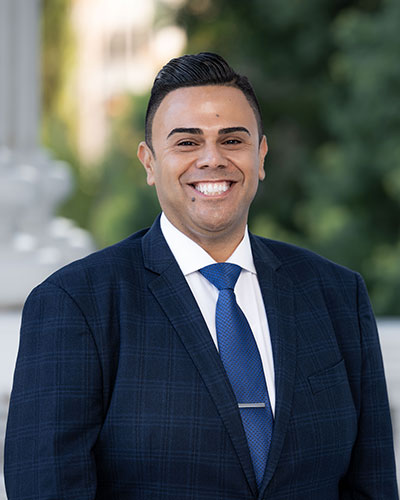
Asm. Mark González
Sponsored bills
The Personal Income Tax Law allows various credits against the taxes imposed by that law, including a young child tax credit to a qualified taxpayer in a specified amount multiplied by the earned income tax credit adjustment factor, as provided. That law also allows a payment from the continuously appropriated Tax Relief and Refund Account for an amount in excess of tax liability. Existing law defines "qualified taxpayer" for this purpose to include an eligible individual, as defined, who has a qualifying child, defined to be a child younger than 6 years of age as of the last day of the taxable year, and who meets other specified criteria. This bill, for taxable years beginning on or after January 1, 2026, and before January 1, 2038, would instead define a "qualifying child" to mean a child younger than the age limit from the prior taxable year plus one year, as described. The bill, for taxable years beginning on or after January 1, 2038, would define "qualifying child" as being a child younger than 18 years of age, as described. By increasing the payments from the Tax Relief and Refund Account, a continuously appropriated fund, the bill would make an appropriation. Existing law requires any bill authorizing a new tax expenditure to contain, among other things, specific goals that the tax expenditure will achieve, detailed performance indicators, and data collection requirements. This bill would include additional information required for any bill authorizing a new tax expenditure.
Maddy summaryThis bill designates April 2026 as Second Chance Month in California to raise awareness about opportunities for individuals reentering society after incarceration. The measure is a ceremonial proclamation that does not alter laws, allocate funding, or change government operations. Its primary purpose is to encourage public recognition of the challenges faced by formerly incarcerated people and to highlight available support resources during that specific month.
This measure would proclaim the week of April 20, 2026, to April 24, 2026, inclusive, as California Home Visiting Week, and would encourage all Californians to recognize and celebrate the contributions of home visiting programs and professionals and the families they serve.
Maddy summaryThis bill designates the week of April 19 to April 25, 2026, as Mosquito Awareness Week. The measure is a commemorative resolution that officially recognizes this specific time period to highlight mosquito-related issues. It does not create new laws, impose regulations, or allocate funding, but rather serves to raise public awareness through official designation.
Maddy summaryThis bill designates April 2026 as Parkinson's Disease Awareness Month in California. It requires state officials to issue a formal proclamation highlighting the importance of raising public awareness about the condition. The measure does not change laws or allocate funding but serves to recognize the month dedicated to this health issue.
This measure would proclaim March 2026 as American Red Cross Month, dedicate it to all those who continue to advance the noble legacy of the organization's founder, and encourage all Californians to reach out, support the organization's humanitarian mission, and join in their commitment to care for people in need.
Maddy summaryThis bill designates April 14 of every year as Sylvia Mendez Day to honor the civil rights activist who challenged school segregation in California. The measure is a commemorative resolution that does not change laws, allocate funding, or alter government operations. By establishing this annual observance, the state recognizes Mendez's historical contributions to education and civil rights.
Maddy summaryThis bill designates the week of April 5, 2026, through April 11, 2026, as Special Districts Week. It directly affects special districts, which are local government entities that provide specific services like water supply or fire protection to communities. The primary mechanism is an official proclamation that encourages public awareness and recognition of the work these districts perform. This measure does not alter any laws or budgets but serves as a commemorative resolution to highlight the importance of special districts.
Maddy summaryThis bill designates the week of April 12 to April 18, 2026, as California Public Safety Telecommunicators Week to honor the work of emergency call operators. The measure does not change laws or allocate funding; it simply establishes an official state observance. By creating this designated week, the legislation aims to bring public attention to the role of telecommunicators without altering their duties or compensation.