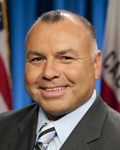
Photo of Freddie Rodriguez
D California Assembly · District 53

Asm. Freddie Rodriguez

Contact Email
Compare
Total votes
23,465
all sessions
Attendance
95%
988 missed
Near the chamber average
With party
99%
of cast votes
Near the chamber average
Bipartisan score
0%
crosses aisle rarely
Near the chamber average
Sponsored
2,071
bills & resolutions
Near the chamber average
Committees
0
assignments
2,071 bills and resolutions

Sponsored bills

Total
2,071
Primary
239
Co-sponsor
1,832
This page
2,071
matching current filters
Co-sponsor SCR 141
Failed · California Senate · Co-sponsor
Relative to the CAL FIRE Firefighter Christopher Lee Douglas Memorial Highway.

This measure would designate a 5-mile portion of Interstate 10 as the CAL FIRE Firefighter Christopher Lee Douglas Memorial Highway. The measure would also request the Department of Transportation to determine the cost for appropriate signs showing this special designation and, upon receiving donations from nonstate sources covering that cost, to erect those signs.

Failed Nov 30, 2014 1 co-sponsor
Co-sponsor AB 1451
Failed · California Assembly · Co-sponsor
Public schools: concurrent enrollment in secondary school and community college.

Existing law authorizes the governing board of a school district to allow pupils whom the district has determined would benefit from advanced scholastic or vocational work to attend community college as special part-time or full-time students, subject to parental permission. Existing law, until January 1, 2014, required credit to be awarded to these pupils, as specified, made the authority of a school principal to recommend a pupil for community college summer session contingent upon a determination that the pupil met various criteria, and prohibited the principal from recommending more than 5% of the total number of pupils from any particular grade level who completed that grade immediately before the time of recommendation for summer session attendance, except as specified. This bill would reinstate these provisions until January 1, 2017. The bill would, until July 1, 2020, authorize the governing board of a school district to enter into a concurrent enrollment partnership agreement with a community college district located within its immediate service area to allow pupils to attend community college. The bill would require a community college district and a school district, as a condition of, and before adopting, a concurrent enrollment partnership agreement, to take testimony from the public and approve or disapprove the proposed agreement at a regularly scheduled open public hearing of its respective governing board after having presented the agreement at a prior open public hearing. The bill would require the concurrent enrollment partnership agreement to outline the terms of the partnership, as specified. The bill would prohibit a school district from receiving a state allowance or apportionment for an instructional activity for which a community college district has been, or will be, paid an allowance or apportionment under a concurrent enrollment partnership agreement. The bill would authorize a participating high school to monitor the progress of its pupils attending a community college and to obtain the pupils' records from a community college district to do so. The bill would require, for each concurrent enrollment partnership agreement entered into under the bill, the affected community college district and school district to file an annual report, containing specified data, with the Office of the Chancellor of the California Community Colleges. The bill would also authorize the governing board of a community college district to enter into a partnership with the governing board of a school district located within its service area with the goal of developing seamless pathways from high school to community college for career technical education or preparation for transfer. The bill would require the partnership agreement to outline the terms of the partnership, as specified, and would require copies of the partnership agreement to be filed with the Chancellor of the California Community Colleges and the Superintendent of Public Instruction. The bill would authorize a community college district to limit enrollment in a community college course to solely high school pupils under specified circumstances. The bill would authorize specified high school pupils to enroll in up to 15 units if those units are required for these pupils' partnership programs and specified circumstances are satisfied, and would authorize a community college district to exempt special part-time and full-time students taking up to a maximum of 15 units per term from specified fee requirements. The bill would prohibit a community college district from receiving a state allowance or apportionment for an instructional activity for which a school district has been, or will be, paid an allowance or apportionment under a concurrent enrollment partnership agreement. The bill would require, for each partnership agreement entered into under the bill, the affected community college district and school district to file an annual report, containing specified data, with the Office of the Chancellor of the California Community Colleges. The bill would also make related and conforming changes.

Failed Nov 30, 2014 1 co-sponsor
Co-sponsor AB 1956
Failed · California Assembly · Co-sponsor
Personal income tax: credit: qualified tuition program.

The Personal Income Tax Law and the Corporation Tax Law allow various credits against the taxes imposed by those laws. This bill would, for taxable years beginning on or after January 1, 2015, and before January 1, 2020, allow a credit in the amount of 20% of the monetary contributions made to a qualified tuition program, as defined, by a qualified taxpayer, as defined, not to exceed $500. This bill would provide for the payment of a credit amount in excess of tax liability upon an appropriation by the Legislature for that purpose. This bill would take effect immediately as a tax levy.

Failed Nov 30, 2014 1 co-sponsor
Co-sponsor SB 951
Failed · California Senate · Co-sponsor
Statute of limitations: conspiracy.

Existing law requires that prosecutions for specified offenses begin within a prescribed period of time based on the term of the sentence for the crime. Under existing law, conspiracy to commit a crime is punishable as a felony, as prescribed, but in most cases in the same manner as is provided for punishment of the underlying felony. This bill would require a prosecution for conspiracy to commit a felony to be commenced within the time required for the commencement of prosecution for the underlying crime. The bill would also specify the intent of the Legislature that the measure abrogate a prior judicial holding that prosecution for the crime of conspiracy to commit a felony must commence within 3 years.

Failed Nov 30, 2014 1 co-sponsor
Co-sponsor AB 423
Failed · California Assembly · Co-sponsor
Student Tuition Recovery Fund: claims.

Existing law, the California Private Postsecondary Education Act of 2009, which is repealed on January 1, 2015, provides for, among other things, student protections and regulatory oversight of private postsecondary institutions in the state. The act is enforced by the Bureau for Private Postsecondary Education in the Department of Consumer Affairs. The act requires the bureau to adopt regulations governing the administration and maintenance of the Student Tuition Recovery Fund, including requirements relating to assessments on students and student claims against the Student Tuition Recovery Fund, a continuously appropriated fund. This bill would provide that a student who uses a Cal Grant or a Pell Grant to pay tuition at a qualifying institution is not thereby made ineligible to apply for payment from the Student Tuition Recovery Fund. The bill would also provide that, when the application of a student who uses a Cal Grant to pay tuition at a qualifying institution for payment from the Student Tuition Recovery Fund is granted, the bureau shall pay that amount to the Student Aid Commission. By expanding eligibility for payments from a continuously appropriated fund, the bill would make an appropriation. This bill would become operative only if an act that becomes operative on or before January 1, 2015, delays or eliminates the January 1, 2015, repeal date of the California Private Postsecondary Education Act of 2009.

Failed Nov 30, 2014 1 co-sponsor
Primary AB 2530
Signed into law · California Assembly · Lead sponsor
Ballot processing.

Existing law requires an elections official to compare the signature on the envelope of a vote by mail ballot, a mail ballot precinct ballot, or a provisional ballot with the signature that appears on the voter's affidavit of registration, as specified. If the elections official determines that the signatures do not compare, existing law requires that the ballot be rejected, as specified. This bill would provide that if a vote by mail ballot, mail ballot precinct ballot, or provisional ballot is processed using signature verification technology that determines the signatures do not compare, the elections official is required to visually examine and verify that the signatures do not compare before rejecting the ballot. By imposing additional duties on local elections officials, this bill would impose a state-mandated local program. This bill would incorporate additional changes to Section 15101 of the Elections Code proposed by SB 29, to be operative only if SB 29 and this bill are both chaptered and become effective January 1, 2015, and this bill is chaptered last. The California Constitution requires the state to reimburse local agencies and school districts for certain costs mandated by the state. Statutory provisions establish procedures for making that reimbursement. This bill would provide that, if the Commission on State Mandates determines that the bill contains costs mandated by the state, reimbursement for those costs shall be made pursuant to these statutory provisions.

Signed into law Sep 30, 2014 0 co-sponsors
Co-sponsor AB 2636
Signed into law · California Assembly · Co-sponsor
CalConserve Water Use Efficiency Revolving Fund.

The California Constitution requires the reasonable and beneficial use of water. This bill would establish the CalConserve Water Use Efficiency Revolving Fund and provide that the moneys in the fund are available to the Department of Water Resources, upon appropriation by the Legislature, for the purpose of water use efficiency projects. This bill would require moneys in the fund to be used for purposes that include, but are not limited to, at or below market interest rate loans to local agencies, as defined, and would permit the department to enter into agreements with local agencies that provide water or recycled water service to provide loans. Existing law, the Costa-Machado Water Act of 2000, a bond act approved by the voters as Proposition 13 at the March 7, 2000, statewide primary election, authorizes the issuance of general obligation bonds in the amount of $1,970,000,000 for grants, loans, and direct expenditures for the purposes of financing a safe drinking water, clean water, watershed protection, and flood protection program. This bill would transfer to the CalConserve Water Use Efficiency Revolving Fund from the bond act specified bond proceeds issued and available for agricultural water projects. This bill would require the department to use these moneys for loans and grants to local agencies to acquire and construct agricultural water conservation projects consistent with provisions of the bond act.

Signed into law Sep 29, 2014 1 co-sponsor
Co-sponsor AB 2146
Signed into law · California Assembly · Co-sponsor
Occupational safety: firefighters: personal protective equipment.

The California Occupational Safety and Health Act of 1973 provides the Division of Occupational Safety and Health within the Department of Industrial Relations with the power, jurisdiction, and supervision over all employment and places of employment necessary to enforce and administer all occupational health and safety laws and to protect employees. The Occupational Safety and Health Standards Board, an independent entity within the department, has the exclusive authority to adopt occupational safety and health standards within the state. This bill would require the Department of Industrial Relations by January 1, 2016, to convene an advisory committee, composed as specified, to evaluate whether changes are needed to align certain safety orders relating to personal protective clothing and equipment for firefighters with standards promulgated by the National Fire Protection Association (NFPA) . The bill would require the committee to present its findings and recommendations to the Occupational Safety and Health Standards Board by July 1, 2016, and require the board no later than July 1, 2017, to render a decision regarding the adoption of changes to the safety orders, or other applicable standards and regulations, in order to maintain alignment with the NFPA standards. The bill would require the board, by July 1, 2018, and every 5 years thereafter, to complete a comprehensive review of all revisions to NFPA standards pertaining to personal protective equipment, as specified, and if the review finds that the revisions to applicable standards provide a greater degree of personal protection than the safety orders, the bill would require the board to consider modifying existing safety orders and to render a decision in that regard, as specified.

Signed into law Sep 29, 2014 1 co-sponsor
Primary AB 2044
Signed into law · California Assembly · Lead sponsor
Residential care facilities for the elderly.

Existing law provides for the licensure and regulation of residential care facilities for the elderly by the State Department of Social Services. A violation of these provisions is a misdemeanor. Existing law requires the administrator designated by the licensee to be present at the facility during normal working hours and requires a facility manager, as defined, to be responsible for the operation of the facility when the administrator is temporarily absent from the facility. This bill would require that at least one administrator, facility manager, or designated substitute who is at least 21 years of age and has adequate qualifications, as specified, be on the premises of the facility 24 hours per day. The bill would also require the facility to employ, and the administrator to schedule, a sufficient number of staff members, as prescribed. Existing law requires the department to adopt regulations to require staff members who assist residents with personal activities of daily living to receive appropriate training, which consists of 10 hours of training within the first 4 weeks and 4 hours annually thereafter. Existing law requires that the training include specified topics. This bill would require that this training also include building and fire safety and the appropriate response to emergencies. By expanding the scope of a crime, this bill would impose a state-mandated local program. This bill would incorporate additional changes to Section 1569.625 of the Health and Safety Code proposed by AB 1570 that would become operative if this bill and AB 1570 are both enacted and this bill is enacted last. The California Constitution requires the state to reimburse local agencies and school districts for certain costs mandated by the state. Statutory provisions establish procedures for making that reimbursement. This bill would provide that no reimbursement is required by this act for a specified reason.

Signed into law Sep 28, 2014 0 co-sponsors
Primary AB 1598
Signed into law · California Assembly · Lead sponsor
Emergency response services: active shooter incidents.

(1) Existing law requires the Director of Emergency Services to establish a Curriculum Development Advisory Committee (CDAC) to, among other things, provide advice on the development of terrorism awareness course curricula and response training. Existing law establishes in the Department of Justice the Commission on Peace Officer Standards and Training, which is required to, among other things, adopt rules establishing minimum standards relating to physical, mental, and moral fitness that govern the recruitment of peace officers and requires the commission to carry out various duties related to the education and training of peace officers. This bill would require CDAC to consult with the commission. (2) Existing law, the Emergency Medical Services System and the Prehospital Emergency Medical Care Personnel Act, establishes the Emergency Medical Services Authority (EMSA) , which is responsible for the coordination and integration of all state agencies concerning emergency medical services. Under existing law, EMSA is required to establish training standards that include the criteria for the curriculum content recommended by CDAC, involving the responsibilities of first responders to terrorism incidents and to address the training needs of those identified as first responders. This bill would additionally require that those training standards include criteria for coordinating between different responding entities. (3) Existing law establishes the Interdepartmental Committee on Emergency Medical Services (ICEMS) , which is required to advise EMSA on the coordination and integration of all state activities concerning emergency medical services. Existing law authorizes the Director of EMSA to appoint select resource committees of experts and to contract with special medical consultants for assistance in the implementation of the act described above. This bill would require ICEMS or another committee designated by the Director of EMSA to consult with the commission regarding emergency medical services integration and coordination with peace officer training. (4) Existing law requires the commission to develop and disseminate guidelines and standardized training recommendations for Special Weapons and Tactics (SWAT) teams, as specified, that would be available for use by law enforcement agencies that conduct SWAT operations. Under existing law, those guidelines are required, at a minimum, to address legal and practical issues of SWAT operations, personnel selection, fitness requirements, planning, hostage negotiation, tactical issues, safety, rescue methods, after-action evaluation of operations, logistical and resource needs, uniform and firearms requirements, risk assessment, policy considerations, and multijurisdictional SWAT operations. Existing law also directs the commission to establish training standards and develop a course of instruction involving the responsibilities of first responders to terrorism incidents, as specified. This bill would authorize the above-described guidelines and training standards for SWAT teams to also address tactical casualty care. The bill would authorize the above-described training standards and course of instruction involving the responsibilities of first responders to terrorism incidents to also, if appropriate, include coordination with emergency medical services providers that respond to an incident, tactical casualty care, and other standards of emergency care as established by the Commission on Emergency Medical Services. The bill would include legislative findings and declarations, and would make a related statement of legislative intent.


Signed into law Sep 27, 2014 0 co-sponsors
Showing 1,961 to 1,970 of 2,071 bills