

Passed Sep 1, 2021
1 co-sponsor
Total votes
22,342
all sessions
Attendance
97%
347 missed
Higher than 83% of chamber peers
With party
99%
of cast votes
Higher than 90% of chamber peers
Bipartisan score
0%
crosses aisle rarely
Lower than 93% of chamber peers
Sponsored
1,612
bills & resolutions
Near the chamber average
Committees
0
assignments
1,612 bills and resolutions
Sponsored bills
Total
1,612
Primary
171
Co-sponsor
1,441
This page
1,612
matching current filters
Title IX: 49th anniversary.
This measure would, on June 23, 2021, commemorate the 49th anniversary of the enactment of Title IX, and would urge Californians to continue to work together to achieve the goals set by Title IX, as specified.
Signed into law Aug 27, 2021
1 co-sponsor
Relative to Healthy Homes Awareness Month.
This measure would designate the month of June 2021 as Healthy Homes Awareness Month.
Signed into law Aug 27, 2021
1 co-sponsor
Early childhood education: parent participation preschools: pilot program.
Existing law requires the Superintendent of Public Instruction to administer all California state preschool programs, including, but not limited to, part-day and full-day age and developmentally appropriate programs for 3- and 4-year-old children. This bill would establish the Parent Participation Preschool Pilot Program, under the administration of the State Department of Education, to provide one-time grants to California state preschool program contracting agencies, as defined, for the creation or expansion of parent participation preschool programs. The bill would define "parent participation preschool program" as a preschool program funded by the state, where there is an educational component for a parent, guardian, or family member of a child in the program, as specified, and there may also be a requirement for those persons to volunteer in the classroom or with other aspects of the program. The bill would require the department to announce and post criteria for grants on or before March 31, 2022, to award grants to selected California state preschool program contracting agencies on or before the beginning of the 2022–23 school year, and to report to the appropriate policy and fiscal committees of the Legislature on the impact of the pilot program on or before January 1, 2024. The bill would make implementation of the pilot program contingent upon an appropriation in the annual Budget Act or another statute for this purpose. The bill would repeal these provisions 5 years after an appropriation in the annual Budget Act or another statute for the pilot program.
Passed Aug 26, 2021
1 co-sponsor
Hydrogen: green hydrogen: emissions of greenhouse gases.
(1) The California Global Warming Solutions Act of 2006 designates the State Air Resources Board (state board) as the state agency charged with monitoring and regulating sources of emissions of greenhouse gases. The state board is required to ensure that statewide greenhouse gas emissions are reduced to at least 40% below the 1990 level by 2030. The act requires the state board to prepare and approve a scoping plan for achieving the maximum technologically feasible and cost-effective reductions in greenhouse gas emissions and to update the scoping plan at least once every 5 years. This bill would require the state board, by December 31, 2022, as a part of the scoping plan and the state's goal for carbon neutrality, to identify the role of hydrogen, and particularly green hydrogen, in helping California achieve the goals of the act and the state's other climate goals. The bill would require the state board, in consultation with the State Energy Resources Conservation and Development Commission (Energy Commission) and Public Utilities Commission (PUC) , to prepare an evaluation posted to the state board's internet website by June 1, 2023, that includes specified information relative to the deployment, development, and use of hydrogen. The bill would require the state board, in making these evaluations, to consult with the California Workforce Development Board and labor and workforce organizations. (2) Existing law requires the Energy Commission, beginning November 1, 2003, and every 2 years thereafter, to adopt an integrated energy policy report that includes an overview of major energy trends and issues facing the state. This bill would require the Energy Commission, as part of the 2023 and 2025 editions of the integrated energy policy report, to study and model potential growth for hydrogen and its role in decarbonizing, as defined, the electrical and transportation sectors of the economy, and helping to achieve specified goals. (3) Existing law requires the PUC, state board, and Energy Commission to consider green electrolytic hydrogen an eligible form of energy storage, and to consider other potential uses of green electrolytic hydrogen. This bill would require the PUC, state board, and Energy Commission to consider other potential uses of green electrolytic hydrogen specifically in all of their decarbonization strategies, as defined. (4) This bill would require the state board, by June 1, 2023, in conjunction with the Energy Commission and the PUC, to (A) jointly develop recommendations to the Legislature on definitions for different categories of hydrogen, and potential end uses for those categories of hydrogen and would authorize the use of the recommendations to the Legislature to inform the oversight and administration of their respective hydrogen programs and eligibility rules, (B) provide guidance to the Legislature on which categories of hydrogen may be used to meet eligibility requirements for the programs under each state entity's jurisdiction, (C) jointly develop prohibitions against double counting of environmental attributes associated with production, distribution, and use of hydrogen, and (D) calculate life-cycle carbon dioxide intensity values for hydrogen pathways that reflect the fuels, feedstocks, and production processes used for their production.
Passed Aug 26, 2021
1 co-sponsor
State government: Immigrant and Refugee Affairs Agency: Office of Immigrant and Refugee Affairs.
Existing law designates 8 agencies in state government and requires the secretary of an agency to be generally responsible for the sound fiscal management of each department, office, or other unit within the agency. Existing law further requires the secretary of an agency to, among other duties, continually seek to improve the organization structure, the operating policies, and the management information systems of each department, office, or other unit. This bill would, until January 1, 2029, establish the Immigrant and Refugee Affairs Agency as an agency within state government, to be headed by a secretary who is appointed by the Governor and subject to Senate confirmation. The bill would specify that the purpose of the agency is to reduce obstacles and enhance immigrant integration, as defined, into the social, cultural, economic, and civic life of the state. The bill would establish the Office of Immigrant and Refugee Affairs within the agency. The bill would transfer functions relating to immigrants and refugees to the office and would declare the intent to incorporate existing and future programs created to assist immigrants and refugees into the office. The bill would transfer the property of any office, agency, or department that relates to functions transferred to the office by these provisions and would transfer the unencumbered balance of any appropriation and any other funds that are available for use in connection with any function transferred to the office. The bill would also provide that every officer and employee who is serving in the state civil service, as provided, and who is transferred to the office, shall retain the status position, and rights. The bill would create the Immigrant and Refugee Integration Fund within the State Treasury, and would make the moneys available in the fund available to the secretary of the office to administer the duties of the office. This bill would establish the duties and responsibilities of the agency and the office which includes, among other duties, establishing a permanent structure within the state to serve immigrants, assisting other state agencies in evaluating their programs for accessibility and effectiveness in providing services to immigrants and refugees, and recommending policy and budget mechanisms for meeting immigrant and refugee integration goals. The bill would prohibit interagency sharing of personal information and would prohibit use of agency resources to directly or indirectly participate or assist in immigration enforcement activity. Existing law establishes the Statewide Director of Immigrant Integration and requires the director serve as the statewide lead for the planning and coordination of immigrant services and policies in California. Existing law requires, among other things, that the director develop a comprehensive statewide report on programs and services that serve immigrants, develop an online clearinghouse of immigrant services, resources, and programs, and monitor the implementation of statewide laws and regulations that serve immigrants. This bill would recast those provisions to rename the director as the Statewide Director of Immigrant and Refugee Integration. The bill would place the director in charge of the office, and would require the director to report to the Governor and the Legislature on programs and services that serve immigrants and refugees by January 1, 2023, and require the director to provide a statewide plan for better implementation and coordination of immigrant and refugee assistance policies and programs. The bill would require the director to incorporate refugee services, resources, and programs into the online clearinghouse by January 1, 2023, and would require the director to monitor statewide laws and regulations that serve refugees, in addition to immigrants. The changes made by this bill would be in effect until January 1, 2029, and as of that date would be repealed. The provisions of this bill would only become operative if funds have been appropriated for the purposes described in the bill in the annual Budget Act or another statute. Existing constitutional provisions require that a statute that limits the right of access to the meetings of public bodies or the writings of public officials and agencies be adopted with findings demonstrating the interest protected by the limitation and the need for protecting that interest. This bill would make legislative findings to that effect.
Passed Aug 26, 2021
1 co-sponsor
Before and after school programs: cost study and advisory group.
The After School Education and Safety Program Act of 2002, an initiative statute approved by the voters as Proposition 49 at the November 5, 2002, statewide general election, establishes the After School Education and Safety (ASES) Program under which participating public schools receive grants to operate before and after school programs serving pupils in kindergarten or any of grades 1 to 9, inclusive. Existing federal law establishes the 21st Century Community Learning Centers program to provide pupils with academic enrichment and other activities during nonschool hours or periods when school is not in session, as provided. This bill would require the State Department of Education to, on or before October 1, 2022, conduct a statewide cost study to determine adequate funding levels in order for expanded learning programs to meet current health and safety needs and state quality standards, establish a statewide expanded learning stakeholder advisory group, coordinate and support the statewide expanded learning stakeholder advisory group in developing recommendations on certain topics relating to funding and coordinating expanded learning programs, and publicly share on the department's internet website the results of the cost study and the statewide expanded learning stakeholder advisory group's recommendations. The bill would appropriate $600,000 from the General Fund to the department to perform those duties, and would authorize the department to use those moneys to contract with qualified local educational agencies or other entities to perform those duties. This bill would declare that it is to take effect immediately as an urgency statute.
Passed Aug 26, 2021
0 co-sponsors
Emergency food assistance.
Existing law establishes and requires the State Department of Social Services to administer the CalFood Program to provide food and funding to food banks whose primary function is to facilitate the distribution of food to low-income households, as specified. This bill would require the department to provide a food assistance benefit to low-income California residents, regardless of immigration status, by contracting with nonprofit entities, as defined, to issue the food assistance benefit in the form of prepaid cards. The bill would require the department to procure the prepaid cards to administer the food assistance benefit and to ensure the availability of those prepaid cards to nonprofit entities, as specified. The bill would require participating nonprofit entities to maintain specified records. The bill would require the department and nonprofit entities to distribute all of the food assistance benefits by July 1, 2023. The bill would authorize the department to implement, interpret, or make specific these provisions without taking regulatory action. The bill would exempt contracts awarded pursuant to these provisions from personal services contracting requirements, the Public Contract Code, and the State Contracting Manual, and the contracts would not be subject to the approval of the Department of General Services. The bill would make these provisions operative upon appropriation. The bill would require the department, in consultation with a workgroup, to author a report to provide recommendations and solutions for a permanent food assistance program for low-income California residents experiencing food insecurity, to complete that report by January 1, 2023, and to submit a copy of that report to the Legislature, as specified. This bill would repeal its provisions on January 1, 2025. This bill would declare that it is to take effect immediately as an urgency statute.
Passed Aug 26, 2021
1 co-sponsor
California Health Equity Program.
Existing law establishes the Office of Health Equity in the State Department of Public Health for the purposes of aligning state resources, decisionmaking, and programs to accomplish certain goals related to, among others, health equity and protecting vulnerable communities. Existing law requires the office to perform certain functions in connection to health equity. This bill would, on July 1, 2022, establish the California Health Equity Program, a competitive grant program administered by the Office of Health Equity to community-based nonprofit organizations, community clinics, local health departments, and tribal organizations to take actions related to health equity. The bill would establish the California Health Equity Fund in the State Treasury and, upon appropriation by the Legislature, would make moneys in the fund available for the purposes of the grant program. The bill would also establish the California Health Equity Fund Oversight and Accountability Committee, a 15-member committee with specified membership, to monitor the distribution, implementation, and impact of local and regional grants funded by the California Health Equity Fund and make reports about the status of the program and related recommendations to specified entities, among other duties.
Passed Aug 26, 2021
1 co-sponsor
Passed Aug 26, 2021
1 co-sponsor
Ask Maddy
·
AI policy assistant
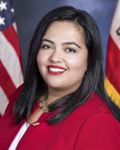
Ask Maddy about Wendy Carrillo
Scope: CA
Hi! I can help you understand Wendy Carrillo's legislative record. What would you like to know?
Try one of these
i
Maddy answers using official bill text and legislative records. Always verify before sharing.
Sources cited inline